Executive Takeaways
- Chemical Bifurcation: The global EV sector is splitting into a two-tier architectural framework: cost-optimized sodium-ion and lithium iron phosphate (LFP) chemistries dominate mass-market vehicles and grid assets, while high-density silicon-anode and solid-state cells capture premium automotive segments.
- Grid Arbitrage Synergy: Stationary Battery Energy Storage Systems (BESS)—typified by utility-scale installations like the Elkhorn Battery Energy Storage System utilizing Tesla Megapacks at Moss Landing—are creating an operational bridge that subsidizes cell scale, stabilizes power grids, and drives yield optimization for enterprise infrastructure assets.
- Solid-State Inflection Point: All-solid-state battery (ASSB) manufacturing is transitioning from lab-scale pilot runs to high-yield gigafactory integration, with leading automotive original equipment manufacturers (OEMs) targeting initial vehicle integration between late 2026 and 2028.
- Capital Allocation Shift: Geopolitical compliance, battery passport regulations, and nearshoring mandates are altering OEM corporate balance sheets, redirecting capital expenditure (CapEx) toward supply chain vertical integration and de-risking raw material procurement.
The Great Electrochemical Divide: Moving Beyond Conventional Liquid Lithium-Ion
The global electric vehicle sector has reached an inflection point where conventional liquid-electrolyte nickel-manganese-cobalt (NMC) battery chemistry is no longer the single benchmark for automotive design. For over three decades, standard lithium-ion cells provided the energy density needed to establish electric mobility. However, as the automotive sector matures, conventional NMC variants are encountering hard physical limits in volumetric density—typically ceiling out at 280 to 300 Watt-hours per kilogram (Wh/kg) at the cell level—while presenting continuous thermal runaway liabilities and persistent supply chain exposure to volatile cobalt and nickel markets.
To preserve enterprise margins and hit lower consumer price points, global automakers and cell manufacturers have instituted a fundamental split in platform architecture. On one side of this divide is the pursuit of maximum energy density through advanced silicon-dominant anodes and solid-state electrolytes. On the other lies the rapid scaling of low-cost, cobalt-free chemistry architectures engineered for long cycle life, high thermal stability, and immediate capital efficiency.
This industrial transition is fundamentally altering how automotive executives approach capital allocation and long-term supply agreements. Battery raw material pricing, once dictated purely by spot market speculators, is increasingly anchored by direct OEM off-take contracts and joint-venture processing facilities designed to secure long-term liquidity and margin predictability.
Intermediate Bridge Architectures: Silicon Anodes, LFP, and the Sodium-Ion Disruption
Before solid-state chemistry achieves full commercial scale, intermediate innovations are redefining cost structure and performance profiles across high-volume assembly lines. Among these, the integration of silicon-dominant anodes into traditional liquid lithium-ion cells represents the most high-impact near-term performance enhancement.
Pure graphite anodes possess a theoretical capacity limit of 372 milliampere-hours per gram (mAh/g). By introducing nanostructured silicon or silicon-oxide composites—which offer a theoretical capacity exceeding 3,500 mAh/g—engineers are unlocking 20% to 40% increases in volumetric energy density without overhauling existing roll-to-roll manufacturing infrastructure. Historically, silicon’s tendency to expand by upwards of 300% during lithiation caused structural pulverization and rapid capacity decay. Advanced chemical vapor deposition (CVD) coatings and engineered polymer binders have largely contained this volumetric swelling, enabling stable commercial cycling across premium EV platforms.
Simultaneously, Lithium Iron Phosphate (LFP) and its manganese-enhanced variant, Lithium Manganese Iron Phosphate (LMFP), have captured a commanding share of the global mass-market EV and stationary energy storage footprints. LMFP increases cell nominal voltage from 3.2V to roughly 3.7V, delivering higher energy density while retaining LFP’s core advantages: zero reliance on expensive nickel or cobalt, superior thermal stability, and operational lifetimes exceeding 4,000 deep discharge cycles.
At the lowest cost tier, Sodium-Ion (Na-Ion) technology has emerged as a disruptive force for urban micro-EVs and stationary applications. Replacing lithium ions with abundant sodium cations reduces cell material costs by an estimated 30% to 40%. While sodium-ion cells exhibit lower energy densities (150–170 Wh/kg), their superior low-temperature performance, enhanced safety profile, and total immunity to thermal runaway make them a strategically vital tool for de-risking raw material volatility.
The Grid Storage Catalyst: Lessons from Moss Landing and Utility-Scale Integration
The evolution of EV battery chemistries cannot be viewed isolated from the broader energy ecosystem. The operational metrics established by stationary storage facilities—most visibly demonstrated by major utility installations such as the Elkhorn Battery Energy Storage System in Moss Landing, California, powered by Tesla Megapack technology—serve as an industrial prove-out for cell longevity, pack architecture, and thermal management at massive scale.
Stationary BESS installations function as crucial demand-stabilization engines for battery manufacturers. The continuous cell demand from gigawatt-hour-scale grid storage deployment creates manufacturing baseline volumes, allowing suppliers to amortize fixed CapEx and refine cell quality controls far faster than auto production alone would allow. Systems like the Moss Landing facility showcase how utility-scale battery deployments achieve structural monetization by capturing peak-hour energy price arbitrage, executing frequency regulation, and providing capacity reserves to grid operators.
Furthermore, grid-scale systems are creating a standardized framework for "second-life" automotive battery degradation models. As EV packs degrade past 70% to 80% of their initial capacity—rendering them sub-optimal for dynamic vehicle acceleration—they can be reconfigured into stationary storage systems. This second-life utility significantly alters vehicle lifecycle economics, extending asset depreciation schedules, boosting long-term enterprise Return on Investment (ROI), and mitigating balance-sheet write-downs for fleet operators and OEM leasing arms.
The Frontier: All-Solid-State Batteries (ASSB) and Manufacturing Realities
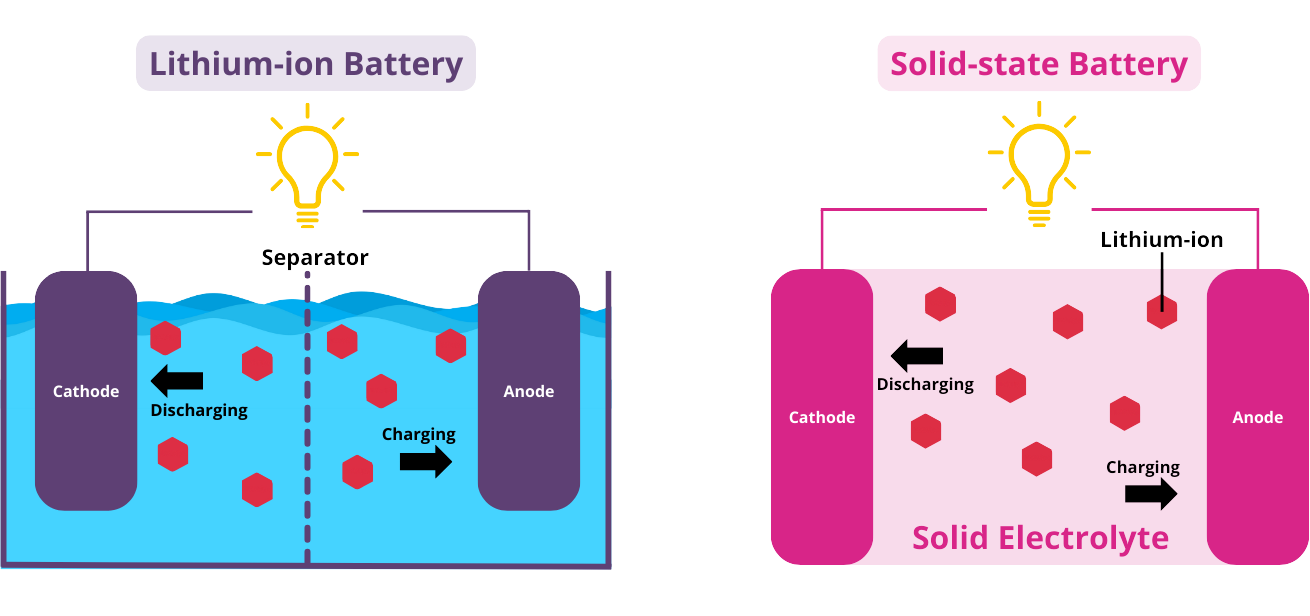
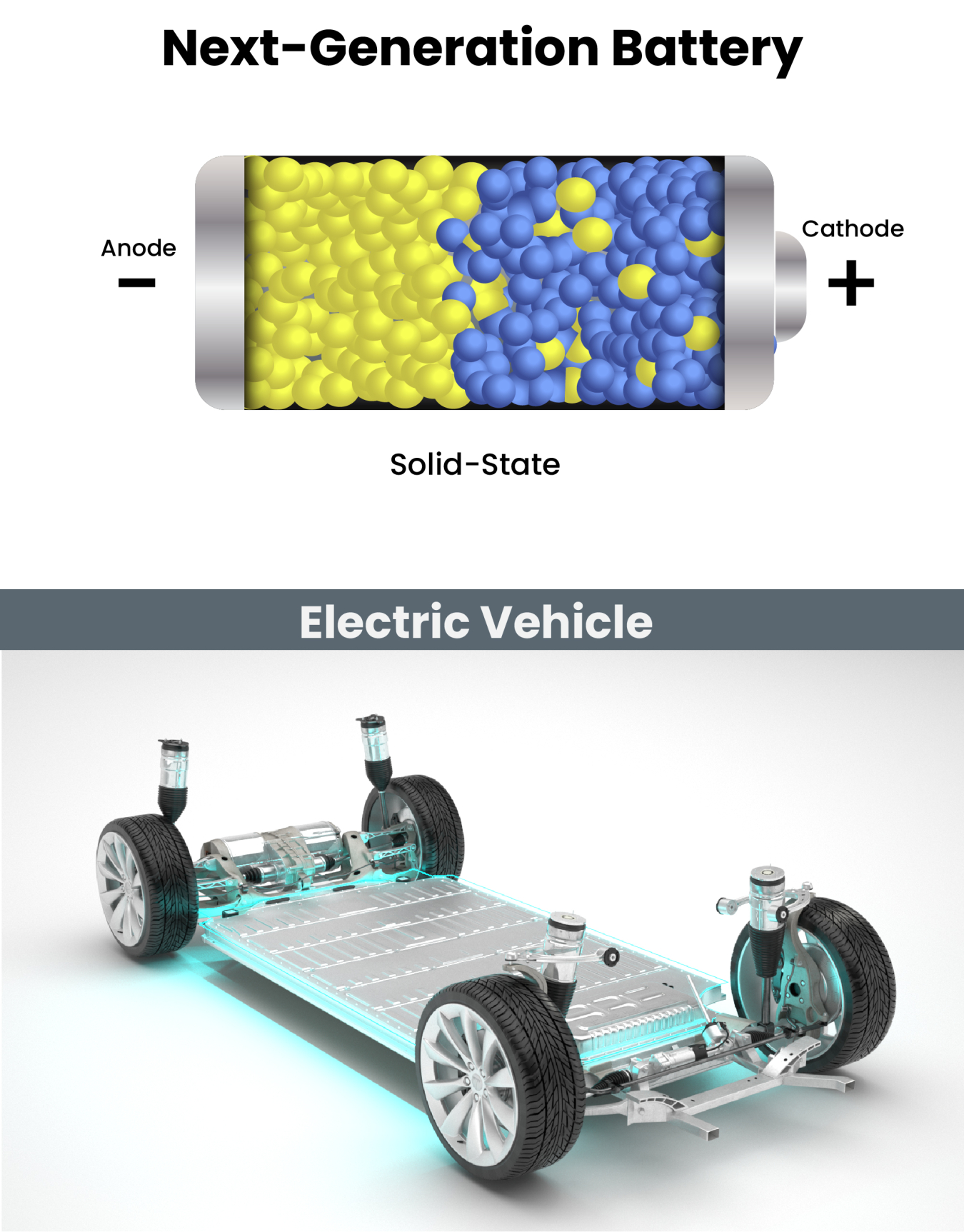
The ultimate frontier in electrochemical energy storage remains the All-Solid-State Battery (ASSB). By replacing volatile organic liquid electrolytes with solid ion conductors—primarily categorized into sulfide-based, oxide-based, and advanced polymer matrixes—ASSB technology addresses the dual challenges of battery safety and energy density.
Sulfide-based electrolytes, favoured by major Asian and European consortiums, exhibit exceptionally high ionic conductivity at room temperature, approaching that of liquid electrolytes. This enables the use of pure lithium metal anodes, driving gravimetric energy densities beyond 500 Wh/kg and volumetric densities above 1,000 Wh/L. Such energy metrics effectively double the range of current EVs while reducing total battery pack weight and volume by half.
However, scaling solid-state manufacturing from lab-scale pouch cells to commercial multi-gigawatt facilities presents complex process engineering challenges:
- Interface Resistance and Dendrite Suppression: Solid-to-solid interfaces lack the dynamic wetting properties of liquids. Microscopic voids formed during repeated charge-discharge cycles lead to uneven current distribution, causing localized lithium dendrites to pierce the solid electrolyte and short-circuit the cell.
- Manufacturing Atmosphere Control: Sulfide electrolytes react rapidly with ambient moisture to produce toxic hydrogen sulfide (H2S) gas, requiring extremely stringent, low-dew-point dry-room environments that increase operational expenditure (OpEx).
- Iso-Static Pressing Requirements: Ensuring void-free contact between solid components requires continuous uniform mechanical pressure, complicating module and pack structural engineering.
Despite these engineering hurdles, pilot manufacturing lines are advancing toward low-volume commercial verification. Early-adopter vehicle integration is projected to deploy high-density solid-state batteries in low-volume, ultra-luxury, and high-performance halo vehicles before trickle-down economics allow for mass-market availability in the late 2020s or early 2030s.
Verified Technical & Macro-Economic Comparison Matrix
| Battery Architecture / Chemistry | Gravimetric Energy Density (Wh/kg) | Estimated Cell Cost ($/kWh) | Cycle Life Expectancy (80% DoD) | Thermal Safety Profile | Primary Enterprise / Commercial Application |
|---|---|---|---|---|---|
| Sodium-Ion (Na-Ion) | 140 – 170 | $40 – $60 | 3,000 – 5,000 | Extremely High; Non-flammable chemistries | Mass-market urban EVs, short-range commercial transport, stationary BESS |
| LFP / LMFP (Gen-3) | 180 – 230 | $60 – $80 | 3,500 – 6,000+ | High; High thermal runaway threshold | Volume EVs, commercial transport fleets, stationary utility storage (e.g., Megapack) |
| High-Silicon Anode Li-Ion | 300 – 380 | $90 – $120 | 1,200 – 2,000 | Moderate; Requires active thermal liquid cooling | Premium luxury EVs, long-range light trucks, high-performance powertrains |
| All-Solid-State (Sulfide/Oxide) | 450 – 520+ | $140 – $200+ (Initial) | 1,500 – 2,500 (Targeting) | Very High; Inherent resistance to fire and thermal surge | Aviation, performance flagship EVs, specialized high-margin industrial applications |
Industry & Financial Market Implications: Winners, Losers, and Capital Re-Allocation
The diversification of battery chemistry is reshaping corporate balance sheets, equity valuations, and global manufacturing ecosystems across the mobility landscape.
Market Winners
- Vertically Integrated BESS Developers: Companies capable of bundling custom software platforms with scalable modular storage (such as Tesla's energy segment) benefit from steady operational cash flows and higher margin realization compared to pure-play vehicle assembly.
- Specialized Chemical Synthesis Firms: Materials suppliers controlling advanced silicon-anode production, solid-state electrolyte synthesis, and binder chemistry hold strong pricing power and high structural moat protections.
- Dual-Track Automakers: OEMs maintaining flexible, software-configurable battery pack platforms capable of seamlessly swapping between LFP, high-silicon, and solid-state chemistries are optimized to weather raw material supply shocks.
Market Losers & Risks
- Single-Chemistry Tier-1 Suppliers: Component manufacturers dedicated exclusively to high-cobalt/high-nickel chemistries face severe asset impairment risks and structural margin contraction as mass-market vehicles convert to LFP and Sodium-ion platforms.
- Unhedged Raw Material Refiners: Processing entities reliant on high-cost spot lithium without long-term off-take pricing mechanisms risk liquidity traps during supply overhang cycles.
From an enterprise risk perspective, access to battery capacity is no longer merely a procurement challenge—it is a core balance-sheet liability. Strategic alliances, joint-venture gigafactories, and direct equity investments by auto manufacturers in upstream chemical processors have become mandatory capital allocation practices aimed at de-risking supply chains and meeting regulatory localized-content thresholds in key markets.
Frequently Asked Questions (People Also Ask)
When will solid-state EV batteries reach mass commercial price parity with liquid lithium-ion?
Solid-state batteries are anticipated to achieve parity on a total-cost-of-ownership (TCO) basis between 2030 and 2032. While initial cell-level manufacturing costs for solid-state will remain elevated through 2028 due to un-optimized supply chains and low production yields, reduced requirements for external thermal management hardware, simplified pack structures, and lower cooling weight offset early cost penalties at the vehicle integration level.
How do Sodium-ion batteries differ from Lithium-ion, and why are they entering mass production?
Sodium-ion batteries utilize sodium cations ($Na^+$) rather than lithium cations ($Li^+$) to store and release energy. Sodium is globally abundant and significantly cheaper to refine than lithium, eliminating dependency on expensive critical minerals like nickel and cobalt. While exhibiting a lower gravimetric energy density than premium lithium chemistries, sodium-ion offers superior low-temperature discharge capabilities, enhanced cycle life, and low manufacturing costs, making it ideal for entry-level city EVs and grid storage.
What strategic role do stationary energy storage systems like the Tesla Megapack play in the EV supply chain?
Grid-scale stationary systems provide massive, steady-state manufacturing volumes that allow battery makers to operate gigafactories at maximum capacity utilization, smoothing out seasonal fluctuations in EV demand. Crucially, these storage assets enable utility operators to stabilize local grids, absorb excess renewable generation, and monetise energy via real-time power arbitrage, providing a profitable deployment route for early-generation and second-life battery packs.
Why are automakers deploying silicon-dominant anodes prior to all-solid-state commercialization?
Silicon-dominant anodes provide an immediate, evolutionary performance bump—increasing cell energy density by up to 30%—while using existing roll-to-roll liquid battery cell manufacturing equipment. This allows automakers to boost vehicle range and reduce pack size immediately without waiting for the complete re-tooling, capital expenditure, and process engineering solutions required for fully solid-state electrolyte production lines.
Future Outlook and Strategic Milestones
The journey from traditional liquid lithium-ion to solid-state systems represents a structural evolution in global mobility infrastructure. Over the next three to five years, key industrial milestones will dictate the pace of market transformation:
- 2026–2027: Dry-Electrode Process Scaling: The commercialization of dry-electrode coating technology will dramatically lower energy consumption and plant footprint requirements for gigafactories, reducing cell-level CapEx by up to 15-20%.
- 2027–2028: Pilot Solid-State Commercial Fleets: Initial commercial deployments of all-solid-state cells will hit public roads in premium halo EV vehicles, validating lifetime field reliability and extreme-fast-charging capabilities under real-world conditions.
- 2028–2030: Regulatory Compliance and Digital Traceability: Strict international battery passport regulations will force mandatory end-to-end supply chain transparency, recycling content tracking, and carbon footprint verification, favoring advanced automated processing operations.
Automakers and energy infrastructure developers capable of managing multi-chemistry supply portfolios while aggressively deploying capital into flexible manufacturing platforms will lead the energy landscape over the coming decades.