Executive Takeaways
- Upended Provenance: Recent geochemical fingerprinting has definitively ruled out traditional Welsh origins for Stonehenge’s central Altar Stone, shattering decades of archaeological consensus.
- Geographic Pivot: Advanced mineralogical analysis points toward the Orcadian Basin in northeast Scotland, more than 450 miles away from Salisbury Plain.
- Logistical Enigma: Transporting a 6-tonne monolith over maritime and overland routes in the Late Neolithic period requires a complete reassessment of prehistoric supply chains, social cohesion, and capital allocation of primitive labor.
- Commercial & Scientific Stakes: The discovery opens new avenues for heritage tourism, high-precision analytics, and technological spin-offs in non-destructive spectral imaging.
For centuries, the prehistoric monument of Stonehenge has stood as an architectural paradox on the Salisbury Plain of Wiltshire, England. While popular folklore has long debated the mystical mechanisms of its construction, the rigorous application of modern geochronology and mineralogical telemetry continues to rewrite the economic, logistical, and social reality of Britain's most famous Neolithic site. At the center of this ongoing scientific revisionism lies the Altar Stone—a massive, six-tonne slab lying flat at the heart of the inner horseshoe, long obscured beneath fallen sarsen megaliths and centuries of accumulated turf.
For generations, textbook orthodoxy dictated that Stonehenge’s smaller stones, known collectively as "bluestones," originated from the Preseli Hills of Pembrokeshire, Wales, roughly 140 miles away. However, a sweeping investigative effort led by interdisciplinary teams of geologists and archaeologists has revealed a startling truth: the Altar Stone shares no geological kinship with the Welsh bluestones. Instead, its chemical signature points northward, toward the ancient sedimentary basins of Scotland. As the geographic search narrows, the implications for understanding prehistoric trade networks, long-distance logistics, and prehistoric governance models are profound, forcing historians and economists alike to view Neolithic Britain through the lens of remarkably sophisticated continental-scale infrastructure projects.
The Anatomy of an Archaeological Paradigm Shift
Test Our Free AI & Tech Utilities Suite
Calculate LLM API token costs, analyze article dwell-time, or simulate tech DCA returns.
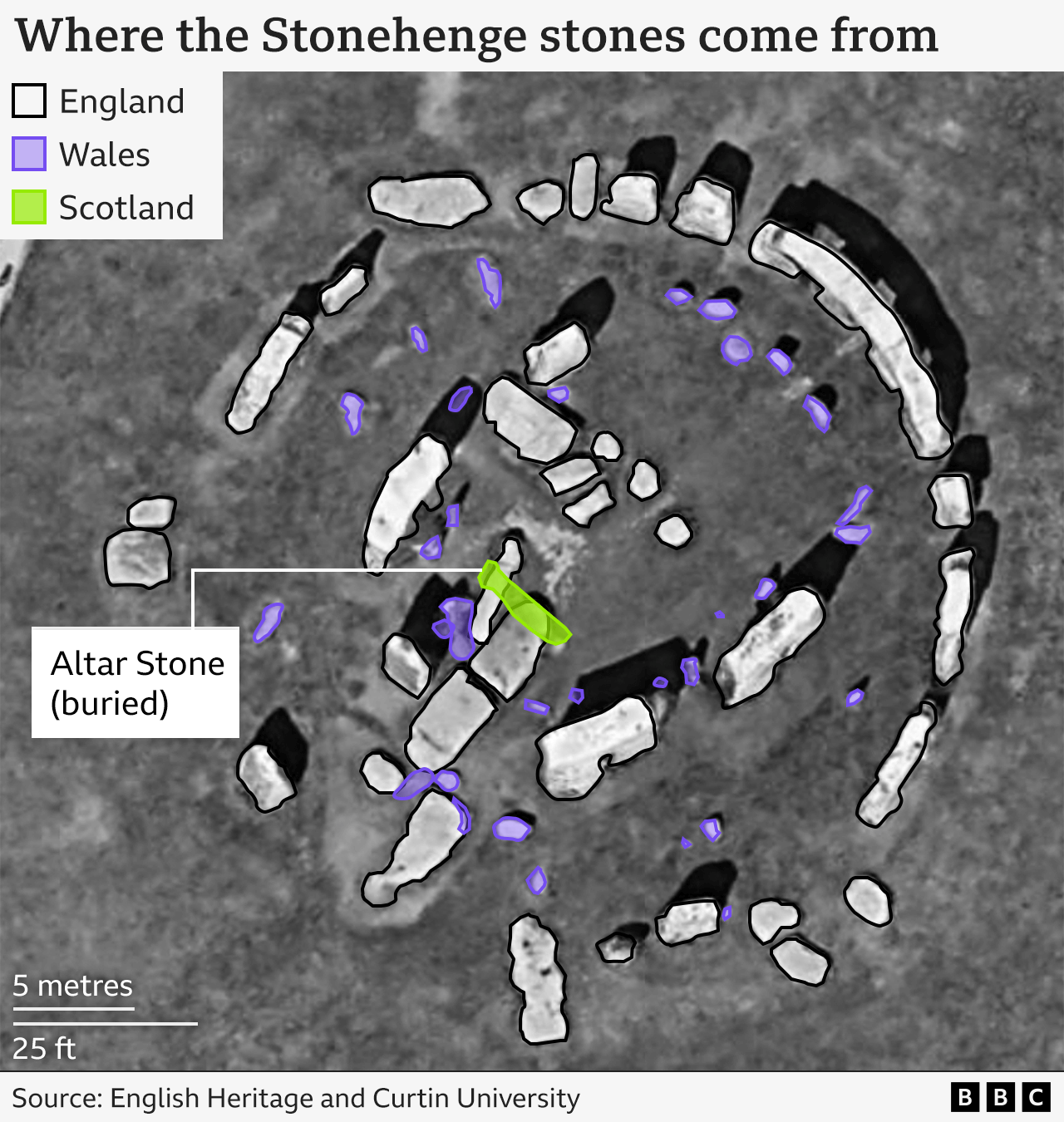
To understand the magnitude of the current scientific breakthrough, one must examine the baseline assumptions that guided archaeological research for much of the 20th century. H.H. Thomas, a pioneering geologist, famously posited in 1923 that the foreign stones of Stonehenge were sourced exclusively from Mynydd Preseli in southwest Wales. For decades, this hypothesis served as an unchallenged framework for capital allocation in heritage research, dictating where field expeditions were funded and where academic hypotheses were tested.
However, modern analytical techniques—including automated mineralogy, portable X-ray fluorescence (pXRF), and high-precision uranium-lead dating of zircon crystals—have unlocked unprecedented resolution in provenance studies. When researchers extracted a core sample from the Altar Stone, they anticipated finding the familiar igneous signature of Welsh dolerite. Instead, they uncovered an abundance of barium-rich feldspar and a distinct detrital zircon age profile that rendered a Welsh origin mathematically impossible.
The mineral composition of the Altar Stone matches the Old Red Sandstone formations of the Orcadian Basin, stretching across