Executive Takeaways
- The Strategic Pivot: CVS Health is formally dismantling its integrated healthcare conglomerate model, separating its retail pharmacy division from insurance and pharmacy benefit management (PBM) operations.
- Valuation Multiples & Market Pressure: Persistent margin compression in retail, sluggish enterprise ROI, and activist investor pressure forced executive leadership to reevaluate capital allocation strategies and infrastructure scalability.
- The End of an Era: The breakup signals a definitive structural retreat from the "one-stop-shop" healthcare consolidation thesis that dominated Wall Street throughout the late 2010s.
- Market Liquidity & Risk Mitigation: The spin-off aims to unlock hidden value, streamline regulatory compliance, and establish distinct capital structures tailored to divergent business models.
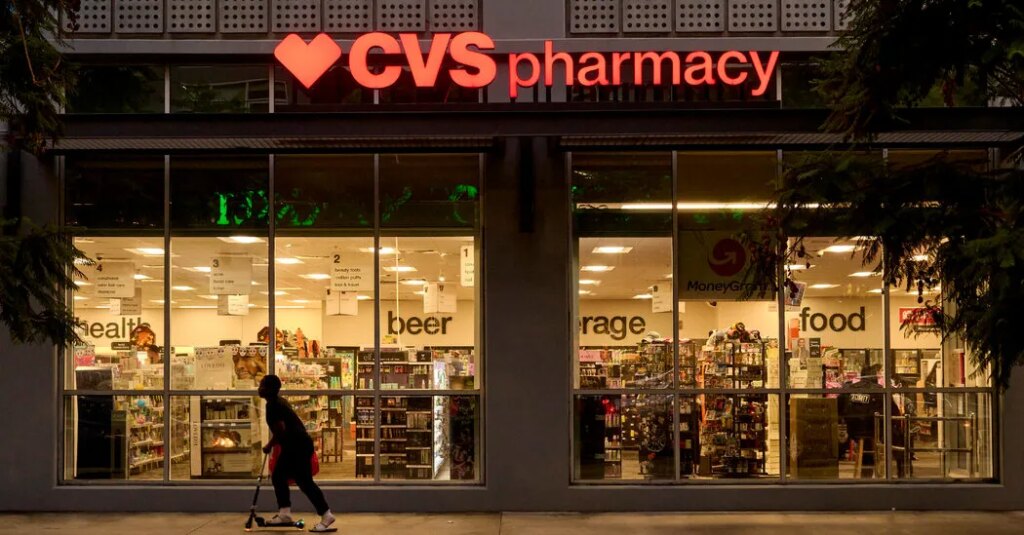
NEW YORK — In a defining moment for corporate America, CVS Health is preparing to execute one of the largest structural unbundling operations in modern business history. According to senior sources familiar with board deliberations, the healthcare titan is moving to split off its core pharmacy business, signaling the definitive collapse of the conglomerate model that reshaped the U.S. health sector over the past decade.
The decision to fracture the sprawling enterprise—which fused retail storefronts, commercial insurance underwriting through Aetna, and the pharmacy benefit management clout of Caremark—marks a historic tactical retreat. For years, executive suites across the Fortune 500 championed vertical integration as the ultimate hedge against market volatility. Today, however, persistent margin compression, mounting regulatory friction, and a widening disconnect between conglomerate valuation multiples and pure-play market realities have rendered the mega-conglomerate model obsolete.
The Catalytic Pressures: Why the Healthcare Conglomerate Model Collapsed
Test Our Free AI & Tech Utilities Suite
Calculate LLM API token costs, analyze article dwell-time, or simulate tech DCA returns.
The anatomy of CVS Health’s strategic reversal cannot be understood without examining the brutal economic realities facing retail and healthcare operators. When CVS acquired Aetna for $69 billion in 2018 and subsequently absorbed Oak Street Health and Signify Health, the thesis was straightforward: capture the consumer at every point of the healthcare continuum, optimize cloud compute architecture and data analytics across disparate business units, and drive sticky enterprise ROI.
Instead, the promised synergies collided with operational friction. Retail pharmacies, long the cash cows of the enterprise, transformed into low-margin, high-overhead liabilities. Surging labor costs, organized labor movements, pharmacy staff burnout, and aggressive reimbursement rate cuts from rival PBMs choked cash flow. Meanwhile, the insurance arm faced escalating medical loss ratios (MLRs) as post-pandemic healthcare utilization spiked unexpectedly across commercial and Medicare Advantage populations.
Investors responded by punishing the stock. Conglomerate discounts systematically eroded market capitalization, leaving CVS trading at valuation multiples drastically lower than its pure-play peers. Institutional shareholders grew increasingly vocal, demanding aggressive capital allocation overhauls and a radical simplification of corporate governance structures.
Anatomy of the Split: Restructuring Capital and Infrastructure

Executing a structural separation of this magnitude requires surgical precision. Corporate finance teams, working alongside external advisors, are currently mapping out a tax-free spin-off or carve-out initial public offering (IPO) for the retail pharmacy unit. This maneuver is designed to isolate the high-volume, low-margin retail storefronts from the high-margin, heavily regulated PBM and insurance pillars.
From an operational standpoint, the decoupling of enterprise technology stacks presents formidable challenges. Decades of post-merger integration created tightly coupled data repositories, shared supply chain logistics networks, and centralized administrative systems. Untangling these assets while maintaining continuous regulatory compliance—particularly concerning HIPAA and state pharmacy boards—will demand massive investments in infrastructure scalability and risk mitigation protocols.
Furthermore, the debt load associated with historical mega-mergers must be strategically apportioned. Maintaining adequate market liquidity and preserving investment-grade credit ratings for both resulting entities remains a paramount objective for the treasury department as debt-to-EBITDA ratios are recalibrated for standalone operations.
Verified Data & Metrics Breakdown
| Metric / Dimension | Pre-Split Conglomerate Structure | Post-Split Pure-Play Projections |
|---|---|---|
| Primary Revenue Drivers | Retail Pharmacy, PBM (Caremark), Health Insurance (Aetna), Health Services | Divergent entities: Dedicated Retail vs. Integrated Managed Care & PBM |
| Valuation Focus | Blended conglomerate multiple (historically discounted) | Sector-specific multiples aligning with retail peers and managed care leaders |
| Capital Allocation Strategy | Cross-subsidization across high- and low-margin business units | Targeted reinvestment, independent debt structuring, and focused M&A |
| Regulatory Exposure | Omnibus antitrust scrutiny across retail, PBM pricing, and insurance markets | Segmented regulatory compliance focused strictly on core operational domains |
Industry & Market Implications: Winners, Losers, and Economic Ripples
The unwinding of CVS Health’s conglomerate architecture sends shockwaves through the broader healthcare ecosystem. For competitors such as Walgreens Boots Alliance, UnitedHealth Group’s Optum division, and Cigna, the move forces an immediate strategic reassessment of their own vertically integrated models.
The Winners: Pure-play investors and activist shareholders emerge as immediate beneficiaries. By unlocking sum-of-the-parts valuations, institutional funds gain the ability to allocate capital directly to high-margin managed care operations without absorbing the secular headwinds of brick-and-mortar retail real estate. Additionally, specialized pharmacy competitors gain breathing room as CVS pivots away from aggressive cross-subsidization.
The Losers: Consumers seeking frictionless, single-source healthcare navigation may experience increased fragmentation. Furthermore, commercial landlords leasing prime retail spaces to CVS face heightened uncertainty regarding long-term store footprints as the standalone pharmacy entity optimizes its real estate portfolio for profitability rather than ecosystem support.
From a macroeconomic perspective, this unbundling signals a broader structural shift on Wall Street. The era of unchecked corporate agglomeration—driven by cheap debt and the pursuit of ubiquitous market share—has been decisively superseded by an emphasis on operational efficiency, balance sheet rigor, and core competency mastery.
Frequently Asked Questions (People Also Ask)
Why is CVS Health splitting off its pharmacy business now?
The decision is driven by persistent margin pressures in retail pharmacy, sluggish valuation multiples associated with the conglomerate model, and sustained pressure from institutional investors. Separating the units allows each business to optimize its capital structure, pursue targeted growth strategies, and eliminate conglomerate valuation discounts.
How will the separation impact existing Aetna insurance and Caremark PBM operations?
The managed care (Aetna) and pharmacy benefit management (Caremark) divisions will form a streamlined healthcare services powerhouse, unburdened by the capital requirements and operational complexities of managing thousands of physical retail storefronts. This allows management to focus heavily on medical loss ratio management and digital health integration.
Will retail CVS pharmacy locations close as a result of the split?
Immediate store closures are not an intended outcome of the structural separation. However, operating as an independent retail entity will subject storefronts to rigorous financial performance reviews. Underperforming locations face accelerated rationalization as management prioritizes enterprise ROI and store-level profitability.
What structural mechanism will CVS use to execute the breakup?
While final board approvals and regulatory filings remain underway, financial advisors indicate that a tax-free spin-off to existing shareholders is the most probable mechanism. This approach ensures market liquidity and maintains equitable equity distribution while cleanly severing operational ties.
Future Outlook: Key Milestones and What to Watch
As CVS Health transitions from planning to execution, market participants must monitor several critical milestones. First, official SEC filings detailing the formal separation structure, pro-forma financial statements, and proposed debt distribution will provide definitive clarity on valuation parameters.
Second, regulatory clearance from federal antitrust regulators, state insurance commissioners, and pharmacy boards will dictate the timeline of the unbundling process. Any scrutiny surrounding market concentration in PBM or insurance markets could introduce procedural delays.
Ultimately, CVS Health’s historic retreat from the conglomerate era serves as a watershed moment for corporate strategy. As other industry giants observe the market's reception of this unbundling, the verdict on vertical integration will be written—proving whether focused, pure-play operational excellence permanently outperforms the elusive promise of the all-in-one healthcare empire.