Executive Takeaways
- Unprecedented Commodity Inflation: Cocoa futures have surged past historical volatility bands, trading at record highs due to severe West African crop failures, root rot, and structural underinvestment in farm infrastructure.
- Structural Margin Compression: Confectionery giants including Hershey, Mondelez, and Mars are facing severe enterprise margin pressures, forcing aggressive capital allocation shifts toward shrinkflation, product portfolio rationalization, and forward-buying hedging strategies.
- Consumer Behavioral Shift: Retail data reveals a decisive pivot toward value-tier brands, alternative channels like dollar stores, and reduced volume purchases as households navigate compounding cost-of-living pressures.
- Strategic Risk Mitigation: Supply chain leaders are deploying advanced predictive analytics and exploring alternative sweeteners to safeguard operating margins ahead of peak seasonal liquidity windows.
For generations, the ritual of outfitting children in costumes and stocking up on bulk confectionery for trick-or-treaters has been an inviolable American tradition. Yet, as the autumn chill settles in, consumers walking down seasonal grocery aisles are experiencing a different kind of fright: sticker shock. The cost of Halloween this year has scaled unprecedented heights, turning what was once a modest seasonal expenditure into a notable line item in household budgets. Behind this retail phenomenon lies a complex, multi-layered macroeconomic crisis characterized by ruptured global supply chains, historical commodity shocks, and difficult strategic pivots by multinational consumer packaged goods (CPG) conglomerates.
To understand why a bag of fun-size chocolate bars now commands a price point that would have seemed improbable just three years ago, one must examine the intersection of agricultural distress, climate anomalies, and global financial liquidity. This is not merely a localized retail markup; it is the culmination of systemic vulnerabilities within the global soft commodities market, testing the risk mitigation strategies and operational resilience of the world’s largest food manufacturers.
The Anatomy of a Supply Shock: Cocoa, Sugar, and Climate Volatility
Test Our Free AI & Tech Utilities Suite
Calculate LLM API token costs, analyze article dwell-time, or simulate tech DCA returns.
The primary driver behind the spiraling cost of Halloween confectionery is an acute supply-side crunch in the cocoa market. Côte d'Ivoire and Ghana, which together account for roughly 60% of the global cocoa supply, have suffered back-to-back catastrophic crop seasons. A toxic combination of the El Niño weather phenomenon, torrential unseasonal rains, and the rapid spread of swollen shoot virus and black pod disease has devastated West African plantations. The resulting deficit has shattered historical pricing models.
For decades, cocoa traded within a relatively stable band, allowing enterprises to execute long-term hedging strategies with predictable valuation multiples. However, structural underinvestment in aging farming infrastructure, coupled with regulatory pricing frameworks that historically insulated local farmers from global market realities—preventing adequate capital reinvestment—created a ticking time bomb. When yields collapsed, the lack of market liquidity and depleted strategic reserves sent futures prices soaring to historic peaks, obliterating standard cost-of-goods-sold (COGS) projections for major confectioners.
Compounding the cocoa crisis is the persistent inflation in global sweetener markets. Raw sugar prices have remained elevated due to adverse weather in major production zones such as India and Thailand, while domestic U.S. sugar quotas and tariffs continue to artificially inflate input costs for manufacturers operating within American borders. When combined with surging packaging expenses—driven by higher resin and corrugated cardboard costs—and escalating logistics outlays across trucking and rail networks, the baseline cost structure for producing a single piece of Halloween candy has undergone a permanent upward re-rating.
Corporate Strategy and the Pivot to Shrinkflation
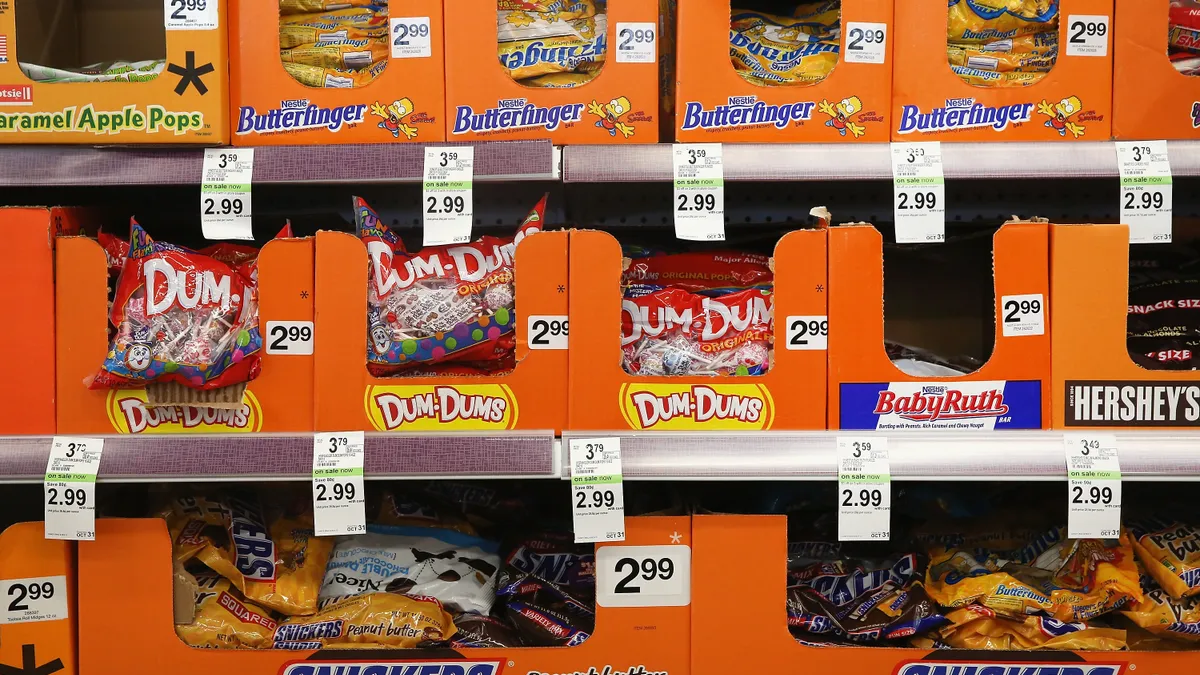
Facing compressed gross margins, confectionery executives have been forced to make difficult capital allocation decisions to protect shareholder value. Rather than passing the entirety of raw material inflation directly to consumers—a move feared to trigger catastrophic demand destruction—enterprises have deployed a sophisticated array of tactical responses.
The most visible among these is "shrinkflation," the practice of quietly reducing package sizes while maintaining or marginally increasing price points. Consumers purchasing traditional multi-packs this October will find fewer pieces per bag, lower net weights, and restructured variety mixes that substitute high-cost chocolate items with lower-cost sugar gummies and hard candies. This approach allows brands to maintain perceived price points while preserving operating margins through reduced unit volume.
Furthermore, major market players are utilizing advanced data analytics and consumer segmentation to optimize their revenue management frameworks. By closely monitoring enterprise ROI on seasonal marketing campaigns, companies are reallocating advertising budgets away from broad-based mass media and toward targeted digital promotions that drive high-margin impulse purchases. Simultaneously, supply chain engineers are re-evaluating cloud compute architecture and predictive inventory models to minimize waste and optimize distribution timing, ensuring that perishable holiday inventory clears shelves efficiently without requiring steep post-holiday liquidations.
Verified Data & Metrics Breakdown
The following comparative metrics illustrate the structural shifts in the confectionery sector and the broader macroeconomic environment influencing this year's Halloween spending:
| Metric / Indicator | Historical Baseline (2019) | Current Period (2024) | Percentage Change / Impact |
|---|---|---|---|
| Cocoa Futures (per metric ton) | ~$2,400 | ~$7,500 - $9,000+ | +250% to +300% |
| Average Seasonal Spend per Household | $86.30 | ~$103.65 | +20.1% |
| Average Price per Pound of Chocolate | $6.15 | $7.85 | +27.6% |
| Average Bag Net Weight (Fun-Size Mix) | 35.5 oz | 31.2 oz | -12.1% (Shrinkflation) |
Industry & Market Implications: Winners and Losers
The macroeconomic pressures reshaping the Halloween retail landscape are creating clear dichotomies between market beneficiaries and those bearing the brunt of the shock.
The Losers: Traditional mid-tier confectionery brands lacking deep pricing power are suffering the most. These entities cannot easily pass on skyrocketing input costs without precipitating severe volume drops. Furthermore, independent brick-and-mortar specialty retailers and boutique candy shops face severe margin erosion, as their wholesale procurement costs rise faster than their ability to re-price goods for local clientele.
The Winners: Multinational conglomerates with highly diversified product portfolios—spanning savory snacks, non-chocolate confections, and beverage divisions—are better positioned to absorb commodity shocks by cross-subsidizing their chocolate lines with higher-margin product categories. Additionally, discount retailers and dollar store chains are capturing significant market share as cash-strapped consumers trade down from premium grocery outlets to seek out value-oriented packaging and private-label alternatives.
From a broader economic perspective, the persistent stickiness of confectionery inflation serves as a micro-case study for central bankers monitoring consumer price indices. While headline inflation has cooled from its post-pandemic peaks, processed food and seasonal discretionary goods continue to reflect structural supply chain scars that will take years to fully remediate.
Frequently Asked Questions (People Also Ask)
Why are Halloween candy prices exceptionally high this year?
Candy prices have surged primarily due to an unprecedented global shortage of cocoa caused by crop failures in West Africa, compounded by rising sugar costs, expensive packaging materials, and elevated logistics expenses. Manufacturers are passing along these higher input costs to protect operating margins.
What is "shrinkflation" and how does it affect Halloween shopping?
Shrinkflation is a manufacturer strategy where the physical size, volume, or weight of a product is reduced while the retail price remains the same or increases. During Halloween, shoppers are finding fewer individual pieces inside standard multi-packs and variety bags compared to previous years.
Are non-chocolate candies experiencing the same level of inflation?
While non-chocolate items such as gummies, hard candies, and fruit chews have also experienced price increases due to sugar tariffs and general inflation, their price velocity is significantly lower than chocolate-based products because they do not rely on the distressed cocoa commodity market.
How can consumers mitigate the impact of high candy prices this season?
Shoppers can mitigate costs by purchasing alternative non-chocolate confections, shopping at discount and dollar retail channels, utilizing digital manufacturer coupons, and buying in bulk early or capitalizing on post-holiday clearance trends where applicable.
Future Outlook and Key Milestones to Watch
Looking ahead, the stabilization of the confectionery market depends heavily on the recovery of West African agricultural yields and the broader macroeconomic climate. Industry analysts will be closely monitoring several critical milestones over the coming quarters:
- West African Mid-Crop Reports: Early agricultural assessments from Côte d'Ivoire and Ghana will dictate whether cocoa futures stabilize or experience further volatility spikes.
- Consumer Elasticity Thresholds: Post-Halloween earnings reports from major CPG firms will reveal the exact point at which price resistance impacts total unit sales, guiding future corporate pricing strategies.
- M&A Activity and Portfolio Diversification: Expect accelerated investments in alternative, plant-based, and precision-fermented cocoa substitutes as enterprises seek structural risk mitigation against future climate-induced agricultural shocks.
- Regulatory Compliance and ESG Metrics: Increased scrutiny regarding sustainable sourcing and farmer compensation frameworks will require greater capital expenditure, permanently altering the cost-to-serve model for global confectionery brands.
Ultimately, while the current cost of Halloween reflects a painful adjustment period for households and corporations alike, it also acts as a powerful catalyst for modernization, forcing the global food supply chain to re-engineer its infrastructure for long-term resilience.