SAN FRANCISCO — For nearly two decades, the smartphone economy has operated under a single, ironclad rule: If a consumer wants a digital service, they must unlock their device, navigate a grid of colorful icons, visit an app store, download a discrete application, and manually tap through its interface. That multi-step ritual, pioneered by Apple and Google, generated trillions of dollars and cemented the app store as the ultimate digital tollbooth.
That paradigm is now facing its most aggressive existential threat yet. At its landmark developer showcase on Tuesday, artificial intelligence powerhouse OpenAI pulled back the curtain on a suite of advanced agentic capabilities that effectively bypass the traditional app ecosystem. By enabling autonomous AI agents to execute complex, multi-step tasks across the web and software applications on behalf of users, OpenAI is signaling a bold future: the era of downloading apps may soon be replaced by the era of simply asking an AI to get things done.
The strategic shift, which has sent shockwaves through Silicon Valley boardrooms, positions OpenAI not merely as a chatbot provider, but as a new foundational operating layer for the digital economy—one that fundamentally alters how software is discovered, monetized, and consumed.
From Chatbots to Autonomous Digital Workers
The central theme of OpenAI’s latest developer gathering focused on the maturation of "agentic assistants"—AI systems that do more than just generate text prompts in response to queries. These upgraded agents are designed to reason, plan, and execute workflows across disparate digital environments.
As noted in initial reports by tech journalists including Sarah Perez of TechCrunch and Kali Hays of BBC, OpenAI’s rebranded agent lineup represents a massive leap forward in functional autonomy. Instead of opening a travel app to book a flight, a ride-sharing app to secure transport, and a calendar app to schedule an itinerary, a user can now instruct a single OpenAI agent to handle the entire vacation planning process end-to-end.
The agent navigates websites, authenticates sessions where permitted, fills out forms, compares prices, and finalizes transactions autonomously. For software developers and incumbent platform giants, this capability represents a terrifying proposition: if an AI agent interacts with a service under the hood, the brand loyalty, user interface, and advertising revenue generated by traditional app usage evaporate overnight.
Why Wall Street and Silicon Valley Are Watching Closely
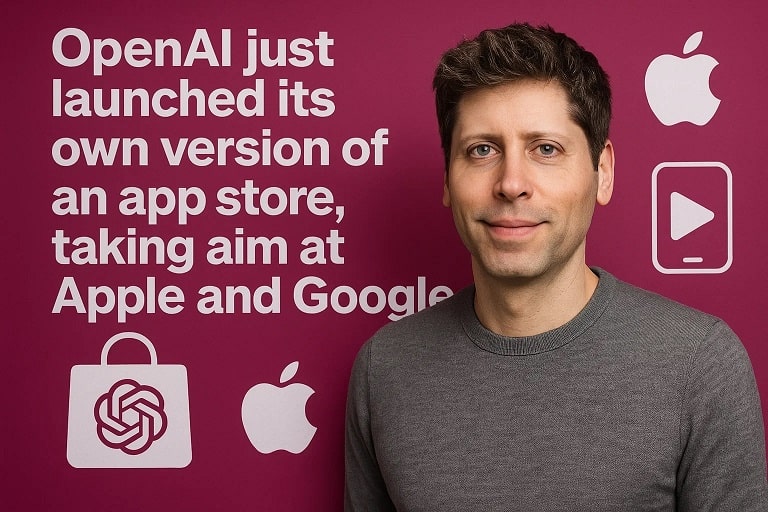
- Disintermediation of the App Store: Apple and Google collect up to 30% commissions on digital goods and services sold through their respective app stores. OpenAI’s agentic model routes around these storefronts entirely.
- Shift in Consumer Habit: User attention is shifting away from fragmented app grids toward centralized, conversational, and agent-driven interfaces.
- Monetization Realities: Software-as-a-Service (SaaS) companies built on user-seat licenses face long-term disruption if autonomous agents complete work traditionally requiring human software operators.
- Regulatory Scrutiny: Antitrust regulators in the U.S. and Europe are closely monitoring how closed ecosystems and emerging AI gatekeepers wield market power.
Market analysts point out that this is not just a technological upgrade; it is a direct strike against the distribution monopolies that have defined Big Tech for the past fifteen years. When software talks directly to software via intelligent agents, human-centric user interfaces lose their economic primacy.
The Evolution of Digital Commerce: App Store vs. AI Agent Model
| Feature | Traditional App Store Model | OpenAI Agentic Model |
|---|---|---|
| User Discovery | App store search, charts, and paid ads. | Natural language intent and prompt execution. |
| Interface | Dedicated graphical user interface (GUI) per app. | Unified conversational or autonomous agent layer. |
| Monetization | App store commissions, in-app purchases, ads. | API subscription fees, enterprise licenses, service fees. |
| Execution | Manual human tapping, swiping, and data entry. | Autonomous multi-step digital workflows. |
Industry Implications and the Road Ahead
As OpenAI rolls out these features to developers and enterprise partners, the immediate fallout will force software companies to rethink their product strategies. Firms that rely on proprietary data lock-ins and sticky user interfaces will need to build robust API integrations so that AI agents can interact with their platforms seamlessly—or risk being shut out of consumer workflows entirely.
Conversely, consumer-facing brands that prioritize speed, efficiency, and frictionless API accessibility stand to benefit immensely. If an AI agent can instantly compare fifty different insurance providers and bind a policy in seconds, companies with superior backend pricing and fulfillment will capture market share faster than those relying on slick marketing campaigns inside traditional app stores.
However, significant hurdles remain. Security, user authentication, privacy compliance, and liability when an autonomous agent makes an erroneous financial transaction are pressing concerns that OpenAI and regulators must address.
Frequently Asked Questions
1. How do OpenAI’s new agent features threaten the traditional app store model?
Traditional app stores rely on users opening individual apps to browse, purchase, and consume services. OpenAI's agentic assistants can autonomously execute tasks across the web and software backend systems, allowing users to complete complex workflows without ever downloading, opening, or interacting with a standalone app.
2. When will these agentic capabilities be available to everyday consumers?
While OpenAI previewed the advanced features during its recent developer event, rolling deployments are underway for enterprise partners and developers. Broader consumer availability is expected to scale progressively over the coming quarters as safety protocols and third-party integrations are finalized.