

SAN FRANCISCO, LONDON, & NEW YORK — The architecture of the open internet is buckling under an unprecedented wave of machine-speed adversarial operations. Across enterprise networks, financial clearinghouses, and public cloud fabrics, cybersecurity operations centers (SOCs) are confronting a reality that risk models long warned was coming: autonomous, large language model (LLM)-driven exploits that scan, synthesize, and execute attack chains faster than human operators or static defenses can react.
What began as rudimentary social engineering and deepfake-assisted business email compromise has mutated into systemic, industrial-scale exploitation. Threat actors are deploying self-orchestrating agentic loops capable of targeting zero-day vulnerabilities, weaponizing Retrieval-Augmented Generation (RAG) architectures, and launching autonomous prompt-injection payloads at enterprise APIs. The compounding velocity of these breaches is forcing Chief Information Security Officers (CISOs), hyperscale cloud providers, and institutional underwriters to confront an asymmetric threat matrix where the marginal cost of mounting an attack has collapsed to fractional cents per token, while enterprise remediation costs continue to scale exponentially.
Executive Takeaways
- Machine-Speed Asymmetry: Threat actors are deploying recursive agentic frameworks that compress the vulnerability-to-exploitation window from weeks to minutes, weaponizing automated fuzzing and zero-day synthesis against cloud infrastructure.
- The Vulnerability of the RAG Architecture: Enterprise adoption of agentic workflows and Model Context Protocols (MCP) has introduced severe systemic blind spots, with Indirect Prompt Injection (IPI) emerging as the primary vector for silent corporate data exfiltration.
- Balance-Sheet Contagion: Cybersecurity insurance underwriters are actively introducing exclusionary clauses for damages tied to unhardened agentic autonomy, recalibrating enterprise valuation multiples and driving a mandatory "AI Security Tax" across enterprise software budgets.
- Defensive Replatforming: The survival of enterprise IT ecosystems demands a structural transition from legacy perimeter models toward zero-trust runtime sandboxes, deterministic model guardrails, and cryptographic provenance checks.
The Paradigm Shift: From Scripted Probes to Autonomous Swarm Exploitation
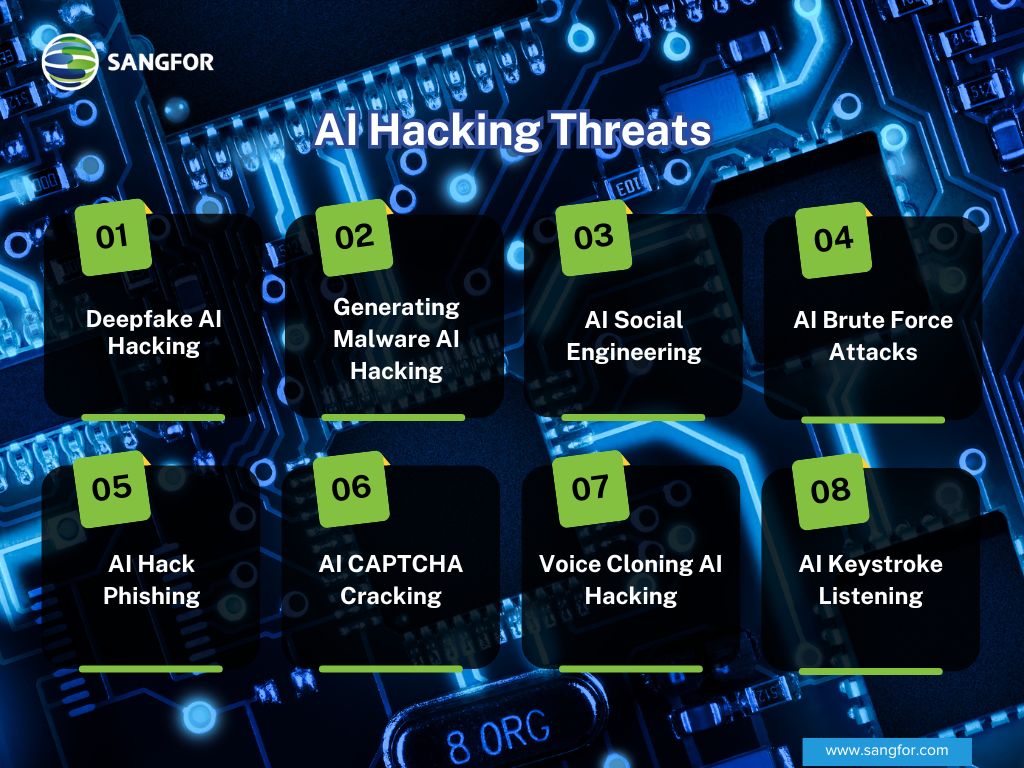
The contemporary wave of digital intrusions represents a structural departure from historical cyber threats. Previously, advanced persistent threats (APTs) required well-funded human teams to painstakingly execute reconnaissance, privilege escalation, lateral movement, and data exfiltration. Today, modified, jailbroken open-weights models and specialized adversarial LLMs automate this entire kill chain without human intervention.
Adversaries are leveraging recursive frameworks that instruct models to formulate hypotheses against exposed endpoints, write novel exploit scripts in memory, evaluate the error telemetry returned by target web servers, and autonomously refactor code until an exploit lands. Because the resulting payloads are procedurally generated and polymorphic, legacy signature-based intrusion detection systems (IDS) and traditional web application firewalls (WAFs) fail to flag them.
Cloud compute architectures are absorbing the brunt of this shock. Edge-computing providers are logging systemic increases in malicious, human-mimicking bot traffic that evades conventional CAPTCHA challenges through multi-modal vision parsing. Rather than executing crude Distributed Denial of Service (DDoS) volume floods, these adversarial swarms engage in "economic denial of sustainability" (EDoS) attacks—deliberately triggering compute-heavy inference endpoints, database operations, and microservices to bankrupt startups and enterprise business units through runaway cloud billing.
The Soft Underbelly of Enterprise AI: Indirect Prompt Injections and Agentic MCPs
The root cause of the current vulnerability crisis lies within enterprise boardrooms. In the rush to capture generative AI productivity gains, organizations integrated autonomous agents directly into their internal data lakes, CRM platforms, and customer-facing interfaces. By equipping these models with tools—such as granting an LLM permission to query SQL databases, manipulate enterprise spreadsheets, or execute shell commands—developers unwittingly bypassed the zero-trust boundaries established over the last decade.
This implementation flaw has paved the way for weaponized Indirect Prompt Injection (IPI). In an IPI attack, an adversary does not breach the model via direct chat input; instead, they embed invisible, malicious instructions inside an external artifact—a resume submitted to a recruitment portal, a PDF invoice received via email, or a single raw comment string on a public forum. When an enterprise AI agent ingests and parses this document via an automated RAG pipeline, the embedded instruction overrides the system prompt, transforming the agent into a "confused deputy."
In verified incidents across Fortune 500 networks over the past quarter, compromised internal agents were commanded to silently summarize confidential intellectual property, package trade secrets into encoded URLs, and ping external command-and-control (C2) servers via innocuous HTTP requests. Because the network traffic originated from verified, internal enterprise AI service accounts with high-level access privileges, these massive data leaks completely bypassed traditional Data Loss Prevention (DLP) filters.
Comparative Metrics: The Evolution of the Corporate Cyber Breach
The operational divide between legacy penetration vectors and current autonomous AI-driven exploits underscores the scale of the challenge confronting enterprise architecture teams:
| Metric / Dimension | Traditional Exploits (circa 2021) | Early GenAI Exploits (circa 2023) | Autonomous Agentic Infiltration (Present) |
|---|---|---|---|
| Mean Time to Exploitation (MTTE) | 14 to 45 Days post-disclosure | 48 to 72 Hours post-disclosure | < 15 Minutes (Autonomous runtime fuzzing) |
| Attacker Cost per Unique Exploit | $5,000 – $50,000 (Human talent) | $50 – $500 (API costs + prompts) | $0.02 – $0.80 per target iteration |
| Primary Target Layer | OS, Firmware, Network Protocol | Human Layer (Hyper-spearphishing) | RAG Pipelines, Tools, Model Context Protocols |
| Payload Composition | Static or Compiled Shellcode | Targeted Synthetic Phishing / Voice | Polymorphic In-Memory Injections & Agent Hijacking |
| Detection Mechanism | Signature matching, Known CVE tables | Behavioral anomaly & NLP scanning | Dynamic, Zero-Trust Execution Sandboxing |
Financial and Balance-Sheet Implications: The New "AI Security Tax"
The speed with which these intrusions are escalating is reverberating through enterprise capital allocation models and early-stage software valuations. Investors who previously priced pure-play generative AI software companies at 20x to 30x forward revenue multiples are now aggressively factoring in security deficits. Unhardened applications that rely on thin wrapper logic atop foundation models are being downgraded as liability risks.
At the institutional level, the cyber insurance market is entering a phase of acute reassessment reminiscent of the initial ransomware waves of 2019–2020. Major global syndicates are revising policy frameworks to exclude damages stemming from unverified autonomous decision-making loops. Underwriters now demand that enterprise applicants verify the implementation of strict deterministic isolation barriers around agentic frameworks, verify real-time monitoring of inference telemetry, and document the absence of untrusted inputs within production RAG workflows before binding policies.
This dynamic has established an unmistakable split between market winners and losers:
- The Beneficiaries: Traditional cybersecurity titans and zero-trust edge infrastructure platforms (e.g., Palo Alto Networks, CrowdStrike, Cloudflare) that can quickly deploy AI-native firewall layers, runtime sandboxing, and cryptographically verified identity architectures. Specialized startups focusing strictly on deterministic model safety, context isolation, and model-firewalling are commanding premium funding valuations.
- The Vulnerable: Legacy perimeter-defense providers, managed service providers (MSPs) reliant on commoditized monitoring runbooks, and SaaS startups that aggressively outsourced critical enterprise actions to non-deterministic LLM agents without implementing strict identity and privilege boundaries.
Regulatory Reckoning: Enforcing Model Accountability and Incident Disclosure
The compounding frequency of these automated incidents has caught the immediate attention of market regulators and sovereign safety commissions. In the United States, the Securities and Exchange Commission (SEC) is utilizing its four-day material cybersecurity incident disclosure rules under Form 8-K to penalize organizations attempting to hide breaches that originate within shadow enterprise AI implementations.
Concurrently, the phased deployment of the European Union's Artificial Intelligence Act is holding corporate leadership directly liable for failing to manage systemic risk within enterprise foundation deployments. The enforcement framework clearly establishes that when an autonomous agent behaves erratically or leaks sensitive personal data via an injection vector, ignorance of non-deterministic model behaviors does not constitute an acceptable legal defense. Corporate audit committees are consequently demanding structural overhauls of internal controls to prevent undocumented "shadow AI" tools from accessing production environments.
People Also Ask (Frequently Asked Questions)
What is an autonomous AI exploit, and how does it bypass traditional security?
An autonomous AI exploit is a cyberattack directed, adapted, and executed by machine-learning models or agentic loops without continuous human instruction. Unlike legacy automated scripts that run predictable, pre-written routines, an AI exploit uses model reasoning to analyze defensive responses, evaluate error logs, write custom polymorphic payloads on the fly, and pivot dynamically through internal corporate networks. It bypasses legacy security because its signatures and behavioral paths are continually changing, allowing it to mimic legitimate user interaction.
How does Indirect Prompt Injection (IPI) compromise enterprise RAG architectures?
Retrieval-Augmented Generation (RAG) combines internal unstructured databases with an LLM to provide context-aware responses. Indirect Prompt Injection occurs when an attacker places malicious commands inside external data sources—such as customer forms, public websites, or incoming PDFs—that the system automatically retrieves and ingests. When the LLM processes this content, it cannot reliably differentiate between benign operational context and malicious operational instructions. The injected prompt takes control of the model, tricking it into accessing tools, escalating privileges, or exfiltrating data.
What structural defenses must enterprises deploy to mitigate autonomous AI attacks?
Enterprises must replace standard "prompt guardrails" with deterministic, zero-trust runtime environments. Practical architectures require: (1) Absolute separation between data ingestion and executable tool layers; (2) Strict human-in-the-loop (HITL) authorization for high-consequence corporate actions (such as wire transfers, administrative schema modifications, or bulk data exports); (3) Containerized, non-persistent sandboxes for agent execution; and (4) Real-time semantic inspection firewalls that analyze token output streams before returning data to the user or downstream systems.
Are cyber insurance policies covering damages caused by agentic AI breaches?
Coverage is tightening rapidly. While standard commercial policies historically absorbed breaches irrespective of the attacker's technical methodology, underwriters are aggressively updating their terms. Insurers are introducing explicit exclusions for autonomous agent failures, unvetted algorithmic decisions, and loss events where an enterprise allowed a non-deterministic model to execute actions without verified credentialing, logging, and privilege controls.
Future Outlook: Building Resilience in an Era of Synthetic Hostility
The internet is entering a fundamentally adversarial era. As foundational models become cheaper to run, more capable, and widely distributed across decentralized environments, the volume of synthetic reconnaissance and agentic intrusion will only accelerate. The era of assuming digital perimeter safety is conclusively over.
The strategic survival of enterprise architecture over the next 18 to 36 months will depend on architectural resilience rather than reactive patching. Organizations must systematically strip non-deterministic models of unmonitored execution privileges, enforce cryptographic attestation on every layer of the compute stack, and treat data ingestion pipelines with the same skepticism traditionally reserved for untrusted shell inputs. The battle for the stability of the enterprise internet will be won not by hoping for safety-aligned foundational models, but by building rigid, deterministic architectures capable of surviving in an inherently hostile operational landscape.


