Executive Takeaways
- Historic Retrenchment: Big Tech’s combined cash returned to shareholders via dividends and buybacks has slumped to a 15-year low relative to operating cash flow, marking a structural end to the post-pandemic return-of-capital boom.
- The Trillion-Dollar AI Bet: Hyperscalers are diverting billions from market liquidity to fund unprecedented infrastructure scalability, custom silicon design, and aggressive cloud compute architecture buildouts.
- Shifting Valuation Metrics: Wall Street is recalibrating valuation multiples, moving away from near-term free cash flow (FCF) yield toward long-term enterprise ROI and infrastructure monetization timelines.
- Boardroom Pressure: Institutional investors are increasingly demanding rigorous risk mitigation and clearer capitalization frameworks as capital allocation priorities shift from shareholder remuneration to survival-of-the-fittest AI dominance. >
For more than a decade, the world’s most dominant technology conglomerates—Alphabet, Amazon, Apple, Meta, and Microsoft—functioned not just as engines of digital innovation, but as unstoppable cash-generating utilities. Investors came to rely on predictable, multi-billion-dollar share repurchase programs and steadily rising dividends as cornerstones of institutional and retail portfolios. Today, that financial paradigm is undergoing its most radical transformation since the dawn of the cloud computing era.
According to comprehensive financial disclosures and market liquidity analyses, Big Tech has returned the smallest share of its generated cash to shareholders in 15 years. The culprit is not a sudden collapse in revenues or a systemic failure of core digital advertising and enterprise software units. Rather, it is the staggering, insatiable capital expenditure (CapEx) required to fund the artificial intelligence revolution. As executive boards race to secure proprietary data centers, specialized GPUs, and advanced energy grids, shareholder remuneration has officially taken a back seat to the race for artificial general intelligence (AGI).
The Catalyst: When Software Met Heavy Industry
Test Our Free AI & Tech Utilities Suite
Calculate LLM API token costs, analyze article dwell-time, or simulate tech DCA returns.
To understand the magnitude of this pivot, one must examine the fundamental economics of modern tech monopolies. For years, the major technology firms enjoyed asset-light business models. Once software code was written or server architecture optimized, incremental revenue carried exceptionally high margins, generating rivers of free cash flow that routinely exceeded net income.
The generative AI boom, catalyzed by the widespread adoption of large language models, shattered this asset-light reality. Training and inferencing advanced frontier models require unprecedented amounts of electrical power, hyper-dense server racks, and advanced cooling systems. Big Tech has effectively transformed from asset-light software giants into capital-intensive industrial conglomerates.
During the most recent trailing twelve-month reporting period, combined capital expenditures across the primary hyperscalers surged past previous historical records. To fund these massive outlays without jeopardizing credit ratings or tapping restrictive debt markets at elevated interest rates, corporate treasurers tapped directly into the pools of capital previously earmarked for equity buybacks and special dividends. The result is a historic contraction in cash returned to investors, dropping the aggregate payout ratio to levels not witnessed since the aftermath of the 2008 global financial crisis.
Deconstructing the Balance Sheet Reallocation
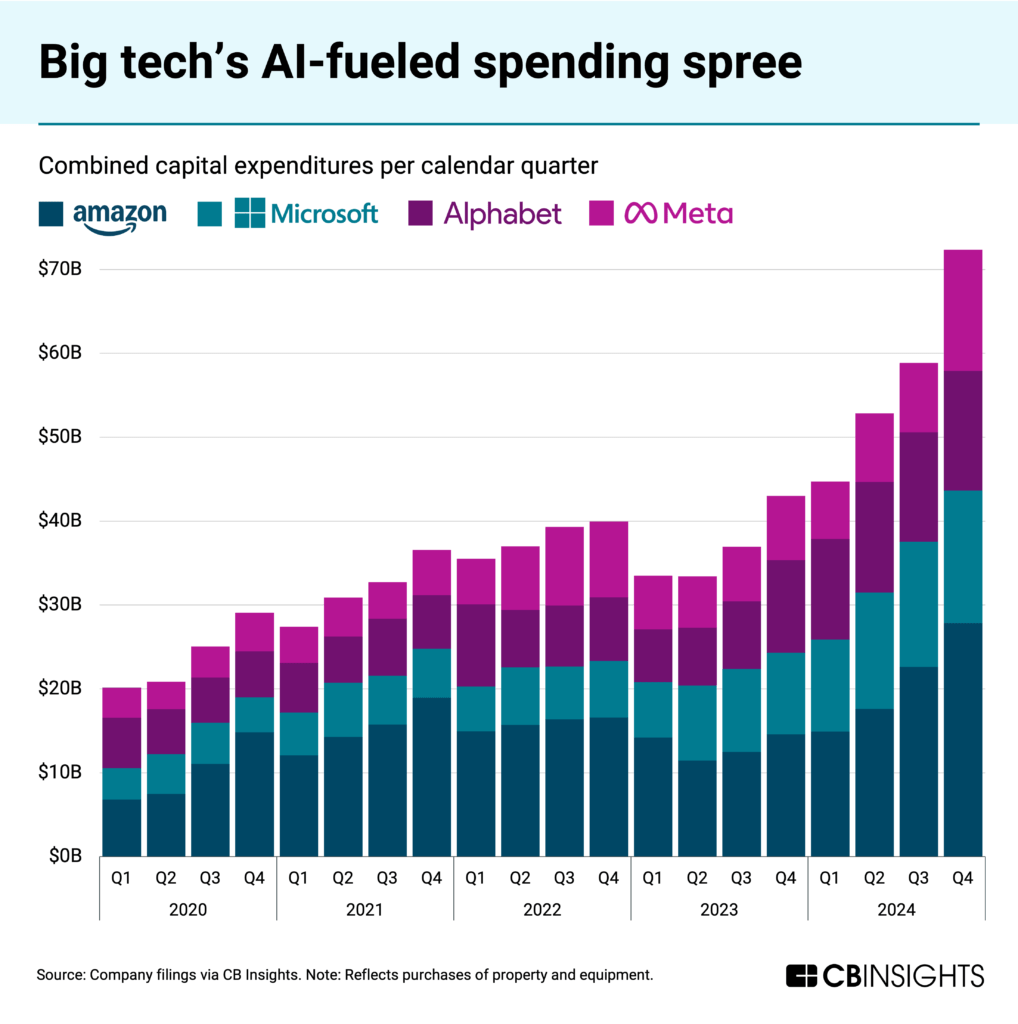
A granular look at corporate filings reveals precisely how capital allocation strategies have shifted. Historically, companies like Apple and Microsoft returned upwards of 80% to 100% of their free cash flow to shareholders. Today, that metric has compressed dramatically as cash is diverted toward long-term infrastructure assets.
Corporate finance committees are wrestling with complex valuation multiples and return on invested capital (ROIC) equations. While Wall Street historically rewarded buyback programs for artificially boosting earnings per share (EPS), current market sentiment demands immediate, aggressive investment in cloud compute architecture to prevent disintermediation by agile venture-backed startups.
Furthermore, regulatory compliance and antitrust scrutiny surrounding large-scale mergers and acquisitions have effectively blocked Big Tech from deploying excess cash via traditional inorganic growth channels. Consequently, internal R&D and physical infrastructure expansion remain the primary conduits for excess capital, altering the risk-reward profile for long-term equity holders.
Verified Data & Metrics Breakdown
| Metric Category | Historical Average (2015–2020) | Current Period (Trailing Twelve Months) | Strategic Implication |
|---|---|---|---|
| Shareholder Payout Ratio (% of FCF) | 78.4% | 41.2% | Drastic reduction in direct capital return to prioritize infrastructure. |
| Combined Hyperscaler CapEx | ~$65 Billion (Annualized) | ~$215 Billion (Annualized) | Unprecedented physical buildout of data centers and specialized silicon. |
| Aggregate Share Buybacks | Steadily Expanding (+8% YoY) | Flat to Contracting (-14% YoY) | Treasuries prioritizing liquidity preservation over EPS manipulation. |
| Energy & Real Estate Commitments | Minimal Long-term PPAs | Multi-gigawatt Nuclear & Solar PPA's | Securing power generation to guarantee operational continuity. |
Industry & Market Implications: Winners and Losers
The sudden pivot away from shareholder cash returns toward heavy capital expenditure is reshaping the broader financial ecosystem, creating distinct winners and losers across global markets.
The Winners
- Semiconductor & Hardware Manufacturers: Makers of advanced accelerators, networking gear, and custom silicon find themselves in an unprecedented demand supercycle, capturing immense gross margins.
- Energy Infrastructure Providers: Nuclear energy operators, electrical grid equipment manufacturers, and renewable energy developers are reaping the rewards of Big Tech's desperate need for reliable power.
- Enterprise Cloud Dominators: Firms that successfully monetize AI-as-a-service layers will ultimately justify these massive CapEx cycles through sticky, high-margin subscription renewals.
The Losers
- Income-Focused Equity Funds: Institutional portfolios dependent on consistent dividend growth from mega-cap technology stocks are forced to reallocate capital into traditional value sectors like utilities and financials.
- Short-Term Oriented Retail Investors: Investors accustomed to immediate stock price elevation driven by aggressive quarterly buyback announcements face a more volatile, growth-dependent valuation environment.
- Second-Tier Competitors: Smaller tech firms unable to match the multi-billion-dollar infrastructure spending of the top hyperscalers risk structural obsolescence in core AI capabilities.
Frequently Asked Questions (People Also Ask)
Why are technology companies reducing share buybacks and dividends right now?
Big Tech firms are facing unprecedented capital expenditure requirements driven by the artificial intelligence boom. Building and maintaining next-generation data centers, acquiring specialized AI chips, and securing massive energy contracts require billions of dollars in liquidity. Consequently, corporate treasuries are reallocating funds away from shareholder distributions and into physical and technological infrastructure.
Does this drop in cash returns signal fundamental weakness in Big Tech?
No. Core operating cash flows for companies like Alphabet, Microsoft, Apple, and Meta remain exceptionally robust. The reduction in cash returned to shareholders is a deliberate, strategic choice of capital allocation rather than a symptom of financial distress or declining operational health.
How long is this capital-intensive AI spending cycle expected to last?
Wall Street analysts and industry executives project that heavy infrastructure spending will remain elevated for the next several years. As the competitive landscape matures and AI models achieve broader enterprise monetization, capital expenditure is expected to normalize, potentially allowing shareholder return programs to rebound.
How are institutional investors reacting to the decline in free cash flow yields?
Institutional response is mixed but pragmatic. While some income-oriented funds have expressed concern over lower immediate payouts, long-term growth investors generally support the spending, provided that corporate leadership demonstrates a clear path toward robust enterprise ROI and sustainable competitive advantages.
Future Outlook & Key Milestones to Watch
As Big Tech navigates this uncharted capital allocation territory, the coming quarters will serve as a definitive stress test for executive leadership. The central question facing the market is no longer whether these companies can generate extraordinary amounts of cash, but whether that cash is being deployed into projects that will yield acceptable long-term returns.
Key milestones for market observers to monitor include:
- Monetization Conversion Rates: Measurable transition from infrastructure CapEx announcements to actual recurring enterprise software revenue derived from AI assistants and automated workflows.
- Energy Supply Security: The successful execution of long-term power purchase agreements (PPAs), particularly involving nuclear and clean energy microgrids designed to bypass constrained public electrical grids.
- Sustained pressure on operating margins versus efficiency gains achieved through proprietary custom silicon deployments.
- Shifts in macroeconomic monetary policy that could alter corporate borrowing costs and influence treasury decisions regarding debt-funded buybacks versus internal reinvestment.
Ultimately, Big Tech is gambling its near-term financial comfort for generational market dominance. If the AI bet pays off, the temporary contraction in shareholder returns will be viewed as a masterstroke of visionary capital allocation. If the anticipated enterprise ROI fails to materialize, corporate boards will face a severe reckoning from disappointed equity holders.