Executive Takeaways
- The Paradigm Shift: Decades of public health mandates favoring low-fat dairy are being aggressively dismantled by contemporary epidemiological studies and randomized controlled trials.
- Economic & Market Disruption: CPG conglomerates, agricultural cooperatives, and alternative beverage producers face massive capital reallocation and portfolio restructuring as consumer preferences pivot toward whole-fat products.
- Methodological Corrections: Modern nutritional epidemiology is moving away from reductionist single-nutrient models, prioritizing the "food matrix" effect—how the complex structural interactions of fats, proteins, and probiotics alter metabolic risk profiles.
- Regulatory & Institutional Lag: Global health agencies face increasing scrutiny over legacy dietary guidelines, accelerating calls for risk mitigation frameworks that reflect current empirical evidence. >
For more than half a century, the global consumer was subjected to a singular, unwavering nutritional dogma: eliminate dietary fat to protect your cardiovascular system. From institutional school lunch programs to clinical dietary guidelines, full-fat dairy products—whole milk, artisan cheeses, and traditional butter—were systematically cast as dietary liabilities. This ideological war on lipids re-engineered supermarket aisles, spawned multi-billion-dollar low-fat manufacturing infrastructure, and fundamentally altered global agricultural supply chains.
Today, that foundational pillar of public health policy is fracturing. A critical mass of peer-reviewed research, long-term prospective cohort studies, and meta-analyses published in leading medical journals suggests that the demonization of full-fat dairy was not only scientifically premature but profoundly misguided. As institutional investors adjust their capital allocation strategies across the consumer packaged goods (CPG) sector, the scientific community is reckoning with a profound question: How did mainstream nutritional science miss the mark for generations, and what are the sweeping market and health implications of this correction?
The Genesis of a Dietary Orthodoxy: Historical Context and Policy Lock-In
Test Our Free AI & Tech Utilities Suite
Calculate LLM API token costs, analyze article dwell-time, or simulate tech DCA returns.
To understand the current pivot in nutritional science, one must examine the mid-20th-century origins of the diet-heart hypothesis. In the post-World War II era, soaring rates of myocardial infarctions among middle-aged men catalyzed an urgent search for culprits. Pioneering work by physiologist Ancel Keys posited a direct linear relationship between the consumption of saturated fatty acids, elevated serum cholesterol, and coronary heart disease (CHD).
Despite contemporary scientific debate—most notably from British nutritionist John Yudkin, who argued that refined sugar was the primary driver of metabolic syndrome—Keys' lipid hypothesis gained institutional capture. By 1977, the United States Senate Select Committee on Nutrition and Human Needs issued the "Dietary Goals for the United States," formally advising the public to reduce fat intake to 30 percent or less of total daily calories, with a strict sub-ceiling on saturated fats.
This policy pivot initiated a half-century of infrastructural transformation. Dairy processors invested heavily in skimming technology, membrane filtration, and artificial additive stabilization to manufacture palatable low-fat and non-fat alternatives. Supermarket shelves expanded their footprints for skim milk and reduced-fat cheeses, while food scientists engineered hyper-palatable formulations, frequently substituting depleted milk fats with refined carbohydrates, added sugars, and chemical thickeners to preserve texture and consumer appeal.
However, recent epidemiological reviews indicate that these early policy frameworks suffered from critical methodological vulnerabilities. Confounding variables—such as concurrent rises in sedentary lifestyles, hyper-processed food consumption, and smoking rates—were frequently underspecified, while the biochemical complexity of whole foods was reduced to isolated macronutrients.
The Empirical Reversal: What Modern Research Reveals
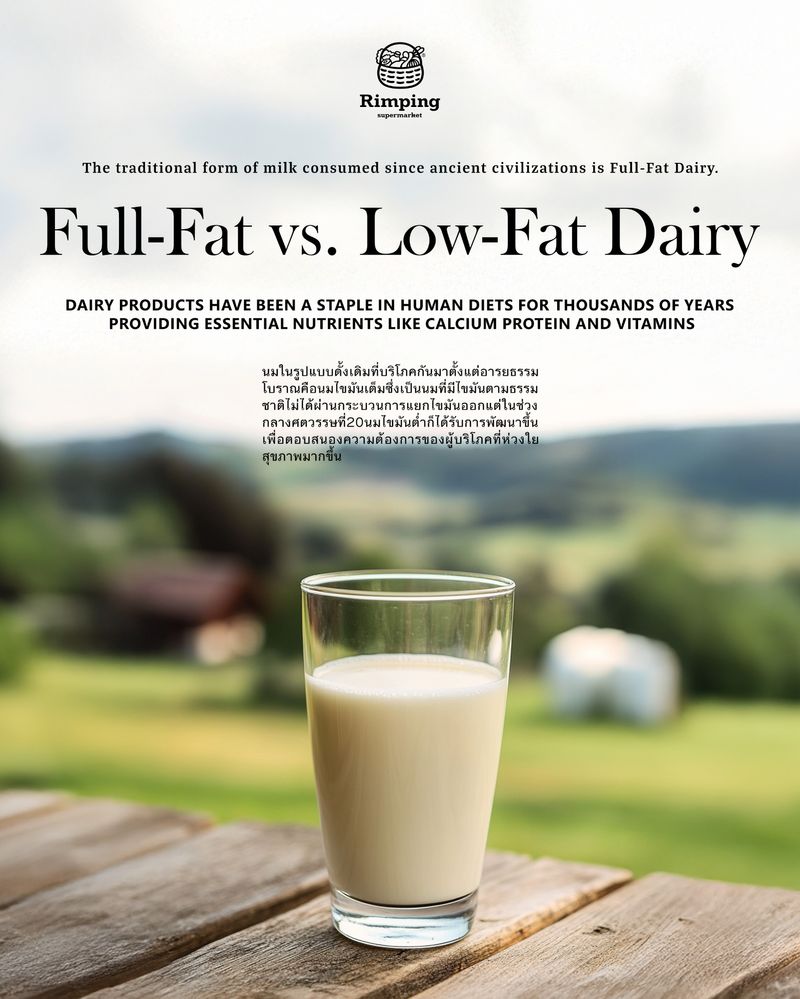
The erosion of the low-fat consensus has not happened overnight. It represents the cumulative output of rigorous longitudinal investigations tracking tens of thousands of participants across decades, immune to the short-term industry funding biases that historically plagued nutritional research.
A landmark study published in The Lancet, drawing from the Prospective Urban Rural Epidemiology (PURE) cohort—which encompassed over 130,000 individuals across 21 countries—challenged the foundational tenets of saturated fat avoidance. The PURE data demonstrated no significant association between total dairy consumption and major cardiovascular disease or mortality. In fact, higher consumption of whole-fat dairy was inversely associated with cardiovascular events and stroke.
Biochemists and nutritional epidemiologists now point to the "food matrix" as the primary explanatory mechanism. Milk, cheese, and yogurt are not merely delivery systems for saturated fatty acids; they are complex biochemical matrices containing a dense array of bioactive compounds:
- Specific Fatty Acids: Odd-chain saturated fatty acids (such as pentadecanoic and heptadecanoic acid), which are predominantly found in dairy fat, serve as biomarkers for dairy intake and are consistently associated with a lower risk of type 2 diabetes and cardiovascular disease.
- Calcium and Phosphorus Matrices: Minerals bound within the dairy matrix interact with fatty acids in the gut, forming insoluble soaps that are excreted rather than absorbed, thereby mitigating potential spikes in serum low-density lipoprotein (LDL) cholesterol.
- Fermentation Byproducts: Fermented dairy products like yogurt and aged cheeses introduce bioactive peptides and live microbial cultures that positively modulate the gut microbiome, systemic inflammation, and insulin sensitivity.
| Study / Cohort | Sample Size & Scope | Key Finding on Full-Fat Dairy | Implication for Risk Mitigation |
|---|---|---|---|
| PURE Study (2018) | 135,000+ adults across 21 countries (Longitudinal) | High whole-fat dairy intake correlated with lower risk of mortality and stroke. | Challenges global dietary limits on saturated fats from natural sources. |
| American Journal of Clinical Nutrition (2021) | Multi-center meta-analysis of biomarker studies | Circulating odd-chain dairy fatty acids linked to reduced incidence of type 2 diabetes. | Highlights biomarker accuracy over self-reported dietary questionnaires. |
| The EPIC-Norfolk Study | 25,000+ British adults tracked over 10+ years | No adverse correlation between cheese/yogurt consumption and coronary heart disease. | Demonstrates the protective food matrix effect of fermented dairy. |
Industry & Market Implications: Capital Reallocation and CPG Disruption
The collapse of the low-fat orthodoxy carries profound financial and operational consequences for the global food and beverage sector. For decades, enterprise strategies within Big Dairy and major CPG conglomerates were optimized around the separation, processing, and marketing of low-fat SKUs. Today, executives face complex portfolio restructuring and capital expenditure challenges.
Who Wins:
- Artisan and Grass-Fed Producers: Premium dairy brands emphasizing traditional processing, single-origin sourcing, and high-fat content (such as whole-milk Greek yogurts, cultured butters, and raw-milk cheeses) are capturing outsized valuation multiples and premium pricing power.
- Agricultural Cooperatives: Dairy farmers are experiencing a structural realignment in milk pricing models, as butterfat commands higher spot-market values relative to skim milk surpluses.
- Innovative biotech and food science firms leveraging fermentation to enhance the natural lipid and probiotic profiles of dairy matrices.
Who Loses:
- Synthetic Low-Fat Formulators: Manufacturers heavily reliant on the high-margin production of artificially modified, fat-free dairy substitutes face declining consumer demand and margin compression.
- Legacy Refined Sugar & Emulsifier Suppliers: As consumers reject the "fat-removed, sugar-added" formulations that dominated supermarket shelves for decades, ingredient suppliers specializing in chemical texturizers and artificial sweeteners are experiencing sustained volume declines.
Furthermore, institutional investors are auditing enterprise sustainability and supply chain integrity. As ESG (Environmental, Social, and Governance) mandates converge with nutritional health metrics, agricultural producers are required to demonstrate transparent sourcing, regenerative grazing practices, and nutritional density to secure optimal market liquidity and institutional backing.
Frequently Asked Questions (People Also Ask)
Frequently Asked Questions
Does eating full-fat dairy increase the risk of heart disease?
Contemporary large-scale prospective studies, including the PURE cohort and extensive meta-analyses published in leading medical journals, indicate no direct correlation between the consumption of whole-fat dairy and an increased risk of cardiovascular disease or mortality. The complex food matrix of dairy—containing calcium, specific fatty acids, and fermentation byproducts—appears to neutralize or mitigate the potential risks traditionally attributed to saturated fats.
Why did health authorities recommend low-fat dairy for so long?
The mid-20th-century "diet-heart hypothesis" posited that dietary saturated fats uniformly raise blood cholesterol and accelerate atherosclerosis. Based on early, reductionist epidemiological models, public health agencies enacted sweeping low-fat mandates. These guidelines overlooked the biochemical complexity of whole foods and frequently failed to account for how the removal of fat was often compensated for by the addition of refined sugars and processed carbohydrates.
Are fermented full-fat dairy products better than fluid whole milk?
While both provide valuable lipids and micronutrients, fermented options like whole-milk Greek yogurt, kefir, and aged cheeses offer distinct advantages. The fermentation process introduces live microbial cultures and bioactive peptides that actively support gut microbiome diversity, improve insulin sensitivity, and enhance the bioavailability of key minerals within the food matrix.
How are food manufacturers adapting to this scientific shift?
CPG conglomerates and dairy processors are executing strategic capital reallocations. Companies are phasing out highly processed, fat-free formulations in favor of clean-label, whole-fat, and grass-fed product lines. Marketing narratives are shifting from "fat-free health claims" to emphasizing nutritional density, provenance, and the physiological benefits of the natural dairy matrix.
Future Outlook: Regulatory Horizons and Strategic Milestones to Watch
As the empirical foundation supporting full-fat dairy solidifies, the primary battleground shifts to institutional policy and regulatory compliance. National dietary guidelines—most notably the upcoming revisions to the Dietary Guidelines for Americans and equivalent international frameworks—are under intense pressure from the scientific community to shed legacy anti-fat rhetoric.
Over the next 24 to 36 months, industry stakeholders, institutional investors, and healthcare executives must monitor several critical milestones:
- Regulatory Guideline Updates: Watch for official policy revisions from global health authorities regarding saturated fat thresholds, specifically distinguishing between animal-derived whole-food fats and industrial trans fats.
- CPG Portfolio Restructuring: Expect aggressive mergers, acquisitions, and brand repositioning as major food corporations divest from lagging low-fat asset classes and acquire high-growth, artisan dairy properties.
- Biomarker-Driven Nutrition: The acceleration of personalized nutrition platforms utilizing continuous metabolic monitoring and blood biomarker tracking, which will further validate the individual metabolic tolerance of whole-fat dairy. >
The collapse of the low-fat orthodoxy serves as a cautionary tale of institutional inertia in scientific governance. For the financial markets and the agricultural sector, it underscores a vital reality: long-term enterprise viability requires rigorous alignment with empirical evidence, continuous risk mitigation, and the courage to abandon legacy dogmas when the data demands a reset.