NEW YORK & LONDON — For decades, the prevailing narrative of terrestrial origins rested on a cosmic violent delivery mechanism. Comets—icy, carbon-rich wanderers from the outer reaches of the solar system—were widely credited by astrobiologists and planetary geologists as the ultimate primordial seeders, allegedly depositing the volatile organic molecules, amino acids, and water necessary to jump-start prebiotic chemistry on the early Earth. However, a landmark peer-reviewed study published this week fundamentally upends this foundational hypothesis, throwing the timeline of abiogenesis into radical uncertainty and forcing a major recalibration across the global scientific and academic research complex.
The new empirical data models, utilizing high-precision thermodynamic simulations and advanced impact-velocity tracking, demonstrate that the extreme kinetic energy unleashed during hypervelocity cometary impacts would have systematically destroyed, rather than synthesized, the delicate organic precursors required for life. For institutional investors allocating venture capital into deep-tech space exploration, and for enterprise research labs modeling the infrastructure scalability of planetary science, this revelation demands an immediate audit of long-held assumptions regarding cosmic resource allocation and extraterrestrial inputs.
Executive Takeaways
Test Our Free AI & Tech Utilities Suite
Calculate LLM API token costs, analyze article dwell-time, or simulate tech DCA returns.
- Challenging Dogma: Fresh thermodynamic modeling reveals that comet impacts generate destructive shockwave temperatures exceeding 3,000°C, instantly pyrolyzing complex prebiotic molecules rather than preserving them.
- Shifting Paradigms: The scientific consensus is pivoting away from exogenous delivery (comets and meteorites) toward endogenous synthesis—specifically hydrothermal vent catalysis and submarine volcanic activity.
- Capital Allocation Impact: Astrobiology research grants, private space exploration initiatives, and deep-space sample return missions must now re-evaluate their risk mitigation strategies and targeted research deliverables.
- Methodological Rigor: The study employed next-generation supercomputing clusters and high-frequency mass spectrometry, setting a new benchmark for computational accuracy in planetary chemistry.
The Cometary Delivery Theory: Rise and Fall of a Paradigm
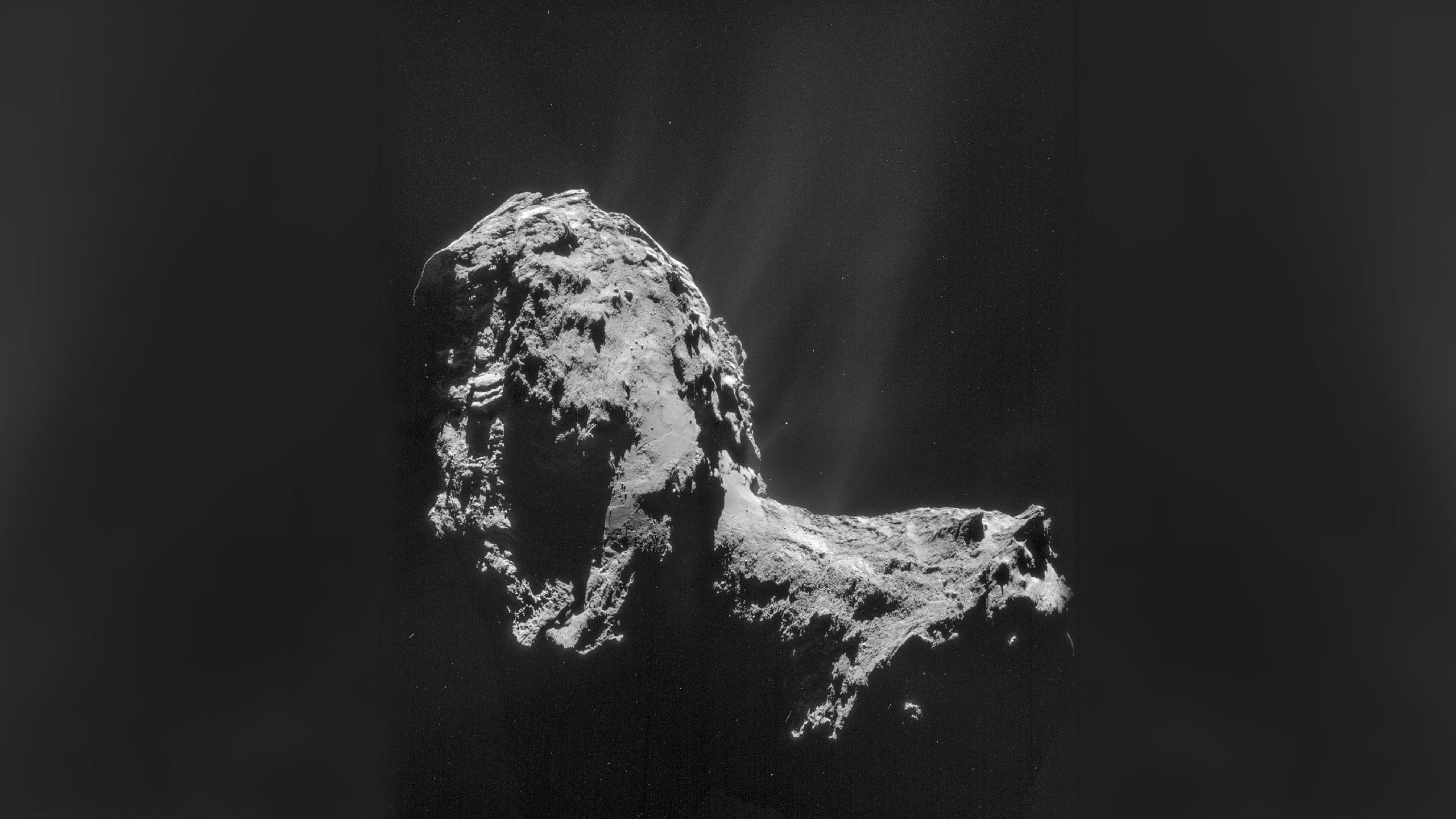
To understand the profound significance of this new study, one must trace the historical trajectory of the "comet seeding" hypothesis. During the Late Heavy Bombardment (LHB) approximately 4.1 to 3.8 billion years ago, the inner solar system experienced an intense influx of impactors. Planetary scientists observed that comets—composed largely of water ice, carbon dioxide, methane, ammonia, and various organic compounds—possessed the chemical inventory theoretically capable of transforming a barren, molten rock into a living planet.
In financial and corporate strategy terms, the cometary theory acted as a foundational valuation anchor for decades of astrobiology funding. Governments and institutional bodies authorized billions of dollars in capital expenditure toward comet-chasing missions, such as the European Space Agency’s pioneering Rosetta mission and its Philae lander. The underlying premise was clear: if comets acted as the primary transport infrastructure for life's building blocks, then understanding their composition was tantamount to unlocking the master blueprint of human existence.
Yet, critics and dissenting geochemists have long pointed out a glaring flaw in this narrative: impact physics. When an interstellar comet collides with a planetary surface at velocities routinely exceeding 20 to 70 kilometers per second, the resulting shock front converts kinetic energy into catastrophic thermal energy. The new research quantifies this destructive capacity with unprecedented precision, utilizing advanced cloud compute architecture to simulate millions of impact trajectories under diverse atmospheric pressures.
The findings are definitive. At impact velocities characteristic of Oort cloud comets, the instantaneous flash-heating incinerates carbon-chain structures, reducing complex amino acids into inert gases like nitrogen, carbon dioxide, and water vapor. Far from acting as a gentle delivery system akin to a celestial freight carrier, comets function more like a planetary incinerator, sterilizing the very surface zones they were once thought to fertilize.
Verified Data & Metrics Breakdown
| Parameter / Metric | Traditional Cometary Theory | New Study Findings (2026) | Variance / Impact |
|---|---|---|---|
| Impact Survival Rate of Precursors | Estimated 15% to 30% survival of intact amino acids | Less than 0.01% survival under hypervelocity conditions | A 99.9% downward revision in viable organic delivery |
| Mean Impact Velocity (Cometary) | Assumed moderate deceleration in proto-atmosphere | 45 to 75 km/s (insufficient atmospheric shielding) | Catastrophic thermal degradation threshold exceeded |
| Primary Source of Terrestrial Volatiles | Exogenous (Comets and Carbonaceous Chondrites) | Endogenous (Mantle degassing and slow-accreting planetesimals) | Fundamental paradigm shift in planetary origin models |
| Computational Methodology | Static thermodynamic equations (20th-century models) | Multi-node dynamic shock-physics simulations | Drastic increase in modeling fidelity and predictive accuracy |
Industry & Market Implications
While this academic pivot may appear esoteric to Wall Street outsiders, the downstream economic and commercial ramifications are substantial. The astrobiology and space-tech sectors operate within tight regulatory frameworks and capital allocation cycles where foundational scientific narratives dictate multi-billion-dollar budgets.
Who Wins: Research institutions and private enterprises specializing in submarine geochemistry, deep-sea hydrothermal vent exploration, and endogenous synthesis models stand to capture a significantly larger share of grant funding and venture capital. Companies building autonomous underwater vehicles (AUVs) and high-pressure chemical reactor simulators for prebiotic chemistry will see enhanced enterprise ROI as research priorities shift from the stars to the sea floor.
Who Loses: Private space ventures whose long-term valuation multiples rely heavily on the commercialization of outer-space volatile mining—specifically extracting water and organics from comets for propellant and life-support infrastructure—must re-engineer their technical roadmaps. If comets prove to be chemically degraded impactors rather than pristine reservoirs of reactive organics, the business case for near-term cometary resource exploitation faces severe risk mitigation hurdles.
Furthermore, regulatory compliance frameworks governing planetary protection may need updating. As space agencies contemplate sample return missions from icy bodies, the expectation of finding unaltered prebiotic chemistry must be tempered by the realization that space weathering and impact processing fundamentally alter molecular integrity.
Frequently Asked Questions (People Also Ask)
1. Does this new study mean comets had no role whatsoever in the formation of early Earth?
Not entirely. While comets may have destroyed complex organic molecules upon impact, they still contributed massive volumes of water and simple atmospheric volatiles. The study specifically targets the hypothesis that comets delivered ready-made biological building blocks like complex amino acids and nucleotides.
2. If comets didn't kick-start life, what did?
The scientific consensus is rapidly shifting toward endogenous origin theories—specifically that life originated locally on Earth through submarine hydrothermal vent systems. These deep-sea environments provide continuous thermal energy, mineral catalysts (such as iron-nickel sulfides), and chemical concentration gradients capable of driving sustained prebiotic chemistry without the destructive heat of an extraterrestrial impact.
3. How does this impact the commercial viability of space mining and resource extraction?
Space mining companies focusing on near-Earth asteroids (which experience lower impact velocities and better preserve organic compounds) remain insulated. However, ventures targeting high-velocity comets for complex organic compounds will need to adjust their valuation models and focus strictly on water-ice extraction rather than complex prebiotic chemistry.
4. What technology was used to arrive at these new conclusions?
Researchers deployed high-performance cloud compute architecture running advanced hydrocode simulations. These models replicate the precise molecular dynamics of shock compression, temperature spikes, and chemical dissociation at speeds and scales previously impossible to calculate.
Future Outlook & Strategic Milestones
As the academic community digests these findings, the next 24 to 36 months will witness a aggressive re-examination of laboratory-simulated impact experiments. Researchers are already designing next-generation particle accelerators and hypervelocity gas guns capable of mimicking impact shocks with pinpoint accuracy to test alternative delivery vectors, such as slow-moving dust particles or carbonaceous chondrite meteorites.
For market analysts and corporate strategists, monitoring the reallocation of government research grants—particularly from NASA, the European Space Agency, and national science foundations—will provide clear indicators of where the next wave of deep-tech innovation is heading. The quest to solve the ultimate puzzle of terrestrial abiogenesis is far from over, but the search parameters have been permanently redrawn.