A quiet revolution in digital commerce has transformed the simple act of canceling a software subscription into a psychological and technological gauntlet. Over the past 12 months, enterprise app developers have aggressively adopted sophisticated "churn prevention engines"—algorithmic retention software that actively intercepts, delays, and counter-proposes cancellation attempts in real time. Powered by dynamic micro-targeting, adaptive discounting, and complex user-experience routing, these tools represent the enterprise software industry’s latest weapon against consumer fatigue in an increasingly saturated subscription economy.
While venture-backed SaaS startups and consumer platforms frame these mechanisms as hyper-personalized customer care, consumer advocates, federal regulators, and antitrust litigation authorities view them through a sharper lens: deceptive "dark patterns" designed to degrade user autonomy and protect Monthly Recurring Revenue (MRR) at any cost. As regulatory bodies like the U.S. Federal Trade Commission (FTC) finalize aggressive "Click-to-Cancel" mandates, a high-stakes battle is taking shape among app developers, mobile platform operators, and global regulators over who controls the exit button.
Executive Takeaways
- Algorithmic Retention Interception: Mobile and desktop applications are integrating third-party churn-mitigation APIs that analyze user engagement data in real time to deploy dynamic exit offers, pricing discounts, or mandatory surveys before revealing a final cancellation link.
- The Financial Imperative: With Customer Acquisition Costs (CAC) escalating across enterprise and consumer sectors, retaining existing subscribers yields a vastly superior enterprise ROI. A 5% reduction in customer churn can elevate corporate valuation multiples and net revenue retention (NRR) by 25% to 85%.
- Regulatory Escalation: The FTC’s updated "Click-to-Cancel" rule (16 CFR Part 425) alongside the European Union’s Digital Services Act (DSA) have explicitly targeted multi-step cancellation friction, setting up an impending compliance crisis for applications relying on non-linear offboarding funnels.
- Platform Policy Friction: Apple and Google face mounting pressure to standardize and lock down in-app subscription management, pitting developer financial customization against ecosystem-wide anti-friction guidelines.
The Architecture of Retention Engines: How Apps Intercept the Exit Flow
Test Our Free AI & Tech Utilities Suite
Calculate LLM API token costs, analyze article dwell-time, or simulate tech DCA returns.
To understand how modern applications delay or prevent cancellation, one must look beyond basic user-interface design to the back-end telemetry driving modern enterprise software. Historically, canceling a digital subscription involved a straightforward API call: the user clicked "Cancel," the app sent a payload to payment processors such as Stripe or Adyen, and the recurring billing cycle terminated immediately.
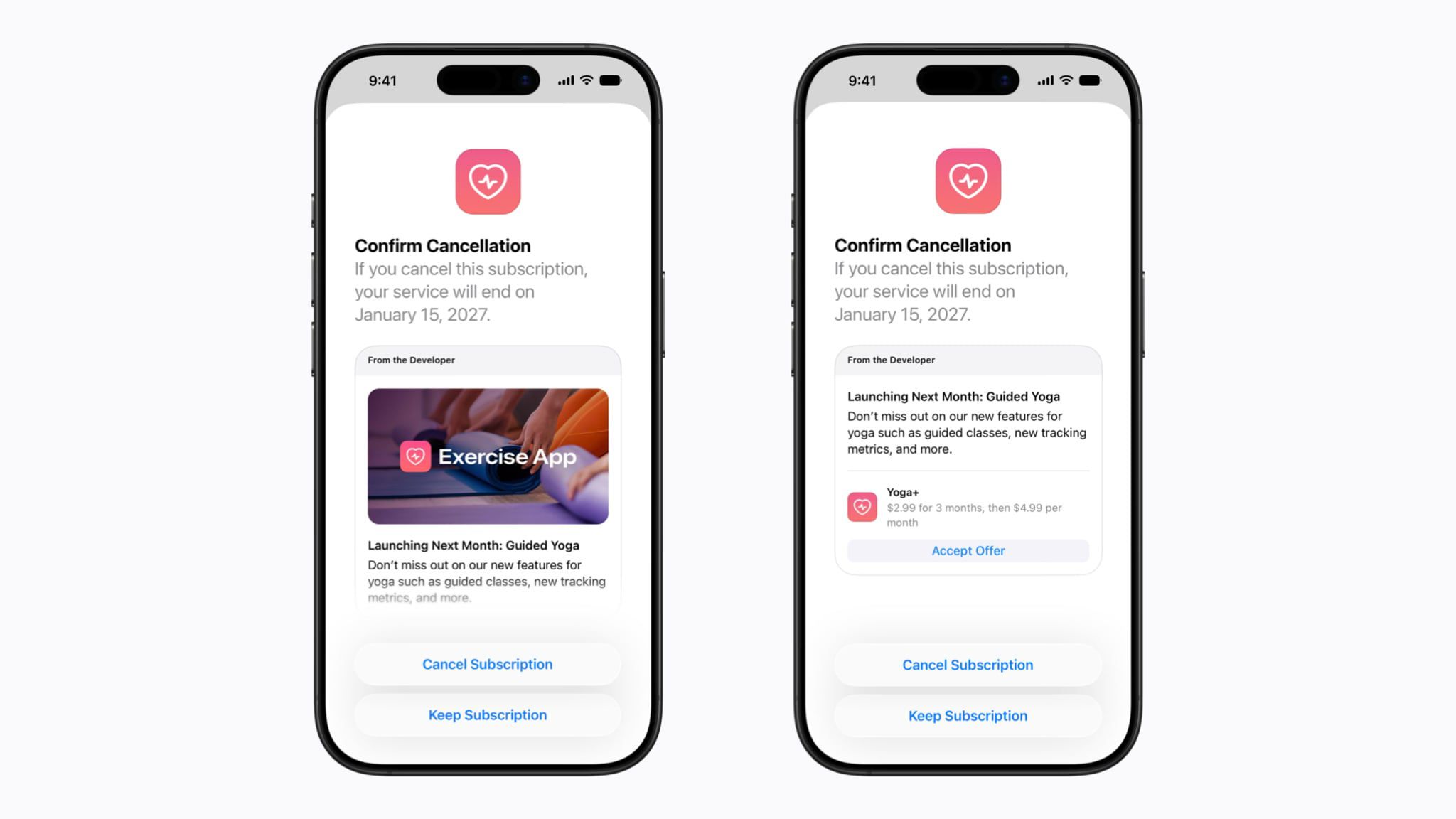
Today, that linear path is systematically intercepted by specialized churn-reduction SaaS platforms like Churnkey, ProsperStack, and Chargebee Retain. When a user taps "Cancel Subscription," the event triggers an intervention workflow managed by predictive machine learning models rather than an instant termination request. The platform instantly queries the user’s behavior metrics—usage frequency, feature utilization, feature drop-off rates, and lifetime customer value (LTV)—to construct a custom exit funnel.

Enterprise subscription platforms utilize real-time telemetry analytics to evaluate user Lifetime Value (LTV) before triggering dynamic cancellation intercept funnels.
This dynamic interception relies on four primary structural layers:
- Adaptive Discounting & Tier Downgrades: If the model determines a user is price-sensitive, the application instantly presents targeted monetary offers—such as 50% off for the next three months or an unlisted "lite" plan tier. By offering micro-concessions at the precise moment of intent to leave, apps achieve dynamic price discrimination without degrading top-line public pricing strategy.
- The "Pause" Mechanics Illusion: Rather than processing a hard cancellation, software flows heavily emphasize a temporary "pause" option (e.g., 30, 60, or 90 days). Once paused, the account automatically reverts to full recurring charges at the end of the window without requiring secondary user opt-in, effectively resetting the billing cycle.
- Asymmetric Survey Barriers: Apps frequently condition access to the final cancellation confirmation button on completing multi-page qualitative exit surveys. In some cases, selecting specific survey responses reroutes the user into specialized customer support retention loops rather than executing the cancellation.
- Cross-Platform Routing Scramble: Mobile users who attempt to cancel within an iOS or Android application are frequently informed that their account was activated on the web, forcing them through external web-based authentication funnels designed with elevated security checks and higher behavioral friction.
The Financial Economics: Enterprise ROI, CAC, and Net Revenue Retention

The aggressive adoption of retention software is driven by fundamental shift in tech unit economics. Over the past three years, rising digital advertising rates, privacy changes (such as Apple’s App Tracking Transparency framework), and higher risk-free interest rates have made original customer acquisition significantly more expensive across corporate balance sheets.
For enterprise software firms and high-velocity consumer apps, Customer Acquisition Cost (CAC) has expanded by an estimated 40% to 60%. As capital markets shift their focus from top-line revenue expansion to durable cash flow and profitability metrics, public and private market valuation multiples are heavily tied to Net Revenue Retention (NRR). Maintaining an NRR above 110% is critical for SaaS companies seeking premium valuation multiples during corporate liquidity events or public market debuts.
Consider the core financial mechanics: converting just 15% of canceling subscribers into retained customers via automated dynamic discounts delivers an immediate bump to Net Capital Efficiency. Because the infrastructure cost (cloud compute, bandwidth, storage) of serving that retained user is already spent, the incremental margin on retained subscription revenue approaches 80% to 90%. Consequently, Chief Revenue Officers (CROs) view high-friction offboarding funnels not as a user experience bug, but as a core enterprise asset designed to protect baseline corporate valuation.
Verified Data Breakdown: Retention Mechanics vs. Regulatory Standards
The table below summarizes key operational metrics, retention conversion yields, and regulatory compliance risk profiles across the main subscription exit flow mechanisms currently deployed across major apps and SaaS ecosystems.
| Offboarding Mechanism | Average Retention Conversion Rate | Impact on Net Revenue Retention (NRR) | FTC & EU Regulatory Risk Level | Primary Technological Dependency |
|---|---|---|---|---|
| Dynamic Algorithmic Discounting | 18% – 27% | High positive lift (+4.2% average) | Medium-High (Conditional pricing scrutinies) | Real-time LTV scoring engines / API webhooks |
| Temporary Pause Intercept | 12% – 22% | Moderate positive lift (+2.8% average) | Medium (Negative option opt-out rules) | Automated deferral billing schedules |
| Asymmetric Multi-Step Survey | 5% – 9% | Low positive lift (+0.8% average) | Severe (Violates direct "Click-to-Cancel") | Conditional UI form engines & redirect scripts |
| Cross-Platform Redirect Friction | 8% – 15% (via drop-off abandonment) | Neutral to negative long-term impact | Extreme (Targeted by FTC & State AGs) | Decoupled auth tokens & external billing bridges |
| Native Single-Click Exit (Compliant) | 0% (Direct Churn processing) | Baseline measurement | Zero Risk (Fully compliant standard) | StoreKit 2 / Google Play Billing APIs |
The Regulatory Counter-Offensive: FTC "Click-to-Cancel" and Dark Pattern Enforcement
As app developers deploy increasingly elaborate retention tactics, regulatory authorities worldwide are moving to ban friction-heavy cancellation flows. The primary regulatory catalyst in the United States is the FTC’s updated Rule on Subscriptions and Other Negative Option Plans (commonly referred to as the "Click-to-Cancel" rule), codified under 16 CFR Part 425.
The core standard of the FTC rule is simple: canceling a subscription must be at least as easy as signing up for it. If a user can initiate a subscription with a single tap via Apple Pay or a credit card entry form on a mobile application, the company must provide a simple, single-mechanism method to terminate the recurring charge without mandatory interactions with sales agents or complex offboarding paths.
"Unreasonable friction is not customer engagement; it is unlawful consumer entrapment. If a business makes it as easy as a single tap to join, it must make it equally effortless to leave."
In addition to federal rule-making, individual state regulatory regimes—led by California (via AB 2863) and New York—have introduced stringent requirements. California’s expanded Automatic Renewal Law mandates that apps operating within the state provide an immediate, accessible opt-out mechanism directly within the user account settings, explicitly barring secondary exit surveys that hide or delay access to the final cancellation trigger.
Concurrently, the European Union is prosecuting churn friction under Article 25 of the Digital Services Act (DSA), which strictly prohibits dark patterns. European regulators define dark patterns as UI/UX layouts that distort, impair, or deceive users into making choices that negatively impact their financial assets. Enforcement actions in Europe can incur administrative fines reaching up to 6% of a enterprise's global annual revenue, presenting a existential risk for platforms relying on deceptive retention mechanics.
Platform Warfare: Apple and Google’s Policy Conundrum
The regulatory focus puts mobile operating system gatekeepers—Apple and Google—in a delicate position. Both tech giants maintain controlled application marketplaces (the App Store and Google Play Store) that process hundreds of billions of dollars in gross merchandise value (GMV) annually, taking a 15% to 30% commission cut on digital subscriptions.
To comply with global regulatory pressures while insulating their platform ecosystems from liability, Apple and Google have continually expanded native subscription management features. Apple’s StoreKit 2 API, for instance, allows users to view, manage, and cancel subscriptions directly from within iOS system settings—completely bypassing any developer-controlled in-app retention funnels.

Mobile operating system gatekeepers are increasingly routing subscription controls through native OS management, bypassing developer-level retention scripts.
However, this centralized approach has created strategic tension with major application developers:
- Data Control and Customer Attribution: When a user cancels through an OS system setting, the developer loses the opportunity to collect qualitative exit survey feedback or dynamically present custom retaining offers, disrupting standard retention marketing campaigns.
- Web-to-App Arbitrage: To avoid paying platform fees and bypass platform-enforced simple cancellation rules, software publishers increasingly route users to sign up on external websites. Once on the web, developers retain complete control over the cancellation experience, reintroducing multi-tiered exit flows that native mobile stores prohibit.
Frequently Asked Questions (People Also Ask)
Are apps legally allowed to block me from canceling my subscription?
No. Under regulatory frameworks like the FTC’s "Click-to-Cancel" rule and the European Union’s Digital Services Act, businesses are legally prohibited from deliberately preventing, misleading, or imposing excessive friction on consumer subscription cancellations. While apps can offer optional retention discounts, forcing users through mandatory long surveys or hiding the exit option violates federal and international consumer protection standards.
How do algorithmic retention tools target users during the cancellation process?
Algorithmic retention platforms inspect real-time user telemetry, including how often you open the app, feature usage history, billing history, and original sign-up pricing. When you tap "Cancel," the software uses these metrics to determine your likelihood of staying. It then dynamically renders custom interventions—such as temporary price reductions, account pause options, or custom feature recommendations—to persuade you to reverse your decision.
What is the FTC’s "Click-to-Cancel" rule and how does it affect app subscriptions?
The FTC's "Click-to-Cancel" rule (16 CFR Part 425) requires businesses to make canceling a subscription as simple as signing up for one. If an app allowed you to sign up online or via a single tap on your mobile device, it must provide a clear, direct, and immediate method to cancel using the same medium. The rule bans deceptive dark patterns, multi-page survey walls, and deceptive offboarding loops.
How can I cancel a persistent subscription if an app makes it impossible on the web?
If an app’s cancellation flow is unresponsive or excessively complex, you have several options:
1. Mobile OS Settings: If billed through Apple App Store or Google Play, cancel directly via your device’s system settings (Settings > Apple ID/Google Account > Subscriptions).
2. Payment Processor Revocation: Revoke billing permissions directly within PayPal or your banking portal.
3. Chargeback/Dispute: File a formal billing dispute with your card issuer citing non-compliance with merchant cancellation policies.
Strategic Outlook: The Battle for the Cancel Button
As regulatory deadlines approach and compliance enforcement intensifies, the arms race between retention-focused software developers and consumer regulatory agencies is reaching a critical turning point. The market for pure retention software is undergoing a rapid architectural shift from high-friction obstruction toward dynamic value optimization.
In the near term, corporate legal departments are advising engineering teams to strip out multi-stage offboarding surveys, obfuscated hyperlinks, and mandatory support calls. Forward-thinking software vendors are recalibrating their engines away from defensive cancellation barriers and toward proactive engagement. Instead of intercepting users at the exit door, modern retention architectures monitor usage drops to automatically deploy value-delivery interventions weeks before a user ever decides to tap "Cancel."
Ultimately, the battle over subscription mechanics reveals a broader structural truth about the modern digital economy: customer retention secured through user-interface manipulation is an unsustainable corporate strategy. As regulatory oversight closes existing loopholes and consumers grow increasingly sensitive to subscription fatigue, companies that prioritize transparent, customer-centric offboarding will build stronger long-term brand equity and more defensible enterprise valuations.