Executive Takeaways
- Staggering Scale: India's Unified Payments Interface (UPI) processed an unprecedented 24,161.69 crore transactions totaling Rs. 314 lakh crore (approximately US$3,552.94 billion) in FY2025–26, cementing its status as the world’s most robust real-time payment rail.
- Exponential Momentum: Transaction volumes expanded by roughly 30% year-over-year, outstripping traditional capital allocation models and forcing legacy institutions to accelerate cloud compute architecture modernization.
- Macroeconomic Transformation: Driven by government-backed digital public infrastructure (India Stack) and high smartphone penetration, digital banking is optimizing market liquidity, reducing friction in enterprise ROI, and reshaping valuation multiples for fintech unicorns.
- Umbrella frameworks, rigorous regulatory compliance, and advanced risk mitigation protocols are now serving as global case studies for central bank digital currencies (CBDCs) and cross-border payment interoperability.
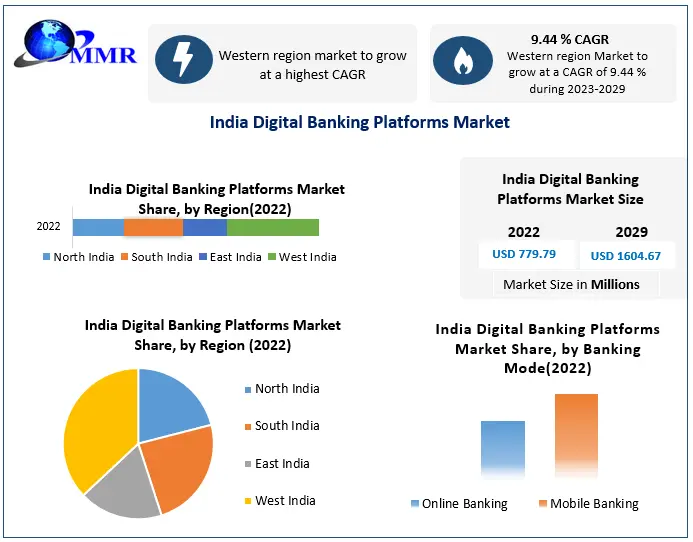
MUMBAI AND NEW DELHI — In the bustling financial corridors of Bandra-Kurla Complex and Connaught Place, a quiet revolution has fundamentally rewritten the mechanics of money. What began over a decade ago as an ambitious government-backed digital identity experiment has matured into a financial leviathan. According to primary wire data compiled by the India Brand Equity Foundation (IBEF), India’s digital banking ecosystem achieved a historic milestone in FY2025–26, with the Unified Payments Interface (UPI) processing 24,161.69 crore transactions valued at an astronomical Rs. 314 lakh crore (US$3,552.94 billion). Registering a relentless 30% surge in transaction volumes, this financial highway is no longer merely a domestic convenience; it is a masterclass in infrastructure scalability that has left Western legacy banking systems scrambling to modernize.
For institutional investors, private equity partners, and multinational technology conglomerates, the implications extend far beyond retail convenience. The digitization of the world’s most populous nation offers a living laboratory for high-frequency data analytics, friction-free merchant acquisition, and advanced credit underwriting. As capital allocation pivots decisively toward emerging markets, understanding the structural catalysts behind India's digital banking surge is essential for navigating the next decade of global macroeconomic growth.
The Genesis of India's Digital Public Infrastructure (DPI)
Test Our Free AI & Tech Utilities Suite
Calculate LLM API token costs, analyze article dwell-time, or simulate tech DCA returns.
To comprehend the sheer velocity of India’s digital banking boom, one must examine the foundational architecture known globally as the "India Stack." Conceived under the framework of Aadhaar (biometric digital identity), e-KYC, and the Unified Payments Interface, this interoperable stack dismantled the friction points that historically choked financial inclusion in developing economies.
For decades, legacy banking in India was plagued by high customer acquisition costs, physical paperwork bottlenecks, and fragmented branch networks. The introduction of UPI by the National Payments Corporation of India (NPCI) in 2016 served as a foundational API layer. By allowing third-party application providers (TPAPs) like Google Pay, PhonePe, and Paytm to interface directly with bank accounts through a secure, single-identifier protocol (Virtual Payment Address or VPA), the system commoditized payment routing.
Over successive fiscal cycles, this architecture evolved from a peer-to-peer (P2P) novelty into the backbone of peer-to-merchant (P2M) commerce. Street vendors in rural Uttar Pradesh now process micro-transactions with the same digital fluidity as corporate conglomerates in Mumbai. This widespread adoption has radically altered cash-to-GDP ratios, pulling billions of dollars of informal economic activity into the formal banking sector, thereby expanding the tax base and providing lenders with unprecedented data lakes for behavioral credit scoring.
Granular Analysis: FY2025–26 Performance Metrics

The macroeconomic weight of India's digital rails is best understood through hard metrics. In FY2025–26, the sheer volume and nominal value of transactions crossed thresholds that rival the annual GDP of several G20 nations.
Achieving 24,161.69 crore transactions while maintaining near-zero system downtime requires a level of cloud compute architecture and transaction routing resilience that few global tech firms can match. Furthermore, the 30% volume expansion underscores a secular shift in consumer behavior rather than a temporary post-pandemic anomaly. Micro-merchant adoption, coupled with feature-phone offline payment capabilities (UPI123Pay) and credit integration via RuPay credit cards on UPI, has unlocked new tiers of monetization.
Below is a comparative breakdown of key performance indicators tracking the evolution of India's digital financial infrastructure:
| Metric / Parameter | FY2024–25 (Baseline) | FY2025–26 (Current Data) | YoY Growth / Trajectory |
|---|---|---|---|
| Total UPI Transaction Volume | ~18,585 crore | 24,161.69 crore | +30.0% |
| Total UPI Transaction Value | ~Rs. 240 lakh crore | Rs. 314 lakh crore (US$3.55T) | +30.8% |
| Primary Growth Driver | P2P & Urban P2M | Semi-Urban/Rural P2M & Credit Integration | Deepening Penetration |
| Regulatory & Risk Posture | Initial market consolidation | Stringent compliance & fraud mitigation | Enhanced Security Focus |
Industry & Market Implications: Winners, Losers, and Economic Shifts
The transformation of India's banking sector is creating stark divergences between market participants. As liquidity concentrates within digitally agile institutions, traditional players must adapt or face margin compression.
Who Wins: Tech-Forward Banks and Specialized Fintech Enablers
Private sector lenders such as HDFC Bank, ICICI Bank, and Axis Bank—alongside agile neo-banking platforms—have emerged as primary beneficiaries. By embedding their APIs directly into consumer apps, these institutions capture low-cost Current Account Savings Account (CASA) deposits at scale. Furthermore, software-as-a-service (SaaS) providers specializing in API orchestration, fraud analytics, and automated compliance are witnessing explosive enterprise ROI as banks upgrade their legacy cores.
Who Loses: Legacy Lenders Slow to Modernize and High-Fee Intermediaries
State-owned or regional banks that have delayed investments in cloud infrastructure struggle with transaction failure rates and sluggish customer onboarding. Additionally, traditional credit card networks and legacy point-of-sale (POS) terminal providers face intense margin erosion. Because UPI transactions operate on a zero-MDR (Merchant Discount Rate) model for standard consumer transfers, traditional payment processors cannot rely on interchange fees as primary revenue drivers, forcing them to pivot toward value-added enterprise software and lending services.
Broader Economic Impact
At the macro level, the digitization of payments has injected velocity into market liquidity. Small and Medium Enterprises (SMEs), historically starved of institutional credit due to lack of audited financial histories, can now leverage their real-time digital cash flows to secure collateral-free working capital loans from fintech-bank partnerships. This democratization of credit is acting as a primary engine for industrial growth and employment generation.
Frequently Asked Questions (People Also Ask)
1. What is driving the massive 30% year-over-year growth in India's digital banking transactions?
The growth is primarily driven by expanding smartphone penetration in Tier-2, Tier-3, and rural cities, continuous innovations like RuPay credit card linking on UPI, offline voice-based payment solutions, and the unyielding formalization of merchant transactions across the subcontinent.
2. How does the zero-MDR policy impact financial institutions and fintech companies in India?
While the zero-Merchant Discount Rate (MDR) policy on standard UPI transactions reduces direct fee-based revenue for payment processors and banks, it serves as a powerful customer acquisition tool. Financial institutions monetize these relationships by cross-selling high-margin credit products, wealth management tools, and enterprise SaaS solutions to onboarded merchants and users.
3. What role do regulatory compliance and risk mitigation play in India's current digital banking landscape?
With billions of dollars flowing through real-time rails daily, regulatory bodies like the Reserve Bank of India (RBI) and NPCI enforce strict risk mitigation standards. This includes mandatory two-factor authentication, advanced machine learning-based fraud detection, stringent data localization norms, and regular audits of cloud compute architecture to ensure systemic stability.
4. Can India's digital public infrastructure model be replicated in Western economies?
While elements of the India Stack—such as instant payments and digital identity verification—are being studied or piloted globally (such as FedNow in the United States and various European instant payment initiatives), replicating the model requires centralized regulatory coordination, public-private alignment, and a greenfield approach that many legacy-heavy Western banking systems find difficult to implement.
Future Outlook: Milestones and Strategic Horizons
Looking ahead, India’s digital banking narrative is entering its next evolutionary phase. The focus is shifting from simple transaction volume growth to complex financial deepening. Key milestones to watch over the next 24 to 36 months include:
- Cross-Border Interoperability: Expanding bilateral UPI linkages with economies across Southeast Asia, the Middle East, and Europe to reduce remittance friction and challenge traditional SWIFT networks.
- Central Bank Digital Currency (CBDC): The wholesale and retail rollouts of the Digital Rupee (e-Rupee), which will test programmatic money capabilities and interact directly with existing UPI rails.
- AI-Driven Credit Underwriting: The widespread deployment of generative AI and machine learning models leveraging real-time transaction data to offer instant, sub-minute micro-loans to the unbanked and underbanked segments.
In summation, India’s digital banking evolution is no longer an isolated regional phenomenon; it is a foundational blueprint for global financial architecture. As institutional capital continues to flow into this ecosystem, the metrics established in FY2025–26 will serve as the baseline for a fully digitized, high-velocity global economy.