
The global financial architecture is undergoing a quiet, high-stakes restructuring. When the U.S. Department of the Treasury deployed a surprise liquidity-boosting debt buyback program, it sent a shockwave through international trading desks, challenging foundational assumptions about sovereign debt management, monetary policy transmission, and structural market liquidity. As detailed in the landmark Council on Foreign Relations (CFR) analysis authored by financial economist Rebecca Patterson, this intervention is far more than routine debt management—it is a flashing red indicator regarding the fragility of the world’s most critical benchmark market.
For institutional allocators, chief risk officers, and macroeconomic strategists, understanding the mechanics and motivations behind this buyback initiative is paramount. In an era marked by shifting valuation multiples, volatile interest rate expectations, and tightening regulatory compliance frameworks for primary dealers, the Treasury’s maneuver underscores a sobering reality: sustaining public sector fiscal deficits requires active, non-traditional market intervention to prevent systemic dysfunction.
Executive Takeaways
- Emergency Liquidity Intervention: The Treasury’s strategic debt buyback program is designed not just to smooth issuance patterns, but to actively manage off-the-run liquidity strains in the $27 trillion U.S. Treasury market.
- The Yield Curve Dilemma: Advanced economies globally are increasingly deploying balance sheet operations to cap rising government bond yields, blurring the traditional lines between fiscal debt issuance and monetary policy.
- Primary Dealer Strain: Structural changes in bank capital requirements, including post-crisis regulations, have diminished the capacity of primary dealers to absorb massive sovereign supply, necessitating direct federal intervention.
- Capital Allocation Paradigm Shift: Institutional portfolios must recalibrate risk mitigation strategies, duration positioning, and asset-liability matching to account for persistent central bank and treasury market backstops.
The Anatomy of the Surprise: Background and Catalytic Events
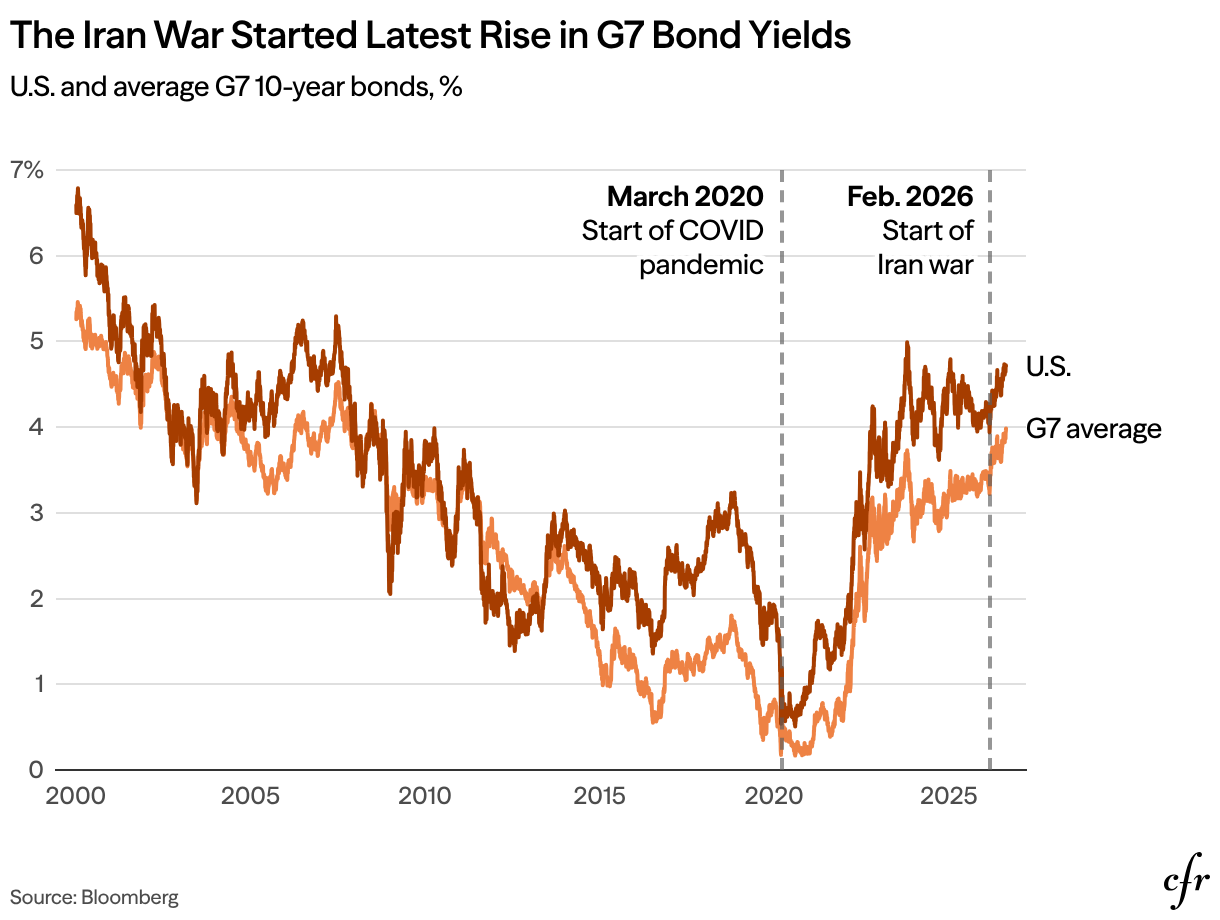
To contextualize the Treasury’s maneuver, one must examine the structural pressures compounding within the U.S. Treasury market over recent fiscal cycles. Decades of expanding federal deficits, compounded by quantitative tightening (QT) from the Federal Reserve, have flooded primary markets with an unprecedented volume of sovereign paper. At the same time, the institutional plumbing responsible for clearing and absorbing this debt has faced severe structural constraints.
Historically, primary dealers served as the shock absorbers of the bond market, buying newly issued debt at auctions and distributing it across global institutional networks. However, stringent post-financial crisis regulatory compliance mandates—most notably the Supplementary Leverage Ratio (SLR)—have penalized banks for holding large inventories of low-yielding, risk-weighted sovereign assets on their balance sheets. When market volatility spikes, as witnessed during multiple "dash-for-cash" episodes, dealer balance sheet capacity evaporates.
It was against this backdrop of thinning market liquidity and fragile order-book depth that the Treasury executed its surprise buyback initiative. By repurchasing older, less liquid "off-the-run" securities and replacing them with standardized, highly liquid "on-the-run" benchmarks, the Treasury engineered a dual-purpose intervention: it provided cash injections to stabilize dealer inventories while smoothing out the yield curve distortions caused by erratic trading volumes.
As Rebecca Patterson noted in her CFR evaluation, such actions highlight a growing convergence between fiscal authorities and central bank objectives. When advanced economies step in to artificially constrain rising government bond yields through targeted repurchases or quantitative operations, they risk undermining market price discovery. Yet, in the face of potential systemic liquidity freezes, policymakers have repeatedly demonstrated that maintaining orderly market functioning supersedes pure free-market price mechanisms.
Verified Data & Metrics Breakdown
A rigorous examination of the mechanics behind the Treasury’s operations requires analyzing key structural indicators governing current sovereign debt dynamics. The table below outlines the core metrics shaping the contemporary bond market landscape, contrasting historical norms with current operational realities.
| Market Metric / Indicator | Historical Baseline (Pre-2020) | Current Operational Reality | Macroeconomic Implication |
|---|---|---|---|
| Average Daily Trading Volume | $450 Billion - $550 Billion | $750 Billion - $850+ Billion | Higher turnover driven by algorithmic trading and algorithmic execution, but vulnerable to flash liquidity vacuums. |
| Primary Dealer Balance Sheet Capacity | Unconstrained by strict SLR | Highly constrained by capital rules | Reduced capacity to absorb massive quarterly refunding announcements without severe yield spikes. |
| Treasury Buyback Objective | Cash management & debt retirement | Liquidity enhancement & off-the-run support | Shifts from opportunistic debt management to permanent structural market-making support. |
| Bid-Ask Spread Volatility (Off-the-Run) | Tighter, predictable spreads | Widened spreads during stress periods | Elevates execution costs for enterprise pension funds and long-duration institutional allocators. |
Industry & Market Implications: Winners, Losers, and Systemic Risk
Any profound shift in sovereign debt management ripples across every tier of the global financial ecosystem. The Treasury’s buyback strategy creates distinct asymmetries for market participants:
Who Wins
- Primary Dealers and Macro Hedge Funds: Financial institutions acting as intermediaries benefit from reduced inventory risk and enhanced secondary market liquidity. Buyback operations provide a reliable exit valve for trapped or distressed off-the-run positions.
- Long-Duration Asset Owners: Pension funds and insurance enterprises requiring predictable cash flows benefit from stabilized market depth, reducing the risk of catastrophic execution slippage during portfolio rebalancing.
Who Loses
- Pure Price Discovery and Free-Market Advocates: When the federal government intervenes to manipulate yield curves or absorb specific tranches of debt, it distorts the true cost of capital. This creates moral hazard, masking underlying fiscal sustainability risks.
- Tactical Short-Duration Traders: Traders attempting to capitalize on structural liquidity dislocations find their windows of opportunity compressed as federal backstops smooth out volatility spikes.
From an enterprise risk mitigation perspective, corporations must recognize that the cost of capital is no longer entirely tethered to macroeconomic fundamentals. Instead, it is increasingly influenced by central bank balance sheet policies and treasury intervention mechanics. CFOs navigating capital allocation strategies must factor in heightened volatility in interest rate swaps and corporate credit spreads, ensuring their balance sheets remain resilient against sudden shifts in liquidity availability.
Frequently Asked Questions (People Also Ask)
What is a Treasury debt buyback, and why did the recent operation shock the bond market?
A Treasury debt buyback involves the federal government purchasing its own previously issued securities (bonds, notes, or bills) before their scheduled maturity date. The recent operation shocked the bond market because it signaled that the Treasury is actively deploying balance sheet interventions not just for routine cash management, but to directly address structural liquidity strains and market dysfunction caused by heavy sovereign issuance.
How does the Treasury’s buyback program impact government bond yields?
By repurchasing less liquid, off-the-run securities and injecting cash into the primary dealer network, the Treasury helps reduce upward pressure on yields in stressed segments of the yield curve. While not an explicit interest rate cut, these operations lower execution friction and restore order, effectively capping extreme yield spikes driven by temporary supply imbalances.
Why are primary dealers struggling to absorb modern U.S. debt issuance?
Post-crisis regulatory frameworks, such as the Supplementary Leverage Ratio (SLR), impose strict capital requirements on major banks that act as primary dealers. These rules penalize banks for holding large inventories of low-yielding sovereign debt. Consequently, when quarterly refunding announcements bring massive supplies of new treasuries to market, dealers lack the balance sheet capacity to absorb them without significant price concessions, leading to market volatility.
What does this mean for institutional investors and corporate capital allocation?
For institutional allocators, these developments signal that the risk-free rate is increasingly managed through administrative and structural interventions. Enterprise treasurers and portfolio managers must incorporate heightened duration risk, shifting valuation multiples, and potential liquidity backstops into their capital allocation models, long-term hedging strategies, and risk mitigation frameworks.
Future Outlook: Milestones to Watch
As the intersection of fiscal policy and bond market plumbing grows increasingly complex, market participants must monitor several critical forward-looking indicators over the coming quarters:
- Treasury Quarterly Refunding Announcements: Watch closely for shifts in the announced sizes of buyback operations, particularly regarding whether the Treasury expands repurchases from liquidity-support initiatives to broader debt-management retirements.
- Regulatory Adjustments on Capital Rules: Keep an eye on potential modifications to the Supplementary Leverage Ratio (SLR) or central bank liquidity facilities. Any regulatory relief granted to primary dealers could dramatically alter secondary market liquidity.
- Federal Reserve QT Trajectory: The pace of quantitative tightening directly dictates how much private sector capital must absorb public debt. Any acceleration or deceleration in Fed balance sheet runoff will instantly interact with Treasury buyback efficacy.
- Bid-to-Cover Ratios at Sovereign Auctions: Sustained weakness or unexpected tailing in Treasury auctions will serve as the ultimate litmus test for whether current federal interventions are successfully anchoring market confidence or merely masking structural saturation.
Ultimately, the Treasury’s buyback surprise is a watershed moment for modern finance. It underscores that in an era of massive fiscal deficits and constrained private balance sheets, the boundary between free-market capitalism and state-supported debt management has permanently blurred. Navigating this new regime requires rigorous analysis, agile risk management, and a clear-eyed recognition of the structural forces shaping the future of global fixed income.