Test Our Free AI & Tech Utilities Suite
Calculate LLM API token costs, analyze article dwell-time, or simulate tech DCA returns.
Executive Takeaways
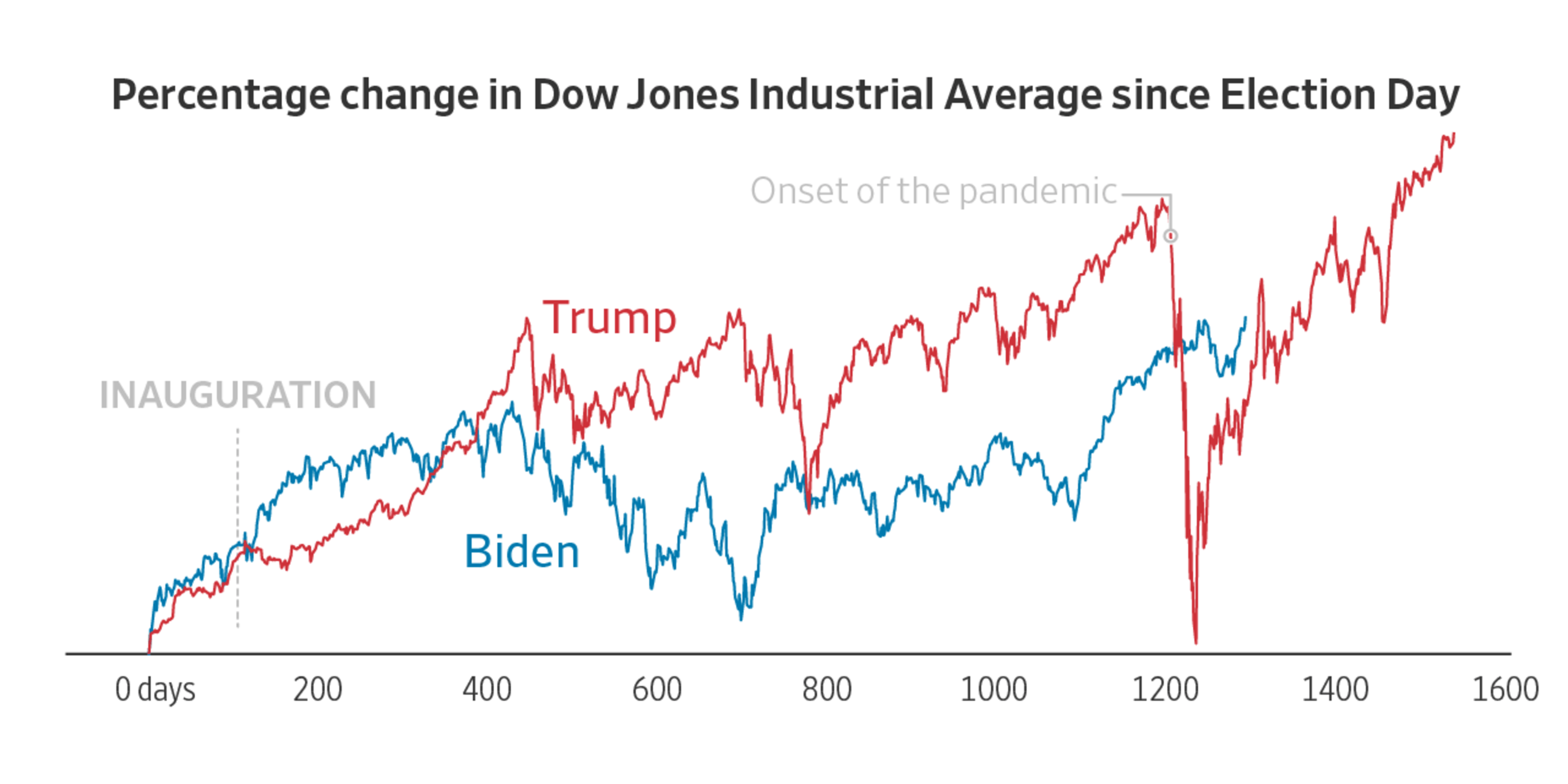
- Historic Market Breadth: The Dow Jones Industrial Average surged more than 1,500 points in a single session following the election, marking one of the most violent rotations in modern capital allocation history.
- The Tech Divergence: While traditional value, industrials, and financials soared, heavily concentrated artificial intelligence infrastructure plays and Elon Musk-linked equities closed the session in the red.
- Capital Allocation Shift: Institutional investors rapidly rebalanced portfolios, rotating out of hyper-valued growth and speculative tech into cyclical enterprises poised to benefit from anticipated regulatory relief and domestic tax incentives.
- Enterprise ROI Realities: The dip in AI-linked stocks signals a growing corporate skepticism regarding immediate enterprise ROI, forcing cloud compute architectures and hardware providers to prove infrastructure scalability.
In a financial phenomenon that has left quantitative analysts and portfolio managers dissecting trading terminals late into the night, the post-election landscape delivered a paradox of historic proportions. The Dow Jones Industrial Average exploded upward by more than 1,500 points, rewriting record books as institutional capital flooded into cyclical stocks, domestic manufacturers, and traditional financial institutions. Yet, beneath the roaring surface of the broader market, a distinct divergence occurred: high-flying artificial intelligence infrastructure providers and Elon Musk-linked equities bucked the euphoria, finishing the session firmly in negative territory.
For months leading up to the ballot, Wall Street consensus dictated a binary market outcome: a continuation of mega-cap tech dominance fueled by generative AI capital expenditure cycles, or a defensive contraction. Instead, the market chose a third path—a massive, breadth-driven rotation. As trading desks processed the preliminary election results, the underlying mechanics of institutional portfolio balancing shifted overnight. Risk mitigation strategies were hastily rewritten, valuation multiples for