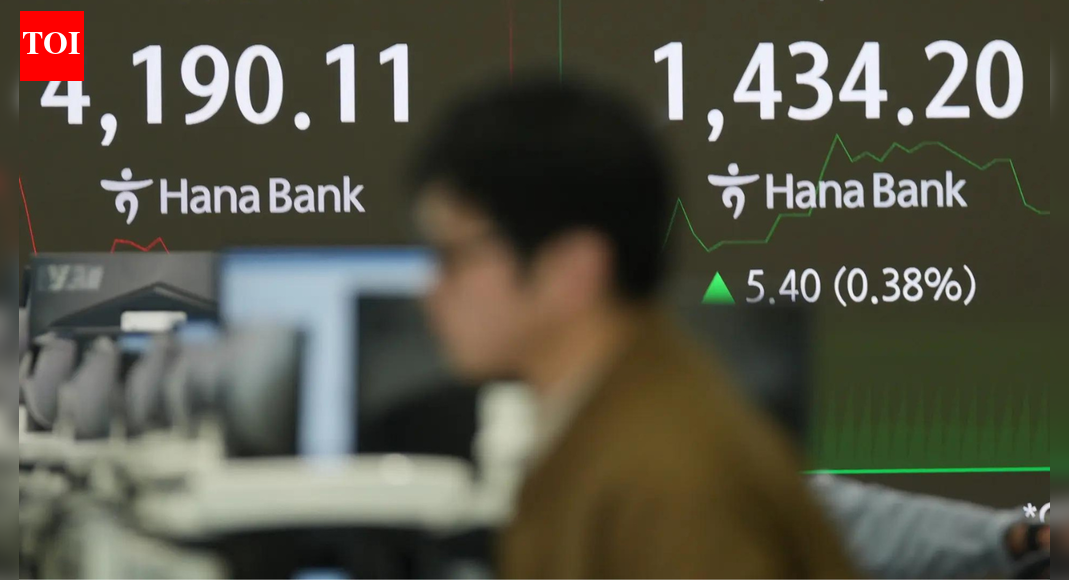
Global capital markets are undergoing a violent, high-velocity repricing following the decisive outcome of the United States presidential election. In early trading across the Asia-Pacific region, major stock indices surged aggressively, propelled by a potent cocktail of diminished policy uncertainty, potential pro-growth domestic agendas, and a dramatic sell-off in global energy benchmarks. Crude oil futures tumbled over 4%, triggering a cascading effect across commodity-linked currencies, sovereign debt yields, and cross-border capital allocation strategies.
As institutional investors, sovereign wealth funds, and corporate treasurers digest the macro implications of the new political landscape, market liquidity is bifurcating rapidly. Risk-on sentiment has returned to equity floors from Tokyo to Sydney, even as energy conglomerates and upstream exploration firms grapple with a sharply lower valuation multiple paradigm. This investigative report breaks down the structural drivers, quantitative metrics, and downstream economic repercussions of this historic post-election market shift.
Executive Takeaways
Test Our Free AI & Tech Utilities Suite
Calculate LLM API token costs, analyze article dwell-time, or simulate tech DCA returns.
- Equities Surge on Certainty: Asian stock benchmarks, led by the Nikkei 225 and Hang Seng, rallied sharply as the removal of U.S. election binary risk unlocked sidelined institutional capital and spurred short-covering.
- Oil Plummets on Supply and Policy Outlook: WTI and Brent crude futures plunged more than 4% as markets priced in potential shifts toward domestic U.S. fossil fuel deregulation, increased supply, and broader macroeconomic demand considerations.
- Capital Allocation Pivot: Institutional asset managers are recalibrating their portfolio risk mitigation frameworks, rotating away from defensive commodity hedges toward high-beta technology and export-oriented cyclicals.
- FX and Yield Volatility: The U.S. dollar strengthened against major emerging market currencies, while Asian central banks intervened selectively to stabilize local foreign exchange reserves amid volatile debt market flows.
Comprehensive Narrative: The Catalytic Event and Market Mechanics

Financial markets notoriously despise a vacuum of certainty. For months, the impending U.S. presidential election acted as a gravitational pull on global risk sentiment, suppressing volatility indices while forcing corporate treasurers to defer major capital expenditure and M&A deployment. With the ballot count finalized and a definitive victor declared, the sudden dissipation of political ambiguity unleashed a massive wave of pent-up demand across international bourses.
The immediate reaction in Asian trading hours demonstrated the classic playbook of post-election relief rallies, complicated by an unexpected shock in the energy complex. While regional equity indices—traditionally sensitive to global trade dynamics and U.S. monetary policy expectations—opened significantly higher, the simultaneous collapse in crude oil prices altered the baseline assumptions for global inflation and input costs.
Energy analysts point to several compounding factors driving the oil sell-off. Foremost among them is the anticipated shift in U.S. energy policy, which markets expect to favor accelerated domestic drilling permits and streamlined pipeline infrastructure scalability. Concurrently, broader global growth anxieties and weaker-than-expected industrial demand metrics from key Asian manufacturing hubs added downward pressure to Brent and WTI contracts. For energy-importing economies across Asia—such as Japan, South Korea, and India—this sudden drop in petroleum input costs represents an immediate boon to corporate profit margins and current account balances.
However, the divergence between surging equities and sliding commodities has forced portfolio managers to reevaluate standard cross-asset correlations. Historically, a sharp drop in oil served as a reliable proxy for systemic economic deceleration. In this instance, however, the commodity correction is being interpreted by equity bulls as a disinflationary tailwind that could give regional central banks—and the U.S. Federal Reserve—greater latitude to ease monetary policy or maintain accommodative interest rate trajectories without stoking runaway consumer price indexes.
Verified Data & Metrics Breakdown
| Market Indicator / Asset Class | Pre-Election Baseline | Post-Election Session Move | Primary Driver / Catalyst |
|---|---|---|---|
| MSCI Asia Pacific Index | Consolidated / Range-bound | +1.8% to +2.4% | Removal of binary U.S. political risk; short-covering. |
| WTI Crude Oil Futures | $71.50 / barrel | -4.2% | Anticipated U.S. supply expansion and deregulation. |
| U.S. Dollar Index (DXY) | 103.40 | +0.9% | Safe-haven flows and Treasury yield repricing. |
| Nikkei 225 (Japan) | 38,850 | +2.6% | FX tailwinds (weaker Yen) and lower energy import bills. |
Industry & Market Implications: Who Wins, Who Loses
The asymmetric nature of this market wrap creates clear winners and losers across global sectors. Understanding these shifts is vital for institutional asset allocators tasked with optimizing portfolio risk-adjusted returns in the wake of the U.S. election.
The Winners
- Asian Exporters & Tech Manufacturers: Corporations in Taiwan, South Korea, and Japan with heavy exposure to U.S. consumer demand stand to benefit from sustained economic growth and reduced trade policy surprises.
- Energy-Importing Industrials: Chemical producers, airlines, logistics firms, and heavy manufacturers across Asia will experience immediate relief in operating margins due to lower feedstock and fuel costs.
- Growth Equities & Venture Capital: As regulatory compliance fears moderate and market liquidity normalizes, high-beta growth stocks and tech infrastructure providers are seeing renewed valuation multiple expansion.
The Losers
- Upstream Oil & Gas Producers: Major energy conglomerates face margin compression as crude benchmarks slide, forcing executive boards to reassess capital expenditure budgets and shareholder return programs.
- Emerging Market Currencies with High Deficits: Countries reliant on dollar-denominated debt face renewed servicing pressures as the U.S. dollar strengthens in response to shifting domestic interest rate expectations.
- Commodity Hedge Funds: Macro funds holding long-oil positioning have been forced into rapid position liquidation, generating short-term volatility spikes across derivatives markets.
Frequently Asked Questions (People Also Ask)
Why did Asian stocks rise immediately following the U.S. election?
Asian equities rallied primarily due to the removal of binary political uncertainty. Institutional investors had held back capital deployment while awaiting the U.S. election outcome. Once a clear victor emerged, sidelined liquidity flooded back into the market, triggering short-covering and boosting regional indices like the Nikkei and Hang Seng.
What caused the sharp drop in crude oil prices after the election?
Crude oil fell over 4% due to market expectations that the new U.S. administration will pursue pro-growth fossil fuel policies, including increased domestic drilling permits and looser regulatory oversight on pipeline infrastructure. These expectations of expanded future supply, combined with persistent concerns over global demand sluggishness, drove the sell-off.
How does lower oil benefit Asian economies?
Most major Asian economies—particularly Japan, South Korea, India, and China—are net importers of energy. A significant decline in crude oil reduces the cost of petroleum imports, improves national current account balances, lowers inflationary pressures, and expands profit margins for energy-dependent industrial and transport sectors.
What are the implications for institutional portfolio asset allocation?
Portfolio managers are currently rotating away from defensive commodity hedges and positioning for increased volatility in fixed-income markets. The combination of rallying equities and falling oil prices requires dynamic risk mitigation, prompting a shift toward high-quality large-cap equities and technology infrastructure assets.
Future Outlook and Key Milestones to Watch
As the initial dust settles on the post-election trading sessions, institutional focus is pivoting rapidly toward structural economic fundamentals and upcoming policy enactments. The durability of the current Asian equity rally will depend heavily on corporate earnings guidance delivered during the upcoming reporting season, as well as the actual legislative feasibility of the new U.S. administration's proposed fiscal and trade agendas.
Key milestones to monitor over the coming quarters include:
- OPEC+ Production Policy Adjustments: How global cartel members respond to sliding oil prices and whether they choose to alter voluntary output cuts to defend price floors.
- U.S. Federal Reserve Monetary Path: Incoming inflation and labor market data prints that will dictate whether the central bank accelerates or pauses its interest rate easing cycle.
- Corporate Capital Expenditure Reports: Guidance from multinational enterprises regarding enterprise ROI, cloud compute architecture investments, and global supply chain re-engineering.
- Geopolitical and Trade Announcements: Specific executive orders or tariff frameworks proposed by Washington that could directly impact Asian export economies and semiconductor supply chains.
Ultimately, while the immediate market reaction has been overwhelmingly positive for equities and disinflationary for energy, market participants must maintain disciplined risk management frameworks. The intersection of shifting U.S. fiscal policies and evolving global monetary conditions guarantees that market liquidity and valuation multiples will remain highly dynamic in the months ahead.