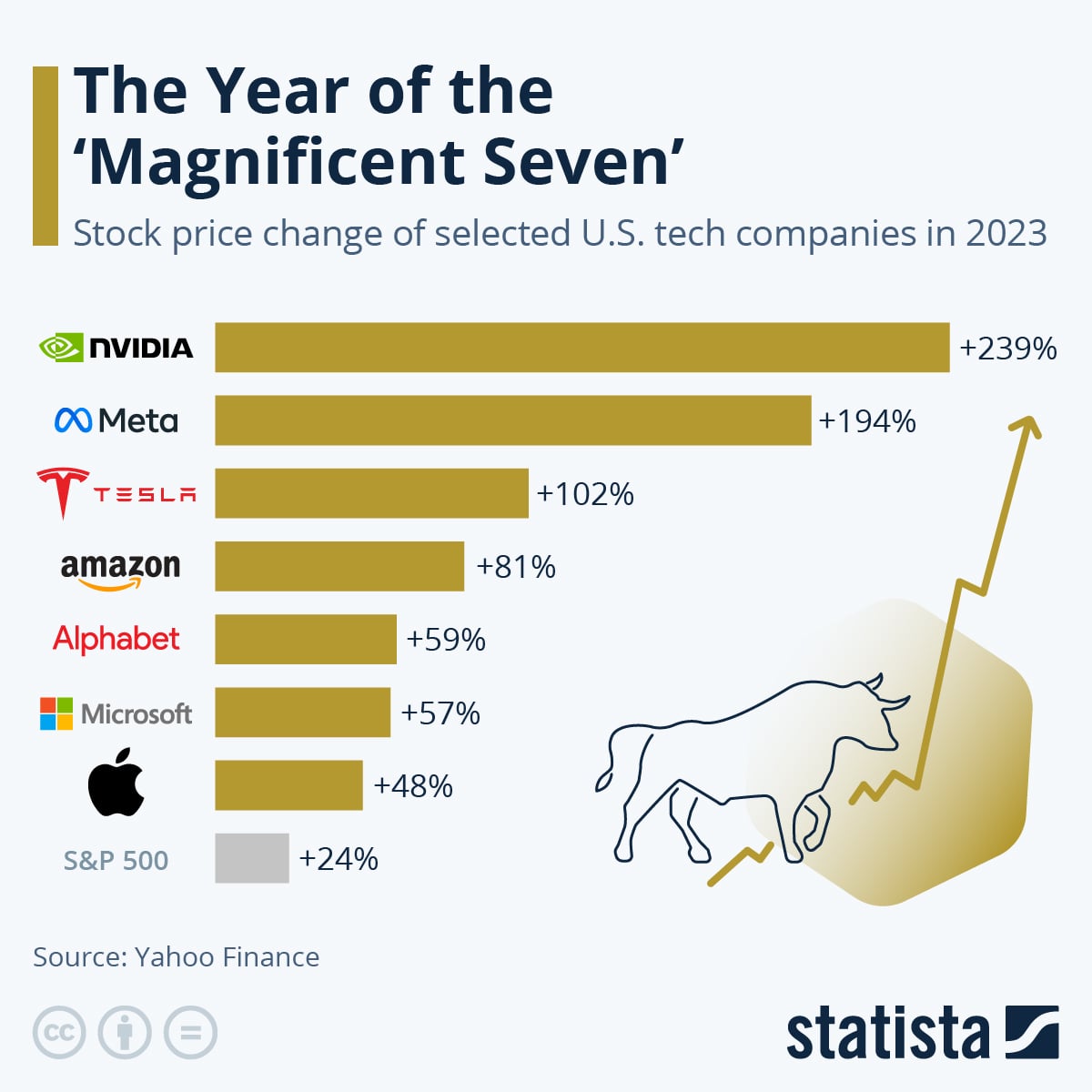
Wall Street is currently bearing witness to one of the most statistically anomalous divergences in modern financial history. While headline equity indices continue to display a veneer of resilience, a microscopic cohort of artificial intelligence heavyweights—anchored irrevocably by Nvidia—is carrying the entire weight of the United States capital markets on its shoulders. Beneath this gilded surface, a quiet contraction is taking place across the broader economy. High-interest-rate pressures, tightening market liquidity, and softening consumer demand are battering secondary equities, while bellwether casualties like Apple face mounting headwinds.
For institutional asset allocators, risk managers, and corporate treasurers, this moment represents a critical inflection point. As capital allocation aggressively concentrates into an elite group of infrastructure providers, the rest of the market is experiencing a rolling correction. Dissecting the mechanics of this divergence reveals a complex interplay of enterprise capital expenditure cycles, shifting valuation multiples, and structural market mechanics that threaten to redefine the trajectory of global equities.
Executive Takeaways
Test Our Free AI & Tech Utilities Suite
Calculate LLM API token costs, analyze article dwell-time, or simulate tech DCA returns.
- The Concentration Paradox: A handful of AI-focused megacaps are single-handedly propping up major indexes, masking broad-based declines across more than 60% of S&P 500 constituents.
- Apple’s Structural Drag: Pressured by regulatory headwinds, lengthening replacement cycles, and fierce competition in key overseas markets, Apple's recent valuation compression highlights vulnerabilities in legacy consumer hardware models.
- The Infrastructure Supercycle: Nvidia’s relentless market dominance is fueled by insatiable enterprise demand for cloud compute architecture and specialized hardware, driving unmatched top-line revenue growth.
- Systemic Risk & Liquidity: Extreme market concentration elevates systemic risk mitigation concerns, leaving index-tracking retail and institutional portfolios acutely vulnerable to a sudden correction in tech valuations.
The Anatomy of a Bifurcated Market

To understand the current market architecture, one must look past the headline numbers of the S&P 500 and the Nasdaq Composite. While these benchmarks frequently flirt with or set new all-time highs, the equal-weighted versions of these same indexes tell a drastically different story. The divergence signals a profound structural shift: the decoupling of broad economic health from the capital expenditures of Big Tech.
At the epicenter of this phenomenon is Nvidia. The Silicon Valley chipmaker has evolved from a specialized gaming hardware manufacturer into the foundational tollbooth of the global artificial intelligence revolution. As hyperscalers—including Microsoft, Alphabet, Amazon, and Meta Platforms—race to secure enterprise ROI through generative AI deployments, their capital expenditure budgets have expanded exponentially. These capital outlays flow almost directly into Nvidia’s balance sheet, creating an unprecedented feedback loop of soaring revenues, massive free cash flow generation, and skyrocketing valuation multiples.
However, this intense focus on AI infrastructure scalability has starved other sectors of capital liquidity. Small and mid-cap stocks, heavily reliant on floating-rate debt and traditional bank lending, are buckling under the weight of higher-for-longer interest rates. Consequently, portfolio managers are executing aggressive sector rotations, pulling capital out of consumer discretionary, regional banking, and cyclical industrials to fund concentrated bets on the AI trade.
Apple and the Chinks in the Consumer Armor
While Nvidia surges, the struggles of other traditional titans underscore the fragility of the broader market rally. Apple, long considered the ultimate defensive growth stock and a sanctuary for risk-averse institutional capital, has faced sustained downward pressure. This underperformance is not merely a cyclical blip; it is the result of converging structural challenges.
Chief among these challenges is the maturation of the global smartphone market. Hardware upgrade cycles have stretched past the three-to-four-year mark, as incremental technological updates fail to incentivize mass consumer replacements. Simultaneously, regulatory compliance scrutiny is intensifying on a global scale. Antitrust investigations in both the United States and the European Union are threatening Apple's lucrative services margins—its primary growth engine over the past five years. Furthermore, intensifying competition in Greater China, driven by surging domestic manufacturing capabilities, has permanently altered the competitive landscape for iPhone shipments.
The simultaneous rise of Nvidia and stumble of Apple highlights a brutal rotation within Big Tech itself: the market is ruthlessly punishing companies reliant on mature consumer hardware replacement cycles while aggressively rewarding those constructing the enterprise plumbing of the next computing era.
Verified Data & Metrics Breakdown
The following comparative financial data illustrates the widening performance gap between AI infrastructure leaders, consumer tech giants, and broader market health indicators:
| Company / Index | Primary Driver / Catalyst | YTD Price Performance | Valuation Multiple (Forward P/E) | Market Sentiment |
|---|---|---|---|---|
| Nvidia (NVDA) | Data center GPU demand, AI infrastructure buildout | +145% (Est.) | ~38x - 42x | Bullish / High Momentum |
| Apple (AAPL) | Hardware maturation, regulatory pressure, China sales | -4% to +2% | ~27x - 30x | Cautious / Defensive |
| S&P 500 Equal Weight | Broader economic exposure, rate sensitivity | Flat to Low Single Digits | ~16x - 18x | Neutral / Pressured |
| Russell 2000 (Small Caps) | Floating debt exposure, tighter lending standards | Negative to Flat | ~22x (Operating Losses Excluded) | Bearish / Distressed |
Industry & Market Implications
The profound concentration of market gains among a handful of AI pioneers carries deep implications for the broader financial ecosystem. Institutional risk mitigation strategies are being severely tested. Traditional diversification models—such as the classic 60/40 portfolio—are failing to deliver expected downside protection when a handful of correlated technology stocks dictate the movement of the entire equity market.
Who Wins: Hyperscale cloud providers with secure balance sheets, specialized semiconductor designers, energy infrastructure firms supplying power to data centers, and active quantitative fund managers capable of exploiting micro-trends beneath the index level.
Who Loses: Passive retail investors laboring under the misconception of true market diversification, regional banks exposed to commercial real estate and slowing loan demand, and consumer-facing enterprises unable to pass inflationary pressures onto cost-conscious buyers.
From a macroeconomic perspective, this dynamic creates a bifurcated economy. Corporate balance sheets of mega-cap tech enterprises are pristine, sitting on mountains of cash and insulated from high interest rates. Conversely, Main Street businesses and heavily leveraged corporations are feeling the acute squeeze of monetary policy tightening. This disconnect complicates the Federal Reserve’s mandate, as headline equity stability masks underlying economic strain.
People Also Ask (FAQ)
Why are Big Tech stocks rising while the rest of the market is falling?
The divergence is driven by massive corporate capital expenditure into artificial intelligence infrastructure. Investors are aggressively funneling capital into companies like Nvidia that produce high-margin enterprise hardware and software, viewing them as immune to traditional economic slowdowns. Meanwhile, the rest of the market struggles with elevated borrowing costs and softening consumer demand.
Is the current dominance of Nvidia and AI stocks a market bubble?
Financial analysts are deeply divided. Skeptics argue that valuation multiples and sky-high revenue growth expectations leave little room for operational error, mirroring the dot-com era. Proponents, however, point out that unlike the late 1990s, today's megacap tech leaders generate immense free cash flow, boast fortress balance sheets, and are selling products with immediate, measurable enterprise ROI.
Why is Apple lagging behind other major technology stocks?
Apple is facing a convergence of headwinds, including lengthened consumer upgrade cycles for smartphones, aggressive competition in international markets like China, and mounting regulatory scrutiny regarding its App Store ecosystem and service revenue models. The market is temporarily prioritizing hyper-growth AI infrastructure plays over mature consumer hardware devices.
How does extreme market concentration impact retail and passive investors?
When a few mega-cap stocks dominate market capitalization-weighted indexes like the S&P 500, investors holding passive index funds have far less diversification than they realize. If sentiment shifts and capital flows out of AI leaders, these portfolios can experience sharp, disproportionate drawdowns despite holding hundreds of other underlying stocks.
Future Outlook
As corporate earnings seasons unfold, the sustainability of this divergence will be tested by hard financial metrics. The primary milestone to watch is whether enterprise customers of AI infrastructure begin realizing tangible productivity gains and revenue acceleration that justify the hundreds of billions of dollars currently being spent on data center architecture.
If enterprise ROI materializes as projected, Nvidia and its peers will likely sustain their outperformance, cementing a new technological paradigm. However, any signs of capital expenditure fatigue, supply chain blockages, or macroeconomic shocks that force corporations to rein in IT budgets could trigger a sharp, systemic re-pricing across global equities. For Chief Investment Officers, the mandate moving forward is clear: navigate the AI supercycle with rigorous risk controls while preparing for the inevitable reckoning of a broader, bifurcated market.