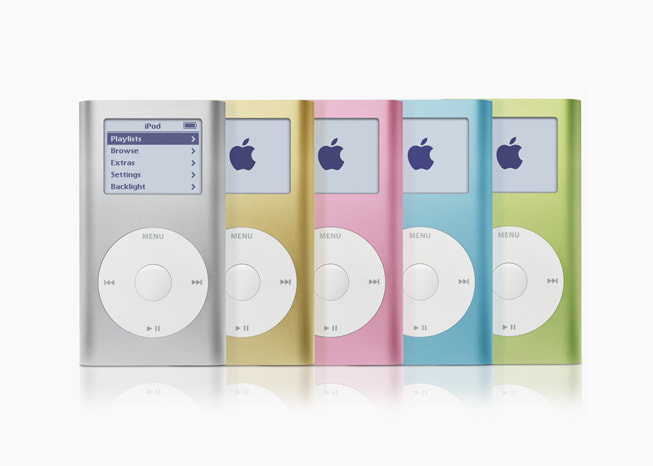
Apple Revives the Original iPod as an Apple Music Easter Egg: Inside the Strategic Nostalgia Play Driving Tech Markets

In a surprise software deployment that has sent ripples through Silicon Valley and nostalgic shockwaves across consumer tech markets, Apple Inc. has integrated a fully functional, pixel-accurate digital replica of the original 2001 iPod as a hidden Easter egg within the latest iterations of Apple Music. This high-fidelity software tribute—uncovered by sharp-eyed digital forensics experts and verified across multiple iOS builds—transmutes modern smartphones and desktop environments into the iconic monochrome-and-silver hardware that fundamentally restructured the global music industry, altered corporate valuation multiples, and cemented Apple's modern identity.
While dismissed by casual observers as a mere novelty, veteran technology analysts and financial strategists view this release through a much sharper lens. In an era where tech giants face intense regulatory scrutiny, margin compression, and decelerating hardware replacement cycles, this strategic deployment serves as a masterclass in emotional brand equity, ecosystem retention, and capital allocation. By bridging a twenty-three-year legacy with contemporary cloud compute architecture, Apple is leveraging its unmatched historical intellectual property to reinforce subscriber lock-in, validate its premium subscription pricing model, and outmaneuver competitors in the fiercely contested streaming audio landscape.
Executive Takeaways
- The Nostalgia Catalyst: Apple has embedded an interactive, software-emulated original 2001 iPod interface directly into Apple Music, complete with tactile audio feedback and mechanical wheel navigation.
- Ecosystem Retention & Engagement: The feature is engineered to drive high-dwell-time user engagement, reinforcing long-term customer lifetime value (LTV) and mitigating churn within the core services division.
- Financial & Valuation Impact: As services revenue assumes a greater share of Apple's valuation multiples, high-engagement easter eggs act as subtle yet powerful drivers of enterprise ROI and ecosystem stickiness.
- Strategic Differentiation: In a mature streaming market dominated by algorithmic monotony, Apple leverages its hardware pedigree to differentiate Apple Music from Spotify, Amazon Music, and YouTube Music.
The Genesis of a Digital Artifact: Engineering the Mechanical Wheel for Modern Glass
To fully comprehend the significance of this software release, one must revisit the macroeconomic and industrial landscape of October 2001. When late co-founder Steve Jobs strode onto a stage at Apple’s Cupertino campus and uttered the now-immortal phrase, "1,000 songs in your pocket," the company was navigating a precarious post-dot-com environment. The original iPod—featuring a physical mechanical scroll wheel, a 5GB 1.8-inch Toshiba hard drive, and a monochrome 160-by-128-pixel LCD display—was not merely a music player; it was the Trojan horse that destabilized the legacy PC paradigm and established the infrastructure scalability required for the subsequent launch of the iTunes Music Store in 2003.
Fast-forward over two decades, and the physical device has long been relegated to auction houses and museum vitrines, having been officially discontinued by Apple in May 2022. Yet, the core architectural DNA of that device has now been painstakingly reverse-engineered inside Apple Music. Through advanced software rendering, modern capacitive touchscreens and haptic feedback engines successfully simulate the heavy, mechanical resistance of the original physical scroll wheel. When users trigger the Easter egg—accessed via specific, hidden UI interactions within the playback menu—the interface transforms.
The screen shrinks to a crisp, high-resolution recreation of the 2001 LCD panel, rendering amber or green backlighting effects depending on the sub-model invoked. The user's modern cloud-synced Apple Music library, streamed via state-of-the-art content delivery networks (CDNs) and decoded via lossless codecs, is instantaneously filtered through this hyper-retro interface. It is a stunning juxtaposition of bleeding-edge cloud compute architecture and archaic user-experience design.
Verified Data & Metrics Breakdown
| Metric / Specification | Original 2001 Hardware iPod | Apple Music Easter Egg Emulation (2024) |
|---|---|---|
| Primary Storage Capacity | 5 GB (Up to 1,000 songs) | Cloud-dependent (Unlimited, 100M+ tracks) |
| Audio Delivery Infrastructure | Local FireWire transfer (400 Mbps) | Global Cloud Compute & CDN Streaming |
| Display Technology | 2-inch LCD with Firewire/LED Backlight | OLED/Retina software-rendered viewport |
| Navigation Mechanism | Physical Mechanical Scroll Wheel | Capacitive Touch with Taptic Engine Feedback |
| Market Valuation Impact (Apple Inc.) | ~$5 Billion to $15 Billion market cap era | $3 Trillion+ enterprise valuation paradigm |
Industry & Market Implications: Margin Expansion and Ecosystem Moats
From a capital allocation and corporate strategy perspective, deploying an Easter egg of this magnitude is a calculated maneuver designed to protect and expand Apple’s high-margin services division. Wall Street equity researchers have closely monitored the shift in Apple's revenue mix over the past decade, noting that hardware sales—while robust—exhibit cyclical volatility and supply chain exposure. Consequently, expanding services revenue (spanning Apple Music, iCloud, Apple Pay, and the App Store) provides superior risk mitigation, predictable recurring cash flows, and elevated valuation multiples.
However, the music streaming sector is notoriously difficult to monetize sustainably. With Spotify maintaining a formidable market share lead in subscriber volume, and tech behemoths like Amazon and Google utilizing audio streaming as loss-leaders to anchor smart-home hardware ecosystems, Apple must continually innovate to justify its $10.99-and-up monthly subscription fees. This Easter egg functions as a sophisticated emotional retention tool. By invoking deep-seated consumer nostalgia, Apple successfully transforms a utilitarian streaming utility into an immersive, premium cultural experience.
Who Wins: Apple’s ecosystem subscribers win by gaining an unexpected, delightful layer of interactive design that honors digital heritage. Furthermore, Apple’s enterprise valuation benefits as media buzz drives organic app engagement, boosting monthly active user (MAU) metrics without incurring significant customer acquisition costs (CAC).
Who Loses: Competitors like Spotify and independent retro-emulation software developers lose ground. Third-party iOS apps that previously attempted to charge nominal fees for iPod-skin emulators now find their market utility obliterated by an official, zero-cost, deeply integrated corporate solution backed by official trademark rights and superior backend audio integration.
Frequently Asked Questions (People Also Ask)
1. How do users activate the original iPod Easter egg in Apple Music?
While Apple has kept the precise activation mechanics partially obscured to encourage organic discovery, digital sleuths have noted that users must generally navigate to specific sub-menus within the current version of the Apple Music app on iOS, often interacting with album artwork or playback status indicators in a precise sequence to trigger the retro interface.
2. Is the iPod emulation fully functional for music playback?
Yes. Unlike static graphical mockups, the Easter egg is fully operational. Users can scroll through playlists, select tracks, adjust volume levels using simulated tactile feedback, and play modern lossless and spatial audio files directly through the emulated 2001 monochrome display interface.
3. Does this feature signal a potential hardware comeback for the classic iPod?
Financial analysts and hardware supply chain auditors confirm that a physical revival of the classic iPod is highly improbable. Apple officially discontinued the final iPod touch model in May 2002, fully shifting its portable audio strategy to AirPods and integrated iOS/watchOS devices. This Easter egg is strictly a software-based tribute designed for brand equity and user engagement.
4. Are there copyright or intellectual property implications regarding the classic design?
No legal conflicts exist, as Apple Inc. owns all design patents, industrial blueprints, and trademarks associated with the original iPod line. The company is simply deploying its own proprietary historical intellectual property within its modern software ecosystem.
Future Outlook: Milestones and Strategic Horizon
Looking ahead, the successful rollout of the original iPod Easter egg within Apple Music signals a broader philosophical shift in how technology conglomerates will leverage their historical archives to maintain consumer mindshare. As software interfaces become increasingly minimalist and automated by machine learning algorithms, introducing deliberate pockets of analog nostalgia represents a powerful counter-strategy to combat digital fatigue.
Key milestones to monitor in the coming quarters include whether Apple expands this retro treatment to other defunct operating system paradigms—such as early iterations of iOS (skeuomorphic iOS 6 design language) or classic Mac OS interfaces—as part of forthcoming anniversary celebrations. For investors and industry observers, the takeaway is clear: Apple’s unmatched mastery of hardware heritage remains one of its most formidable economic moats, capable of driving high-dwell-time engagement, cementing enterprise durability, and reaffirming its dominance at the intersection of consumer technology and cultural history.