Executive Takeaways
- Multi-Model Hegemony: Dell Technologies is bypassing traditional cloud lock-in by deploying turnkey, on-premises "AI Factories" capable of simultaneously running OpenAI’s ChatGPT, Google’s Gemini, and xAI’s Grok.
- The Video World Model Breakthrough: Beyond text and code, the core technical disruption is the integration of massive spatial and video world models, enabling Fortune 500 manufacturers to simulate physical environments locally.
- Corporate Data Sovereignty: Spurred by mounting regulatory compliance pressures and data-leak anxieties, enterprise-grade buyers are aggressively reallocating capital from public cloud compute to high-density, secure server clusters.
- Wall Street Valuation Implications: This strategic pivot directly challenges major hyperscalers, transforming hardware providers into sovereign gatekeepers of enterprise artificial intelligence infrastructure.
NEW YORK & AUSTIN — In a seismic shift that threatens to upend the foundational architecture of enterprise computing, Dell Technologies has officially launched its unified on-premises "AI Factory" ecosystem. According to disclosures verified through financial intelligence wires including BigGo data feeds on May 23, 2026, Dell is no longer merely selling servers; it is delivering pre-configured, multi-model supercomputing stacks designed to run OpenAI’s ChatGPT, Google’s Gemini, and xAI’s Grok concurrently within a single localized infrastructure. For corporate chief information officers (CIOs) navigating the treacherous waters of enterprise ROI, infrastructure scalability, and data sovereignty, the message is unequivocal: the public cloud’s monopoly on generative artificial intelligence is drawing to a close.
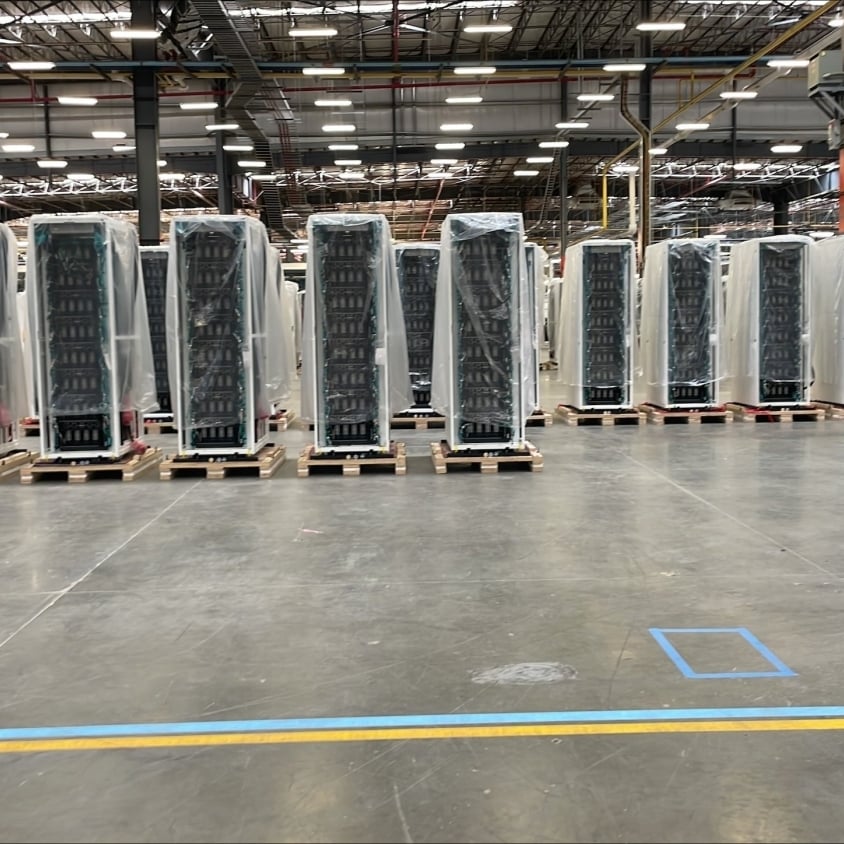
For the past three years, the corporate AI battlefield was defined by a binary choice: surrender proprietary corporate data to public cloud providers or build impossibly complex, expensive internal clusters from disjointed parts. Dell’s aggressive leap straight into turnkey on-premises AI factories changes the calculus entirely. By combining elite hardware—anchored by NVIDIA’s latest Blackwell architecture and high-density liquid cooling—with software orchestration layers that seamlessly toggle between competing foundation models, Dell is positioning itself as the Switzerland of the enterprise tech stack.
The Anatomy of an Enterprise AI Factory: Beyond the Public Cloud
The modern enterprise is drowning in data yet starving for actionable intelligence. However, the friction of moving petabytes of sensitive financial records, intellectual property, and proprietary operational logs to external cloud hyperscalers has created severe bottlenecks in risk mitigation and regulatory compliance. Dell’s new architecture resolves this tension by bringing the training and inference capabilities directly behind corporate firewalls.
The system’s true differentiator, however, extends far beyond standard large language model (LLM) text processing. Industry insiders tracking the May 2026 rollout emphasize that the real engineering breakthrough lies in the integration of advanced video world models. These models allow heavy industrial enterprises—ranging from automotive giants to global logistics operators—to simulate physical world dynamics in real-time. By processing high-definition video feeds through localized Gemini and Grok instances housed in Dell cabinets, factories can predict equipment failure, optimize robotics workflows, and test safety protocols in simulated digital twins without a single byte of telemetry ever leaving the building.
This multi-model integration strategy allows businesses to avoid vendor lock-in. An enterprise can route routine customer service automation through ChatGPT, deploy Google’s Gemini for deep data analytics and multimodal document processing, and leverage xAI’s Grok for real-time market intelligence and code generation—all managed under a single, unified orchestration pane of glass.
Verified Data and Metrics Breakdown
To understand the magnitude of this market shift, financial analysts must examine the underlying structural metrics governing enterprise infrastructure deployment, data security tolerances, and capital expenditure reallocation.
| Metric / Parameter | Traditional Public Cloud Model | Dell On-Premises AI Factory |
|---|---|---|
| Data Latency & Ingress/Egress Costs | High recurring bandwidth fees; variable latency | Near-zero latency; zero egress penalties |
| Model Integration Scope | Siloed (typically single-cloud or restricted APIs) | Unified (ChatGPT, Gemini, Grok native co-existence) |
| Regulatory Compliance Risk | Elevated exposure to cross-border data transfer laws | Complete sovereignty; local air-gapped security |
| Capital Expenditure vs. OpEx | Perpetual operational expenditure subscription model | CapEx investment with predictable long-term TCO |
Industry & Market Implications: Winners and Losers
The commercial debut of Dell’s all-in-one AI factory initiative sends immediate shockwaves across global capital markets, forcing a dramatic reassessment of valuation multiples for both hardware manufacturers and cloud service providers.
The Winners
- Dell Technologies (NYSE: DELL): Cementing its transition from legacy PC and server vendor to the premier architect of sovereign enterprise artificial intelligence. This strategy positions Dell to capture high-margin service contracts and recurring maintenance revenues.
- Enterprise CIOs & CISOs: Corporate technology chiefs regain absolute control over their data pipelines, mitigating compliance risks associated with GDPR, HIPAA, and emerging global AI regulations.
- Hardware & Cooling Innovators: Suppliers of advanced liquid-cooling systems, high-speed networking switches, and high-density power distribution units will experience a surge in demand as on-premises power density requirements skyrocket.
The Losers
- Pure-Play Public Cloud Hyperscalers: Companies heavily reliant on renting out generic compute cycles for AI training face a structural threat as enterprises bring high-compute workloads back on-premises to curb runaway cloud bills.
- Single-Model Proprietary Ecosystems: Tech firms attempting to force enterprises into utilizing only one proprietary foundation model will struggle against Dell’s multi-model flexibility.
Frequently Asked Questions (People Also Ask)
What is an on-premises AI factory?
An on-premises AI factory is a fully integrated, turnkey supercomputing infrastructure installed directly within a company’s own data center or secure facility. Unlike public cloud setups, it combines specialized high-performance servers, advanced liquid cooling, storage arrays, and orchestration software locally, allowing enterprises to train, fine-tune, and run multiple foundation models behind their own firewall.
Why would an enterprise choose ChatGPT, Gemini, and Grok simultaneously?
Different foundation models possess distinct core competencies. By deploying a multi-model architecture through Dell, enterprises can route specific tasks to the optimal model—such as utilizing Gemini for multimodal document analysis, ChatGPT for conversational automation, and Grok for rapid code generation or real-time data processing—without being locked into a single vendor's ecosystem.
How does this impact cloud compute spending and enterprise ROI?
While on-premises AI factories require a significant upfront capital expenditure (CapEx), they drastically reduce the long-term operational expenditure (OpEx) associated with recurring public cloud API calls, data egress fees, and unpredictable bandwidth costs. For Fortune 500 corporations operating at scale, this structural shift accelerates time-to-value and improves overall return on investment.
What role do video world models play in Dell’s new architecture?
Video world models allow enterprise systems to process and interpret complex physical environments and spatial dynamics from camera feeds. In an on-premises factory setting, this enables industrial, manufacturing, and logistics firms to run real-time simulations, predict mechanical failures, and optimize automated workflows securely and instantaneously.
Future Outlook: Milestones to Watch
As the enterprise AI battlefield matures through 2026 and beyond, market watchers must monitor several critical inflection points. First, observe how aggressively public cloud hyperscalers adjust their pricing structures and hybrid-cloud offerings to stem the migration of high-value AI workloads back to corporate data centers. Second, track enterprise adoption rates of multi-model orchestration platforms versus single-tenant cloud deployments in upcoming quarterly earnings reports.
Ultimately, Dell’s decisive move signals that the future of enterprise artificial intelligence will not be dictated solely by Silicon Valley cloud monopolies. By bridging the gap between hardware supremacy and model democratization, Dell has laid the groundwork for the next era of sovereign corporate intelligence—one where data security, flexibility, and raw computing power reside entirely in the hands of the enterprise.