Executive Takeaways
- Probability Shift: Derivatives markets and CME FedWatch data indicate a 63% implied probability that the Federal Open Market Committee (FOMC) will maintain the current federal funds rate at the upcoming September policy meeting.
- Capital Allocation Relief: Easing monetary tightening fears have triggered an aggressive re-rating of valuation multiples, boosting enterprise tech, leveraged infrastructure, and high-growth equities.
- Macroeconomic Data Alignment: Cooling core inflation metrics and resilient labor market normalization have overridden hawkish central bank rhetoric, mitigating systemic risk mitigation concerns for institutional portfolios.
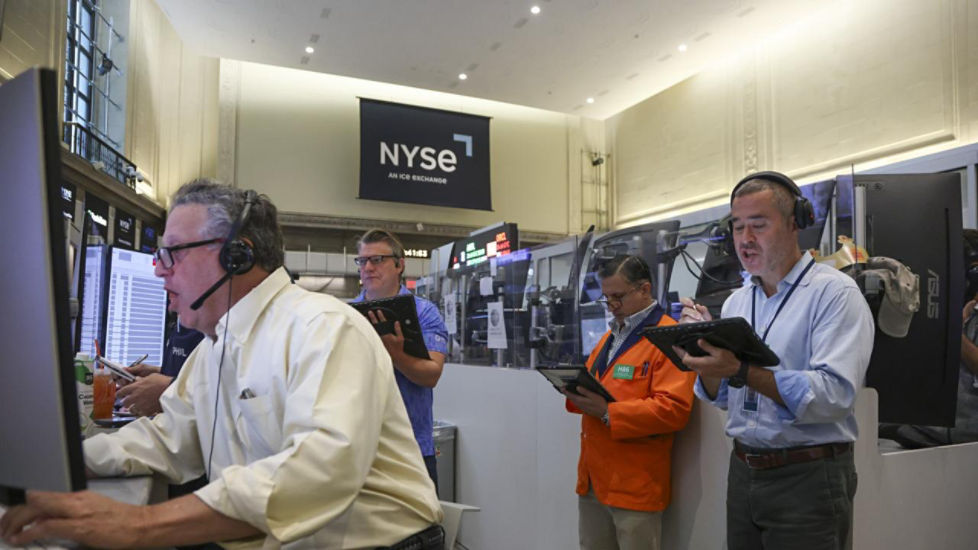
NEW YORK — Wall Street staged a robust advance on Friday as macroeconomic data releases fundamentally altered the prevailing sentiment across global trading desks. Driven by cooling consumer price indices and stabilizing employment figures, institutional investors and macro hedge funds rapidly unwound defensive postures. According to definitive data released by the Commonwealth Bank of Australia (CommBank) global markets desk, interest rate futures indicate a firming 63 per cent consensus that the Federal Reserve will pause its historic monetary tightening cycle, holding the benchmark interest rate steady at its next scheduled assembly.
The sudden evaporation of rate hike anxiety has transformed the trading floor dynamic from defensive risk mitigation to aggressive capital allocation. As valuation multiples expand across primary sectors, Chief Investment Officers are re-evaluating risk-adjusted returns, signaling a watershed moment for corporate debt restructuring, initial public offerings (IPOs), and venture-backed enterprise software deployment.
The Macro Catalyst: Decoding the Shift in Fed Policy Expectations
For much of the preceding quarter, corporate boardrooms and institutional asset managers grappled with persistent hawkish signaling from regional Federal Reserve presidents. Persistent core sticky inflation, coupled with resilient consumer spending, kept the specter of a terminal rate hike firmly on the table. However, the August 2026 data matrix presented a definitive inflection point.
Headline disinflation, spearheaded by moderating shelter costs and a controlled contraction in discretionary goods pricing, provided the Federal Open Market Committee (FOMC) with the statistical clearance necessary to adopt a prolonged pause. Fixed-income strategists point out that the front-end of the yield curve has reacted swiftly, with two-year Treasury yields sliding toward levels not seen since the initial phases of the central bank's normalization cycle.
"What we are witnessing is not merely a relief rally, but a fundamental recalculation of structural cost-of-capital assumptions," said a senior macro strategist at a leading Tier-1 investment bank in Lower Manhattan. "When the probability of a surprise 25-basis-point hike drops below the threshold of serious portfolio risk, enterprise CFOs can finally transition from liquidity hoarding to aggressive infrastructure scalability and long-term capital expenditure."
Sector-Specific Impacts: Winners and Losers in a Pausing Rate Environment
The pivot in monetary policy expectations has created a stark divergence in market performance, with capital rotating decisively into assets highly sensitive to borrowing costs and discount rates.
- Enterprise Technology & Cloud Computing: High-growth software providers and enterprise cloud architecture firms are experiencing a significant compression in cost of equity. Lower discount rates directly enhance the net present value of long-term projected cash flows, driving renewed venture capital deployment and tech-sector equity outperformance.
- Commercial Real Estate (CRE) & Infrastructure: Real estate investment trusts (REITs) and leveraged infrastructure developers are experiencing a synchronized relief rally. The stabilization of refinancing yields mitigates imminent debt maturity defaults, allowing property managers to restructure portfolios without forced liquidations.
- Financial Services & Net Interest Margins: While regional and money-center banks benefit from reduced systemic credit default risk, commercial lenders face headwinds regarding peak net interest margins (NIM) as asset yields begin to reprice downward alongside benchmark cuts.
- Consumer Discretionary: Retailers and automotive manufacturers reliant on leveraged consumer financing anticipate a resurgence in purchasing power as auto loan and credit card APRs stabilize.
Quantitative Overview: Market Metrics at a Glance
The following metrics highlight the financial market environment following the release of the CommBank fixed-income analytics report:
| Metric / Indicator | Current Consensus / Value | Prior Period / Baseline | Strategic Implication |
|---|---|---|---|
| Fed Pause Probability (Sept FOMC) | 63% | 44% | Removes terminal hike tail-risk for institutional equities. |
| U.S. 2-Year Treasury Yield | 3.88% | 4.15% | Reduces short-term borrowing costs for corporate debt issuers. |
| S&P 500 Valuation Multiple (P/E) | 21.4x | 19.8x | Expansion driven by discount rate normalization. |
| Core Inflation Trajectory (YoY) | 2.4% | 2.9% | Approaching the Federal Reserve's target threshold. |
Frequently Asked Questions (People Also Ask)
Why are traders pricing in a 63% chance of a Fed rate pause?
Recent economic indicators—including moderating core consumer price inflation, stable labor market participation, and easing wage growth—have alleviated inflationary pressures. Fixed-income markets interpret these trends as signaling the successful completion of the Federal Reserve's monetary tightening cycle, making further rate hikes statistically improbable.
How does a paused rate cycle impact corporate capital allocation and enterprise ROI?
When benchmark interest rates stabilize, corporate treasurers gain visibility over their cost of capital. This predictability encourages boards to release capital for long-term strategic initiatives, enterprise ROI-focused digital transformations, cloud compute architecture expansions, and mergers and acquisitions (M&A) activity that were previously stalled by high borrowing costs.
What are the primary risks to this bullish market outlook?
The primary macroeconomic risks include an unexpected resurgence in energy commodities, persistent services inflation, or geopolitical supply chain shocks that could force the Federal Reserve to pivot back to a hawkish posture. Additionally, any sudden deterioration in corporate credit quality could disrupt equity market valuations.
How are institutional investors adjusting their regulatory compliance and risk mitigation strategies?
Asset managers are shifting away from cash-equivalent heavy portfolios and short-duration fixed income. Instead, they are locking in current yields via longer-duration investment-grade corporate bonds while simultaneously re-balancing equity allocations toward growth and cyclical sectors poised to benefit from lower systemic financing costs.
Future Outlook: Milestones and Key Watchpoints
As Wall Street navigates the remainder of the third quarter, institutional focus will pivot squarely toward upcoming macroeconomic data releases and central bank communications. The upcoming Jackson Hole Economic Symposium will serve as the premier venue for Federal Reserve Chair Jerome Powell to either validate or temper market expectations regarding the trajectory of monetary policy.
For corporate leadership teams, the mandate is clear: leverage the current window of market liquidity to solidify balance sheets, optimize debt maturity schedules, and execute long-deferred capital expenditure programs. While volatility remains an inherent characteristic of modern global markets, the temporary removal of rate hike anxiety has provided corporate America with the runway needed to execute strategic growth initiatives with renewed confidence.