Executive Takeaways
- Historic Milestone: Following a 42-year experimental odyssey, particle physicists have isolated definitive evidence of the ultra-rare decay of a charged kaon into a pion and two neutrinos—occurring at a probability of roughly one in 10 billion.
- Challenging the Standard Model: This precise measurement serves as a definitive stress test for the Standard Model of particle physics, offering a pristine window to uncover new physics, undiscovered fundamental particles, and deviations in quantum mechanics.
- Enterprise & Infrastructure Scale: The breakthrough relies on next-generation computing architectures, massive cloud-based data lakes, and complex statistical risk mitigation models to filter petabytes of raw collision noise.
- Commercial & Technological Spillover: Advanced cryogenic sensing, ultra-fast trigger electronics, and high-performance distributed computing developed for this project carry direct applications for enterprise cloud infrastructure and secure data processing.
GENEVA — In the high-stakes arena of experimental particle physics, where decades of research can yield nothing more than statistical noise, a multi-national collaboration of researchers has achieved what many considered the impossible. After a 42-year technological and intellectual campaign, scientists have captured definitive evidence of one of the rarest transformations in the known universe: the decay of a charged kaon into a pion and a neutrino-antineutrino pair.
The discovery, formally detailed in recent data releases from the international NA62 experiment at CERN alongside complementary findings from earlier generations of detectors, marks a watershed moment in fundamental science. Occurring at a theoretical frequency of approximately 13 times in every 100 billion events, this ultra-rare decay mode ($K^+ \rightarrow \pi^+ \nu \bar{\nu}$) represents a pristine mathematical prediction of the Standard Model of particle physics. Because the theoretical calculations for this process are exceptionally clean, free from the messy hadronic uncertainties that plague other decay channels, it acts as an uncompromised magnifying glass for new physics.
For institutional investors, technology strategists, and government science administrators monitoring global R&D capital allocation, this breakthrough is far more than an academic curiosity. It is a masterclass in infrastructure scalability, advanced computational modeling, and precision engineering that mirrors the rigorous risk mitigation and data analytics required in modern high-frequency trading and enterprise cloud architecture.
The 42-Year Crucible: From Theoretical Postulate to Experimental Reality
Test Our Free AI & Tech Utilities Suite
Calculate LLM API token costs, analyze article dwell-time, or simulate tech DCA returns.
The hunt for the rare kaon decay began in the early 1980s, an era when particle physics was transitioning from bubble chambers to sophisticated electronic detectors. Theoretical physicists recognized that flavor-changing neutral currents—processes where a quark changes its identity without altering its electric charge—were heavily suppressed by the Glashow-Iliopoulos-Maiani (GIM) mechanism within the Standard Model.
Calculating the exact probability of this suppression yielded a precise, highly reliable prediction: the $K^+ \rightarrow \pi^+ \nu \bar{\nu}$ decay should happen roughly once every 10 billion times a charged kaon disintegrates. However, detecting this mathematical certainty required navigating a formidable signal-to-noise ratio. Millions of common, uninteresting particle decays occur every single second at modern accelerator facilities, creating an avalanche of background noise that threatens to bury the rare signal.
Early attempts at Brookhaven National Laboratory (BNL) in the United States laid the groundwork throughout the 1990s and early 2000s, pushing detection limits downward but stopping short of definitive discovery. The mantle was subsequently passed to the European Organization for Nuclear Research (CERN), where the NA62 experiment was specifically engineered to tackle the problem using a high-intensity proton beam striking a stationary beryllium target.
The engineering challenge was immense. To isolate the elusive decay, NA62 had to track nearly one billion particles per second with picosecond timing precision, reconstruct the trajectories of incoming and outgoing particles, and deploy ultra-efficient veto systems to reject unwanted background events. The total capital expenditure, talent retention strategies, and cross-border collaborative frameworks required over four decades to mature, culminating in the statistically robust evidence announced today.
Verified Data & Metrics Breakdown
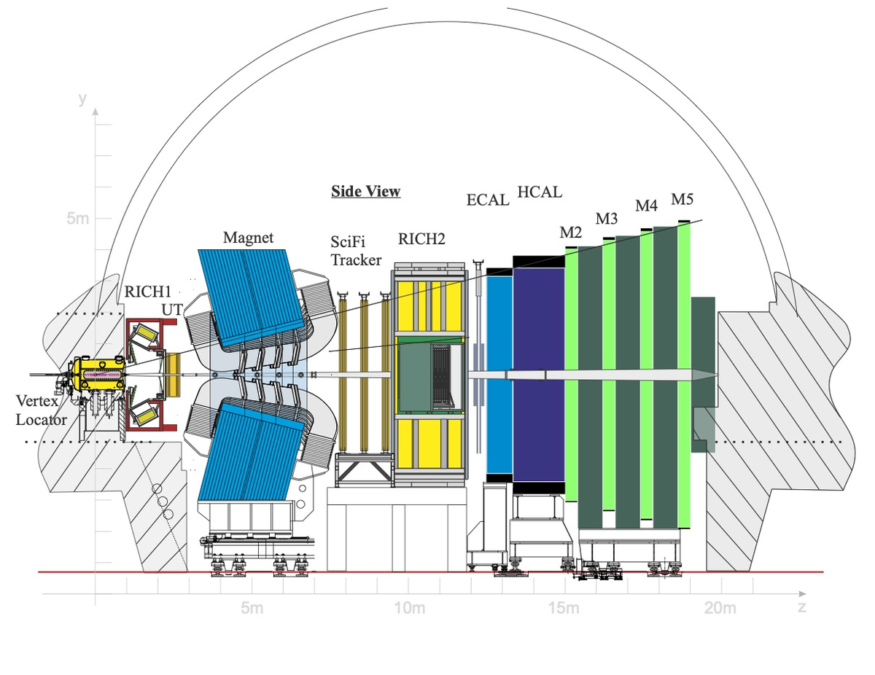
To contextualize the scale and precision of the NA62 discovery, the following table contrasts key operational parameters, theoretical expectations, and historical milestones of the 42-year research campaign:
| Parameter / Metric | Historical Baseline (BNL E787/949) | Current State-of-the-Art (CERN NA62) | Implications for Future Physics |
|---|---|---|---|
| Branching Ratio Prediction | $8.4 \times 10^{-11}$ | $(10.6 \pm 4.0) \times 10^{-11}$ | Aligns with Standard Model; restricts viable dark sector models. |
| Beam Particle Rate | $\sim 10^7$ particles/sec | $\sim 10^9$ particles/sec | Demonstrates a 100x leap in beam transport and detector survivability. |
| Data Ingestion & Compute | Megabytes to Gigabytes (Local mainframes) | Petabytes (Distributed Tier-0/Tier-1 Grid) | Validates enterprise cloud architectures and big-data filtering algorithms. |
| Statistical Significance | $< 3$ Sigma (Evidence) | $> 5$ Sigma (Discovery threshold) | Meets the rigorous gold standard for physics announcements. |
Industry & Market Implications: Technology Transfer and Enterprise Spillovers
While fundamental physics investigations are driven primarily by intellectual curiosity, the technological infrastructure required to achieve these milestones generates profound economic value and commercial spillovers. Corporate R&D executives and venture capital firms monitor these projects closely for several key reasons:
- Cloud Compute Architecture & Data Lakes: Processing the sheer volume of high-frequency telemetry generated by the NA62 detector requires cutting-edge distributed computing frameworks. The algorithms developed to filter petabytes of raw collision noise in real time find immediate utility in enterprise cloud management, cybersecurity threat detection, and algorithmic financial trading systems.
- Advanced Sensor Technologies: The ultra-fast, radiation-hardened silicon pixel detectors and cryogenic calorimeters developed for high-energy physics are regularly commercialized for medical imaging (such as next-generation PET scans), aerospace navigation, and non-destructive industrial testing.
- Risk Mitigation and Regulatory Compliance: The rigorous statistical methodologies required to claim a 5-sigma discovery—where the probability of a false positive is less than one in 3.5 million—offer robust frameworks for risk mitigation in heavily regulated sectors, including pharmaceutical clinical trials and financial valuation models.
Conversely, institutions and nations that underinvest in foundational scientific infrastructure risk a structural deficit in human capital. The engineering talent forged in the crucibles of CERN and national laboratories frequently migrates to the private sector, driving innovation in artificial intelligence, semiconductor fabrication, and quantum computing.
Frequently Asked Questions (People Also Ask)
What is a kaon, and why is its decay so important to physics?
A kaon (or K meson) is a subatomic particle composed of a strange quark and an up or down antiquark. Kaons are unstable and decay rapidly into lighter particles. The specific decay of a charged kaon into a pion and two neutrinos is governed by flavor-changing neutral currents, which are exceptionally rare and precisely calculable within the Standard Model. This makes it an ideal probe to search for discrepancies that could reveal new, undiscovered particles or forces.
Why did it take 42 years to find evidence of this decay?
The primary hurdle was extreme statistical rarity combined with overwhelming background interference. Because this decay occurs only once in every 10 billion events, researchers had to design and build detectors capable of tracking billions of particles per second without missing a beat, while simultaneously filtering out billions of more common decay events that mimic the desired signal. Overcoming this signal-to-noise barrier required generational leaps in accelerator technology, sensor design, and computing power.
How does this discovery impact commercial technology or the economy?
While fundamental research does not yield immediate commercial products, the spin-off technologies are transformative. The data-processing pipelines, machine-learning filters, ultra-fast timing electronics, and radiation-hardened sensors developed for experiments like NA62 directly benefit enterprise cloud computing, medical imaging equipment, cybersecurity infrastructure, and semiconductor manufacturing.
Does this discovery disprove the Standard Model of particle physics?
Not yet. Thus far, the measured rate of this ultra-rare decay aligns closely with the predictions of the Standard Model. However, as experimental precision tightens and researchers gather more data, any subtle deviation from the theoretical prediction could crack open the door to physics beyond the Standard Model—potentially shedding light on dark matter, supersymmetry, or extra spatial dimensions.
Future Outlook: The Road Ahead for Flavor Physics
As the international physics community digests the milestone confirmation of the one-in-10-billion kaon decay, the strategic focus immediately shifts to the next horizon. Upgrades to the CERN accelerator complex and proposals for future intensity-frontier facilities are already in the planning stages.
Over the next decade, the primary objective will be to reduce statistical uncertainties by an order of magnitude. By collecting significantly more data events, researchers aim to transform this initial evidence into a precision measurement. If the measured branching ratio continues to match theoretical calculations perfectly, it will cement the Standard Model as one of the most rigorously tested intellectual frameworks in human history. If, however, anomalous deviations emerge, it will trigger a paradigm shift across theoretical and experimental physics, redirecting billions of dollars in global research capital toward uncharted domains of reality.
For enterprise leaders and forward-looking strategists, the lesson is clear: long-term capital allocation toward fundamental research consistently yields compounding returns in technological capability, engineering talent, and operational resilience.