For more than three decades, the Hubble Space Telescope has served as the undisputed crown jewel of observational astronomy, radically shifting humanity’s understanding of cosmic expansion, dark energy, and the planetary architectures of our galaxy. Yet, as the spacecraft gracefully arcs through an increasingly congested Low Earth Orbit (LEO), federal decision-makers, aerospace executives, and deep-pocketed private-space visionaries are confronting a sobering reality: Hubble’s orbital decay has reached a critical inflection point. Washington is now locked in high-level deliberations over whether to authorize an unprecedented commercial servicing mission to extend the observatory's lifespan or to engineer a safe, controlled deorbit that will permanently plunge the historic instrument into the remote expanse of the South Pacific Ocean.
This high-stakes dilemma is no longer just a matter of academic curiosity. It represents a watershed moment for capital allocation within the New Space economy, pitting legacy aerospace risk-mitigation frameworks against aggressive, venture-backed enterprise scalability models. As NASA weighs its options, the decision carries profound implications not only for the future of orbital infrastructure management and regulatory compliance, but also for the valuation multiples of emerging commercial spaceflight providers eager to validate their technological readiness levels (TRLs) on a national stage.
Executive Takeaways
Test Our Free AI & Tech Utilities Suite
Calculate LLM API token costs, analyze article dwell-time, or simulate tech DCA returns.
The Catalytic Turning Point: Orbital Decay Meets Commercial Ambition
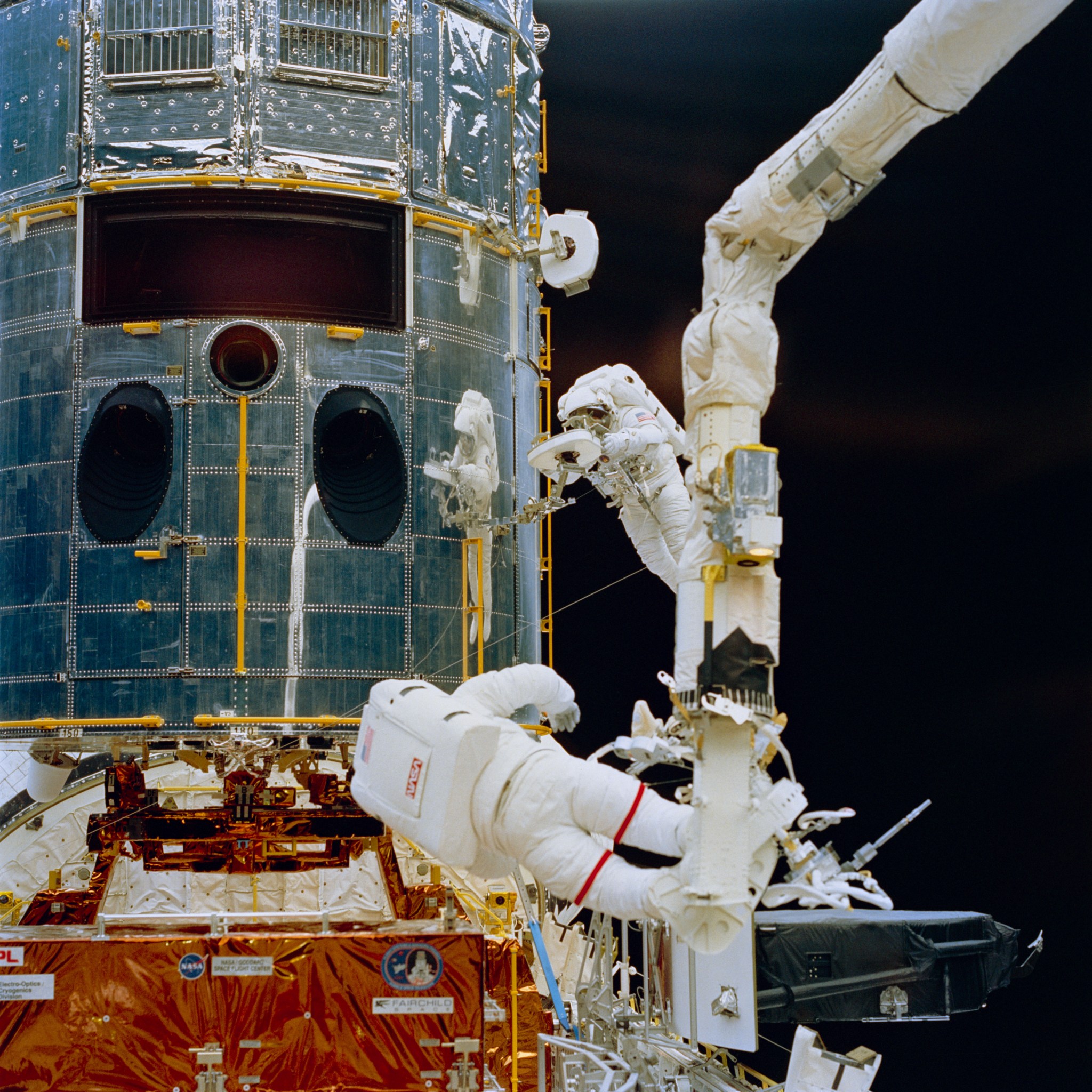
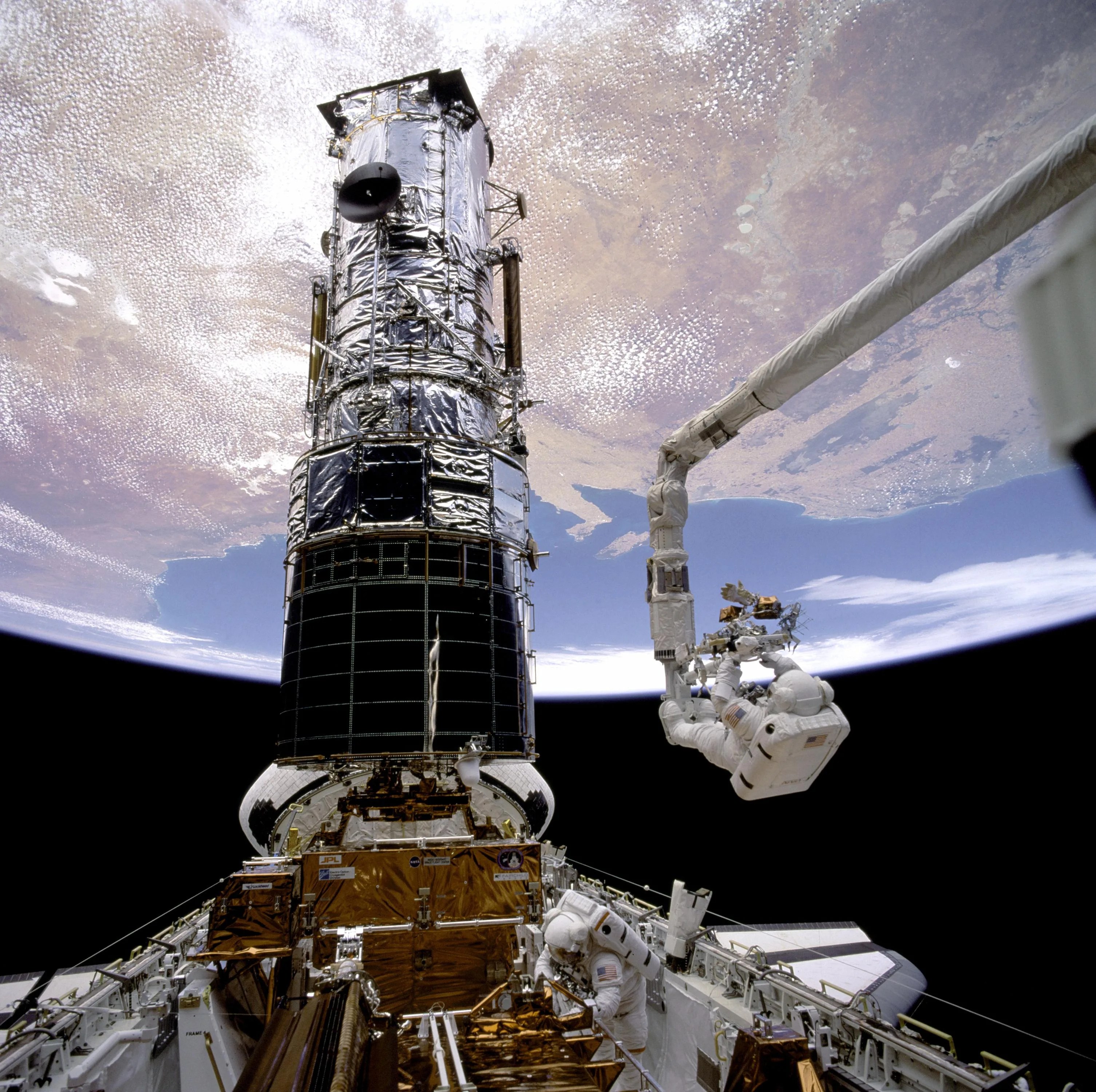
Launched in April 1990 aboard the Space Shuttle Discovery, Hubble was engineered with a modular architecture specifically designed to allow human servicing missions. Over five historic shuttle flights, astronauts executed complex maintenance routines, replacing gyroscopes, installing state-of-the-art optical instruments, and upgrading onboard data-processing infrastructure. These interventions transformed a flawed mirror into a peerless astronomical powerhouse. However, with the retirement of the Space Shuttle fleet in 2011, those vital human-tended maintenance windows abruptly ceased.
Today, Hubble orbits at an altitude of approximately 535 kilometers—a decaying path driven by residual atmospheric drag, which fluctuates significantly depending on solar activity and space weather. Without intervention, atmospheric friction will inexorably drag the 24,000-pound telescope into an uncontrolled re-entry sometime in the mid-2030s. While statistical models suggest that a substantial portion of the observatory would vaporize during descent, heavy structural components and primary mirror segments could survive atmospheric heating, creating an unacceptable collateral risk profile for populated landmasses below.
The turning point arrived when SpaceX and the Polaris Program approached NASA with an unsolicited Space Act Agreement (SAA) proposal. Utilizing an uncrewed or modified Crew Dragon capsule equipped with specialized docking hardware, private astronauts or autonomous systems could theoretically rendezvous with Hubble, attach a propulsion kit, and safely elevate the telescope into a fresh, higher-altitude orbit—while potentially conducting minor hardware diagnostics. For enterprise investors and market analysts monitoring the commercial space sector, this initiative represents a major stress test of infrastructure scalability and public-private operational synergy.
| Parameter / Metric | Hubble Servicing / Re-boost Option | Controlled Deorbit Option |
|---|---|---|
| Estimated Cost to NASA | Variable (Primarily privately funded with government oversight) | Low to Moderate (Standard federal deorbit burn protocols) |
| Technical Risk Profile | High (Unproven commercial docking in high-radiation LEO) | Low-Moderate (Standard orbital mechanics and thruster actuation) |
| Asset Longevity Impact | Extends operational lifespan by 10 to 20 years | Immediate termination of observational capabilities |
| Market & Valuation Impact | Validates commercial orbital servicing market; high enterprise ROI potential | Signals strict risk aversion; curtails speculative servicing models |
| Regulatory Compliance | Aligns with advanced orbital asset preservation guidelines | Directly satisfies international orbital debris mitigation mandates |
Weighing the Ledger: Risk Mitigation vs. Asset Preservation
Inside NASA’s headquarters and at the Goddard Space Flight Center, agency leaders are locked in intense internal deliberations. The friction point lies in the tension between asset preservation and rigorous risk mitigation. On one hand, Hubble continues to produce world-class science. Its wide-field cameras and spectrographs operate in tandem with newer assets like JWST, providing crucial ultraviolet and optical data that infrared telescopes cannot capture. Terminating Hubble prematurely would leave a permanent observational void in multi-messenger astrophysics.
Conversely, federal oversight bodies and risk-assessment panels view the proposed commercial servicing mission through a lens of strict liability and fiscal prudence. Even if SpaceX and its partners absorb the majority of the developmental capital expenditure, NASA remains the ultimate data custodian and risk owner. A botched docking maneuver that damages Hubble prematurely could result in an ungraceful, public-relations disaster while generating thousands of hazardous high-speed orbital debris fragments.
Furthermore, capital allocation across federal space budgets is exceptionally tight. Appropriations subcommittees must balance planetary defense, Earth-observing climate satellites, and human lunar exploration against maintenance costs for legacy assets. For enterprise finance strategists, this highlights a classic sunk-cost dilemma: at what point do the marginal costs of extending an aging infrastructure asset outweigh the opportunity cost of investing in next-generation, high-yield technologies?
Industry and Market Implications: Winners, Losers, and Economic Ripples
The impending decision on Hubble’s ultimate fate carries sweeping consequences across the global aerospace supply chain, influencing market liquidity for venture-backed space startups and shaping the strategic trajectories of legacy prime contractors.
The Winners: Commercial Orbital Servicing Providers
Should NASA greenlight the commercial re-boost study, it will instantly legitimize the burgeoning orbital servicing and logistics sector. Companies specializing in rendezvous, proximity operations, and docking (RPOD) technologies will experience an immediate surge in valuation multiples. Venture capital deployment into in-space manufacturing and maintenance startups would accelerate, driven by the realization that NASA is willing to trust private enterprise with high-value national assets.
The Losers: Risk-Averse Legacy Contractors & Pure-Play Decommissioning Advocates
Conversely, if NASA leans toward a controlled deorbit, the near-term addressable market for commercial human-tended servicing will contract. Legacy firms advocating for traditional, risk-averse procurement models would feel vindicated, but pioneering startups banking on an active in-space servicing economy would face a tougher fundraising climate. Investors would be forced to re-evaluate their enterprise ROI timelines, pivoting away from near-term government rescue contracts toward more self-sustaining commercial propositions like satellite refueling and active space debris removal.
Frequently Asked Questions (People Also Ask)
Why can't NASA use robotic spacecraft instead of human missions to service Hubble?
While robotic technology has advanced significantly, Hubble was explicitly engineered to be serviced by human hands using specialized tools, handrails, and mechanical interfaces designed for astronauts wearing bulky pressure suits. Retrofitting Hubble for purely autonomous robotic intervention would introduce immense engineering complexity and cost, making human-tended or highly sophisticated hybrid operations the preferred choice for major mechanical overhauls.
What is the current timeline for NASA’s final decision?
NASA has not committed to a hard deadline, but as Hubble's orbital decay accelerates due to ongoing solar cycle activity, agency officials indicate that a definitive policy framework must be established. The choice between moving forward with a formal procurement process for a servicing mission or designing a specialized deorbit module will likely crystallize as orbital tracking data dictates.
How does a controlled deorbit of Hubble work?
A controlled deorbit requires attaching a dedicated propulsion module to the telescope—either via a specialized robotic delivery system or a crewed vehicle—to precisely ignite thrusters at a calculated moment. This targeted burn ensures that any surviving debris safely impacts a predetermined, uninhabited oceanic zone, most commonly known as the spacecraft graveyard in the South Pacific Ocean.
Will the James Webb Space Telescope replace Hubble entirely if it is decommissioned?
No. While the James Webb Space Telescope is exponentially more powerful in the infrared spectrum, it does not observe the universe in the same ultraviolet and visible light wavelengths as Hubble. The two instruments were designed to be complementary rather than redundant, meaning Hubble’s retirement would leave a distinct gap in humanity's multi-wavelength observational capabilities.
Future Outlook: Milestones to Watch as the Final Orbit Nears
As this high-stakes narrative unfolds, industry stakeholders and institutional investors should monitor several key milestones over the coming quarters. First, watch for any formal updates to NASA's Space Act Agreements regarding private-sector feasibility studies and safety baseline reviews. Second, pay close attention to updates from commercial launch providers regarding technological readiness levels for autonomous docking hardware operating in Low Earth Orbit.
Ultimately, whether Hubble receives a historic, privately backed lease on life or makes its final, fiery descent into the ocean depths, the decision will serve as a foundational benchmark. It will test the boundaries of public-private cooperation, redefine regulatory compliance standards for orbital infrastructure, and permanently etch the future path of commercial enterprise in space.