Executive Takeaways
- Comprehensive Inflation Adjustments: The Internal Revenue Service (IRS) has finalized the official inflation-adjusted individual income tax brackets and standard deductions for tax year 2027, utilizing the Chained Consumer Price Index for All Urban Consumers (C-CPI-U).
- TCJA Baseline Dynamics: The 2027 bracket structure reflects the post-statutory baseline environment following the expiration of core provisions from the Tax Cuts and Jobs Act (TCJA), recalibrating marginal rate triggers and standard deduction baselines across all filing statuses.
- High-Net-Worth Capital Realignment: Shifts in long-term capital gains thresholds, Alternative Minimum Tax (AMT) phaseouts, and the unindexed Net Investment Income Tax (NIIT) trigger force wealth management firms and family offices to execute aggressive tax-loss harvesting and strategic Roth conversion corridors.
- Enterprise Payroll & ERP Modernization: Corporate CFOs and payroll infrastructure providers must immediately upgrade Enterprise Resource Planning (ERP) withholding algorithms to ensure enterprise tax compliance and prevent structural under-withholding liabilities across multi-state workforce deployments.
The Macroeconomic Mechanics Behind the 2027 IRS Recalibration
Test Our Free AI & Tech Utilities Suite
Calculate LLM API token costs, analyze article dwell-time, or simulate tech DCA returns.
The Internal Revenue Service has released its official revenue procedure detailing the comprehensive tax bracket thresholds, standard deductions, and statutory indexing parameters for tax year 2027 (returns filed in early 2028). Arriving amidst a macro environment characterized by stabilizing yet sticky core inflation, the annual adjustment serves as a critical structural calibration designed to prevent "bracket creep"—a phenomenon where nominal wage increases push taxpayers into higher marginal brackets without a corresponding increase in real purchasing power.
The 2027 tax parameters are calculated using the Chained Consumer Price Index for All Urban Consumers (C-CPI-U), a formulaic mechanism permanently adopted under the Tax Cuts and Jobs Act of 2017. Unlike the traditional Consumer Price Index (CPI-U), Chained CPI accounts for consumer substitution behavior when prices for specific goods rise. Consequently, C-CPI-U yields a slightly lower measured rate of inflation over time, compounding into subtle upward shifts in marginal tax bracket thresholds. For institutional investors, corporate tax departments, and private wealth advisory teams, understanding the mechanics of these adjustments is vital for optimizing capital allocation and preservation strategies.
Compounding the technical complexity of the 2027 announcement is the lingering legislative shadow of the TCJA’s individual tax provisions. Because the primary marginal rates, standard deductions, and itemized deduction caps enacted under the 2017 reform were legislated with sunset provisions, the 2027 bracket thresholds represent the finalized baseline operational environment established by current statutory law. Taxpayers across every income tier face a structural realignment of their effective tax rates, requiring immediate scenario modeling across estate planning, corporate payroll compliance, and institutional equity compensation structure.
Deconstructing the 2027 Marginal Tax Brackets and Standard Deductions
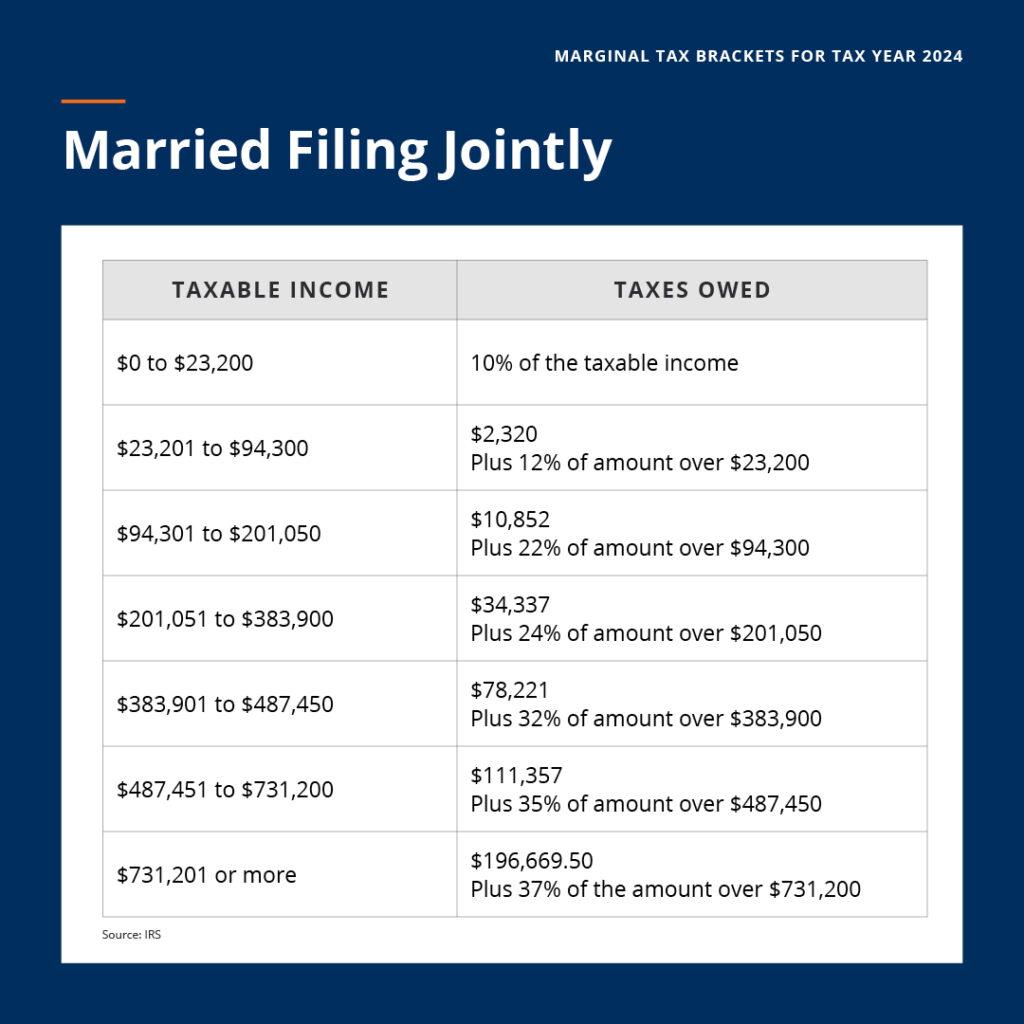
The 2027 tax schedule maintains a seven-tier marginal rate framework, though the dollar bands defining each bracket have expanded to reflect cumulative C-CPI-U adjustments. Marginal tax rates apply strictly to income within designated income corridors, rather than taxing total gross earnings at a single flat rate.
For single filers, the lowest marginal bracket of 10% now applies to adjusted taxable income up to $11,925, while the top statutory rate of 37% captures taxable income exceeding $626,350. Married couples filing jointly will see their 10% boundary expand to $23,850, with the top 37% marginal rate triggering on joint taxable income above $751,600. The standard deduction—a critical benchmark governing whether households itemize deductions such as state and local taxes (SALT), mortgage interest, and charitable contributions—has been adjusted upward to $15,750 for single filers, $31,500 for married couples filing jointly, and $23,625 for heads of household.
The upward shift in standard deductions alters the cost-benefit analysis for itemization strategies. High-net-worth households (HNWHs) subject to the ongoing statutory caps on State and Local Tax (SALT) deductions must carefully time charitable donations—utilizing strategies such as donor-advised fund (DAF) "bunching"—to surpass the higher standard deduction floor and optimize tax efficiency.
Verified Data Breakdown: 2027 Tax Brackets & Statutory Thresholds
The following authoritative metric matrix outlines the official 2027 tax brackets, income bands across primary filing statuses, and key compliance thresholds as codified by the Internal Revenue Service.
| Marginal Tax Rate | Single Filers (Taxable Income) | Married Filing Jointly (Taxable Income) | Head of Household (Taxable Income) |
|---|---|---|---|
| 10% | $0 to $11,925 | $0 to $23,850 | $0 to $17,000 |
| 12% | $11,926 to $48,475 | $23,851 to $96,950 | $17,001 to $64,850 |
| 22% | $48,476 to $103,350 | $96,951 to $206,700 | $64,851 to $103,350 |
| 24% | $103,351 to $197,300 | $206,701 to $394,600 | $103,351 to $197,300 |
| 32% | $197,301 to $250,525 | $394,601 to $501,050 | $197,301 to $250,500 |
| 35% | $250,526 to $626,350 | $501,051 to $751,600 | $250,501 to $626,350 |
| 37% | Over $626,350 | Over $751,600 | Over $626,350 |
| Standard Deduction | $15,750 | $31,500 | $23,625 |
Capital Gains Corridors, NIIT, and Alternative Minimum Tax (AMT) Dynamics
Beyond ordinary income rates, the 2027 tax parameters introduce significant operational shifts across long-term capital gains, qualified dividends, and wealth-transfer tax corridors. Preferential tax treatment for long-term capital gains remains anchored to three statutory tiers: 0%, 15%, and 20%.
For tax year 2027, the 0% long-term capital gains rate applies to joint taxable income up to $96,700 ($48,350 for single filers). The 15% bracket encompasses joint income between $96,701 and $600,050 ($48,351 to $533,400 for single filers). Any taxable capital gain exceeding these maximum thresholds triggers the top 20% capital gains rate. Crucially, high-earning investors face an additional layer of tax liability via the Net Investment Income Tax (NIIT)—a 3.8% surtax levied under Section 1411 of the Internal Revenue Code.
Unlike ordinary income brackets, the statutory thresholds triggering the 3.8% NIIT tax remain unindexed for inflation by law, set permanently at $200,000 for single filers and $250,000 for married couples filing jointly. Because ordinary income brackets shift upward with inflation while the NIIT thresholds remain static, a broader population of mid-to-high income households naturally drifts into NIIT liability over time—a phenomenon financial engineering teams refer to as structural tax drag. Investors selling real estate assets, equity portfolios, or private business holdings must carefully model gross income timing to mitigate cumulative marginal exposure reaching 23.8% at the federal level, exclusive of state liabilities.
Simultaneously, the Alternative Minimum Tax (AMT) baseline parameters for 2027 have been revised. The AMT exemption amount rises to $88,100 for single individuals and $137,000 for married couples filing jointly, with phaseout thresholds starting at $626,350 and $1,252,700, respectively. These updated AMT boundaries provide substantial insulation for middle-to-upper-tier executive earners holding incentive stock options (ISOs) from unexpected AMT triggers upon exercise.
Industry & Market Implications: Enterprise Compliance and Private Wealth Realignment
The operational release of the 2027 tax brackets impacts multiple institutional operational pillars across corporate payroll, risk mitigation, private wealth management, and capital markets enterprise software.
1. Wealth Management and Family Office Capital Allocation
Private banks, multi-family offices, and wealth planning platforms must immediately review wealth preservation strategies. The widening of marginal rate bands creates optimized windows for tax-loss harvesting, asset location management, and systematic Roth IRA conversion corridors. High-net-worth investors hovering near bracket boundaries can utilize partial Roth conversions to fill out lower marginal rate bands (e.g., the 22% or 24% brackets) before higher statutory rates kick in. Furthermore, wealth managers must account for lifetime gift and estate tax exemption adjustments, coordinating grantor trust structures (such as SLATs and GRATs) before statutory shifts alter transfer taxation efficiency.
2. Corporate Treasury, Payroll Architecture, and Enterprise HR Systems
Enterprise organizations utilizing large-scale payroll engines—such as Workday, SAP SuccessFactors, and Oracle HCM—must deploy mandatory software patches to align tax withholding tables with 2027 IRS specifications. Failure to implement accurate bracket indexing in enterprise resource planning (ERP) workflows risks systemic employee under-withholding or over-withholding, triggering compliance penalties and administrative friction. Chief Human Resources Officers (CHROs) and corporate treasurers must also evaluate executive equity compensation delivery—specifically Restricted Stock Units (RSUs) and non-qualified stock options (NQSOs)—to optimize tax withholding elections upon vesting dates.
3. Real Estate Capital Markets and Entity Structuring
Pass-through entities, including partnerships, S-corporations, and LLCs, must assess how the updated income ranges interact with Section 199A Qualified Business Income (QBI) deduction limits. Because the QBI phaseout thresholds are tied to inflation-indexed taxable income levels, business owners operating in service-based sectors (such as healthcare, law, and financial advisory) will have updated income runways before face-out rules restrict deductible pass-through earnings. In commercial real estate, investors executing Section 1031 like-kind exchanges will find the recalibrated capital gains corridors vital for determining equity reinvestment sizing and debt-financing ratios.
Frequently Asked Questions (People Also Ask)
How do the 2027 IRS tax brackets affect my take-home pay and tax return strategy?
The upward adjustment of tax bracket boundaries and standard deductions generally reduces structural tax drag, expanding the amount of income subject to lower marginal rates. For most working professionals, this recalibration results in slightly lower federal tax withholding per paycheck, increasing net take-home pay assuming gross compensation remains stable. From a tax strategy perspective, individuals can leverage higher bracket ceilings to perform tax-efficient asset rebalancing, maximize pre-tax retirement contributions (such as 401k and HSA limits), or execute partial Roth conversions without triggering unexpected higher marginal tax bands.
What is the difference between standard CPI and Chained CPI in determining tax bracket inflation adjustments?
Standard Consumer Price Index (CPI-U) measures price changes across a fixed basket of consumer goods and services over time. In contrast, Chained Consumer Price Index (C-CPI-U)—which the IRS was mandated to use under the Tax Cuts and Jobs Act—accounts for consumer substitution behavior, assuming that when certain items become expensive, consumers switch to lower-cost alternatives. Because substitution modeling slightly depresses measured inflation rate trajectories compared to standard CPI-U, Chained CPI results in slower annual tax bracket expansion, resulting in marginal revenue gains for the federal treasury over multi-year horizons.
How do the 2027 adjustments impact long-term capital gains tax liability?
The 2027 brackets shift the threshold levels for the 0%, 15%, and 20% long-term capital gains rate tiers upward to reflect inflation. Investors can realize greater realized capital gains before triggering higher tax brackets. However, because the 3.8% Net Investment Income Tax (NIIT) threshold remains unindexed by law at $200,000 for single filers and $250,000 for joint filers, high-earning investors must account for the fact that investment gains above these static lines remain subject to the combined maximum federal rate of 23.8%.
Could upcoming Congressional legislation alter the 2027 IRS tax brackets?
Yes. While the IRS releases official revenue procedures based on current statutory tax code provisions under the Internal Revenue Code, federal tax policy remains subject to legislative amendments passed by Congress and signed into law by the President. If Congress enacts fiscal reform, modifies statutory marginal rates, or extends expiring tax provisions prior to or during tax year 2027, the IRS would issue a revised revenue procedure superseding current bracket specifications.
Future Outlook: Fiscal Milestones & Institutional Roadmap
As market participants look ahead to 2027, corporate planning cycles and private client advisories must navigate an increasingly dynamic legislative and fiscal landscape. The structural health of federal receipts remains under intense scrutiny amid elevated sovereign debt levels, guaranteeing that tax policy will occupy center stage in economic policy debates.
Key strategic milestones for institutions to monitor include:
- Congressional Fiscal Debates: Potential legislative adjustments to statutory marginal rates, capital gains provisions, and corporate tax rates prior to tax year 2027 compliance operationalization.
- IRS IT Infrastructure Modernization: The ongoing digital transformation of IRS core processing architecture, expanding automated audit analytics and enterprise compliance monitoring across complex pass-through structures and high-net-worth filings.
- ERP and Payroll Integration Schedules: Corporate IT deployment windows for updating tax engine parameters across enterprise human capital software during Q3 and Q4 ahead of the 2027 tax execution cycle.
Market participants who proactively align capital allocation, payroll engine infrastructure, and wealth transfer vehicles with these calibrated 2027 parameters will effectively minimize tax friction, enhance balance sheet liquidity, and preserve long-term enterprise value.