

Executive Takeaways
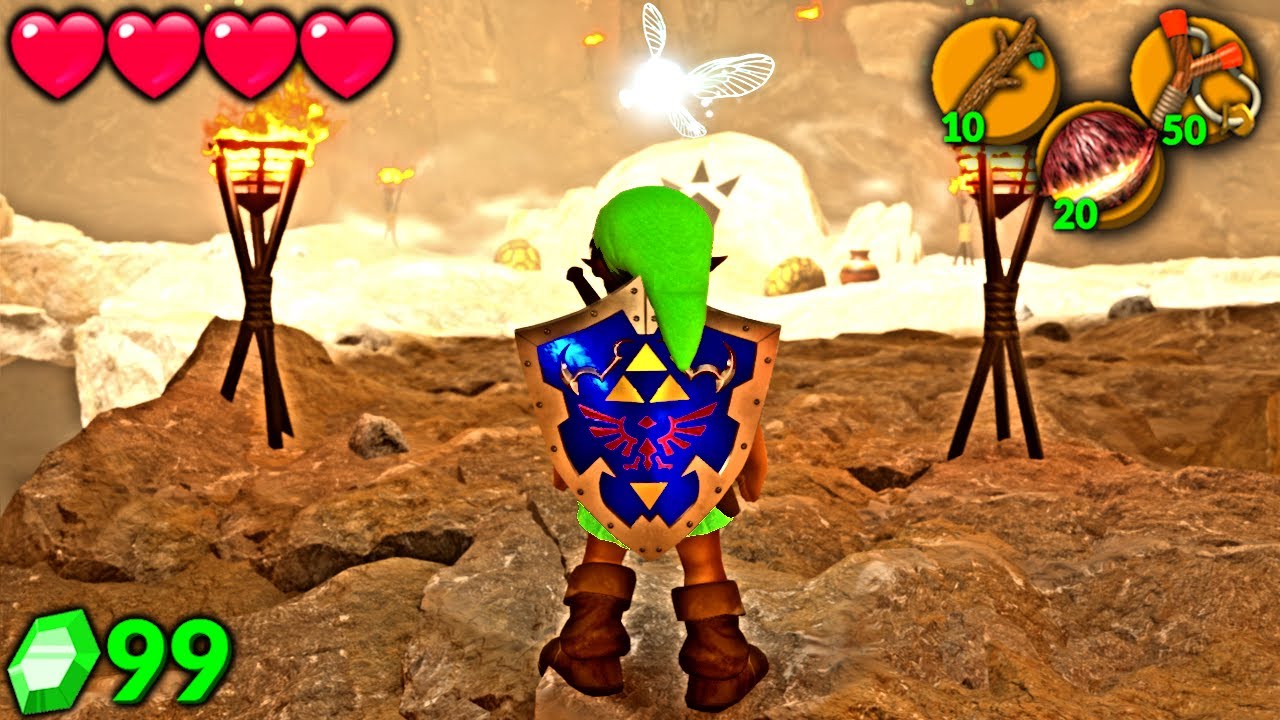
- The Breakthrough: Independent developers have successfully engineered a native PC port of The Legend of Zelda: Ocarina of Time operating at a locked 60 frames per second (FPS) with modern ultrawide support.
- Technical Infrastructure: Unlike resource-heavy emulation, this release utilizes reverse-engineered C code—similar to the Super Mario 64 PC port methodology—optimizing CPU-bound execution and memory utilization.
- Market & Capital Impact: The milestone reignites discussions surrounding intellectual property (IP) monetization, digital preservation, and Nintendo’s aggressive capital allocation toward protecting legacy valuation multiples.
- Regulatory & Compliance Landscape: While the software operates in a legal gray area by requiring users to legally dump their own ROM assets, publishers face mounting scrutiny over the lack of accessible official infrastructure for historical gaming assets.
For over two decades, Nintendo’s 1998 masterpiece, The Legend of Zelda: Ocarina of Time, has stood as an immutable pillar of interactive entertainment. Originally bound to the hardware limitations of the Nintendo 64—running natively at an inconsistent 20 FPS with progressive scan limitations—the title has now broken free from proprietary console architecture. A dedicated community of reverse-engineering specialists has achieved what corporate retro-releases have historically struggled to deliver: a native, high-performance PC port boasting seamless 60 FPS execution, high-definition asset scaling, and contemporary rendering capabilities.
This development transcends a mere nostalgic novelty. It represents a watershed moment at the intersection of software preservation, copyright compliance, and modern computing infrastructure scalability. As global tech giants and entertainment conglomerates evaluate the long-term ROI of legacy monetization, the open-source community’s ability to modernize foundational codebases without official source code access poses profound operational and legal questions for the trillion-dollar gaming sector.
The Genesis of the 60 FPS Milestone: Architectural Breakdown
Test Our Free AI & Tech Utilities Suite
Calculate LLM API token costs, analyze article dwell-time, or simulate tech DCA returns.
Achieving a native 60 FPS execution on modern x86 and ARM PC architectures requires far more than simple graphic interpolation or traditional emulation. Traditional emulators—such as Project64 or RetroArch cores—simulate the original Nintendo 64 hardware environment, translating MIPS architecture instructions into modern CPU instructions on the fly. This introduces overhead inefficiencies, latency spikes, and inherent frame-pacing irregularities.
Conversely, the new PC port stems from a monumental multi-year static recompilation and manual reverse-engineering effort known as decompilation. By systematically analyzing the original ROM binary, developers translated machine code back into high-level C code. This allows the game to compile natively as an executable binary (.exe) designed directly for Windows, macOS, and Linux operating systems.
By untethering the game logic from the original hardware's 20 FPS tick rate, engineers were able to decouple physics calculations from rendering loops. The result is a buttery-smooth 60 FPS presentation that redefines traversal through Hyrule Field, lightning-fast inventory management, and hyper-responsive combat mechanics that expose the deep underlying design brilliance of the original director, Eiji Aonuma, and producer Shigeru Miyamoto.
Verified Data and Metrics Breakdown
To fully contextualize the technological leap of the Ocarina of Time PC port, the following comparative matrix contrasts the original 1998 hardware baseline against official modern console iterations and the current independent PC implementation:
| Platform / Version | Release Year | Native Framerate | Rendering Resolution | Execution Methodology |
|---|---|---|---|---|
| Nintendo 64 (Original) | 1998 | 20 FPS (Variable) | 240p (Interlaced) | Native Hardware Execution |
| Nintendo 3DS (Remake) | 2011 | 30 FPS (Locked) | 400x240 (Stereoscopic) | Grezzo / Nintendo Proprietary Engine |
| Nintendo Switch Online | 2021 | 20 FPS (Emulated) | 720p / 1080p Upscaled | Official N64 Cloud/Local Emulation |
| Independent PC Port | 2024 | 60+ FPS (Unlocked) | 4K, 8K, & Ultrawide (21:9) | Native C Source Recompilation |
Industry & Market Implications: Risk Mitigation and IP Monetization
From an enterprise and capital allocation perspective, events like this force major entertainment conglomerates to reassess their digital asset strategies. Nintendo, renowned for its fiercely protective stance on intellectual property and aggressive risk mitigation via legal channels, views unauthorized ports and decompilation projects as a direct threat to its valuation multiples and software ecosystem control.
However, financial analysts note a distinct strategic vulnerability in current publisher business models. When corporate entities rely on subscription-based emulation services (such as the Nintendo Switch Online Expansion Pack) that fail to deliver technical parity with fan-engineered solutions, market demand for open-source alternatives surges. Key economic dynamics at play include:
- Asset Valuation vs. Consumer Expectations: Consumers increasingly expect modern graphical performance—such as high refresh rates and ultra-high-definition scaling—from foundational IPs, creating a gap between official retro releases and contemporary hardware standards.
- Digital Preservation Dilemma: Archivists and digital historians argue that community-driven decompilation provides a vital hedge against hardware decay, ensuring cultural artifacts survive independent of corporate cloud infrastructure lifecycles.
- Copyright Compliance and Legal Grey Areas: Because the PC port installer typically requires the end-user to provide a legally acquired ROM file to extract proprietary textures and audio assets, developers attempt to navigate safe harbors, though legal challenges from publisher counsels remain an omnipresent operational risk.
Frequently Asked Questions (People Also Ask)
How does the Ocarina of Time PC port achieve 60 FPS without breaking the game code?
The engineering team accomplished this by rewriting the game's core C codebase through manual reverse engineering. By decoupling game logic, collision detection, and animation frames from the original hardware’s 20 FPS rendering loop, the engine can process variable or locked high-framerates (60 FPS and beyond) without game-breaking speed anomalies.
Is the Ocarina of Time PC port legally available to download?
The project is distributed as an open-source executable builder rather than a pre-packaged commercial game. To comply with copyright frameworks, the software requires the user to supply their own legally dumped ROM file of Ocarina of Time to extract proprietary assets like audio, maps, and textures upon installation.
How does this differ from traditional Nintendo 64 emulation?
Traditional emulation involves real-time translation of N64 hardware instructions via software layer interpretation. In contrast, the PC port is a native compilation that runs directly on modern computer processors (x86/x64/ARM), resulting in substantially lower CPU overhead, zero emulation stutter, and native support for modern peripherals, widescreen resolutions, and modding frameworks.
Will Nintendo take legal action against this project?
Nintendo has a long-established precedent of issuing aggressive cease-and-desist letters and deploying copyright enforcement mechanisms against projects that distribute copyrighted IP or utilize leaked source code. Because this specific project operates via clean-room reverse engineering and requires user-supplied ROM assets, it exists in a complex legal space, though ongoing scrutiny from corporate legal teams remains high.
Future Outlook: Strategic Milestones to Watch
As the Ocarina of Time PC port gains widespread adoption across tech enthusiast communities, the broader implications for the video game industry will unfold across several critical vectors over the next 12 to 24 months:
- Modding Ecosystem Expansion: Expect rapid proliferation of community-driven texture packs, ray-tracing implementation mods, and custom campaign expansions, transforming the legacy title into a living platform for modern game development experimentation.
- Corporate Policy Shifts: Pressure will likely mount on legacy publishers to either modernize their official retro offerings with competitive features (such as native ports and high-framerate support) or escalate legal frameworks targeting static recompilation repositories globally.
- Precedent for Future Decompilation: The success of both the Super Mario 64 and Ocarina of Time C-ports establishes a repeatable technical blueprint. Similar reverse-engineering initiatives targeting complex fifth and sixth-generation console libraries (such as GameCube and PlayStation 2 classics) are already accelerating across developer forums.
Ultimately, the realization of a 60 FPS native PC experience for Ocarina of Time underscores a fundamental truth of the digital age: consumer demand for technological excellence often outpaces corporate infrastructure cycles. How publishers choose to balance intellectual property enforcement with technological adaptation will define the economic landscape of digital preservation for decades to come.


