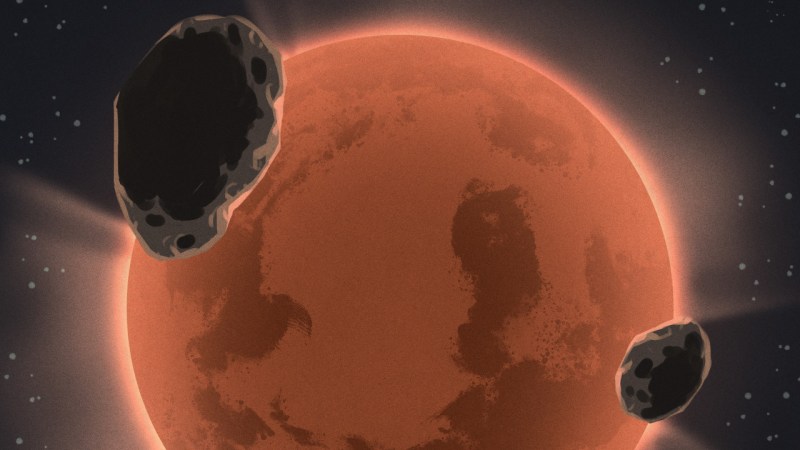
TOKYO — In an era where geopolitical dominance is increasingly measured in orbital trajectories and extraterrestrial resources, Japan’s Aerospace Exploration Agency (JAXA) has greenlit the final deployment sequence for the Martian Moons eXploration (MMX) architecture. This ambitious mission, backed by Japanese industrial heavyweights and international partners, is engineered to execute humanity’s first surface sample collection from Phobos, the enigmatic, crater-scarred moon of Mars. Far beyond a pure science initiative, the MMX mission represents a masterclass in sovereign capital allocation, high-precision aerospace engineering, and strategic supply chain dominance that could recalibrate the competitive dynamics between Tokyo, Washington, and Beijing for decades to come.
Executive Takeaways
- Sovereign Space Supremacy: JAXA’s MMX project represents an estimated ¥46.4 billion ($300+ million) direct technological investment, asserting Japan’s position as a Tier-1 space power capable of complex, multi-body deep-space transit and autonomous orbital rendezvous.
- Global Supply Chain & Multilateral Integration: Built via industrial consortiums led by Mitsubishi Heavy Industries (MHI), NEC Corporation, and IHI Aerospace, the mission integrates mission-critical payloads from NASA, France’s CNES, and Germany’s DLR—including the autonomous micro-rover "IDEFIX."
- Disrupting Mars Sample Return Timelines: By targeting a sample return to Earth by the early 2030s, Japan could precede NASA and the European Space Agency’s (ESA) fiscally constrained Mars Sample Return (MSR) program, securing prime intellectual property regarding the origin of water, volatile compounds, and organic precursors in the inner solar system.
- Enterprise Technology Spin-offs: The architecture introduces advanced radiation-hardened edge computing, optical autonomous landing systems, and pneumatic regolith extraction mechanisms that offer significant commercial utility for terrestrial defense, automated mining, and orbital servicing markets.
The Strategic Calculus: Why Phobos Matters to Global Capital and Defense
To understand why the Japanese government and premier defense contractors have prioritized Phobos over a conventional Martian surface touchdown, one must analyze the physics of deep-space logistics. Phobos orbits Mars at a distance of just 6,000 kilometers—closer to its primary body than any other natural satellite in the solar system. Its microgravity environment, measuring roughly one-thousandth of Earth's gravity, presents an ultra-low energy barrier to entry and exit.
For aerospace strategists and sovereign wealth planners, Phobos is not merely a scientific anomaly; it is the ultimate orbital waystation. Possessing low escape velocity and harboring deep deposits of primordial volatile materials, the moon is structurally positioned to serve as an in-situ resource utilization (ISRU) depot for future crewed exploration and deep-space commercial transit. If JAXA validates that Phobos is an accretion of Mars ejecta—blasted off the red planet’s surface during ancient, cataclysmic asteroid impacts—the MMX mission will deliver Martian surface samples back to Earth at a fraction of the capital expenditure, operational complexity, and delta-v (velocity change) budget demanded by NASA’s stalled multi-billion-dollar ground-ascent architecture.
Deep-Tech Architecture: Engineering an Unprecedented Landing Profile
The MMX spacecraft is an integrated three-module spacecraft stack with a wet mass exceeding 4,000 kilograms at launch, making it one of the heaviest interplanetary explorers ever developed by an Asian nation. Propelling this hardware into a Trans-Mars Injection (TMI) orbit is the flagship H3 Launch Vehicle, manufactured by Mitsubishi Heavy Industries. Following early development headwinds, the H3 has emerged as Tokyo's centerpiece launch asset, designed to lower the cost per kilogram to low-Earth orbit (LEO) while maintaining high-reliability cadence for deep-space payloads.
The mission architecture is divided into three distinct operational systems:
- The Propulsion Module: Engineered for extreme delta-v maneuvers, facilitating the year-long cruise phase to Mars, planetary orbit insertion, transition into a Quasi-Satellite Orbit (QSO) around Phobos, and the subsequent trans-Earth injection burn.
- The Exploration Module: The central nervous system of the craft, developed by NEC Corporation. It houses the high-eCPM sensor arrays, LiDAR-guided terrain relative navigation (TRN) cameras, and the autonomous robotics platform capable of millimetric precision mapping under severe sensor degradation conditions.
- The Return Module: Incorporating an advanced, high-velocity ablative thermal protection heat shield engineered to withstand a violent 12 km/s atmospheric re-entry corridor into the Woomera Prohibited Area in South Australia.
Landing on an irregularly shaped, rapidly rotating celestial body in near-zero gravity poses radical engineering constraints. Traditional friction-based landing gear is fundamentally inadequate. JAXA has integrated a hybrid surface interaction system: the spacecraft will descend, touch the regolith using shock-absorbing landing gear, and deploy two distinct sample acquisition systems within seconds. The primary device is a core sampler designed to penetrate up to 2 meters into the regolith, preserving stratigraphical layers; the secondary device is a high-pressure pneumatic transfer system developed to instantly blast gas into the surface, driving granular particles into a specialized containment chamber.
International Co-Development: The IDEFIX Rover and Global Payload Allocation
Demonstrating high-level diplomatic alignment and cost-sharing, MMX carries critical subsystems from Western space agencies. A centerpiece of this multilateral framework is the four-wheeled, 25-kilogram rover "IDEFIX," jointly engineered by the French National Centre for Space Studies (CNES) and the German Aerospace Center (DLR). IDEFIX will be deployed from an altitude of less than 100 meters, tumbling freely onto Phobos's surface before automatically righting itself, deploying solar arrays, and conducting surface scouting missions.
IDEFIX’s operational mandate is to perform real-time mechanical assessment of the Phobos regolith. By executing granular physical stress tests, the rover mitigates catastrophic landing risk for the primary mothership. Simultaneously, NASA has contributed the MEGANE (Mars-moon Exploration with GAmma rays and NEutrons) instrument. Developed by the Johns Hopkins Applied Physics Laboratory, MEGANE utilizes gamma-ray and neutron spectroscopy to map the elemental composition of Phobos, measuring relative abundances of iron, silicon, magnesium, and locked water molecules before physical samples are even secured.
Comparative Mission Profiles: Deep Space Sample Return
To contextualize the mission’s capital efficiency and operational risk, the table below compares MMX against competing sovereign initiatives currently targeting planetary and asteroidal sample recoveries:
| Mission / Agency | Target Body | Est. Budget (USD) | Architecture Type | Return Target Date |
|---|---|---|---|---|
| MMX (JAXA / CNES / DLR) | Phobos & Deimos | ~$350 Million | Orbiter + Rover + Sample Capsule | 2031 |
| Mars Sample Return (NASA / ESA) | Mars Surface (Jezero) | $8.0B – $11.0B (Projected) | Multi-launch / Mars Ascent Vehicle | 2035–2040 (Under Review) |
| Tianwen-3 (CNSA) | Mars Surface | Classified (~$1.5B–$2.5B est.) | Dual-Launch Direct Sample Return | 2030–2031 |
| OSIRIS-REx (NASA) | Asteroid Bennu | ~$1.16 Billion | Touch-and-Go (TAG) Return | Completed (Sept 2023) |
Geopolitical Stakes: The New Space Race to Inner-System Resources
The geopolitical ramifications of JAXA’s timeline cannot be overstated. Currently, the aerospace world is watching a high-stakes strategic bottleneck between the United States and China. NASA's flagship Mars Sample Return program has encountered profound budgetary and engineering turbulence, triggering sweeping independent reviews and multi-year delays over its ballooning multi-billion-dollar price tag. Concurrently, the China National Space Administration (CNSA) has accelerated its Tianwen-3 program, openly aiming to return Martian soil by 2031.
By targeting Phobos, Japan holds the potential to execute an end-run around both superpowers. Because Phobos has been continuously pelted with debris ejected from Mars by millions of asteroid impacts over four billion years, scientists estimate that roughly one-thousandth of the moon's surface material consists of direct Martian ejecta. Consequently, JAXA’s retrieval of just 10 to 100 grams of Phobos regolith will almost certainly yield uncontaminated fragments of Mars itself—including samples from regions far older and more diverse than any single rover could reach on the Martian surface.
If JAXA succeeds in executing a precision recovery at Woomera in 2031, Tokyo will become the first capital in human history to possess uncontaminated material from the Martian system. The diplomatic, scientific, and industrial leverage derived from controlling this sample repository will profoundly alter the balance of international space collaborations, elevating Japan from an indispensable partner to a primary architect of deep-space policy.
Industrial Implications: High-Reliability Supply Chains and Defense Spin-Offs
The commercial beneficiaries of the MMX mission stretch deep into Japan’s high-tech industrial complex. Mitsubishi Heavy Industries, which has spent the last decade navigating the restructuring of its commercial aviation portfolios, is leveraging the H3 and MMX to cement its status as the commercial launch backbone of the Asia-Pacific region. For institutional investors tracking global aerospace indices, this mission offers a clear indicator of sovereign capability in:
- Radiation-Tolerant Microelectronics: The space-grade processors driving MMX’s autonomous decision-making are hardened to survive the devastating solar particle events and galactic cosmic rays of deep space, directly feeding into next-generation tactical satellite defense architectures.
- Precision Optical TRN Systems: The autonomous machine vision algorithms developed by NEC for the Phobos landing require zero GPS or terrestrial infrastructure to guide a dynamic craft to within centimeters of a target zone—a dual-use technology with direct crossover to hypersonic glide navigation and advanced autonomous defense interceptors.
- Advanced Cryogenic & Chemical Propulsion: The high-efficiency thruster designs utilized across the three-year interplanetary transit represent critical innovations in propulsion density, driving down launch masses and expanding commercial payload capacity.
Frequently Asked Questions (People Also Ask)
What is Japan's MMX mission, and what is its primary goal?
The Martian Moons eXploration (MMX) is a mission led by the Japan Aerospace Exploration Agency (JAXA) to study Mars's two moons, Phobos and Deimos. Its central engineering objective is to land on Phobos, gather surface samples totaling at least 10 grams, study Deimos via flybys, and return the Phobos sample material to Earth for laboratory analysis.
Why is JAXA targeting Phobos instead of landing directly on Mars?
Phobos has extremely low gravity, requiring significantly less fuel to approach, land on, and launch from compared to the deep gravitational well of Mars. Furthermore, scientists calculate that Phobos holds substantial Martian dust and rock blasted into orbit by ancient asteroid impacts, allowing Japan to collect pristine Martian material alongside Phobos regolith at a fraction of the cost, complexity, and operational risk of a ground Mars landing and ascent.
How does the MMX mission impact the US-China space rivalry?
As NASA’s Mars Sample Return project faces substantial delays and restructuring due to multi-billion-dollar cost projections, and as China accelerates its Tianwen-3 mission to bring Martian samples home by 2031, Japan's MMX mission could secure the first-ever samples from the Martian orbital sphere. This positions Japan as a critical independent power, preventing either the US or China from claiming a sole monopoly on inner-system sample return capabilities.
When will the MMX mission return to Earth?
Following launch, transit to Mars, orbital mapping, and sample acquisition, the MMX return capsule is engineered to depart the Martian system and touch down on Earth—specifically targeting the Woomera range in South Australia—in the early 2030s, initiating a multi-year global scientific analysis phase.
Future Outlook: The Road to 2031 and Beyond
As the MMX spacecraft undergoes final integration and space-environment qualification testing, the window for Mars launch opportunities dictates strict operational timing. Celestial mechanics grant optimal orbital transits between Earth and Mars only once every 26 months. Any failure to clear systems integration, validation benchmarks, or regulatory payload approvals will cascade into multi-year mission slips.
The downstream benefits, however, extend far beyond planetary science. The institutional competencies refined through MMX—hyper-accurate deep-space navigation, autonomous robotic landing in near-zero-g fields, and safe planetary sample re-entry—form the precise operational playbook required for future commercial asteroid mining and sovereign deep-space logistics. If Japan executes this mission successfully, it will prove that a mid-sized, highly focused space program can fundamentally outmaneuver the lumbering megaprojects of larger superpowers through precision engineering, disciplined fiscal management, and laser-targeted geopolitical strategy.