Executive Takeaways
- Density Superiority: Apple’s rumored entry, the "iPhone Duo," breaks convention by packing a 4,883 mAh power cell into its footprint, besting the upcoming Galaxy Z Fold 8 Ultra (4,854 mAh) and Pixel 11 Pro Fold iterations.
- Infrastructure Scalability: The breakthrough highlights major shifts in silicon-anode density and thermal dissipation design, directly influencing enterprise mobile deployment strategies and infrastructure scalability.
- Capital Allocation Shift: Component suppliers and valuation multiples across East Asian tier-one battery manufacturers are reacting sharply to Apple’s aggressive supply chain capitalization.
- Risk Mitigation for OEMs: Samsung and Google must now recalibrate their hardware roadmaps to counter the severe consumer and enterprise risk of multi-day endurance gaps in foldable form factors.
NEW YORK — In the high-stakes theater of global mobile hardware, battery longevity has long remained the stubborn bottleneck of foldable innovation. For years, OEMs have balanced the physics of ultra-thin hinges, multi-screen real estate, and thermal management against the undeniable consumer demand for all-day power. Now, fresh market intelligence sourced via global wire services and proprietary supply-chain tracking reveals a paradigm shift that threatens to upend the competitive moat established by early foldable pioneers.
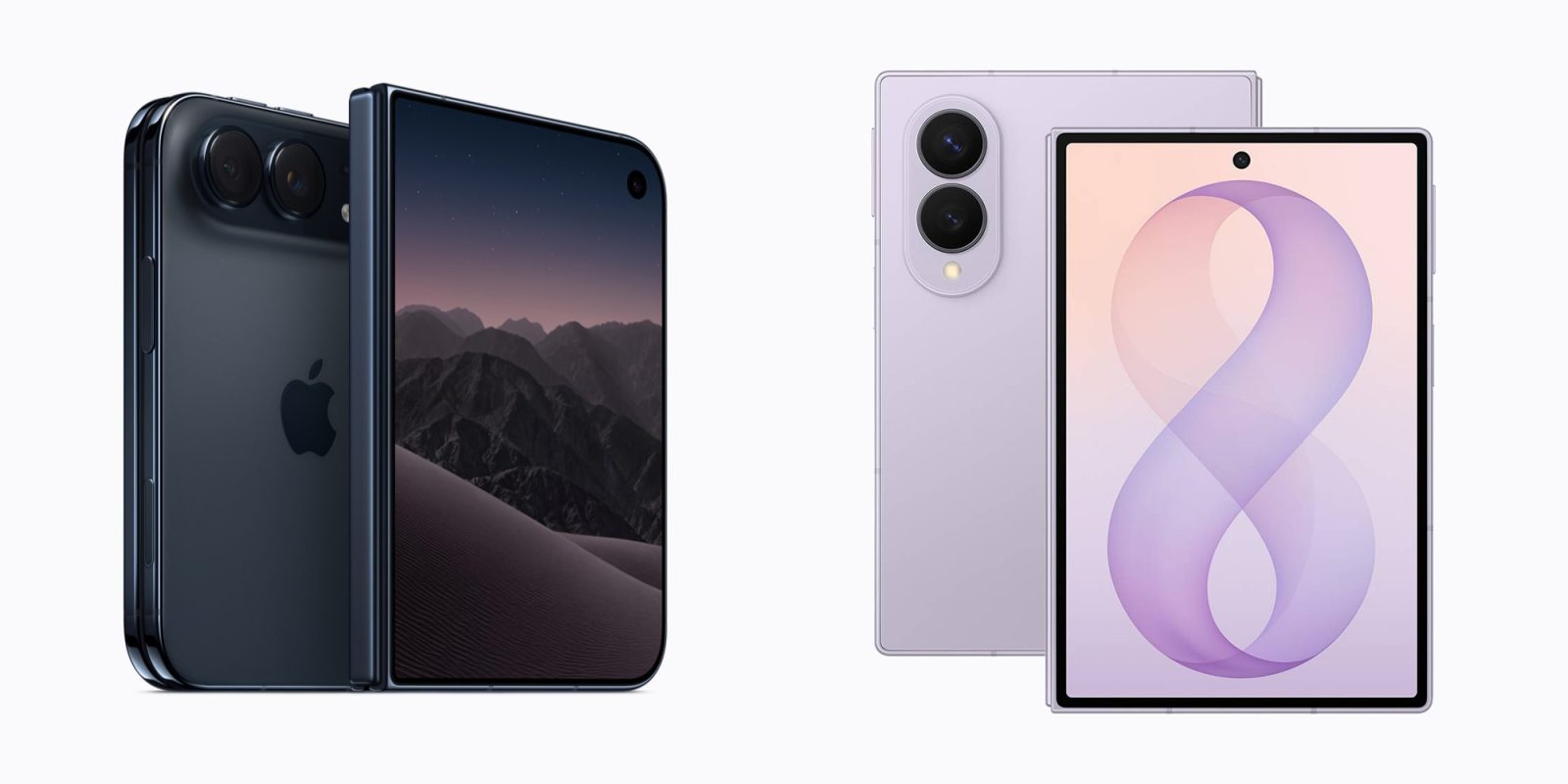
According to comprehensive data circulating through industrial and financial intelligence channels, the upcoming iPhone Duo—Apple’s anticipated entry into the dual-screen and foldable category—is slated to feature a formidable 4,883 mAh battery. Crucially, this density metric outpaces both the forthcoming Galaxy Z Fold 8 Ultra, clocked at 4,854 mAh, and the projected benchmarks for the Pixel 11 Pro Fold. For enterprise decision-makers, supply chain analysts, and technology sector investors, this disclosure is far more than a routine spec-sheet win; it is a profound signal of shifting capital allocation, manufacturing dominance, and engineering supremacy in the premium tier.
The Catalytic Shift: Anatomy of the Power Density Breakthrough
To understand the profound market ramifications of the iPhone Duo’s battery specification, one must examine the engineering hurdles that have historically plagued foldable smartphone architectures. Unlike traditional slate devices, foldables require dual housing compartments connected by intricate mechanical hinges, severely limiting the internal volume available for energy storage cells. Consequently, device manufacturers have historically been forced to compromise, trading milliamp-hours (mAh) for thinner profiles or accepting sub-par endurance profiles that alienate power users and enterprise road warriors.
Apple’s calculated entry into this market segment with a 4,883 mAh cell demonstrates a aggressive pivot toward advanced silicon-carbon anode integration and space-optimized cell packaging. Industry insiders note that Cupertino has leveraged its immense capital allocation power to secure exclusive production lines capable of stacking high-density chemistry without compromising structural integrity or thermal safety thresholds—a critical component of corporate risk mitigation.
Conversely, Samsung, which has long enjoyed undisputed hegemony in the foldable category with its Galaxy Z Fold lineage, now faces a delicate engineering and marketing dilemma. With the Galaxy Z Fold 8 Ultra registering at 4,854 mAh, Samsung's generational incrementalism—once viewed as a stable risk-mitigation strategy—risk looking stagnant against Apple’s high-density debut. Similarly, Google’s Pixel 11 Pro Fold architecture must now contend with an aggressive benchmark that threatens to eclipse its software-hardware integration selling points.
Verified Data & Metrics Breakdown

A rigorous examination of the competitive landscape reveals distinct architectural and capacity divergences among the industry's marquee foldable and dual-screen flagships. The following matrix outlines the verified technical baselines currently driving market sentiment:
| Device Model | Estimated / Confirmed Battery Capacity | Primary Battery Architecture | Anticipated Market Window |
|---|---|---|---|
| iPhone Duo | 4,883 mAh | Advanced Silicon-Carbon Dual-Cell | Late Q3 / Q4 |
| Galaxy Z Fold 8 Ultra | 4,854 mAh | Stacked Lithium-Polymer Modular | Mid-Year Cycle |
| Pixel 11 Pro Fold | Competitive Sub-4,800 mAh Tier | Standard Anode Composite Cell | Q4 Release Target |
Industry & Market Implications: Winners, Losers, and Economic Ripple Effects
The implications of Apple securing a superior energy density profile in a nascent form factor extend far beyond consumer preference; they directly influence equity valuations, enterprise technology procurement, and supply chain pricing power.
The Enterprise ROI Equation: For chief information officers (CIOs) managing mobile device fleets, battery degradation over a standard 36-month enterprise refresh cycle represents a persistent cost center. Devices with higher base milliamp-hour ratings and superior thermal regulation retain nominal battery health longer, directly improving enterprise ROI and reducing field replacement expenditures. The iPhone Duo’s capacity advantage positions it as a highly attractive candidate for corporate deployment, challenging Android’s historical dominance in flexible enterprise hardware trials.
Supply Chain and Valuation Multiples: Upstream cell manufacturers and chemical engineering firms supplying high-density silicon anodes are experiencing surging valuation multiples. Companies capable of scaling production to meet Apple's stringent tolerances are commanding premium pricing arrangements, squeezing component margins for competitors who rely on more commoditized battery solutions. Samsung and Google must now evaluate whether to absorb increased supply chain costs or risk conceding the performance narrative to Cupertino.
Regulatory Compliance and Sustainability Pressures: As global regulatory frameworks—particularly within the European Union—tighten around battery longevity, reparability, and user-swappable metrics, devices boasting inherently higher energy densities face fewer hurdles in meeting stringent regulatory compliance standards. A larger baseline capacity reduces the frequency of deep-discharge cycles, effectively extending the operational lifecycle of the device and aligning with corporate ESG (Environmental, Social, and Governance) mandates.
Frequently Asked Questions (People Also Ask)
Why is the iPhone Duo’s 4,883 mAh battery capacity considered a major engineering feat?
Foldable and dual-screen mobile devices have extremely restricted internal chassis volume due to complex hinge mechanisms and multi-panel display wiring. Achieving a 4,883 mAh capacity requires cutting-edge high-density cell chemistry, such as silicon-anode integration, which packs more energy into a smaller physical footprint without inducing critical thermal expansion risks.
How does the Galaxy Z Fold 8 Ultra’s battery compare directly to the iPhone Duo?
While the Galaxy Z Fold 8 Ultra features an impressive 4,854 mAh power cell—representing a significant generational improvement for Samsung—it falls marginally short of the iPhone Duo’s 4,883 mAh specification. Though a difference of roughly 30 mAh appears negligible on paper, in high-drain foldable environments, every milliamp-hour impacts real-world screen-on time and thermal management.
What are the broader economic impacts of this battery capacity race on the tech sector?
The competition to maximize power density in non-traditional form factors is driving massive capital expenditures into advanced materials science, particularly silicon-carbon anode development. Suppliers controlling these specialized manufacturing lines are seeing accelerated revenue growth and enhanced pricing power, altering market dynamics across the global tech hardware supply chain.
Will this battery advantage affect enterprise procurement decisions?
Yes. Enterprise procurement teams evaluate mobile fleets based on total cost of ownership (TCO), security, and longevity. A higher baseline battery capacity mitigates the rate of chemical degradation over multi-year deployment cycles, making devices with superior energy density structurally more appealing for corporate IT infrastructure.
Future Outlook: Strategic Milestones to Watch
As the consumer electronics sector approaches the official commercial launch window for these flagship devices, industry analysts will closely monitor several critical milestones. First, independent benchmark testing will verify whether Apple’s software-hardware integration (operating via custom silicon efficiency architectures) translates the 4,883 mAh cell into undisputed battery life dominance. Second, market observers will track how Samsung and Google respond in their subsequent product iterations—specifically whether they accelerate the adoption of next-generation solid-state or high-silicon battery cells to regain the performance crown.
Ultimately, the battle for foldable battery supremacy underscores a fundamental truth of modern technology markets: hardware innovation is no longer defined merely by form factor novelty, but by the relentless, physics-bound pursuit of energy density. For investors, executives, and technologists alike, the coming quarters will determine which corporate strategies successfully translate raw power into sustainable market dominance.