Executive Takeaways
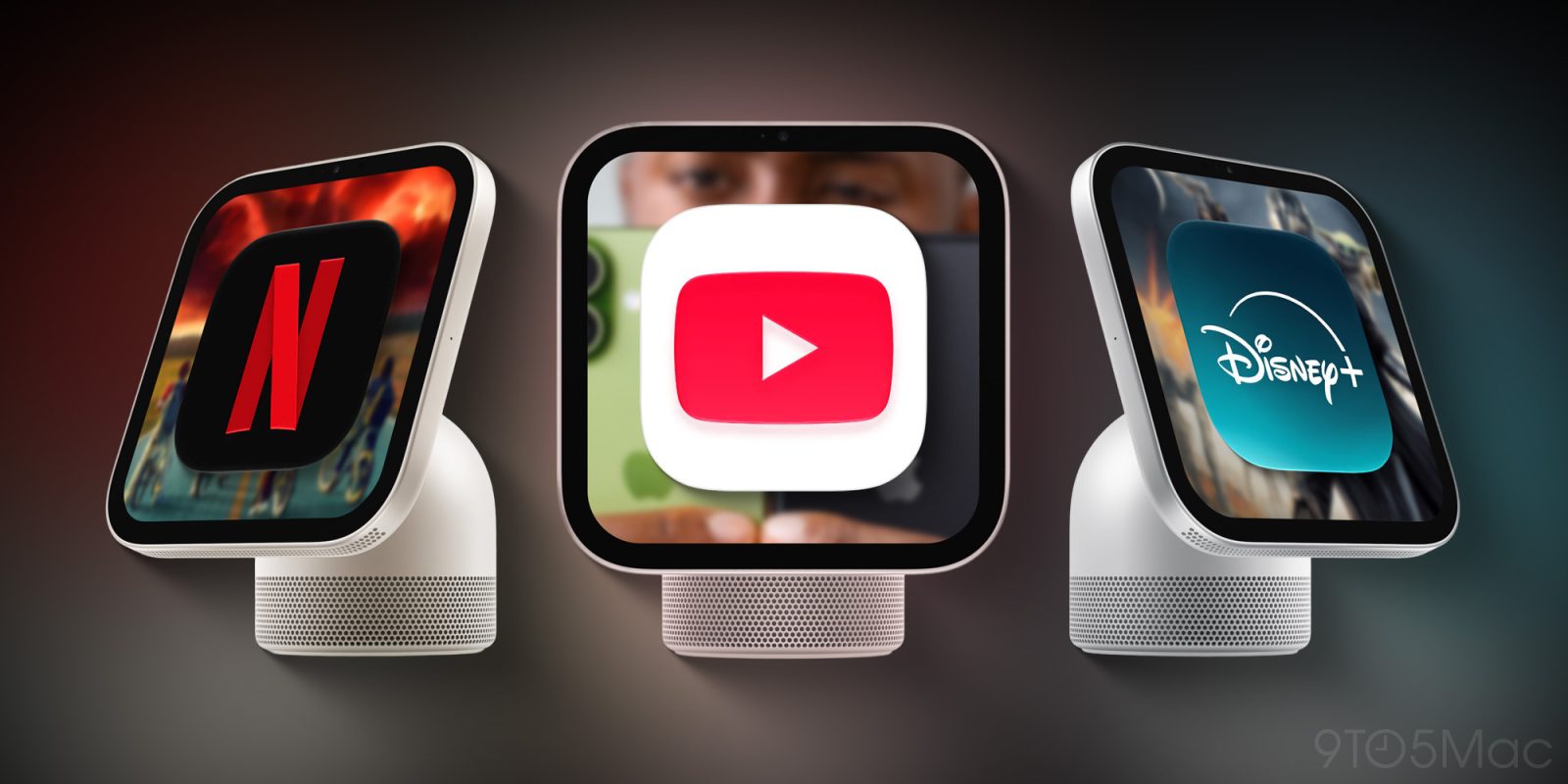
- The Architectural Pivot: The emerging HomeView platform has deployed full-stack technical support for native video integration, explicitly offering containerized runtime environments for tier-one streamers including Netflix, YouTube, and Disney+.
- The Consent Bottleneck: Despite native framework readiness, deployment remains entirely gated by commercial clearance, bilateral distribution agreements, and compliance with proprietary Digital Rights Management (DRM) certification pipelines.
- The Monetization Divide: At the center of the standoff sits an intractable battle over ad-telemetry ownership, subscription revenue splits, and platform tax structures, mirroring the ecosystem friction seen between connected TV (CTV) gatekeepers and streaming cartels.
- Market Valuation at Stake: For HomeView, securing day-one access to YouTube and Netflix is vital to establishing enterprise valuation multiples and consumer hardware adoption; for streamers, withholding native code is an aggressive defensive moat against interface disintermediation.
The Catalyst: HomeView’s Open Protocol Strategy Meets Platform Protectionism
In the high-stakes theater of ambient smart-display platforms and spatial media interfaces, technical capability rarely dictates market reality. The latest disruption arrives via HomeView—the modular, ambient interface platform engineered to unify fragmented smart-home canvases and mixed-display environments. According to internal technical documentation and high-level platform briefings, HomeView’s engineering core is fully architected to host top-tier streaming services, specifically engineered around native APIs for YouTube and Netflix. The hardware pipeline, sandbox environments, and video decoding layers are primed. The singular point of failure? The streaming titans have not yet signed on the dotted line.
The public declaration that HomeView will support these ubiquitous media giants—predicated upon the contingency “if they say yes”—lays bare the profound tension governing modern consumer tech ecosystems. As hardware commoditization accelerates, platform valuation is no longer determined by silicon performance, display panel refresh rates, or industrial design. Enterprise enterprise value hinges entirely on software distribution rights, user engagement gravity, and unhindered access to tier-one content ecosystems. By proactively declaring technical readiness while publicly shifting the onus of deployment onto Alphabet Inc.’s YouTube and Netflix Inc., HomeView’s leadership has launched an audacious, high-risk gambit in corporate platform diplomacy.
Historically, emerging operating systems and display environments faced technical engineering deficits—inefficient codecs, fragile web-wrapper runtimes, or unoptimized silicon. HomeView has preemptively neutralized these arguments. By building out native hardware-accelerated decode pipelines for the AV1, HEVC, and VP9 profiles, alongside comprehensive support for Widevine Modular and Microsoft PlayReady encryption layers, HomeView has eliminated the engineering hurdles. The current impasse is purely an exercise in commercial leverage, corporate capital allocation, and algorithmic audience control.
Behind the Silicon Curtain: DRM Pipelines, Monetization Splits, and Architecture
To understand why a platform cannot simply render Netflix or YouTube without explicit corporate sanction, one must examine the complex stack of contemporary Digital Rights Management (DRM) and cloud compute architecture. Modern premium video distribution is governed by strict cryptographic standards engineered to prevent content interception at the display pipeline level. For HomeView to display 4K HDR streams from Netflix, the device must achieve Widevine L1 or PlayReady SL3000 compliance, demanding that content decryption occur exclusively inside a hardware-isolated Trusted Execution Environment (TEE).
Achieving this compliance is not an open-source formality; it demands rigorous, bilateral auditing protocols overseen by content-protection cartels. Even when an operating architecture is technically equipped to enforce hardware-root-of-trust decryption, the application packages themselves (the APKs or proprietary runtime binaries) are guarded intellectual property. Scraping content or deploying unauthorized WebKit wrappers frequently degrades playback resolutions to standard definition (480p) due to fallback DRM profiles, a commercial death sentence for an ambient, high-definition interface attempting to command premium price-to-earnings multiples from consumers and venture capital backers alike.
Beyond the cryptographic threshold lies the battle over monetization telemetry. YouTube's multi-billion-dollar Connected TV (CTV) infrastructure relies on precise ad-insertion beacons, direct user telemetry, and proprietary auction mechanics via Google Ad Manager. If an intermediate interface like HomeView abstracts or aggregates the media container—stripping away granular hardware identifiers, contextual telemetry, or ad-targeting parameters—Alphabet’s effective yield on ad impressions plummets. Conversely, Netflix, aggressively scaling its lower-tier, ad-supported subscription tier (Standard with Ads), insists on unmediated control over ad-insertion architecture and audience measurement metrics to justify its pricing power to Madison Avenue media buyers.
Verified Data / Metrics Breakdown
The following metrics highlight the strategic and operational friction points dictating HomeView’s negotiations with tier-one streaming gatekeepers, contrasting technical readiness with commercial distribution mandates.
| Platform Requirement / Metric | HomeView Architectural State | Netflix Commercial Mandate | YouTube / Alphabet Commercial Mandate |
|---|---|---|---|
| Hardware-Level DRM | Widevine L1 & PlayReady SL3000 ready via internal TEE | Mandatory independent lab certification; dedicated security profile | Widevine L1 certification required for premium 4K/HDR content tiers |
| Codec Support & Acceleration | Native hardware decoding for AV1, HEVC (H.265), VP9 | Rigorous thermal and bitrate profiles; strict memory leak audits | AV1 hardware decode mandatory for modern high-efficiency streaming tiers |
| Monetization & In-App Rev-Share | Proposed 0% to 15% platform fee on transactional interactions | Zero platform rev-share tolerance; billing handled exclusively via web/direct | Complete retention of in-stream ad revenue; no intermediate attribution |
| Data Telemetry & Ad Tracking | Aggregated privacy-centric user analytics framework | Direct telemetry piped to Netflix data lake; third-party ad auditing | Direct integration with Google Ad Manager and measurement partners |
| Deployment Gate Factor | Open-ended API readiness ready for instantaneous OTA deployment | Minimum active device footprint (often >1M MAU) before native porting | Compliance with YouTube Living Room certification standards |
Platform Politics: Why Netflix Holds Out and How YouTube Leverages Scale
The strategic hesitation from Netflix and YouTube is neither unprecedented nor accidental; it is a calculated playbook honed across successive platform transitions over the past two decades. When Apple Inc. launched the Vision Pro spatial computer in early 2024, both Netflix and YouTube conspicuously refused to port their native iPad apps or develop dedicated visionOS software, forcing initial users to rely on mobile Safari web browsers. The strategy was unmistakable: deny a nascent, unproven hardware platform the halo effect of high-fidelity native media consumption until that platform proves significant monthly active user (MAU) volume and favorable commercial concessions.
For Netflix, preserving the sanctity of its user experience and marginal capital allocation is paramount. Building and maintaining a dedicated engineering pipeline for an emerging interface like HomeView introduces continuous engineering overhead—regression testing, security patching, customer service routing—without a guaranteed expansion of net paid subscriber additions. If a HomeView owner is already an active subscriber who will simply shift existing viewing hours from an iPad or a living room OLED panel to HomeView, the streamer captures zero incremental Lifetime Value (LTV) while incurring integration and testing friction. Netflix only yields its engineering resources when platform scale crosses a threshold where non-presence triggers measurable churn.
YouTube’s calculus, while aligned on leverage, is dominated by algorithmic ecosystem retention. Alphabet’s video empire thrives on continuous, unbroken user sessions orchestrated by its proprietary recommendation engine. If HomeView aims to integrate YouTube content into an ambient, unified home dashboard—such as rendering video feeds alongside calendars, smart-home automation widgets, or ambient widgets—it risks decoupling the video stream from the algorithmic feedback loop that drives ad impressions. Alphabet fundamentally resists any aggregation interface that threatens to relegate its core surface to a dumb utility pipe.
Macroeconomic Implications: Capital Allocation, CAC/LTV Pressure, and Ecosystem Fragmentation
The HomeView standoff illustrates a wider macroeconomic paradigm shift rippling through the technology sector: the drying up of speculative venture capital for platform gate-crashing. During the low-interest-rate regime of the late 2010s, hardware and platform upstarts could subsidize customer acquisition costs (CAC) through venture debt, buying their way into content ecosystems via massive upfront licensing guarantees paid directly to media cartels. In today’s institutional capital environment, where cost of capital is elevated and discounted cash flow (DCF) models demand immediate paths to profitability, HomeView cannot simply write blank checks to Netflix or Alphabet to purchase their native cooperation.
This dynamic shifts the competitive advantage decisively toward entrenched technology monopolies. Gatekeepers such as Amazon (Fire OS), Google (Google TV/Android TV), and Apple (tvOS/iOS) enjoy closed-loop ecosystem economics. They can cross-subsidize streaming interfaces through high-margin cloud compute infrastructure (AWS, Google Cloud) and robust hardware supply-chain margins. Independent, specialized interfaces like HomeView are forced to navigate an asymmetric battlefield: they must convince wary users to adopt a new form factor while simultaneously fighting for the baseline content access that consumers consider a mandatory utility.
Furthermore, this dynamic poses regulatory implications. As the European Union’s Digital Markets Act (DMA) and United States antitrust scrutiny continue to target platform gatekeeping, the refusal of mega-cap platforms to support emerging operating systems could soon face regulatory crossfire. While antitrust authorities have historically focused on app-store payment monopolies, the weaponization of app availability to suppress alternative hardware platforms represents the next frontier of anti-competitive analysis.
Frequently Asked Questions (People Also Ask)
Why can't HomeView just run YouTube and Netflix without their permission?
Premium streaming applications are proprietary software packages protected by copyright and strict intellectual property frameworks. More critically, high-definition (HD) and 4K video playback requires integration with proprietary Digital Rights Management (DRM) pipelines, such as Widevine L1 and PlayReady. These encryption standards require direct security validation and bilateral agreements. Running unauthorized or reverse-engineered versions results in platform blacklisting, broken application states, and playback restricted to low-resolution streams.
Will users still be able to watch Netflix and YouTube via an onboard web browser?
Yes, standard web fallback remains functionally viable on HomeView through modern web rendering engines. However, the browser experience is notoriously inferior to native integration. Browser-based playback lacks deep hardware acceleration, causing higher power draw and elevated thermal output. Furthermore, web wrappers miss out on fluid touch/ambient UI interactions, offline downloads, 4K HDR color space matching, and native single-sign-on (SSO) credentials that consumer-grade platforms require.
What do Netflix and YouTube gain by saying "No" to HomeView?
By withholding native apps, streaming giants protect their capital allocation, ad telemetry, and user relationships. Building and continuously maintaining a dedicated application for an unproven platform incurs non-trivial operational expenditures without a clear return on investment. Additionally, withholding their market-leading platforms serves as a protective barrier against emerging operating systems that attempt to aggregate or monetize their content without offering significant subscriber growth in return.
What commercial terms must be resolved before HomeView can secure native integration?
Resolution hinges on three critical pillars: revenue-share structures (how in-app subscriptions and ad impressions are monetized), telemetry sovereignty (who owns and processes audience viewership analytics), and device footprint scale. Streaming gatekeepers typically require hardware platforms to prove a minimum viable audience metric—often exceeding hundreds of thousands or millions of monthly active users—before committing engineering teams to native certification and long-term maintenance.
Strategic Horizon: What to Watch Through 2025–2026
The resolution of the HomeView impasse will serve as a bellwether for the future viability of independent ambient platforms, spatial monitors, and next-generation smart displays. Over the next twelve to eighteen months, market participants must monitor three primary milestones to gauge the trajectory of this standoff:
- The WebRTC and PWA Compromise: In the near term, look for HomeView to deploy aggressive optimizations for Progressive Web Apps (PWAs) as a bridge strategy. If HomeView can deliver an indistinguishable, semi-native web experience that supports 1080p and basic HDR through secure browser sandboxes, it can alleviate immediate consumer friction while continuing backroom negotiations with the streaming cartels.
- Volume-Triggered Biphasic Certification: Keep a close eye on hardware production volumes and initial batch shipments. The moment HomeView demonstrates verified hardware adoption metrics that cross critical consumer adoption milestones, the economic leverage shifts. When consumer hardware reaches significant market penetration, withholding native distribution transitions from a strategic defensive play to an opportunity cost that streamers cannot afford.
- Regulatory and Interoperability Interventions: Emerging platform friction will inevitably attract the gaze of global competition watchdogs. Watch for whether regional regulatory agencies classify native video playback as a critical digital utility, forcing dominant streaming conglomerates to publish open, platform-agnostic APIs that operate independent of bilateral corporate handshakes.
HomeView has laid its technical cards on the table. The platform has demonstrated that its decode stack, memory architecture, and visual rendering canvas are natively primed for deployment. The remaining question is whether the streaming oligopoly will allow an upstart interface to redefine the terms of digital distribution—or whether they will freeze HomeView out in defense of their own closed, walled gardens.