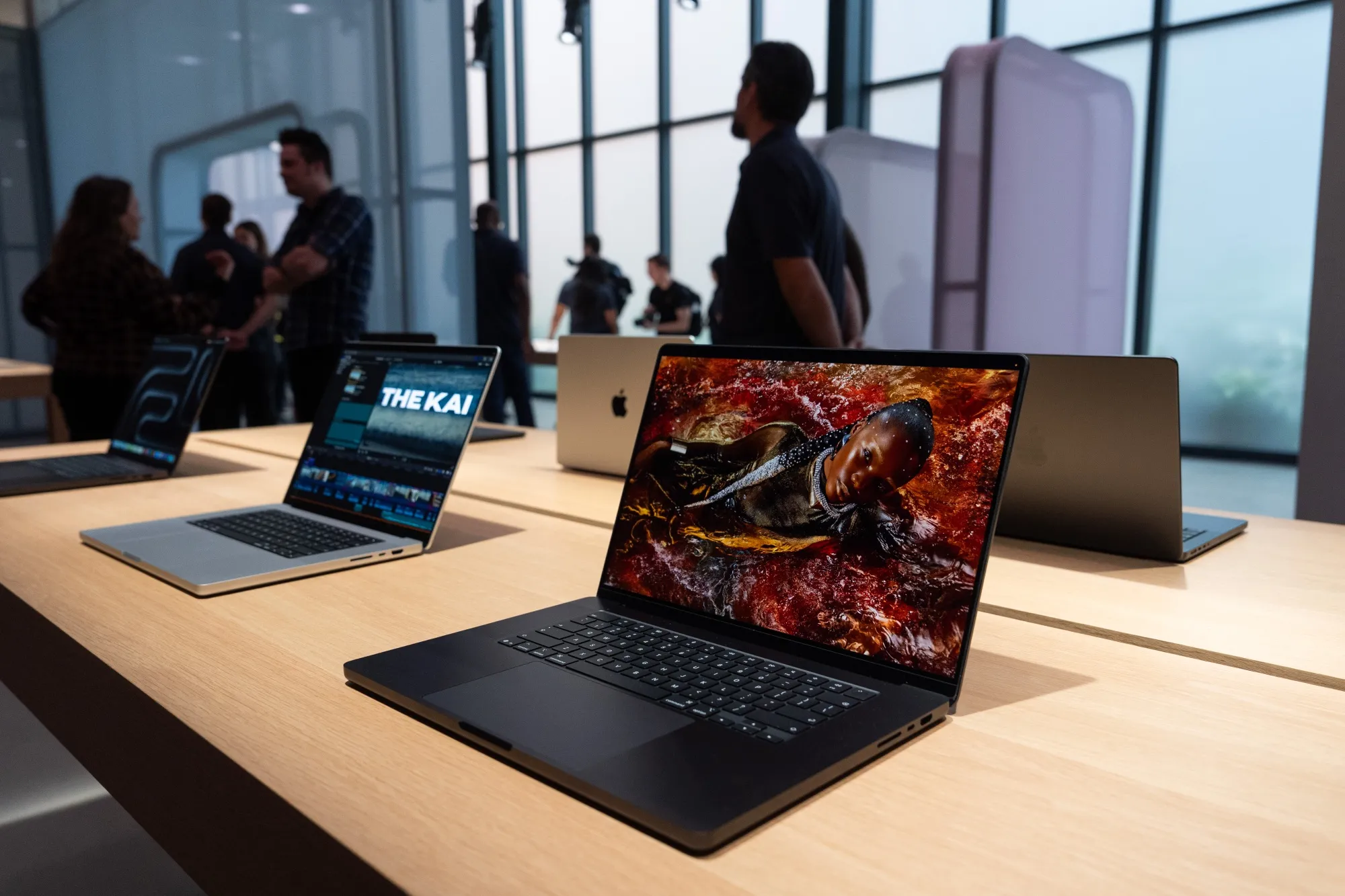
Executive Takeaways
Test Our Free AI & Tech Utilities Suite
Calculate LLM API token costs, analyze article dwell-time, or simulate tech DCA returns.
- Historic Strategic Reversal: Apple is preparing to unveil its first touchscreen MacBook Pro, definitively ending a 20-year corporate doctrine that previously dismissed touch-enabled laptop displays as "ergonomically terrible."
- Engineering & Display Innovation: Powered by next-generation tandem OLED display stacks with integrated touch-sensor layers, the new lineup leverages custom ARM-based Apple Silicon pipelines to deliver zero-latency input without compromising chassis thinness or battery efficiency.
- Ecosystem & TAM Expansion: The move targets the high-margin enterprise and creative professional segments, designed to protect Apple’s $38 billion Mac revenue base against premium Windows "AI PC" touch-enabled devices while driving software cross-pollination between iPadOS and macOS.
- Supply Chain & Capital Allocation: Key display partners Samsung Display and LG Display are recalibrating manufacturing lines for custom OLED panels, signaling significant multi-year capital expenditure commitments across Apple’s Asian hardware supply chain.
The Death of a Dogma: How Market Realities Dismantled Steve Jobs’ Legacy Rule
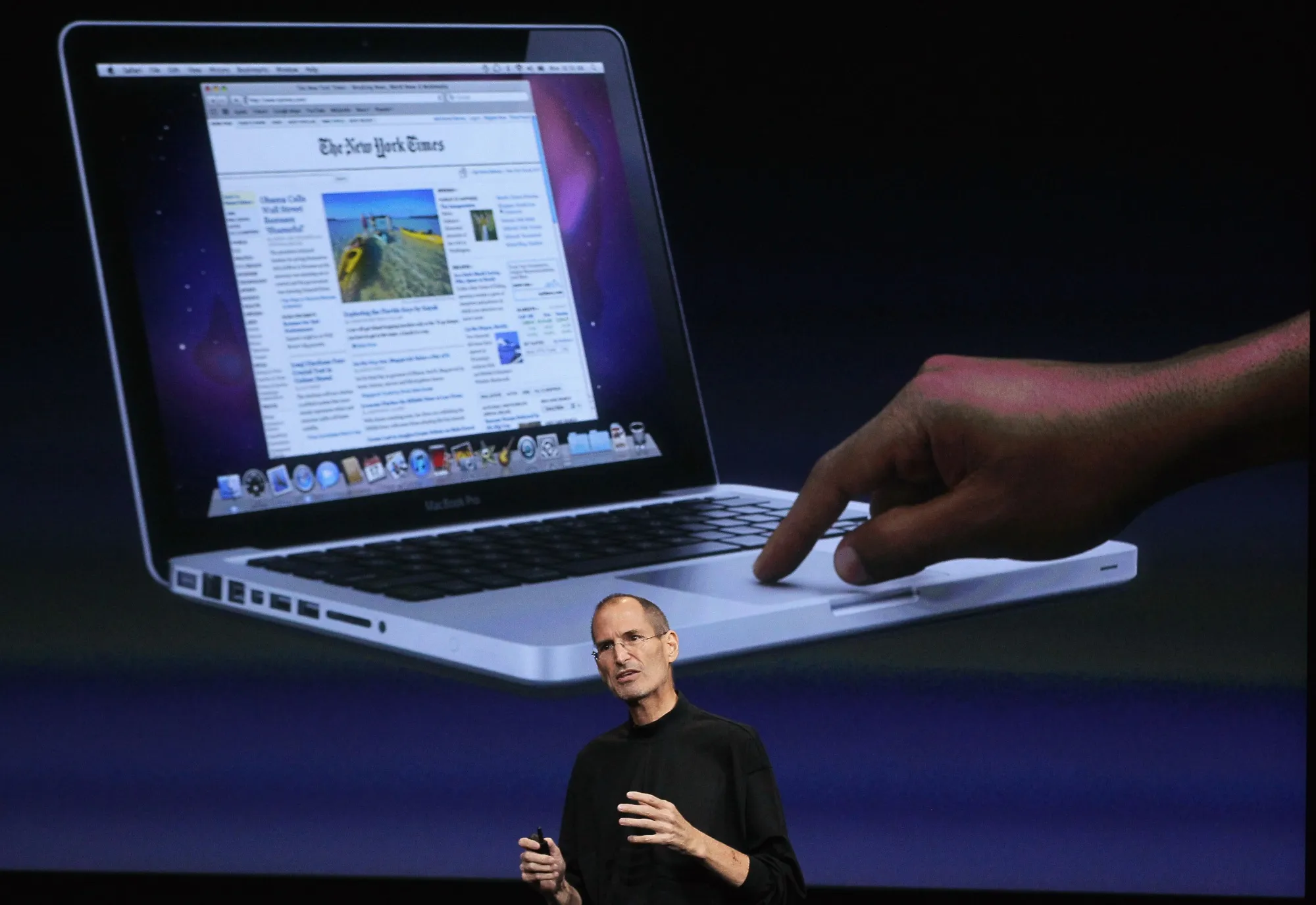
For more than two decades, the prohibition of touch screens on Mac computers remained one of the most visible, unyielding tenets of Apple Inc.’s hardware design philosophy. In October 2010, Steve Jobs famously declared vertical touch surfaces "ergonomically terrible," arguing that user arms would fatigue—a phenomenon dubbed "gorilla arm syndrome"—and insisting that touch belonged exclusively to mobile form factors like the iPhone and iPad. For years, executive leadership including Senior Vice President of Hardware Engineering John Ternus and Senior Vice President of Software Engineering Craig Federighi reiterated this stance, framing the glass multi-touch trackpad and the controversial Touch Bar as the ultimate input mechanisms for desktop computing.
That long-standing dogma has officially collapsed. According to sources familiar with the matter and verified industry supply chain intelligence, Apple is finalizing the launch of a touch-enabled MacBook Pro. This shift represents far more than an incremental hardware refresh; it is a calculated executive pivot driven by shifting enterprise demands, advancing display physics, and the rapid evolution of hybrid desktop-mobile software architectures.
The catalytic catalyst behind this change is rooted in enterprise capital allocation and modern user workflows. As corporate IT departments increasingly evaluate device total cost of ownership (TCO) and employee productivity metrics, touch functionality has transitioned from a consumer novelty to an enterprise baseline. High-margin enterprise sectors—ranging from financial modeling, UI/UX engineering, and cloud architecture deployment to digital content creation—have spent a decade standardizing workflows on touch-enabled Windows hardware such as Microsoft’s Surface line and premium offerings from Dell, HP, and Lenovo. By refusing to offer a touch interface on macOS, Apple faced a growing ceiling on its total addressable market (TAM) expansion within Fortune 500 fleets.
Engineering the Touch Stack: OLED Physics, Apple Silicon, and macOS Optimization
Engineers inside Apple’s Cupertino labs spent years attempting to solve the physical and software friction points that originally justified the company's resistance to touch laptops. Translating touch to a laptop screen without sacrificing visual clarity, structural rigidity, or system responsiveness required a total overhaul of the display architecture and system-on-chip (SoC) input controller design.
1. Advanced OLED Stack and In-Cell Touch Integration
Traditional touch implementations rely on an added glass substrate overlaid on the display panel, which adds thickness, weight, and internal light reflection while reducing color accuracy. Apple’s touch MacBook Pro leverages advanced flexible tandem OLED panels featuring on-cell or in-cell touch sensor integration. By fusing the touch-sensing circuit directly into the display panel's thin-film transistor (TFT) layer, display suppliers—primarily Samsung Display and LG Display—have achieved an ultra-thin z-height profile. This eliminates touch-induced display distortion (the "puddle effect" seen on soft panels) and maintains the rigorous optical standards required for Liquid Retina XDR displays, including peak HDR brightness and P3 wide color gamut fidelity.
2. Silicon-Level Input Processing and Low Latency
Touch processing on the new MacBook Pro is offloaded to custom silicon built into the M-series processors. Rather than running touch drivers through high-overhead software stacks, input interrupts are handled at the hardware display engine level. This achieves glass-to-photon latency under 8 milliseconds, creating a native, friction-free interface that mirrors the responsiveness of the iPad Pro. Furthermore, Apple’s advanced palm-rejection algorithms—refined over a decade on the iPad—utilize neural engine models to distinguish intentional gestures, multi-finger pinches, and stylus inputs from accidental brush touches along panel bezels.
3. Adaptive macOS UI Architecture
From a software standpoint, macOS is undergoing a quiet, structural adaptation. Rather than forcing a complete UI overhaul toward touch-first mobile paradigm—a misstep that hindered early adoption of Microsoft Windows 8—Apple’s engineering teams are deploying an "adaptive target" approach. macOS automatically scales click targets, menu bar drop-downs, and window controls when a touch event is detected, while retaining precise, high-density layouts during trackpad or mouse navigation. Furthermore, this opens a seamless path for running non-translated iOS and iPadOS applications natively on macOS with zero control mapping friction.
Comparative Architecture Matrix: Legacy vs. Next-Gen MacBook Pro
The operational shift between previous-generation Mac hardware strategies and the incoming touch-enabled ecosystem reflects major advancements across hardware components, software frameworks, and commercial targets:
| Platform Vector | Legacy MacBook Pro Paradigm | Next-Gen Touch MacBook Pro Architecture |
|---|---|---|
| Display Technology | Mini-LED backlit LCD with discrete glass layer | Tandem OLED with integrated on-cell touch layer |
| Primary Input Methods | Force Touch Trackpad + Mechanical Keyboard | Hybrid: Multi-Touch Display, Precision Trackpad, Dynamic Keyboard |
| Input Latency Pipeline | Standard OS cursor events (~16-24ms) | Direct Silicon Display Engine processing (<8ms) |
| Target Enterprise Fleet TAM | Traditional desktop/laptop productivity workflows | High-value cross-platform development, creative, & hybrid enterprise |
| Cross-Platform App Execution | Emulated/mapped iPadOS apps via Catalyst | Native touch-driven execution of mobile & desktop binaries |
| Estimated Hardware ASP Impact | Baseline pricing tier ($1,599 - $2,499) | Premium positioning (~10% to 15% ASP increase) |
Market & Financial Implications: Enterprise Expansion and Valuation Multiples
From a corporate finance perspective, Apple’s hardware innovation strategy is directly linked to gross margin expansion and average selling price (ASP) optimization. Mac sales generated over $29 billion in the first nine months of Apple's fiscal year, but growth in global personal computer shipments remains cyclical. Introducing a touch-enabled premium tier offers Apple a powerful vehicle to drive upgrade cycles among its installed base of over 100 million active Mac users.
Crucially, this hardware pivot allows Apple to challenge high-end Windows OEMs in enterprise markets where PC procurement decisions are heavily influenced by versatile input capabilities. Wall Street analysts view this move as a high-margin opportunity to capture enterprise IT capital spending, which has increasingly prioritized AI PCs and dynamic hardware form factors.
Who Wins
- Apple Hardware Services & Ecosystem: Higher average selling prices support structural gross margins above 40%, while locking enterprise clients deeper into Apple's unified device management (MDM) ecosystem.
- Display Manufacturing Partners: LG Display and Samsung Display benefit from high-margin supply contracts for premium tandem OLED touch panels, driving unit revenue growth.
- Enterprise Software Developers: ISVs (Independent Software Vendors) gain a unified deployment target, allowing developers to write high-performance applications once for iPadOS and macOS with zero input translation code.
Who Faces Headwinds
- Premium Windows OEMs: Dell, HP, Lenovo, and Microsoft face direct competition in the high-end workstation tier ($2,000+ price point), where "touch capability" was previously a key Windows differentiator.
- Legacy Component Suppliers: Component vendors relying on legacy display backlights and traditional touch-controller overlays face reduced order allocations as supply chains consolidate around integrated OLED lines.
Frequently Asked Questions (People Also Ask)
Why did Apple wait two decades to bring a touch screen to the MacBook Pro?
Apple delayed introducing touch functionality to the Mac line due to ergonomic concerns, display technical limitations, and strategic product differentiation. Historically, adding a touch layer meant increasing screen thickness, reducing visual clarity, and introducing input latency. Additionally, Apple sought to protect iPad sales. However, advancements in thin tandem OLED displays, Apple Silicon processing power, and the market maturation of cross-platform apps eliminated these hardware and strategic barriers.
Will the new touch screen MacBook Pro replace the iPad Pro?
No. Apple plans to maintain distinct positioning for both product lines. The iPad Pro remains a modular, tablet-first device optimized for portability, digital pencil precision (Apple Pencil), and flexible field usage running iPadOS. The touch MacBook Pro remains a desktop-class laptop running macOS, engineered for heavy computational workloads, coding, and pro video editing, where touch serves as an intuitive secondary input alongside the keyboard and trackpad.
How will touch screen integration affect MacBook Pro battery life and chassis thickness?
By utilizing in-cell touch sensor integration built directly into flexible tandem OLED panels, Apple avoids adding extra physical glass layers that increase weight or panel thickness. Furthermore, the efficiency gains of Apple Silicon, combined with self-emissive OLED pixels that turn off completely for true blacks, allow the touch MacBook Pro to maintain existing 18-to-22-hour battery life benchmarks.
What does this pivot mean for enterprise IT deployments and legacy software?
For enterprise IT management, the touch MacBook Pro will run standard macOS builds, meaning existing Mobile Device Management (MDM) profiles, security compliance protocols, and legacy desktop software will function without disruption. However, IT managers will gain expanded operational flexibility, enabling deployment of enterprise iPad apps natively to Mac users without needing specialized input remapping or custom software builds.
Future Outlook: Strategic Milestones to Watch
As Apple prepares for the official unveiling of the touch MacBook Pro, industry analysts and institutional investors should monitor several critical milestones over the next 12 to 24 months:
- Supply Chain Ramp and Yield Rates: Watch for capital expenditure announcements from Samsung Display and LG Display regarding Gen 8.5 OLED production line ramp-ups, which will determine initial manufacturing volume and margin performance.
- Developer Ecosystem Adoption at WWDC: Track how Apple updates Xcode and SwiftUI development frameworks to encourage software developers to build hybrid touch-and-cursor interfaces for macOS applications.
- Enterprise Fleet Penetration Metrics: Monitor commercial procurement data across Fortune 500 enterprise accounts to see if touch capability accelerates Mac adoption in corporate IT environments traditionally dominated by high-end Windows laptops.
- Product Line Differentiation: Observe whether touch technology remains an exclusive feature reserved for high-end MacBook Pro configurations or eventually trickles down to consumer-focused platforms like the MacBook Air line.
By shedding a two-decade-old design doctrine, Apple is signaling a new phase of hardware and software convergence. The touch MacBook Pro is not merely a reaction to industry trends, but a strategic maneuver engineered to fortify Mac revenues, capture high-margin enterprise market share, and consolidate its hardware ecosystem for the next decade of personal computing.