Executive Takeaways
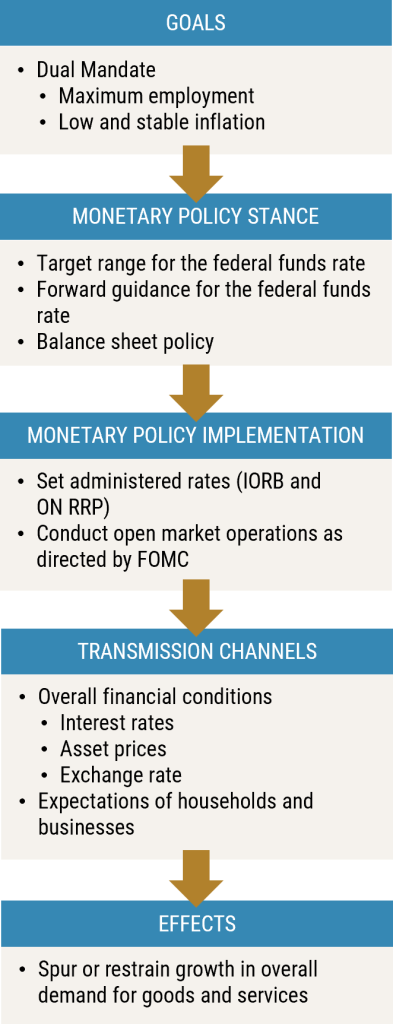
- The Core Disconnect: New research published by Federal Reserve Bank of Atlanta senior economist Nikolay Gospodinov on August 18, 2026, reveals a growing divergence between official central bank policy rates and real-world financial conditions.
- Index Innovation: The newly constructed Policy Hub Macroblog index maps the friction points in monetary policy transmission, demonstrating how corporate debt issuance, asset pricing, and market liquidity react with varying time lags.
- Capital Allocation Impact: Institutional investors and corporate treasurers face heightened risk mitigation challenges as valuation multiples decouple from baseline interest rate projections.
- Regulatory & Enterprise Realities: Financial institutions must recalibrate risk management frameworks and cloud compute infrastructure to handle increased volatility in monetary policy indices.
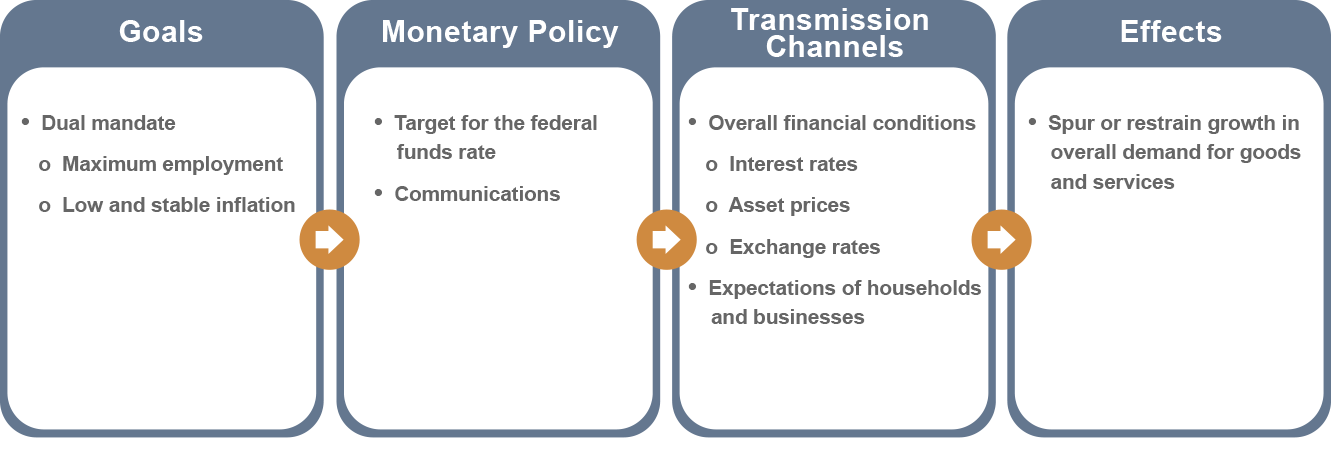
WASHINGTON and ATLANTA — In the high-stakes realm of macroeconomic governance, the central promise of monetary policy has always relied on a predictable mechanical chain: when central bankers adjust the federal funds rate, borrowing costs ripple outward, tightening or loosening financial conditions to steer economic growth and tame inflation. However, a landmark analytical framework released on August 18, 2026, by the Federal Reserve Bank of Atlanta challenges this foundational orthodoxy, laying bare a complex friction that has baffled institutional investors, corporate strategists, and macroeconomic modelers alike.
Authored by Nikolay Gospodinov via the Atlanta Fed's Policy Hub: Macroblog, the new research constructs a streamlined monetary policy index designed to track the precise velocity and efficiency with which central bank directives permeate broad financial markets. The findings suggest that traditional metrics of monetary stance—often anchored narrowly to benchmark overnight lending rates—fail to capture the expansive, and at times contradictory, realities of modern market liquidity, asset valuation multiples, and corporate credit availability.
Deconstructing the Transmission Mechanism: The Atlanta Fed Framework
Test Our Free AI & Tech Utilities Suite
Calculate LLM API token costs, analyze article dwell-time, or simulate tech DCA returns.
For decades, econometricians at global institutions have wrestled with the "long and variable lags" of monetary policy, a phrase famously coined by Milton Friedman. The latest Atlanta Fed analysis cuts through this empirical fog by developing a unified index that correlates the official monetary policy stance with a comprehensive basket of financial condition indicators (FCIs). These indicators encompass credit spreads, equity market valuations, corporate debt issuance volumes, and foreign exchange rates.
The catalytic event driving this methodological deep dive is the structural evolution of non-bank financial intermediation. In past decades, commercial banking channels dominated the transmission of monetary policy. Today, private credit funds, decentralized capital pools, and complex debt securitization structures absorb and re-emit liquidity independently of central bank balance sheet maneuvers. Consequently, when the Federal Reserve signals a restrictive monetary stance, private market liquidity often remains surprisingly robust, delaying the desired cooling effect on aggregate demand and asset prices.
According to the Macroblog data, this structural shift has warped traditional valuation models. Enterprise ROI projections calculated by corporate CFOs are frequently misaligned with prevailing capital costs, as corporate bond markets continue to price risk aggressively despite elevated base rates. For institutional investors navigating these turbulent waters, accurate risk mitigation requires looking past headline rate announcements and examining granular financial condition sub-indices that reveal where liquidity is actually pooling or evaporating.
Verified Data & Metrics Breakdown
| Metric / Parameter | Traditional Monetary Stance | Atlanta Fed Policy Hub Index | Economic Implications |
|---|---|---|---|
| Primary Focus | Federal Funds Rate & Discount Window | Holistic Financial Conditions & Credit Spreads | Broader capture of real-economy liquidity transmission. |
| Release Date | Continuous / FOMC Schedule | August 18, 2026 | Establishes a baseline for late-2026 monetary evaluations. |
| Key Analytical Tool | Taylor Rule / Forward Guidance | Macroblog Policy Index Construction | Quantifies the friction between policy intent and market reaction. |
| Target Audience | Academic Economists & Policymakers | C-Suite Executives, Institutional Investors, Risk Officers | Drives tactical adjustments in capital allocation and asset pricing. |
Industry & Market Implications: Winners, Losers, and Strategic Realignment
The empirical revelations brought to light by the Atlanta Fed carry profound operational consequences across multiple sectors. As financial conditions decouple from baseline monetary policy stances, market participants must adapt their strategic frameworks to avoid systemic blind spots.
Corporate Treasurers and Enterprise Infrastructure
For large enterprises, navigating this environment demands advanced infrastructure scalability and robust capital allocation strategies. CFOs who rely solely on central bank rate cuts or hikes to forecast debt-servicing costs risk severe capital misallocation. Companies heavily reliant on floating-rate debt find themselves exposed to persistent liquidity squeezes even when equity markets signal exuberance. Conversely, firms utilizing sophisticated treasury management platforms integrated with real-time financial condition indices can lock in advantageous financing windows before broader market sentiment shifts.
Banking and Non-Bank Financial Institutions
Traditional commercial banks face mounting competitive pressure from private credit markets, which often maintain loose financial conditions independent of central bank tightening. To maintain regulatory compliance and protect net interest margins, banking institutions are heavily investing in proprietary analytics—frequently leveraging high-performance cloud compute architecture—to model how shifts in the Atlanta Fed's policy index will impact loan portfolios, default probabilities, and collateral valuations.
Asset Management and Valuation Multiples
Equity and fixed-income portfolio managers are rewriting their valuation models. When financial conditions remain loose despite a restrictive monetary stance, equity valuation multiples tend to remain elevated, defying historical gravity. Sophisticated investors are utilizing multi-factor risk mitigation strategies, hedging against the inevitable snap-back when financial conditions eventually realign with central bank intentions.
Frequently Asked Questions (People Also Ask)
What is the primary purpose of the Atlanta Fed’s monetary policy index published in August 2026?
The index constructed by Nikolay Gospodinov on the Policy Hub: Macroblog aims to bridge the analytical gap between official monetary policy stances (such as federal funds rate targets) and broad financial conditions. It quantifies how efficiently central bank actions transmit through credit markets, asset prices, and liquidity channels to influence the broader macroeconomy.
Why do financial conditions sometimes diverge from official monetary policy?
Divergence occurs primarily due to the growth of non-bank financial intermediaries, private credit markets, and global liquidity pools that operate outside traditional commercial banking channels. When these alternative capital sources remain abundant, they can offset central bank tightening, keeping financial conditions looser than policymakers intend.
How do these findings impact corporate capital allocation and risk management?
Corporate leaders and institutional investors can no longer rely exclusively on headline central bank interest rates for financial forecasting. Understanding the nuances of financial conditions indices allows enterprises to optimize capital allocation, refine enterprise ROI projections, and execute proactive risk mitigation against sudden liquidity shifts.
Where can financial professionals access the complete research data?
The complete analytical breakdown, underlying methodology, and accompanying commentary are available directly through the Federal Reserve Bank of Atlanta’s official Policy Hub: Macroblog portal, published under the direction of economic researchers like Nikolay Gospodinov.
Future Outlook: What Lies Ahead for Monetary Policy Transmission
As the Federal Reserve and international central banks continue to refine their toolkits, the insights generated by the Atlanta Fed's August 2026 research underscore an undeniable reality: the era of simplistic monetary transmission analysis is over. Policymakers are increasingly recognizing that financial stability frameworks must account for shadow banking dynamics, digital asset liquidity, and cross-border capital flows.
In the coming quarters, market watchers will closely monitor subsequent Federal Reserve communications for integration of these dynamic financial condition indices into official forecasting models. For enterprise leaders and financial institutions, the mandate is clear. Building resilient capital structures, investing in advanced analytics for real-time risk mitigation, and maintaining agility in capital allocation will separate market leaders from those vulnerable to sudden shifts in the macroeconomic tide.