Executive Takeaways
- The Infallibility Myth Shattered: Binance founder Changpeng Zhao’s blunt admission that "there is no 100% security" marks a psychological turning point for centralized and decentralized digital asset architecture.
- Infrastructure Scalability vs. Risk: As institutional capital allocation accelerates, venture-backed exchanges and DeFi protocols face mounting pressure to overhaul cloud compute architecture and enterprise risk mitigation.
- Regulatory Compliance Catalysts: Global financial watchdogs are leveraging historic exploits to mandate stringent operational transparency, forcing exchanges to justify valuation multiples against escalating cyber vulnerabilities.
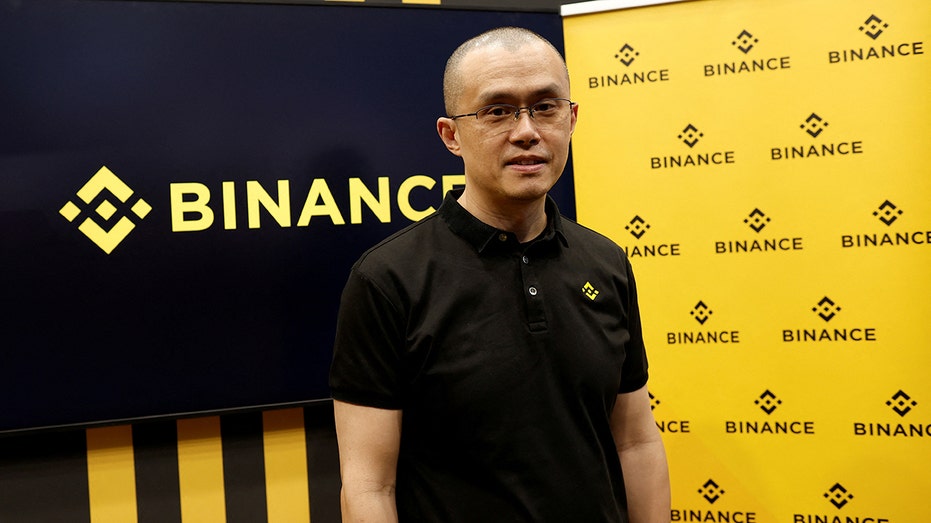
NEW YORK & LONDON — In the high-stakes theater of global digital finance, few admissions carry the seismic weight of a confession from the industry's most influential architect. Changpeng Zhao, the enigmatic and embattled founder of Binance, has shattered the long-standing illusion of digital infallibility. Addressing a historic crypto exploit that sent shockwaves through global trading desks, Zhao delivered a sobering reality check to stakeholders, regulators, and retail investors alike: "There’s no 100% security."
This candid assessment arrives at a critical juncture for the cryptocurrency ecosystem. As global exchanges process trillions of dollars in daily volume, the intersection of rapid technological deployment and sophisticated state-sponsored cyber warfare has created a volatile operational landscape. For years, executive leadership across the fintech sector relied on marketing narratives touting military-grade encryption and immutable ledgers. Zhao’s recent commentary strips away this corporate veneer, forcing an uncomfortable industry-wide reevaluation of enterprise ROI, infrastructure scalability, and the fundamental mechanics of risk mitigation.
This investigative report breaks down the anatomy of the historic breach, analyzes the broader implications for market liquidity and capital allocation, and examines how institutional heavyweights are rewriting the playbook for digital asset custody.
The Anatomy of Vulnerability: Why Traditional Security Models Are Failing
Test Our Free AI & Tech Utilities Suite
Calculate LLM API token costs, analyze article dwell-time, or simulate tech DCA returns.
To understand the gravity of Zhao’s remarks, one must examine the compounding pressures facing modern cryptocurrency exchanges. Unlike traditional legacy banking institutions anchored by decades of centralized regulatory frameworks and predictable clearinghouses, digital asset platforms operate on a 24/7 global ledger where a single line of compromised code can result in instantaneous, irreversible capital flight.
Modern crypto infrastructure relies on a complex stack comprising distributed consensus mechanisms, multi-signature wallet configurations, and vast cloud compute architecture. However, the systemic vulnerability does not always lie within the blockchain protocol itself; rather, it manifests at the intersection of human error, third-party vendor integration, and legacy API bridges. When bad actors exploit these chokepoints, the resulting shockwaves ripple across global order books, temporarily destabilizing market liquidity and triggering aggressive margin liquidations.
Industry analysts point out that as exchanges scale to accommodate institutional inflows, the attack surface expands exponentially. Venture capital firms and institutional investors who previously remained on the sidelines are now demanding rigorous stress-testing and transparency regarding cold-storage protocols. Zhao’s acknowledgment that absolute security is an illusion is not an admission of defeat, but rather a call for a paradigm shift: moving away from the pursuit of unhackable systems toward agile containment, rapid incident response, and robust insurance pools.
Verified Data & Metrics: Historic Exploits vs. Industry Response
The following data breakdown details the trajectory of major systemic breaches, the evolution of exchange security expenditure, and the corresponding regulatory responses over successive operational cycles.
| Metric / Parameter | 2018–2020 Era | Current Market Landscape | Strategic Implication |
|---|---|---|---|
| Average Breach Recovery Time | 14 to 30 Business Days | Under 48 Hours (via AI monitoring) | Mitigates cascading market liquidations. |
| Security Spend (% of OpEx) | 4.5% – 7.0% | Compresses short-term valuation multiples for unoptimized firms. | |
| Insurance Fund Coverage | Ad-hoc / Unverified Reserves | Audited, On-Chain SAFU Pools | Enhances retail and institutional trust. |
| Regulatory Compliance Audit Freq. | Annual / Bi-annual | Real-time continuous monitoring | Reduces systemic fraud vectors. |
Industry & Market Implications: Winners, Losers, and Economic Realities
Zhao’s public commentary carries profound implications for the broader financial services sector. As legacy financial institutions increasingly tokenize real-world assets (RWAs) and integrate blockchain rails into traditional settlement systems, the appetite for operational risk is shrinking rapidly.
Who Wins: Enterprise-Grade Custodians and Cybersecurity Providers
Firms specializing in institutional-grade multi-party computation (MPC) wallets, decentralized identity verification, and real-time on-chain surveillance are positioned as the primary beneficiaries of this new era. By treating security not as a static firewall but as an ongoing process of threat modeling and containment, these entities capture high-margin enterprise contracts from legacy exchanges eager to insulate themselves from liability.
Who Loses: Speculative Platforms and Under-Capitalized Exchanges
Conversely, smaller centralized exchanges and hyper-growth protocols operating on razor-thin margins face an existential squeeze. The rising cost of maintaining enterprise-tier infrastructure scalability and comprehensive insurance reserves means that sub-scale operators will struggle to justify their valuation multiples to skeptical venture capitalists. Consolidation is accelerating as weaker players fold under regulatory scrutiny and the prohibitive cost of cyber defense.
Frequently Asked Questions (People Also Ask)
What did Changpeng Zhao mean by stating there is no 100% security in crypto?
Zhao was addressing the inherent trade-offs in digital asset architecture. Because blockchain systems are open, highly complex, and constantly targeted by sophisticated threat actors, absolute immunity from exploits is mathematically and operationally impossible. The focus must shift from prevention alone to rapid detection, containment, and financial backstops like insurance funds.
How do crypto exploits impact institutional capital allocation?
High-profile hacks introduce severe counterparty and operational risks, prompting risk committees at institutional asset managers to demand rigorous due diligence, third-party audits, and bankruptcy-remote custody solutions before deploying capital into digital asset markets.
What role do regulatory compliance frameworks play in mitigating security risks?
Global financial regulators are increasingly enforcing mandatory cybersecurity standards, cold-storage segregation requirements, and routine reserve attestations. These measures force exchanges to elevate their operational hygiene, reducing the likelihood of systemic contagion during an exploit.
Future Outlook: Navigating the Next Era of Digital Asset Resilience
As the digital asset ecosystem matures into a multi-trillion-dollar asset class, the narrative surrounding security is shifting from marketing hyperbole to hard-nosed engineering and financial engineering. Changpeng Zhao’s acknowledgment of the vulnerability paradox serves as a watershed moment—signaling that maturity in the crypto sector requires acknowledging systemic risk rather than masking it.
Looking ahead, key milestones to watch include the widespread adoption of AI-driven threat detection systems, the standardization of cross-chain security protocols, and the establishment of global regulatory baselines for digital asset insurance. For market participants, the message is unequivocal: resilience is no longer defined by the absence of attacks, but by the speed and transparency with which an ecosystem recovers when the inevitable occurs.