To the Moon and Back: Inside the Lens That Captured humanity’s Greatest Deep-Space Comeback
WASHINGTON & MUMBAI — For more than half a century, the footprints left in the gray dust of the Taurus-Littrow valley stood as the high-water mark of crewed lunar exploration. Since December 1972, humanity’s reach has been tethered to low Earth orbit, bounded by the technological horizon of the space shuttle and the International Space Station. That era officially ended in spirit—and is about to culminate in reality—thanks to an unprecedented visual archive returned by the Artemis I mission.
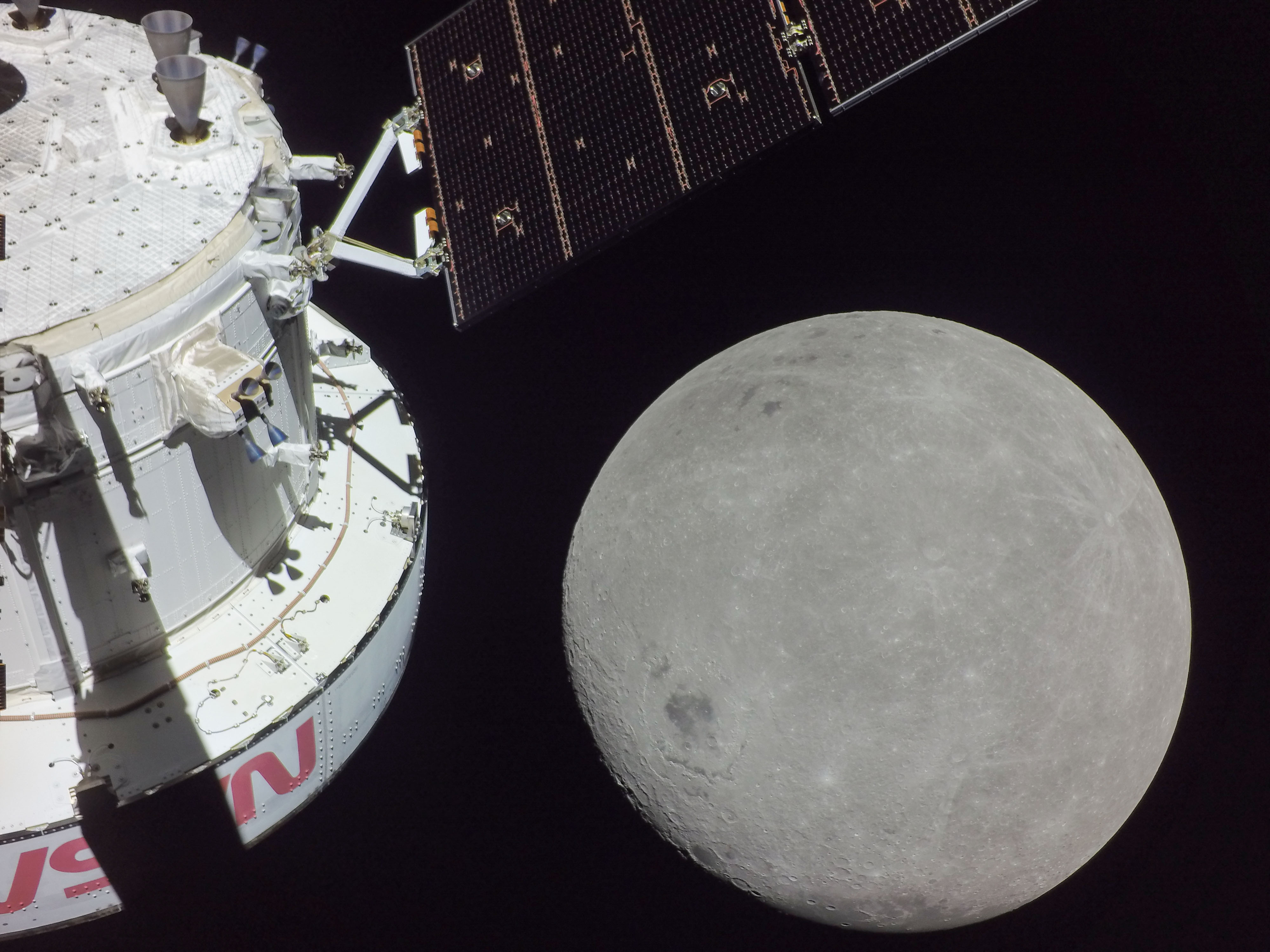
Released by Universe Space Tech, the definitive collection of high-resolution imagery from the uncrewed Orion spacecraft test flight offers a breathtaking, visceral glimpse of Earth rising above the jagged, desolate horizon of the lunar far side. As global space agencies and private aerospace giants pivot toward a permanent lunar economy, these photographs are doing more than inspiring awe; they are serving as the definitive visual blueprint for the next grand chapter of geopolitical and commercial competition in the cosmos.
Framing a New Era: The Visuals That Shook Wall Street and Global Markets
When the Artemis I capsule swung around the far side of the Moon in late 2022, executing a distant retrograde orbit, its optical navigation cameras and commercial-grade sensors locked onto a target last seen by Apollo 17 astronauts Gene Cernan and Harrison Schmitt. But the resulting imagery, fully cataloged and analyzed in this latest release, represents a quantum leap forward in digital fidelity.
Gone are the grainy, analog telecasts of 1969. In their place are hyper-crisp, 4K panoramas revealing the intricate, billion-year-old cratering of the lunar highlands, juxtaposed against the fragile, sapphire marble of Earth floating in the infinite black void. Financial analysts tracking the space economy note that these viral-ready assets have instantly supercharged public interest, driving a fresh wave of venture capital into orbital infrastructure, deep-space communications, and lunar resource extraction startups.
- The 54-Year Gap: Artemis I bridged the historic divide between the Apollo generation and modern commercial spaceflight, proving deep-space architecture is finally ready for human cargo.
- Economic Catalysts: High-impact visual data is directly fueling a projected $1.8 trillion global space economy by 2035, capturing the imaginations of retail investors and institutional funds alike.
- Technical Mastery: The mission successfully tested radiation shielding, optical navigation, and thermal protection systems under extreme deep-space stressors.
The Strategic and Economic Stakes of Returning to the Moon
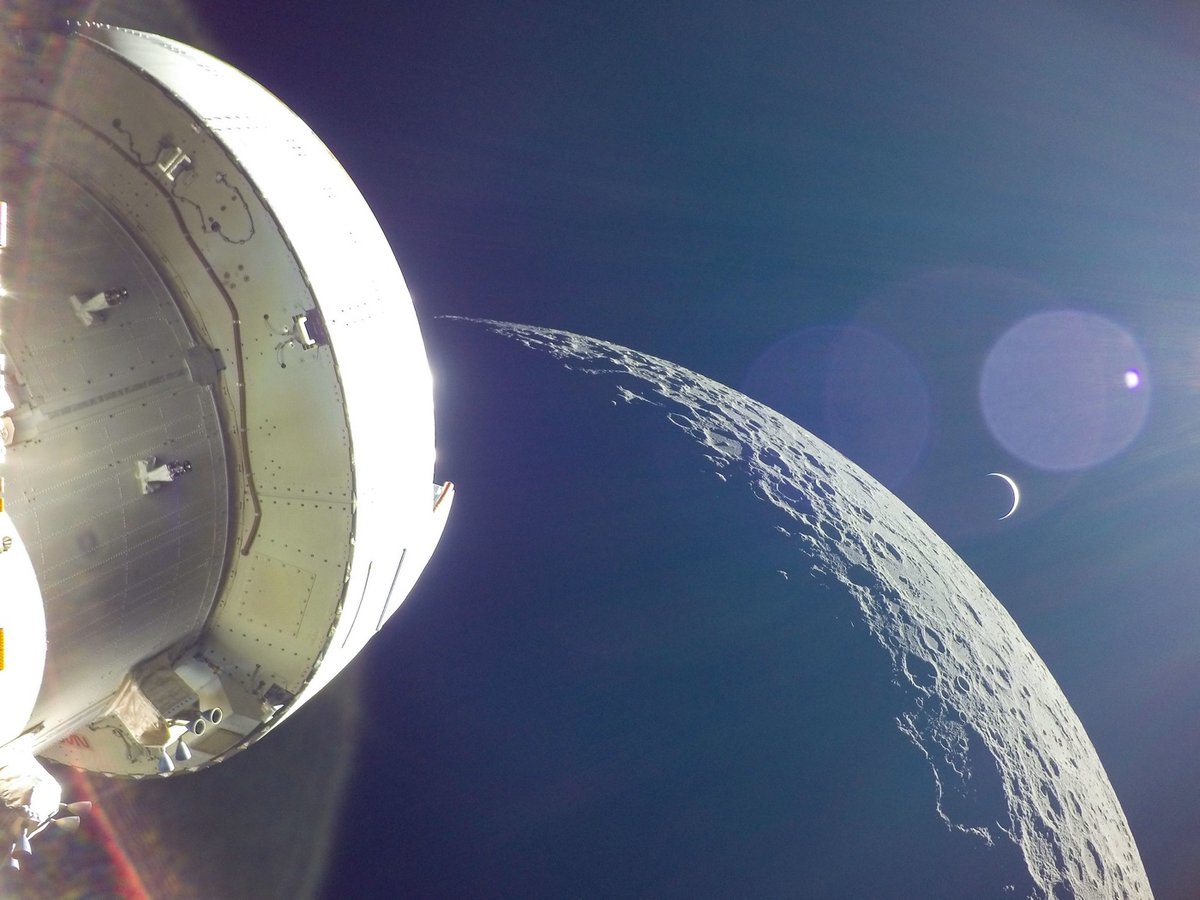
Behind the stunning aesthetics of Earth-rise photos lies a ruthless, high-stakes geopolitical calculus. Unlike the Apollo missions, which were fueled primarily by Cold War ideological rivalry, the Artemis architecture is explicitly built on commercial sustainability and international partnerships. Major space powers and multinational corporations are racing to establish permanent outposts near the lunar south pole, enticed by the presence of water ice that can be converted into rocket propellant and breathable air.
Chief economists at major Wall Street firms point out that lunar logistics are fast becoming the new frontier of industrial manufacturing. Low-gravity metallurgy, solar-power harvesting, and the extraction of rare-earth elements are no longer the stuff of science fiction; they are active line items in corporate defense and aerospace portfolios.
| Mission Parameter | Apollo 17 (1972) | Artemis I / Upcoming Crewed Flights |
|---|---|---|
| Primary Objective | Flag-and-footprints exploration | Sustainable, permanent infrastructure & commerce |
| Imaging Capability | 70mm Hasselblad film cameras | Digital 4K optical arrays & telemetry feeds |
| Key Resource Focus | Geological sampling | Water ice mapping & in-situ resource utilization (ISRU) |
| Stakeholder Model | State-run (NASA) | Public-private partnership (NASA + Commercial Contractors) |
What Industry Leaders Are Saying
The release of the Artemis I photo archive has prompted widespread commentary across the aerospace and financial sectors, underscoring the deep convergence between scientific exploration and capital markets.
“When you look at these images, you aren’t just looking at dead rock and a distant planet. You are looking at the foundational assets of the next trillion-dollar industrial sector. Space is no longer a government-funded science project; it is the ultimate global growth market.”
Universe Space Tech leads noted in their briefing that the sheer volume of high-definition data returned by the Orion capsule has rewritten textbooks on deep-space thermal dynamics. Engineers can now model micrometeoroid impacts and solar radiation degradation with unprecedented precision, ensuring that the upcoming crewed landings are safer and more robust than ever before.
The Road Ahead: What Comes Next for Artemis
As mission controllers finalize preparations for subsequent crewed flybys and surface landings, the focus shifts from testing hardware to establishing operational permanence. The visual legacy of Artemis I has already cemented itself in the cultural zeitgeist, serving as a powerful reminder of human ingenuity. Yet, for global markets and policymakers, the photos are merely an appetizer for the economic and scientific bonanza waiting just beyond the horizon.
Investors and space enthusiasts alike are advised to watch regulatory frameworks surrounding lunar property rights and orbital traffic management, as these legal structures will dictate how quickly space-faring nations can turn breathtaking photographs into profitable terrestrial realities.
Frequently Asked Questions
What made the Artemis I photo collection so significant compared to Apollo-era pictures?
While Apollo images relied on analog film cameras, Artemis I utilized advanced digital sensors, optical navigation arrays, and high-bandwidth telemetry to beam back ultra-high-definition 4K imagery. This provides scientists and the public with unprecedented clarity of lunar topography and deep-space conditions.
How does the Artemis program impact the global economy?
The Artemis program operates on a public-private partnership model, relying heavily on commercial aerospace contractors. This framework stimulates venture capital investment, drives technological innovations in material science and communications, and lays the groundwork for a multi-trillion-dollar lunar resource economy.