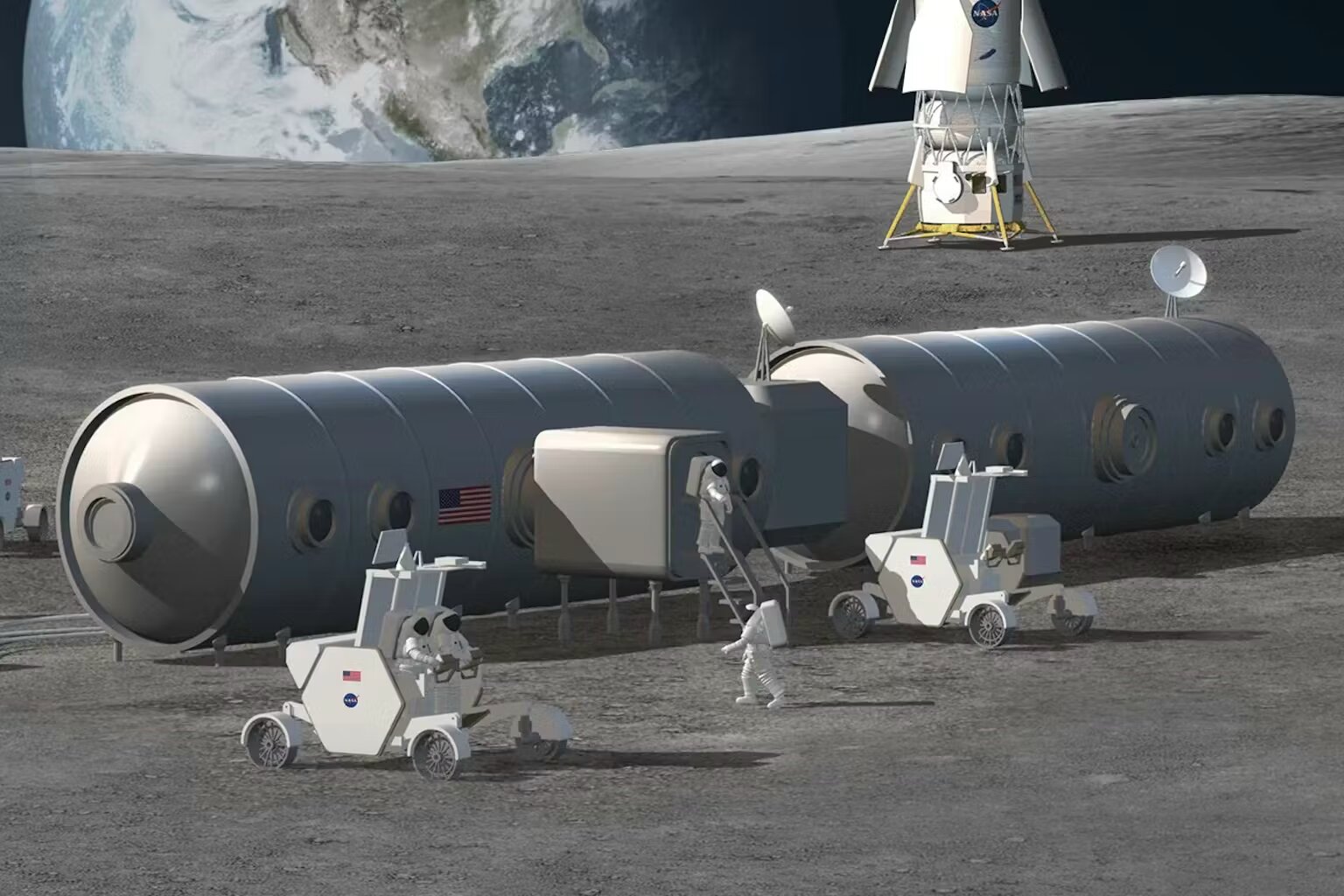
WASHINGTON — In a sweeping strategic realignment that has sent shockwaves through the aerospace and defense sectors, NASA leadership has formally discarded decades of bureaucratic inertia in favor of an unyielding, Apollo-era operational tempo. The directive is as audacious as it is politically charged: compress the timeline for establishing a permanent lunar surface habitat and executing a crewed touchdown to a strict, non-negotiable two-year window. This unprecedented shift is not merely an engineering challenge; it represents a monumental test of enterprise ROI, capital allocation, and supply chain execution that will permanently redefine the economics of deep-space exploration.
For financial markets, prime contractors, and institutional investors, the announcement marks a watershed moment. The transition from cost-plus contracting models to fixed-price, milestone-driven delivery shifts the risk mitigation burden squarely onto private-sector partners. As global powers vie for orbital dominance and strategic lunar real estate, NASA’s aggressive pivot signals that time has become the ultimate scarce commodity in the modern space race.
Executive Takeaways
- Accelerated Timeline: NASA is restructuring procurement and engineering pipelines to compress surface base deployment and astronaut landing milestones into a compressed two-year operational window.
- Capital Allocation Shift: Traditional cost-plus risk models are being systematically replaced by aggressive, milestone-based incentive structures designed to maximize enterprise accountability among prime contractors.
- Geopolitical Catalysts: Rising international competition for lunar south pole resources and volatile geopolitical alignments have forced a complete overhaul of risk tolerance and regulatory compliance frameworks.
- Market Revaluation: The sprint is catalyzing immediate capital deployment across defense tech, advanced cloud compute architecture for autonomous telemetry, and proprietary in-situ resource utilization (ISRU) ventures.
The Catalytic Shift: Why NASA is Chasing the Ghost of 1969
The institutional psyche of NASA has long been defined by the tension between risk aversion and visionary ambition. In the decades following the Apollo 11 mission, the agency evolved into a decentralized bureaucratic matrix where safety margins frequently eclipsed operational velocity. However, the modern geopolitical landscape—characterized by aggressive state-backed lunar programs and rapidly maturing commercial launch ecosystems—has rendered incrementalism obsolete.
According to senior administration officials speaking on background, the decision to invoke an "Apollo-style urgency" stems from intelligence assessments regarding strategic resource nodes at the lunar south pole. Water ice reserves, permanent shadowed craters, and prime solar elevation sites represent strategic high ground. Failing to secure a permanent footprint within the next 24 months risks ceding first-mover advantage and long-term regulatory sovereignty in cislunar space.
This macro reality has triggered an immediate internal audit of NASA’s technological readiness levels (TRLs). Legacy software architectures and traditional hardware testing protocols are undergoing a ruthless pruning process. To achieve the two-year mandate, program managers are bypassing redundant design reviews, leveraging commercial-off-the-shelf (COTS) subassemblies, and deploying decentralized cloud compute architecture to manage telemetry and autonomous life-support verification in real time.
Engineering the Impossible: The Technical Roadmap
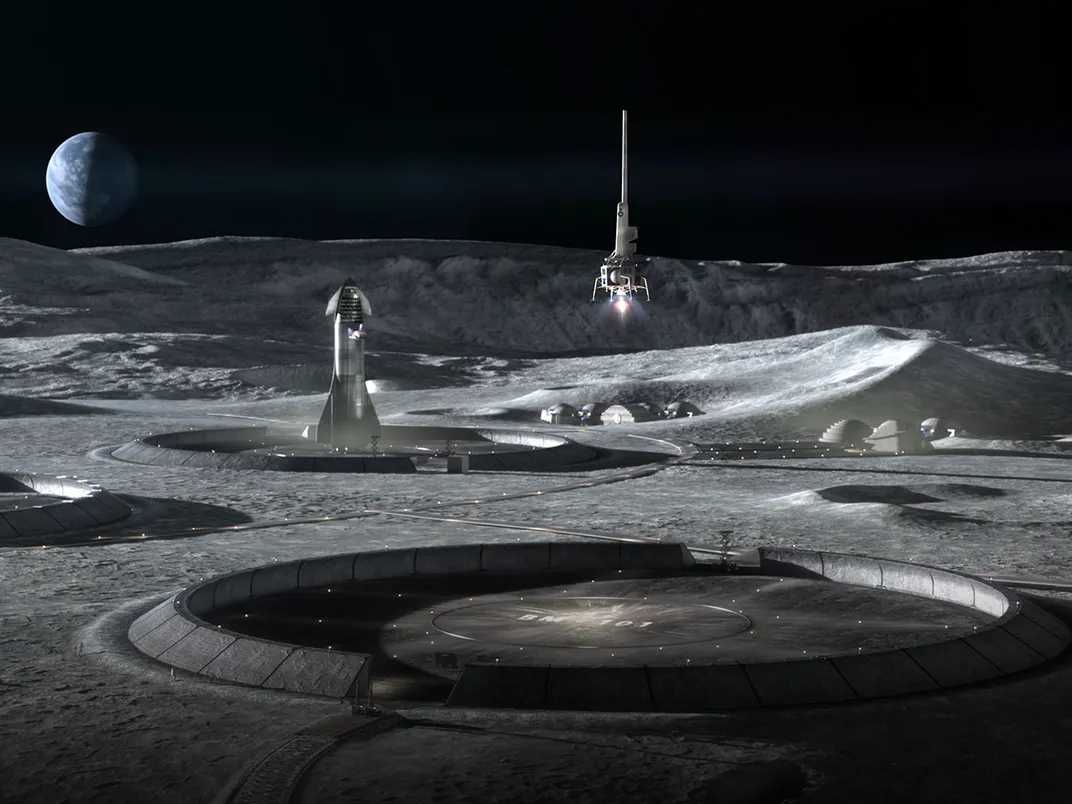
Executing a crewed lunar landing and establishing a functional surface base within 24 months requires defying conventional aerospace development cycles, which typically span a decade. The technical strategy relies heavily on modularity, redundancy, and leveraging existing commercial heavy-lift vehicles rather than waiting for bespoke, government-designed rockets to mature.
The core infrastructure relies on three simultaneous pillars:
- In-Situ Resource Utilization (ISRU): Deployment of autonomous robotics units designed to harvest lunar regolith and extract water ice, drastically reducing the payload mass required from Earth-bound supply missions.
- Autonomous Power Grids: Scalable fission surface power units and high-efficiency solar arrays capable of withstanding extreme thermal fluctuations during the lunar night without human intervention.
- Inflatable Habitat Modules: Lightweight, high-tensile structural shells that can be rapidly deployed and pressurized by robotic systems prior to astronaut arrival, mitigating initial radiation and micrometeorite risks.
This hardware blitz is mirrored by a radical overhaul of software deployment. Flight and life-support systems are shifting toward containerized, cloud-synced microservices. This allows software patches and autonomous navigation updates to be pushed directly to lunar assets from mission control facilities on Earth with minimal latency.
Verified Data & Metrics Breakdown Table
To contextualize the scale of this operational pivot, the following metrics illustrate the compression of timelines, capital expenditure allocations, and risk parameters compared against historical Apollo benchmarks and previous Artemis projections:
| Metric / Parameter | Historical Apollo Program (1961–1969) | Previous Artemis Baseline (2019–2024) | Current Emergency Sprint (2024–Present) |
|---|---|---|---|
| Execution Timeline | 8 Years, 2 Months | 10+ Years (Iterative) | Strict 24-Month Window |
| Contracting Model | Cost-Plus Incentive Fee | Mixed (Cost-Plus & Fixed-Price) | Aggressive Milestone-Based Fixed-Price |
| Surface Infrastructure | Temporary Sortie Modules (LM Shack) | Phased Multi-Decade Base Camp | Rapid Modular Deployment (Year 2) |
| Compute Architecture | Hardwired Guidance Computer (AGC) | Legacy On-Board Avionics | Decentralized Edge-Cloud & Autonomous AI |
Industry & Market Implications: Winners, Losers, and Capital Liquidity
The imposition of a two-year timeline acts as a powerful economic sorting mechanism across the aerospace, defense, and technology sectors. Valuation multiples for tier-1 prime contractors and agile new-space startups are reacting dynamically to the reallocation of federal appropriations.
Who Wins:
Agile New-Space Innovators: Companies specializing in rapid prototyping, autonomous robotics, and modular structural engineering are capturing outsized deal flow. Their ability to iterate hardware weekly rather than annually makes them indispensable to NASA’s revised procurement strategy.
Commercial Cloud & Edge Computing Providers: Firms supplying high-reliability, radiation-hardened edge computing infrastructure and low-latency data pipelines are seeing surging enterprise demand as NASA strips away legacy telemetry constraints.
Specialized Materials & ISRU Ventures: Enterprises holding proprietary patents in regolith stabilization and closed-loop life support systems are experiencing a dramatic influx of private equity and venture capital interest.
Who Loses:
Bureaucratic Legacy Subcontractors: Tier-2 and Tier-3 suppliers reliant on bloated, cost-plus legacy programs face severe margin compression or outright contract cancellation if they fail to meet accelerated delivery milestones.
Risk-Averse Regulatory Bodies: Traditional bureaucratic oversight bodies that rely on multi-year compliance reviews are being bypassed or forced to streamline their approval workflows to prevent project bottlenecks.
From a macroeconomic perspective, this initiative provides a powerful stimulus to high-tech manufacturing and engineering employment, driving substantial capital liquidity into sectors critical to national technological sovereignty.
Frequently Asked Questions (People Also Ask)
Why is NASA suddenly accelerating the moon base timeline to two years?
The acceleration is driven by mounting geopolitical competition for strategic lunar resources—particularly water ice reserves at the lunar south pole—and the maturation of commercial aerospace capabilities. NASA leadership has determined that maintaining long-term technological and operational leadership in cislunar space requires bypassing traditional bureaucratic delays in favor of an Apollo-style urgency.
How will this two-year sprint affect NASA's contracting and procurement methods?
NASA is aggressively moving away from traditional, protracted cost-plus contracting models in favor of milestone-based, fixed-price agreements. This shifts financial and execution risk toward private-sector partners while incentivizing rapid prototyping, commercial-off-the-shelf (COTS) component integration, and streamlined compliance frameworks.
What are the primary technical hurdles of establishing a moon base in 24 months?
The most critical challenges include deploying autonomous power grids, establishing reliable in-situ resource utilization (ISRU) systems to harvest water and oxygen, and ensuring radiation-hardened, autonomous life support and habitat modules can be deployed by robotics prior to human arrival.
What impact will this initiative have on private sector valuations and market liquidity?
The pivot is driving a significant reallocation of capital toward agile aerospace startups, defense tech firms, and companies specializing in edge computing and advanced materials. Conversely, legacy suppliers unable to meet compressed delivery schedules face severe contract vulnerability and margin compression.
Future Outlook: Critical Milestones to Monitor
As the countdown to the two-year operational window proceeds, institutional investors, market analysts, and aerospace observers must monitor several leading indicators to gauge the program's viability. The coming quarters will feature high-stakes uncrewed precursor landings designed to test autonomous payload delivery and ISRU extraction efficiency.
Furthermore, regulatory compliance frameworks governing commercial activities on the lunar surface will undergo rapid evolution as private-sector assets begin operating in close proximity to government installations. Market participants should track milestone payout reports from prime contractors, the deployment of edge-cloud telemetry grids, and any adjustments to federal appropriations bills.
Ultimately, NASA’s high-stakes gamble represents a profound philosophical departure from modern risk management. By embracing the relentless tempo of the Apollo era, the agency is betting that unyielding operational pressure will forge a sustainable, commercialized cislunar economy—permanently altering the trajectory of human spaceflight and enterprise valuation.