Executive Takeaways
- Historic Interplanetary Insertion: Japan’s space agency has officially launched its flagship Martian Moons Exploration (MMX) probe, marking a monumental leap in deep-space capital allocation and international scientific collaboration.
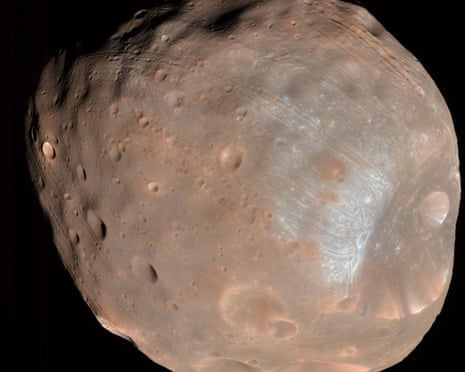
- The Phobos Imperative: The mission’s primary objective is to touch down on Phobos, collect pristine regolith samples, and execute a high-stakes return flight to Earth by 2031, providing unprecedented geological insights into planetary formation.
- Geopolitical & Industrial Stakes: The mission redefines the risk mitigation and supply chain paradigms of deep-space infrastructure, establishing new benchmarks for autonomous navigation, robust cloud compute architecture, and precision aerospace engineering.
- Commercial & Valuation Catalysts: Aerospace conglomerates and private-sector tech contractors tied to the MMX supply chain are experiencing heightened investor interest, signaling a broader shift toward commercialized deep-space resource exploration.
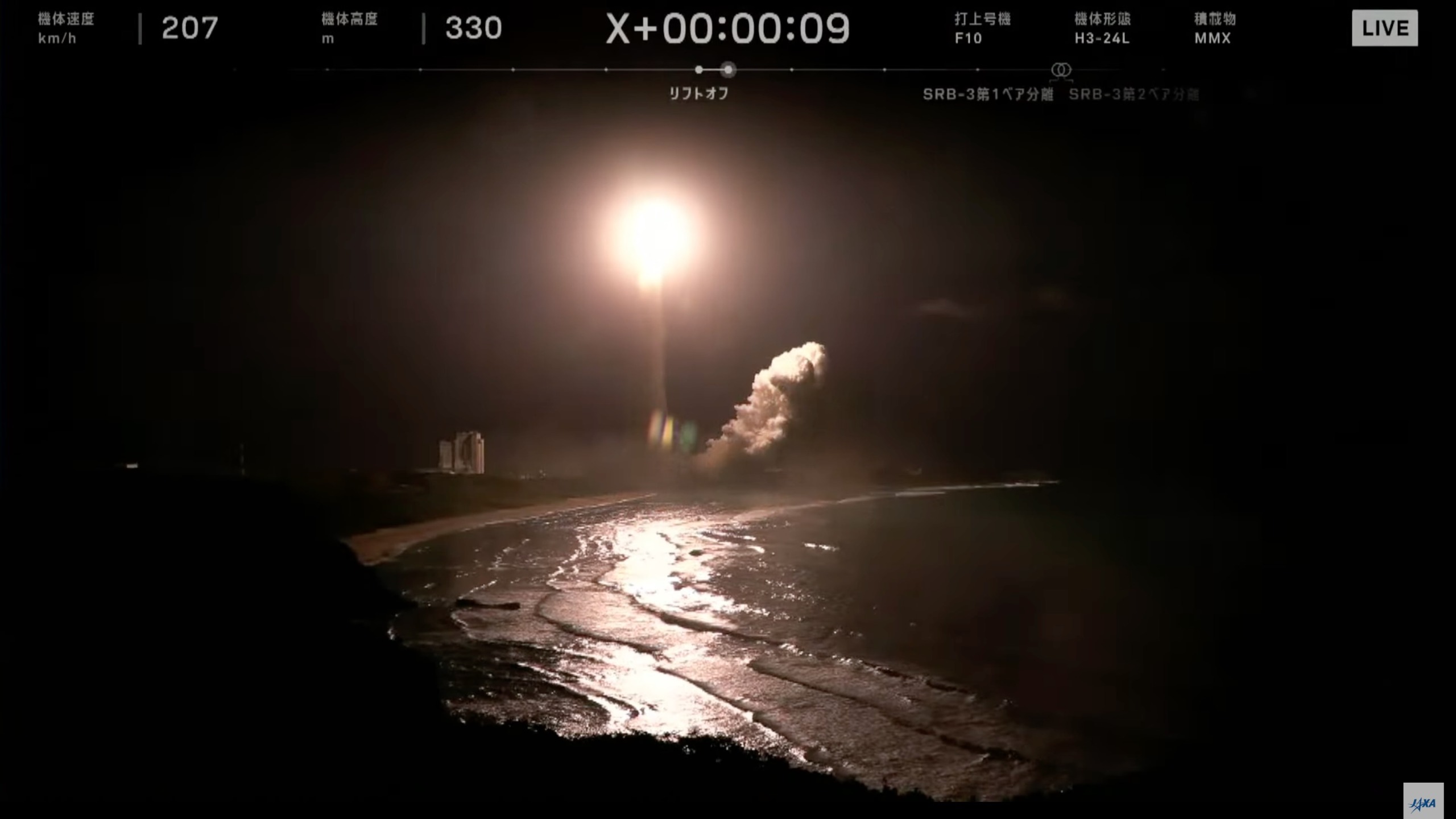
TOKYO/WASHINGTON — In a watershed moment for global aerospace engineering and interplanetary capital allocation, Japan has officially initiated its boldest deep-space endeavor to date. The nation's premier space agency has successfully launched an advanced robotic probe destined for the Martian system, with a laser-focused mandate: rendezvous with Mars' enigmatic moon, Phobos, extract untouched regolith, and execute a complex, multi-year return journey to Earth. This high-stakes mission not only tests the absolute limits of autonomous flight mechanics and infrastructure scalability, but it also opens a new frontier in the commercialization and strategic utilization of outer space.
As global financial markets increasingly factor in the long-term enterprise ROI of space-based technologies, the successful deployment of this mission serves as a bellwether for international aerospace valuations. With significant cross-border investments and proprietary telemetry systems deployed, the mission represents a masterclass in risk mitigation, technological resilience, and rigorous regulatory compliance across international space law.
The Catalytic Genesis of the Martian Moons Mission
For decades, the scientific community has debated the origin of Mars' two irregularly shaped moons, Phobos and Deimos. Are they captured asteroids from the outer reaches of the solar system, or are they the collisional debris of a massive ancient impact on the Martian surface? Resolving this fundamental cosmological debate requires physical samples—data that remote-sensing orbiters simply cannot provide. Enter the Martian Moons Exploration (MMX) initiative, a multi-year engineering marvel designed to bridge this critical knowledge gap.
The genesis of this mission required unprecedented financial syndication and technical alignment. Engineering teams faced monumental challenges in designing a propulsion and navigation suite capable of enduring deep-space radiation, thermal extremes, and communication latency stretching across tens of millions of kilometers. By leveraging cutting-edge cloud compute architecture for trajectory modeling and real-time telemetry processing, mission controllers have optimized fuel efficiency and orbital insertion vectors, safeguarding a multi-billion-dollar investment.
Technical Specifications and Mission Architecture

Executing a sample-return mission from a Martian moon is an exponentially more complex undertaking than lunar exploration. Phobos possesses a micro-gravity environment, meaning traditional landing mechanisms are entirely inadequate. The Japanese probe is equipped with revolutionary anchoring and sampling apparatuses designed to secure the spacecraft to the moon's dusty, cratered surface while pneumatically or mechanically harvesting subsurface regolith.
Below is a comprehensive breakdown of the core metrics, timeline milestones, and technical specifications governing this historic interplanetary venture:
| Mission Parameter | Technical Specification / Detail | Strategic Impact |
|---|---|---|
| Primary Destination | Phobos (Larger inner moon of Mars) | Unlocks pristine records of early solar system history. |
| Launch Window | Current Trending Launch Date | Capitalizes on optimal orbital mechanics between Earth and Mars. |
| Target Return Date | Scheduled for Earth re-entry in 2031 | Establishes a strict timeline for project valuation and scientific deliverables. |
| Payload & Sampling Goal | Minimum 10 grams of surface/subsurface regolith | Sufficient mass for global laboratory distribution and analysis. |
| Key International Partners | NASA, ESA, CNES (Instrumentation & Tracking) | Mitigates single-nation financial risk and enhances data validation. |
Industry & Market Implications: Who Wins and Who Loses
The successful execution of the MMX mission carries profound ramifications for global financial markets, particularly within the aerospace, defense, and specialized tech sectors. As governments increasingly outsource deep-space component manufacturing to private enterprises, institutional capital is closely monitoring valuation multiples across the space economy.
The Winners: Advanced materials manufacturers, precision sensor developers, and enterprise software firms specializing in autonomous navigation stand to gain immensely. Winning contracts for interplanetary missions validate a firm's engineering rigor, serving as an unmatched credential for future defense and commercial space infrastructure bids. Furthermore, international aerospace contractors participating in the telemetry and sample-return capsule design will see immediate boosts in investor confidence and market liquidity.
The Laggards: Traditional aerospace entities that rely solely on low-earth orbit (LEO) legacy satellite contracts risk marginalization. Without a demonstrable capability to scale operations for deep-space environments, archaic supply chains face margin compression and diminished long-term market relevance as institutional investors pivot toward high-growth interplanetary technologies.
Frequently Asked Questions (People Also Ask)
What is the primary scientific objective of Japan's Phobos sample mission?
The core objective is to determine the origin of Mars' moons, Phobos and Deimos. By retrieving pristine regolith samples from Phobos and returning them to Earth laboratories, scientists can definitively test whether the moon is a captured asteroid or the result of a massive impact ejecta ring from Mars, shedding light on planetary formation across our solar system.
When is the probe expected to return its samples to Earth?
Following its cruise phase and orbital insertion around Mars, the spacecraft will spend considerable time surveying both Phobos and Deimos before touching down. The entire round-trip mission—culminating in the parachute-assisted landing of the sample return capsule in the Australian desert (or designated recovery zone)—is scheduled for completion in 2031.
How does this mission impact commercial aerospace valuations and investments?
Missions of this magnitude validate advanced deep-space technologies, autonomous systems, and robust supply chain resilience. Companies supplying components, navigation software, and propulsion hardware experience enhanced market visibility, driving positive valuation multiples and attracting institutional venture and equity capital into the broader space economy sector.
What international agencies are collaborating with Japan on this endeavor?
While spearheaded by Japan's space agency, the mission incorporates vital scientific instruments and tracking support from international partners including NASA (United States), the European Space Agency (ESA), and CNES (France), ensuring global peer review and collaborative risk mitigation.
Future Outlook & Key Milestones to Watch
As the probe embarks on its multi-year interplanetary cruise, executive analysts and scientific boards will monitor several critical operational milestones. The first major hurdle will be mid-course correction maneuvers and deep-space propulsion checks over the coming months, ensuring trajectory accuracy.
Looking further ahead, market participants should keep a close eye on the Martian orbital insertion phase, scheduled for late-decade arrival. Success here will not only rewrite astrophysical textbooks but will also cement public-private aerospace partnerships as the dominant operational paradigm for twenty-first-century exploration. For institutional investors, the successful execution of MMX reaffirms that deep-space infrastructure is transitioning from theoretical ambition to a tangible, high-yield asset class.