Executive Takeaways
- Pioneering Horizon: The Japan Aerospace Exploration Agency (JAXA) is preparing to launch the Martian Moons Exploration (MMX) mission, marking the world's first return of pristine samples from Phobos or Deimos.
- Geopolitical & Capital Implications: Beyond pure scientific discovery, this mission establishes sovereign space-resource precedence, directly impacting long-term valuation multiples for private aerospace contractors and defense infrastructure.
- Technological Resilience: Utilizing advanced ion propulsion and rigorous risk mitigation frameworks, the mission tests deep-space infrastructure scalability under extreme thermal and gravitational anomalies.
- Commercial Synergy: Public-private partnerships are driving down launch cost structures, shifting celestial exploration from government-funded science to high-yield asset acquisition potential.
TOKYO — In an era where sovereign capital allocation increasingly targets the final frontier, the Japan Aerospace Exploration Agency (JAXA) is poised to rewrite the playbook of interplanetary resource acquisition. While global superpowers fixate on lunar return missions and crewed Mars transits, Tokyo is executing a calculated, high-precision strike on the Martian system. The Martian Moons Exploration (MMX) mission is not merely an academic exercise in planetary science; it is a masterclass in risk mitigation, technological sovereignty, and long-term capital deployment that aims to secure the world's first pristine regolith samples from Phobos, the larger of Mars’s two enigmatic moons.
As trending telemetry data from wire services and search engines confirms global public and institutional fascination with the initiative, financial markets and aerospace conglomerates are waking up to the strategic gravity of the endeavor. For institutional investors evaluating the commercial space sector—where enterprise ROI often lags behind visionary rhetoric—the MMX mission represents a critical stress-test of deep-space hardware, autonomous navigation under high-latency conditions, and the delicate economics of interplanetary sample return.
The Genesis of MMX: Unlocking the Martian System's Deepest Mysteries
The conceptual foundation of the MMX mission stretches back over a decade, born from Japan’s stellar track record in robotic sample return, highlighted by the unprecedented successes of the Hayabusa and Hayabusa2 missions. Those initiatives successfully mapped, touched down upon, and retrieved subsurface material from asteroids Itokawa and Ryugu, proving JAXA’s unmatched capability in precision rendezvous and touch-and-go sampling maneuvers.
However, scaling this architecture to the Martian system introduces exponential complexity. Phobos and Deimos occupy a gravitational and radiation-intensive theater that severely tests cloud compute architecture, onboard autonomous decision-making algorithms, and propulsion durability. Scientists remain deeply divided over the origin of these two moons: Are they captured asteroids from the outer main belt, or are they the coalesced ejecta of a catastrophic impact on the Martian surface? Resolving this debate carries profound implications for understanding planetary formation, volatile delivery to the inner solar system, and the distribution of carbonaceous and water-bearing minerals.
From an operational standpoint, the mission requires a sophisticated choreography of orbital insertion, months of detailed surface mapping, and a high-risk descent onto an irregularly shaped body possessing minimal gravity. The financial commitment required from Tokyo reflects a belief that early establishment of operational capabilities in the Mars sphere will yield asymmetric geopolitical and technological advantages in the decades to come.
Data & Specifications: The MMX Blueprint
To fully grasp the magnitude of the engineering undertaking, financial analysts and aerospace engineers must examine the core metrics governing the MMX mission architecture.
| Mission Parameter | Technical Specification | Strategic Implications |
|---|---|---|
| Primary Target | Phobos (with extended observations of Deimos) | Resolves planetary accretion models; evaluates volatile resource distribution. |
| Launch Vehicle | H3 Launch Vehicle (Mitsubishi Heavy Industries) | Validates heavy-lift infrastructure scalability and commercial viability for export markets. |
| Sample Mass Target | Minimum 10 grams (via coring and pneumatic sampling) | Sufficient for global laboratory distribution and multi-spectral analysis. |
| Timeline & Duration | Launch window active; return capsule expected early 2030s | Long-cycle capital allocation requiring stringent milestone-based risk management. |
Industry & Market Implications: Who Wins, Who Loses
The broader economic fallout of Japan’s Martian venture extends far beyond academic laboratories in Tsukuba. As nations transition from symbolic space programs to utilitarian utilization, the supply chain underpinning deep-space exploration is undergoing a rapid valuation recalibration.
The Winners: Prime contractors such as Mitsubishi Heavy Industries, alongside specialized domestic and international tier-1 avionics suppliers, stand to gain substantial valuation multiples. Successful execution of the H3-propelled mission cements Japan’s reputation as a reliable, ultra-precise provider of heavy-launch and deep-space telemetry services. Furthermore, international research institutions partnering with JAXA—including NASA and the Centre National d'Études Spatiales (CNES)—secure privileged access to pristine extraterrestrial samples, driving foundational breakthroughs in geochemistry and astrobiology.
The Laggards: Traditional aerospace entities reliant solely on low-Earth orbit (LEO) commercialization or legacy defense contracts risk marginalization. If JAXA successfully demonstrates low-cost, high-reliability interplanetary sample return, national space programs lacking agile, public-private R&D pipelines will find themselves at a distinct disadvantage in shaping future regulatory frameworks for celestial resource extraction.
From a capital allocation perspective, venture capitalists and sovereign wealth funds are increasingly viewing deep-space hardware as a defensive hedge against terrestrial resource volatility. While immediate market liquidity remains tied to terrestrial equities, the intellectual property generated by autonomous navigation and thermal-shielding technologies has immediate, high-margin dual-use applications in terrestrial robotics and autonomous logistics.
Frequently Asked Questions (People Also Ask)
What makes Japan's MMX mission entirely unique compared to previous Mars explorations?
Unlike previous missions that targeted the Martian atmosphere, surface, or asteroid belts, MMX is specifically engineered to land on, sample, and return pristine regolith from Phobos, Mars's largest moon. It represents the first-ever attempt to retrieve material directly from the Martian moon system, offering clues to both Martian impact history and solar system formation.
How does this mission impact the commercial aerospace and satellite manufacturing sectors?
The mission serves as a rigorous proving ground for deep-space infrastructure scalability, advanced ion propulsion, and autonomous guidance systems. Successful deployment validates high-reliability components manufactured by private contractors, directly influencing valuation multiples and tender successes for future interplanetary government contracts.
What are the primary scientific hypotheses JAXA aims to test with the collected samples?
JAXA's principal objective is to determine whether Phobos and Deimos are captured primitive asteroids from the outer solar system or native debris blown into orbit by a massive impact on Mars. Analyzing the captured volatile compounds and minerals will also shed light on how water and organic molecules were delivered to the terrestrial planets.
When will the samples finally arrive back on Earth for laboratory analysis?
Following launch, cruise phases, and an extensive operational campaign orbiting and surveying Phobos, the spacecraft's return capsule is scheduled to re-enter Earth's atmosphere and deliver the precious payload in the early 2030s, initiating a multi-year global scientific analysis phase.
Future Outlook: Milestones on the Horizon
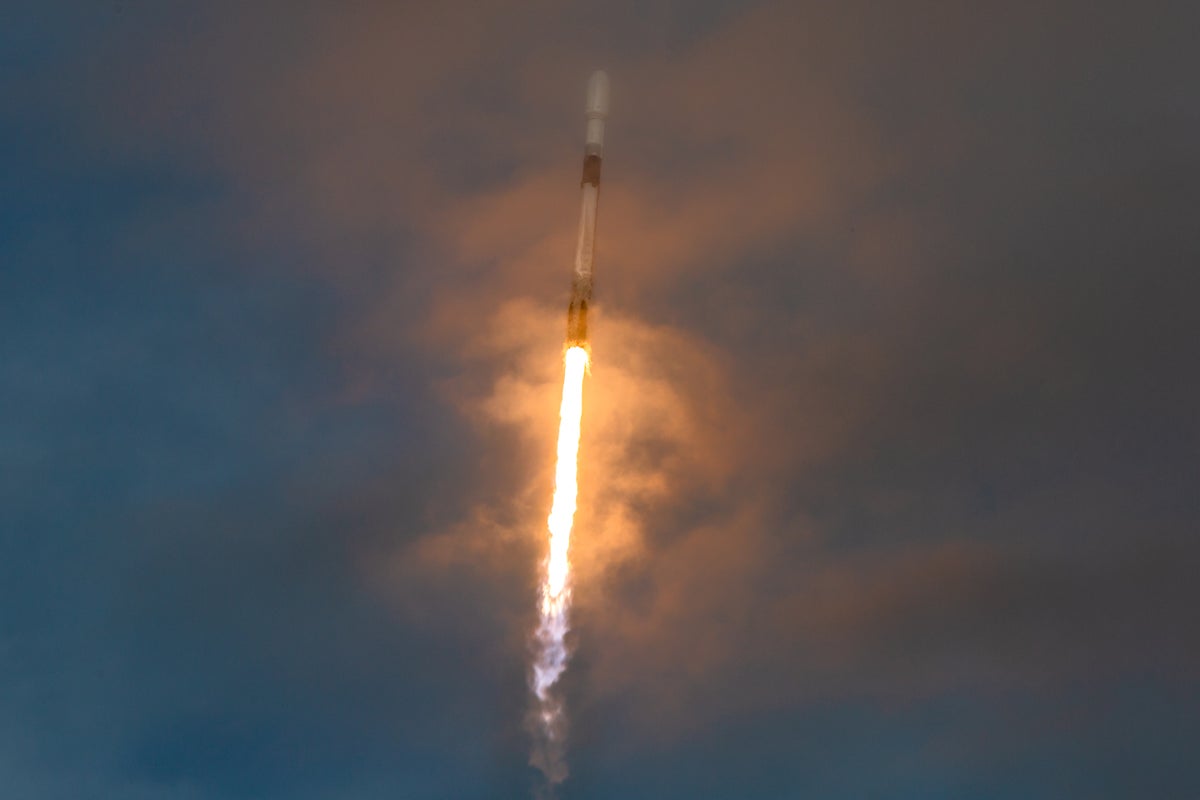
As the countdown to launch progresses, executive leadership, defense strategists, and financial analysts must monitor several key operational inflection points. The immediate focus centers on static-fire testing of the launch vehicle architecture and final calibration of the spacecraft’s onboard sampling mechanisms. Once in transit, the mission’s success will hinge on the reliability of its deep-space communication links and autonomous hazard-avoidance systems during the delicate landing phase on Phobos.
Ultimately, the MMX mission transcends national pride. It serves as a bellwether for the maturation of interplanetary logistics. In an economic climate defined by rigorous capital discipline and risk aversion, Japan’s willingness to spearhead this high-stakes cosmic endeavor demonstrates that the true frontier of enterprise value lies waiting in the dark expanse between worlds.