Executive Takeaways
- Unprecedented Payload Return: Japan’s Martian Moons Exploration (MMX) mission aims to retrieve pristine regolith from Phobos, marking humanity's first return of surface material from the Martian system.
- Capital Allocation & Aerospace Valuation: Backed by a multi-billion-dollar state and private aerospace investment, the mission signals a fundamental shift in risk mitigation and long-term valuation multiples for commercial space infrastructure.
- Deciphering Planetary Genesis: By analyzing whether Phobos is a captured asteroid or the remnant of a massive planetary impact, scientists expect to unlock critical data regarding water distribution and resource scalability across the inner solar system.
- Technological Leap: The mission relies on next-generation ion propulsion, autonomous surface-sampling mechanisms, and complex orbital mechanics far exceeding the operational complexity of previous asteroid-return projects like Hayabusa2.
TOKYO AND WASHINGTON — In a high-stakes masterclass of precision engineering and long-term capital allocation, the Japan Aerospace Exploration Agency (JAXA) has officially launched its flagship Martian Moons Exploration (MMX) mission. With a targeted trajectory toward the Martian system, the spacecraft aims to achieve what no space agency has accomplished before: landing on the enigmatic Martian moon Phobos, securing pristine geological samples, and executing a flawless return journey to Earth by the early 2030s.
For institutional investors, aerospace conglomerates, and geopolitical strategists alike, MMX represents far more than an academic pursuit of planetary origins. It is a vital proving ground for deep-space infrastructure scalability, autonomous navigation algorithms, and the regulatory frameworks governing extraterrestrial resource extraction. As sovereign states increasingly view space as a critical domain for technological dominance, the success or failure of Japan’s ambitious enterprise will reverberate across global financial markets and reshape valuation multiples for the burgeoning commercial space economy.
The Genesis of MMX: Bridging Planetary Science and Strategic Ambition
The conceptual foundation of the MMX mission was forged in the wake of JAXA’s historic Hayabusa and Hayabusa2 missions, which successfully intercepted, sampled, and returned material from near-Earth asteroids Itokawa and Ryugu. However, scaling those operational frameworks from the microgravity environment of an asteroid to the complex gravitational well of Mars—under the watchful orbital mechanics of the Red Planet—demanded an entirely new paradigm in cloud compute architecture, thermal protection systems, and propulsion engineering.
Phobos, along with its smaller companion Deimos, has long baffled planetary scientists. Two primary hypotheses dominate academic debate: Are these moons captured D-type asteroids pulled inward from the outer main asteroid belt by Jupiter’s gravitational perturbations, or are they the collisional debris accretion disk resulting from a massive impact on the Martian surface early in planetary formation?
Solving this riddle carries profound implications for understanding water and volatile delivery to the inner terrestrial planets. If Phobos is composed of primordial asteroid material rich in carbonaceous chondrites and trapped volatiles, it validates theoretical models concerning how Earth and Mars acquired the building blocks necessary for organic chemistry. For corporate entities eyeing future space resource utilization, unlocking the compositional blueprint of Martian system regolith provides essential baseline data for evaluating long-term enterprise ROI in extraterrestrial mining and in-situ resource utilization (ISRU).
Engineering Complexity and Mission Architecture
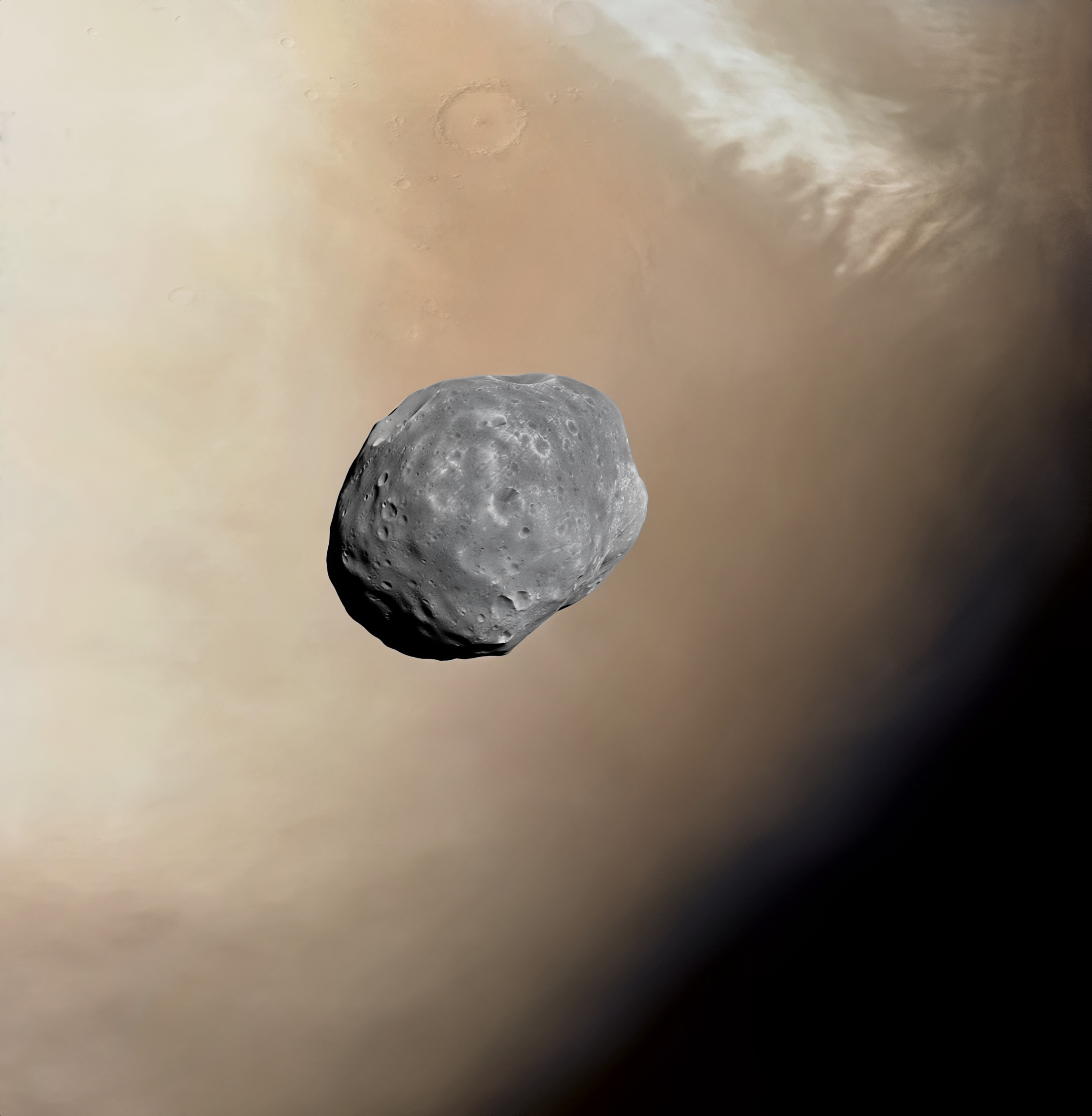
Executing a mission to the Martian system requires navigating severe operational constraints. Communication latency spanning millions of kilometers eliminates the possibility of real-time joystick maneuvering from Earth-based control centers. Consequently, the MMX spacecraft relies heavily on advanced autonomous onboard hazard detection and avoidance systems, processing real-time telemetry to execute a pinpoint touchdown on Phobos's heavily cratered, low-gravity terrain.
The spacecraft configuration is a marvel of aerospace efficiency, divided into three distinct modules: a propulsion module equipped with high-efficiency ion engines, an exploration module dedicated to remote sensing and orbiting operations, and a return module engineered to withstand the extreme thermal shock of Earth atmospheric re-entry at hyper-velocities.
Unlike previous lunar or asteroid missions, MMX will deploy two distinct sampling mechanisms. A core sampler will drill up to two centimeters beneath the regolith to retrieve subsurface material untainted by solar wind and cosmic radiation, while a pneumatic corer will capture surface dust. This dual-pronged sampling strategy ensures maximum data density, safeguarding the mission's scientific return against unforeseen physical anomalies on the moon's surface.
Verified Data and Technical Specifications
To contextualize the scale of JAXA’s engineering endeavor, the following comparative matrix outlines the core parameters of the MMX mission relative to JAXA’s preceding deep-space return efforts:
| Mission Parameter | Hayabusa (2003) | Hayabusa2 (2014) | MMX (Martian Moons) |
|---|---|---|---|
| Target Body | Asteroid Itokawa | Asteroid Ryugu | Phobos (Martian Moon) |
| Distance from Earth | ~300 Million km | ~300 Million km | Up to 400 Million km+ |
| Primary Scientific Objective | Regolith collection | Subsurface impact & sample | Determine moon origin & Mars impact history |
| Target Sample Mass | < 1 gram (unintended) | 5.4 grams | Minimum 10 grams |
| Expected Earth Return | 2010 | 2020 | Early 2030s |
Industry & Market Implications: Risk Mitigation and Commercial Horizons
The successful execution of MMX carries profound financial and strategic implications for the global aerospace ecosystem. As commercial space companies transition from low-Earth orbit (LEO) habitation to deep-space logistics, risk mitigation strategies tested by national space agencies serve as the blueprint for private sector capital allocation.
Defense contractors, avionics manufacturers, and specialty materials firms participating in the MMX supply chain stand to capture significant reputational and commercial upside. The precision guidance systems, radiation-hardened microprocessors, and advanced thermal shielding developed for this mission establish new industry benchmarks. Companies certified to meet JAXA’s stringent regulatory compliance and quality assurance standards will find themselves uniquely positioned to secure lucrative contracts within NASA’s Artemis ecosystem and private commercial ventures.
Conversely, failure to navigate the extreme radiation belts and complex orbital insertions of the Martian system could introduce severe regulatory scrutiny and dampen institutional investor appetite for high-risk deep-space ventures. Market liquidity for emerging space-tech startups remains highly sensitive to headline risk; thus, MMX serves as a critical bellwether for the entire sector's valuation trajectory over the next decade.
Frequently Asked Questions (People Also Ask)
What makes landing on Phobos more difficult than landing on an asteroid?
Unlike near-Earth asteroids, which possess negligible gravity and simple geometries, Phobos is situated deep within the gravitational well of Mars. Spacecraft operating in the Martian system must contend with complex perturbation forces from both Mars and Phobos, demanding higher fuel reserves, highly sophisticated orbital insertion maneuvers, and robust autonomous navigation to avoid catastrophic orbital decay.
How much material is the MMX mission scheduled to return to Earth?
The mission targets a minimum aggregate sample return of 10 grams of pristine regolith collected from both the surface and subsurface of Phobos. While this may appear modest by terrestrial standards, advanced analytical instrumentation in terrestrial laboratories can extract extensive chemical, isotopic, and mineralogical data from micro-gram quantities.
What are the primary theories regarding the origin of Mars' moons?
Scientists are currently divided between two leading hypotheses: that Phobos and Deimos are captured carbonaceous asteroids from the outer asteroid belt, or that they are coalesced debris rings formed after a massive celestial body impacted Mars during the early stages of planetary evolution. MMX data is expected to definitively resolve this debate.
How does international collaboration factor into the MMX mission?
MMX is an international cooperative effort spearheaded by JAXA, with critical scientific and technical contributions from global partners including NASA, the European Space Agency (ESA), France's CNES, and the German Aerospace Center (DLR). These agencies are providing specialized scientific instruments, rover hardware, and deep-space communication tracking support.
Future Outlook and Critical Milestones
As the MMX spacecraft cruises deeper into interplanetary space, aerospace analysts and scientific committees will monitor several critical milestones over the next several years. Following mid-course correction burns, the spacecraft will execute its crucial Martian orbit insertion, transitioning from an interplanetary transit phase to intensive remote sensing of both Phobos and Deimos.
The ultimate litmus test will occur in the late 2020s, when the vehicle descends to the surface of Phobos, executes its dual-sampling protocol, and initiates the multi-year return voyage to Earth. For the global financial markets, the safe recovery of the capsule in the Australian desert during the early 2030s will validate the maturity of deep-space supply chains and pave the way for sustained commercial investment in interplanetary infrastructure.
In an era defined by geopolitical competition and technological disruption, Japan’s MMX mission stands as a testament to calculated ambition—a high-stakes voyage that promises to rewrite our understanding of planetary evolution while cementing the foundational frameworks for humanity's expansion into the solar system.