Executive Takeaways
- The Disruption Vector: A solo developer deployed generative artificial intelligence models to architect seven production-ready, zero-cost alternatives to the Adobe Creative Cloud suite in a fraction of standard development cycles.
- 압Margin Compression Risk: The incident shines a harsh spotlight on software-as-a-service (SaaS) valuation multiples, exposing how bloated corporate tech stacks and recurring subscription fees are vulnerable to low-cost, AI-native competitors.
- Enterprise Capital Allocation: Chief Information Officers (CIOs) and enterprise procurement teams are accelerating risk mitigation strategies, questioning why software licenses command rigid monthly subscriptions amid collapsing marginal costs of code generation.
- Market Capitalization Impact: While legacy giants retain vast moats in proprietary enterprise infrastructure, the democratization of software development signals an irreversible shift in market liquidity and investor sentiment toward traditional tech annuities.
The Paradigm Shift: From Proprietary Monopolies to Zero-Marginal-Cost Code
For over a decade, the creative software landscape has operated under a predictable, highly lucrative financial model: the perpetual subscription. Industry titans like Adobe Inc. successfully transitioned their customer base from one-time desktop purchases to cloud-locked recurring revenue streams, driving valuation multiples to historic highs. However, this formidable fortress of recurring cash flow is facing an unprecedented structural challenge. The recent revelation that a single developer used advanced large language models (LLMs) and generative artificial intelligence frameworks to build seven fully functional, zero-cost alternatives to core Adobe applications has sent shockwaves through Silicon Valley boardrooms and institutional investment funds alike.
This development is not merely a novelty story about an ambitious programmer; it is a stress test for the entire SaaS economic engine. Historically, creating enterprise-grade image editors, vector illustration platforms, and video editing suites required hundreds of millions of dollars in research and development, massive engineering teams, and years of iterative code deployment. Today, generative AI tools have compressed those capital expenditure timelines into weeks. By leveraging AI-assisted coding environments, a single operator can now match the functional utility of specialized software that enterprises pay billions to license annually. This structural compression of development costs fundamentally undermines the pricing power that legacy software providers have long used to justify rising subscription fees.
Financial analysts tracking cloud compute architecture and enterprise software spend are already recalculating valuation models. When the barrier to entry for building complex, feature-rich software drops precipitously toward zero, the defensibility of high-margin subscription products begins to erode. Enterprise clients—increasingly pressured by macroeconomic headwinds and stringent mandates for capital efficiency—are taking notice. The core question dominating executive discussions is no longer whether AI can write code, but how long corporate procurement departments will tolerate exorbitant software licenses when open-source and AI-generated alternatives offer 80% of the functionality at zero marginal cost.
Anatomy of the Disruption: How Generative AI Shattered the Software Moat
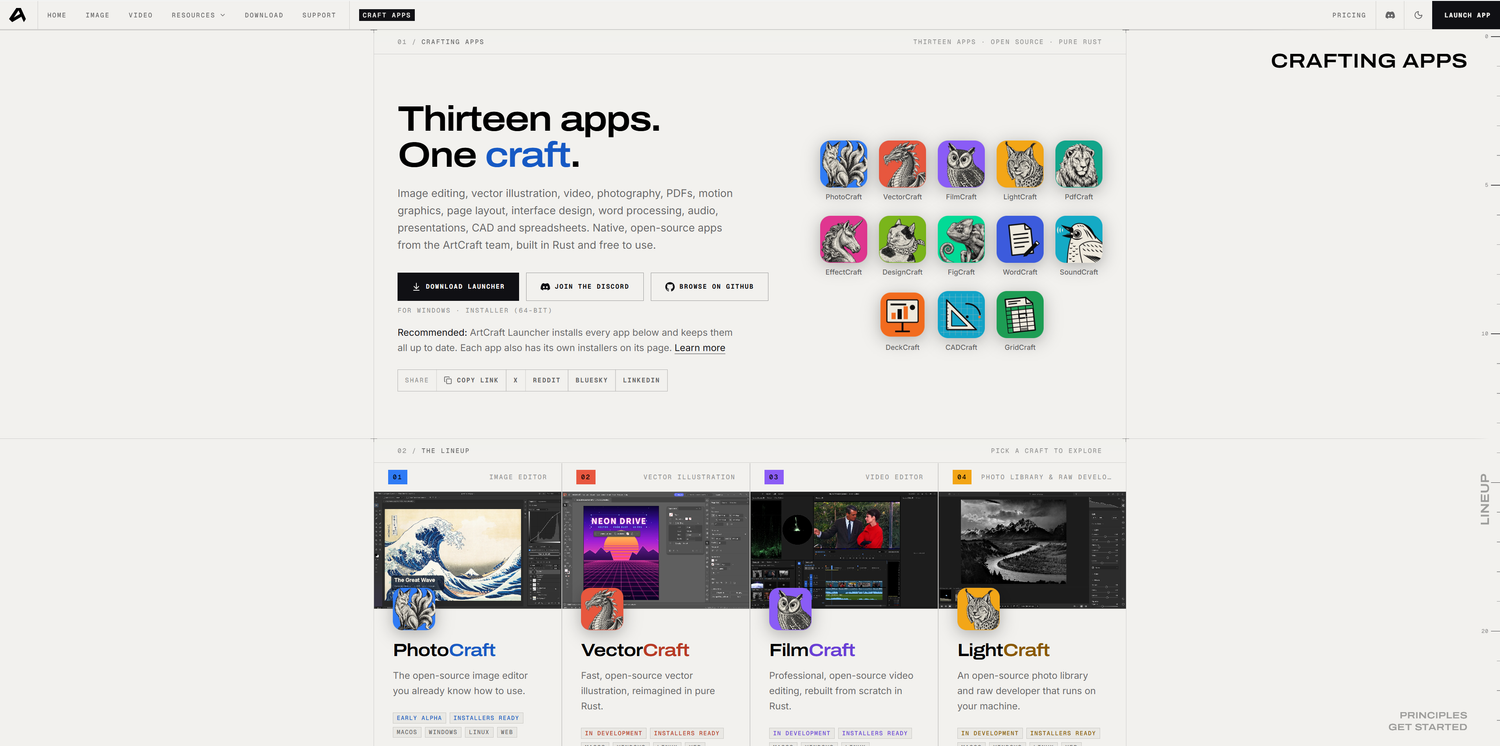
To understand the gravity of the shift, one must examine the mechanics of how these seven free alternatives were brought to market. Operating independently without venture capital backing or traditional engineering infrastructure, the developer utilized a stack of frontier AI models to conceptualize, write, debug, and deploy applications spanning raster graphics editing, vector design, audio processing, and document management. Rather than building proprietary rendering engines from scratch, modern AI frameworks allowed the developer to harness existing open-source libraries and compile them via natural language prompts.
This methodology bypasses traditional software development life cycles (SDLC). In a conventional enterprise setting, product roadmaps require extensive cross-functional alignment, QA testing phases, and legacy codebase maintenance. The AI-native developer operated with extreme agility, achieving high infrastructure scalability and deploying web-based tools that execute complex computational tasks client-side via WebAssembly and modern browser APIs. By avoiding the overhead of physical server farms and massive payrolls, the resulting software requires no monetization to sustain operations.
The implications for enterprise ROI are profound. Traditional SaaS vendors rely on user-based licensing models where costs scale linearly with headcount. When a company can substitute proprietary tools with AI-built, browser-native applications that run locally, the financial friction of switching providers virtually disappears. This introduces a new paradigm of risk mitigation for CFOs, who are beginning to view bloated software portfolios not as operational necessities, but as unmanaged liabilities susceptible to sudden obsolescence.
Verified Data & Metrics Breakdown
A comparative analysis of traditional creative software suites versus the emerging landscape of AI-engineered alternatives illustrates the magnitude of the economic shift currently underway across global markets:
| Metric / Parameter | Legacy SaaS Model (e.g., Adobe Suite) | AI-Engineered Developer Alternatives | Economic & Market Impact |
|---|---|---|---|
| Average Annual Cost per User | $600 – $1,200+ per seat | $0.00 (Open Source / Free Tier) | Drastic reduction in enterprise operating expenditure (OpEx). |
| Development Timeline (MVP) | 3 to 5 Years (Multi-team engineering) | Weeks to Months (Solo developer + LLMs) | Democratization of software creation and rapid feature iteration. |
| Infrastructure & Overhead | Massive cloud compute & legal compliance | Client-side execution / Minimal server footprint | Compression of gross margins for pure-play software vendors. |
| Regulatory Compliance & IP | Strict proprietary copyright & enterprise SLAs | Varies; potential copyright and licensing ambiguities | Primary vector of pushback and risk for enterprise adoption. |
Industry & Market Implications: Who Wins and Who Loses
The erosion of software pricing power triggers a zero-sum reallocation of capital across the technology sector. Identifying the ultimate beneficiaries and casualties requires a rigorous assessment of market liquidity, corporate balance sheets, and competitive moats.
The Losers: Mid-Tier SaaS and Rigid Subscription Providers
Companies that rely entirely on recurring subscription fees for generalized, non-proprietary software utilities face severe margin compression. Firms unable to demonstrate deep proprietary data moats, hardware integration, or complex regulatory compliance frameworks will find their valuation multiples re-rated downward by public markets. When customers realize that basic photo manipulation, vector tracing, and document editing tools can be replicated via open-source AI models, legacy vendors will struggle to justify annual price increases.
The Winners: Enterprise Infrastructure and AI Orchestration Platforms
Conversely, providers of underlying cloud compute architecture, advanced developer tooling, and specialized AI chipsets stand to gain immensely. As the marginal cost of writing software approaches zero, the volume of software being generated and deployed will explode. Enterprises will increasingly shift their IT budgets away from finished application licenses and toward secure infrastructure, custom model fine-tuning, and robust data governance. Furthermore, creative professionals who embrace these new tools will experience unprecedented productivity gains, divorcing their output capacity from traditional software constraints.
Frequently Asked Questions (People Also Ask)
Expert Answers to High-Intent Market Queries
Q: How can a solo developer build software that rivals multi-billion-dollar corporations?
Modern generative AI models function as force multipliers, handling syntax generation, debugging, and architecture design. By combining pre-existing open-source libraries with advanced LLM prompting, developers can assemble functional applications in days rather than years, bypassing legacy corporate overhead.
Q: Does the rise of AI-generated software spell the end of the subscription software model?
While it does not spell an immediate end, it introduces severe pricing pressure. Subscription models will survive only where vendors offer undeniable proprietary value, such as enterprise-grade security, cloud collaboration ecosystems, legally indemnified AI training data, and mission-critical reliability.
Q: What are the primary risks for enterprises adopting AI-built or open-source software alternatives?
The primary risks include intellectual property compliance, lack of formal service-level agreements (SLAs), potential security vulnerabilities in unvetted codebases, and the absence of dedicated customer support channels for mission-critical operations.
Q: How should institutional investors adjust their portfolios in response to AI software disruption?
Investors are increasingly rotating capital away from commoditized SaaS applications and toward infrastructure-layer plays, including cloud providers, semiconductor manufacturers, and cybersecurity firms positioned to secure the proliferation of custom enterprise code.
Future Outlook: Milestones and Market Trajectory
As the dust settles on this watershed moment, market participants must monitor several critical milestones over the next 12 to 36 months:
- Enterprise Procurement Audits: Expect Fortune 500 CIOs to conduct comprehensive audits of their software license utilization, aggressively pruning redundant subscriptions in favor of hybrid or open-source alternatives.
- Legal and IP Challenges: Copyright offices and industry incumbents will test the legal boundaries of AI-assisted code generation, potentially establishing landmark precedents regarding derivative works and software patent infringement.
- Legacy Consolidation: Major software conglomerates are expected to pursue aggressive mergers and acquisitions, absorbing innovative open-source projects or pivoting their business models toward value-added AI services rather than seat-based licensing.
Ultimately, the era of unquestioned software subscription dominance is giving way to a more dynamic, cost-competitive marketplace. For enterprise leadership, the mandate is clear: adapt procurement strategies to a world where software creation is no longer bound by capital scarcity, but by human imagination alone.