Executive Takeaways
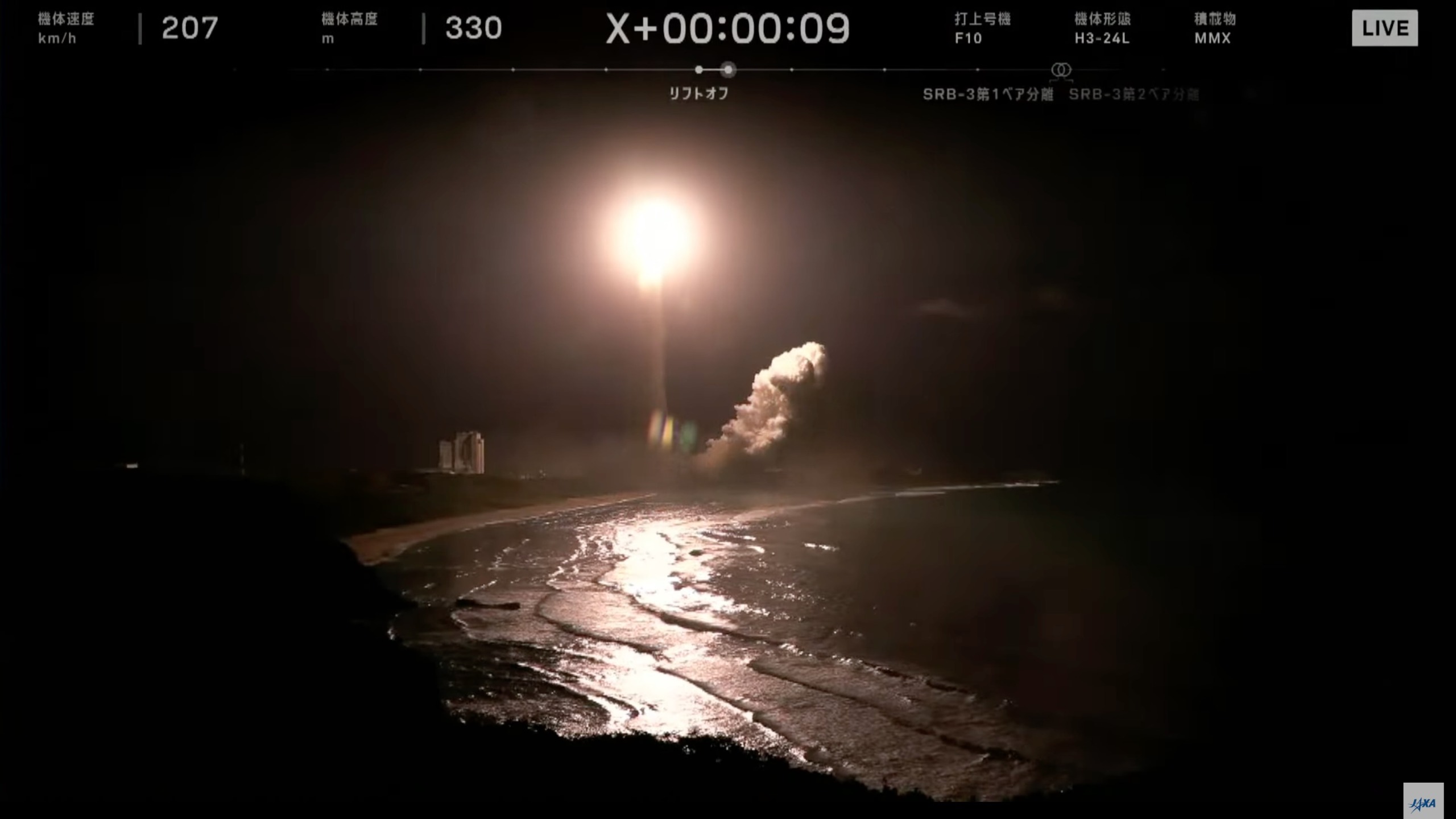
- Historic Trajectory: The Japan Aerospace Exploration Agency (JAXA) has officially ignited its Martian Moons Exploration (MMX) campaign, aiming to execute the world’s first-ever sample-return mission from Phobos.
- Strategic Capital Allocation: Backed by significant international risk mitigation and multi-agency partnerships (including NASA and ESA), the mission balances deep-space exploration costs with high-yield geological intelligence.
- Resource & Infrastructure Valuation: Beyond pure academic research, the data returned will offer critical baselines for future in-situ resource utilization (ISRU) and commercial deep-space logistics.
- Market & Industrial Impact: Prime aerospace contractors and precision optics manufacturers stand to see enhanced valuation multiples as deep-space reliability becomes the new benchmark for enterprise tech.
TOKYO AND WASHINGTON — In an era where commercial space ventures frequently dominate short-term headlines with low-Earth orbit tourism and satellite constellations, national space agencies are pivoting toward high-complexity, high-reward deep-space architecture. JAXA has officially launched its landmark Martian Moons Exploration (MMX) mission, an audacious undertaking designed to intercept, orbit, and land on Phobos, the larger and more enigmatic of Mars’ two natural satellites. By targeting a pristine sample return from a Martian moon, Japan is positioning itself at the vanguard of interplanetary enterprise, marrying rigorous scientific inquiry with long-term technological dominance.
This investigative report breaks down the catalytic events, engineering hurdles, financial frameworks, and geopolitical implications of the MMX mission. As global powers and private conglomerates eye the ultimate frontier for resource extraction and infrastructure scalability, JAXA’s latest venture offers a masterclass in risk-adjusted capital deployment and deep-space engineering.
The Catalytic Imperative: Why Phobos Matters
For decades, Mars has served as the ultimate focal point for planetary scientists. However, its deep gravity well and hostile surface environment complicate direct sample-return logistics. Enter Phobos and Deimos. Phobos, a heavily cratered, potato-shaped body orbiting a mere 6,000 kilometers above the Martian surface, represents a crucial astronomical Rosetta Stone. Prevailing scientific hypotheses suggest that Phobos could be either a captured asteroid from the outer solar system or a collection of debris agglomerated from a catastrophic impact on Mars itself.
Resolving this debate has profound implications not just for theoretical astrophysics, but for our understanding of planetary formation and volatile delivery to the inner solar system. For JAXA, capturing pristine regolith from Phobos and returning it to Earth by the early 2030s represents a masterstroke of strategic positioning. The mission leverages Japan’s proven technical pedigree—demonstrated by the Hayabusa and Hayabusa2 asteroid sample-return campaigns—and scales it up to interplanetary tolerances.
From an enterprise risk mitigation perspective, targeting a moon rather than landing directly on the Martian mainland drastically reduces descent and ascent energy requirements. This operational efficiency allows JAXA to maximize payload capacity for sophisticated analytical suites while minimizing fuel mass fractions at launch. It is an exercise in elegant engineering optimization, executed under strict fiscal and regulatory compliance parameters.
Anatomy of the Spacecraft and Flight Dynamics

The MMX spacecraft is an intricate architectural marvel designed to endure a multi-year interplanetary cruise and operate in the chaotic gravitational environment of the Martian system. Unlike traditional orbiters that remain at a safe distance, MMX will spend roughly three years conducting close-proximity operations around Phobos.
The mission architecture relies on a composite probe featuring three distinct modules: a propulsion module, an exploration module, and a return module. Propulsion scalability is achieved through a high-efficiency ion engine system, ensuring the vessel maintains precise trajectory control across millions of kilometers of deep space. Furthermore, the spacecraft carries a sophisticated payload of scientific instruments developed in collaboration with global partners, including NASA, the European Space Agency (ESA), and France’s Centre National d'Études Spatiales (CNES).
Key instrumentation includes high-resolution multispectral cameras, infrared spectrometers, and a pneumatic sampling device designed to extract regolith from the moon's dusty, low-gravity surface. Additionally, a specialized rover—developed jointly by CNES and DLR (the German Aerospace Center)—will be deployed directly onto the surface of Phobos to provide ground-truth mobility measurements and micro-structural analysis.
Verified Data and Specifications Matrix
To fully grasp the scale and engineering parameters of the MMX mission, the following matrix compares its core specifications against historical deep-space precedents:
| Mission Parameter | JAXA MMX (Mars Phobos) | JAXA Hayabusa2 (Ryugu) | NASA OSIRIS-REx (Bennu) |
|---|---|---|---|
| Launch Date | Recent Campaign Launch | December 3, 2014 | September 8, 2016 |
| Target Destination | Phobos (Martian Moon) | 162173 Ryugu (Near-Earth Asteroid) | 101955 Bennu (Near-Earth Asteroid) |
| Sample Target Mass | Minimum 10 grams (Regolith) | 5.4 grams | 121.6 grams |
| Expected Earth Return | Early 2030s | December 6, 2020 | September 24, 2023 |
| Primary International Partners | NASA, ESA, CNES, DLR | NASA, DLR | JAXA, CSA |
Industry, Market, and Economic Implications
While publicly funded through Japanese government appropriations, the MMX mission carries profound ramifications for commercial aerospace, valuation multiples across defense and tech contractors, and the nascent space-resources economy. As nations transition from geopolitical competition to techno-economic partnerships, the industrial supply chains underpinning deep-space exploration are experiencing a structural renaissance.
Who Wins: The Advanced Engineering Vanguard
Precision Optics & Avionics Manufacturers: Firms specializing in radiation-hardened semiconductors, autonomous optical navigation, and high-gain communication arrays are seeing increased order books. The rigorous reliability standards demanded by JAXA translate directly into competitive moats on Earth and in high-value commercial satellite markets.
International Aerospace Consortia: By pooling resources, NASA and ESA reduce individual taxpayer exposure while securing access to rare extraterrestrial samples. This cooperative framework establishes templates for future commercial resource-sharing agreements under international space law.
Who Loses: Legacy Low-Value Infrastructure
Stagnant Launch Providers: Operators reliant purely on legacy, non-reusable launch systems lacking deep-space injection capabilities are increasingly marginalized. The market now rewards agile, scalable architectures capable of complex multi-burn orbital maneuvers.
From a broader financial perspective, missions like MMX serve as critical technological pathfinders. The autonomous landing algorithms and deep-space telemetry systems validated during this mission will ultimately form the software backbone for commercial asteroid mining and orbital logistics platforms targeted for the late 2030s.
Frequently Asked Questions (People Also Ask)
What is the primary objective of Japan’s MMX mission?
The core objective is to travel to the Martian system, orbit and study Mars' two moons (Phobos and Deimos), land on Phobos, collect a minimum of 10 grams of surface regolith, and safely return those samples to Earth for laboratory analysis. This will help scientists determine whether Phobos is a captured asteroid or primordial debris from Mars.
Why target Phobos instead of landing directly on the surface of Mars?
Landing on Mars requires overcoming a massive gravity well and complex atmospheric entry hurdles, making a direct sample return prohibitively expensive and technically complex. Phobos has negligible gravity, allowing the spacecraft to land, collect samples, and launch back toward Earth with significantly lower fuel consumption and mechanical risk.
How long will the entire MMX mission take from launch to sample return?
The mission timeline spans nearly a decade. Following launch, the spacecraft requires roughly one year to reach the Martian system. It will then spend approximately three years conducting orbital observations and surface operations before embarking on the return cruise to Earth, with samples scheduled for arrival in the early 2030s.
Which international space agencies are collaborating with JAXA on MMX?
JAXA is leading the mission but is actively collaborating with several global heavyweights. NASA and the European Space Agency (ESA) are providing scientific instruments and tracking support, while France’s CNES and Germany’s DLR have contributed the surface rover designed to explore Phobos up close.
Future Outlook and Strategic Milestones
As the MMX spacecraft charts its course through interplanetary space, aerospace analysts, institutional investors, and scientific bodies will be closely monitoring several critical operational milestones. The successful execution of deep-space trajectory corrections, the insertion into Martian orbit, and the delicate touchdown on Phobos will serve as key performance indicators for the future of international planetary exploration.
Ultimately, MMX is far more than a scientific vanity project. It is a calculated step in humanity's expansion into the solar system. By proving that complex sample-return logistics can be executed reliably at the Martian threshold, Japan has cemented its status as a technological powerhouse. For enterprise leaders and investors tracking the frontier economy, the message is clear: the foundational infrastructure for deep-space commerce is being built today, one meticulously engineered mission at a time.