Executive Takeaways
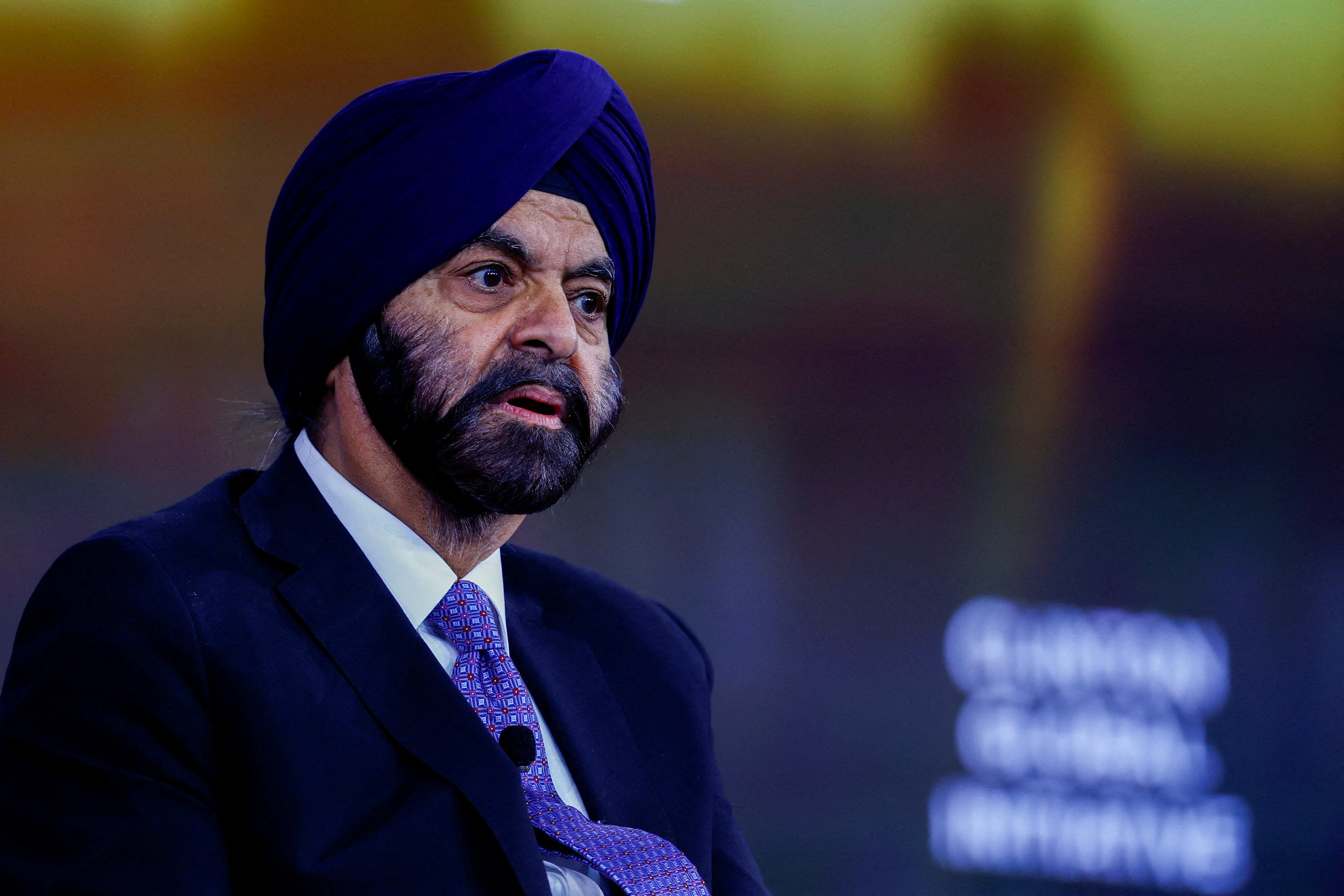
- Unprecedented Sovereign Demand: World Bank President Ajay Banga has confirmed that the multilateral lender is currently engaged in high-stakes negotiations with dozens of developing and middle-income sovereigns facing simultaneous fiscal distress, climate disasters, and geopolitical shocks.
- Balance Sheet Engineering: Under Banga’s "Evolution Roadmap," the institution is stretching its statutory lending limits—leveraging hybrid capital instruments, portfolio guarantee platforms, and optimized Capital Adequacy Framework (CAF) metrics to unleash upwards of $150 billion in incremental lending headroom over the coming decade.
- Structural Velocity Reforms: The World Bank is aggressively slashing internal bureaucratic timelines, cutting project incubation and approval periods from the historical average of 19 months down to 12 months, deploying rapid-response financing via contingent credit lines.
- Capital Market Repercussions: Institutional investors and sovereign debt markets are pricing in the expanded role of Multilateral Development Banks (MDBs) to prevent disorderly debt defaults across frontier markets, even as questions persist regarding private creditor burden-sharing and IDA21 replenishment targets.
The Liquidity Squeeze: Inside Ajay Banga’s Rapid-Response Diplomacy
In the wood-paneled corridors of 1818 H Street NW in Washington, the tempo has shifted from deliberate deliberation to calculated triage. World Bank President Ajay Banga’s public confirmation that the institution is actively negotiating emergency financial packages with dozens of sovereign nations lays bare the brittle reality of the post-pandemic global economy. Behind the diplomatic phrase "crisis aid" lies a compounding sovereign solvency squeeze: an unforgiving cross-current of prolonged high global interest rates, currency depreciations against a resilient U.S. dollar, systemic climate disruptions, and acute food and energy supply shocks stemming from ongoing conflicts in Eastern Europe and the Middle East.
For decades, multilateral crisis response was defined by strict programmatic sequencing—nations turned to the International Monetary Fund (IMF) for immediate balance-of-payments stabilization, followed by slow-disbursing, structural development facilities from the International Bank for Reconstruction and Development (IBRD). That legacy timeline has collapsed under the weight of simultaneous, poly-crisis shocks. Sovereign finance ministries across Sub-Saharan Africa, Latin America, South Asia, and the Caribbean can no longer wait 18 to 24 months for development disbursements while debt service eats up upwards of 40% of government revenues. Banga’s ongoing bilateral discussions represent a structural shift toward rapid, pre-emptive intervention designed to halt fiscal contagion before sovereign liquidity crises metastasize into structural defaults.
The operational pivot reflects Banga’s explicit mandate since assuming the presidency in June 2023. Charged by major shareholders—chiefly the United States, Japan, Germany, and the United Kingdom—to remake the institution into a nimble, crisis-ready development engine, Banga is executing a fundamental recalibration. The institutional goal is no longer merely eradicating extreme poverty on paper; it is preserving sovereign macroeconomic stability on a planet facing systemic existential vulnerabilities.
Engineering the Lending Headroom: Financial Innovation vs. Statutory Prudence
To meet the demands of dozens of concurrent sovereign requests, the World Bank faces a fundamental mathematical dilemma: how to scale capital allocation exponentially without imperiling the AAA credit rating that underpins its low-cost funding model. The answer lies in an aggressive suite of balance sheet optimization tools accelerated under the recommendations of the G20 Capital Adequacy Framework (CAF) review.
Under Banga’s direction, the IBRD has lowered its equity-to-loan (E/L) ratio target from 20% down to 19%, unlocking an immediate $40 billion in incremental financing capacity over ten years. To supplement this baseline, the institution pioneered the issuance of sovereign-backed hybrid capital—a specialized subordinated debt instrument that credit rating agencies treat partially as equity. By structuring these facilities alongside a newly launched Portfolio Guarantee Platform, where donor nations provide credit protection against specific sovereign exposures, the World Bank is manufacturing significant risk mitigation capacity without demanding politically fraught direct capital increases from domestic parliaments.
Crucially, this financial engineering is linked to structural reforms in loan design. The Bank is expanding the systematic integration of Climate Resilient Debt Clauses (CRDCs) across its portfolio. These contractual mechanisms allow vulnerable countries to instantly pause principal and interest repayments for up to two years in the aftermath of a catastrophic, externally verified natural disaster. For sovereign debt managers, this feature transforms debt service from a rigid legal liability into an automatic counter-cyclical liquidity buffer, mitigating immediate default risks during exogenous shocks.
Frontier Vulnerability: The Debt-Climate Nexus
The dozens of sovereign nations currently knocking on the World Bank’s door do not fit a single geographic or macroeconomic profile. Instead, they span three distinct categories of distress: the debt-distressed frontier economies locked out of international capital markets, the middle-income sovereigns battling hyper-localized climate catastrophes, and fragile, conflict-affected states teetering on systemic state failure.
Frontier markets, in particular, remain caught in an extended refinancing drought. With Eurobond yields for several B- and CCC-rated sovereigns hovering at prohibitively elevated spreads over benchmark U.S. Treasuries, commercial refinancing is economically unviable. International commercial bond markets have effectively ceased to function as a viable liquidity source for lower-tier sovereigns. Concurrently, the domestic banking sectors in these nations are saturated with local-currency government paper, crowding out private-sector credit and compounding domestic economic stagnation. Without concessional, low-interest MDB interventions, these sovereigns face catastrophic choices: slash critical social and infrastructure expenditures, default on external obligations, or monetarily finance deficits at the cost of spiraling domestic inflation.
Simultaneously, middle-income island states and coastal economies find their sovereign balance sheets structurally destabilized by extreme weather events. A single Category 5 hurricane can wipe out upwards of 100% of a small nation's gross domestic product within forty-eight hours. Banga’s negotiations are increasingly focused on expanding rapid-access liquidity facilities—such as Catastrophe Deferred Drawdown Options (Cat DDOs) and the Crisis Response Window (CRW)—which bypass standard development project approvals and disburse emergency liquidity directly to treasuries within hours of a declaration of emergency.
Quantitative Architecture: World Bank Crisis Financing & Capital Metrics
The scale of the operational and capital pivot under Ajay Banga is visible across key organizational metrics, operational timelines, and financing targets:
| Metric / Institutional Indicator | Historical Baseline (Pre-2023) | Current Operating Target (2024–2025) | Strategic Objective & Impact |
|---|---|---|---|
| Average Project Approval Duration | 19 Months | ~12 Months | Compress bureaucratic lead times by 35% via parallel technical appraisals and streamlined approvals. |
| IBRD Equity-to-Loan (E/L) Ratio | 20.0% | 19.0% | Releases approximately $40 billion in additional lending headroom over a 10-year horizon. |
| Hybrid Capital & Guarantees Target | Negligible | $157 Billion (Expanded Capacity) | Blends donor-backed guarantees and subordinate instruments to multiply IBRD leverage without formal capital calls. |
| IDA21 Replenishment Target | $93 Billion (IDA20 Baseline) | $100+ Billion Target | Provides highly concessional, near-zero interest loans and direct grants to the world’s 75 poorest nations. |
| Climate Finance Share of Total Commitments | ~35% | 45% of Annual Commitments | Mandates integration of mitigation, adaptation, and resilient infrastructure across core sovereign pipelines. |
Capital Market Implications: Private Capital Mobilization and the Sovereign Landscape
Banga’s public disclosure carries direct consequences for institutional fixed-income allocators, private equity infrastructure funds, and sovereign risk analysts. As the World Bank deepens its crisis engagement, international capital markets are reassessing three structural variables: sovereign recovery expectations, debt seniority dynamics, and private capital mobilization.
First, the injection of substantial World Bank crisis liquidity directly reduces the near-term probability of chaotic, disorderly sovereign debt default across vulnerable emerging and frontier markets. By providing stable, counter-cyclical budget support, the World Bank protects the underlying macro-frameworks of these economies, indirectly safeguarding outstanding commercial bondholders from catastrophic restructuring write-downs. However, this dynamic introduces a persistent tension regarding preferred creditor status. Because MDB debt holds de facto super-seniority over commercial paper, an expanding proportion of multilateral debt within a country’s overall liability structure shrinks the eventual recovery pool available to commercial creditors in the event of an eventual comprehensive restructuring under the G20 Common Framework.
Second, Banga’s reforms are systematically designed to resolve the elusive challenge of private capital mobilization. Historically, private institutional capital—overseeing trillions in assets across pension funds, sovereign wealth funds, and private credit—has avoided frontier markets due to unhedged currency risk, regulatory volatility, and perceived political risk. Through the newly consolidated World Bank Group Guarantee Platform—which synthesizes risk mitigation facilities across MIGA (Multilateral Investment Guarantee Agency), IFC (International Finance Corporation), and IBRD—the Bank is structuring first-loss credit guarantees, foreign exchange risk-mitigation facilities, and political risk insurance. This enterprise-grade derisking aims to crowd in private capital at an targeted ratio of $1 of public concessional capital to $1-plus of private investment, particularly into renewable energy grids, digital compute infrastructure, and port logistics.
Frequently Asked Questions (People Also Ask)
What specific crisis aid is the World Bank negotiating with these countries?
The discussions encompass a spectrum of fast-disbursing financial instruments designed for acute liquidity and macro-stabilization needs. These include Development Policy Operations (DPOs) that deliver direct budget support linked to structural policy benchmarks, Catastrophe Deferred Drawdown Options (Cat DDOs) offering pre-approved lines of contingent credit triggered by natural disasters, and expanded allocations from the International Development Association’s (IDA) Crisis Response Window. These facilities focus on maintaining essential government operations, stabilizing public finance, and safeguarding critical infrastructure during macro shocks.
How does Ajay Banga's approach differ from previous World Bank leadership?
Ajay Banga, bringing decades of private-sector executive experience from Mastercard and Citigroup, has oriented the institution toward execution speed, institutional efficiency, and aggressive balance-sheet optimization. Unlike historical practices that treated poverty alleviation and environmental crises as distinct work streams, Banga has fused these into a unified mission: ending poverty on a livable planet. Operationally, he has prioritized shrinking the bureaucratic project approval cycle from 19 months to 12 months, scaling private capital mobilization through structured guarantees, and modernizing statutory leverage ratios to expand lending capacity without waiting for taxpayer-funded capital injections.
Why are so many sovereign nations seeking World Bank crisis aid right now?
Developing and middle-income sovereigns are grappling with a confluence of compounding macro pressures. Global interest rates have driven borrowing costs to historic highs, pricing vulnerable sovereigns out of international bond markets while escalating the cost of servicing existing external debts. Concurrently, currency depreciations against the U.S. dollar have amplified the cost of dollar-denominated imports and debt obligations. Compounding these monetary constraints are severe, frequent climate disasters and persistent trade disruptions, which drain sovereign reserves and leave treasuries without fiscal buffers.
Will the expansion of crisis loans impact the World Bank’s AAA credit rating?
World Bank leadership has reiterated that safeguarding the institution’s AAA credit rating remains non-negotiable, as it enables the Bank to borrow at the lowest available market rates and pass those cost efficiencies to borrowing nations. The expanded lending headroom is being generated primarily through the G20 Capital Adequacy Framework reforms, which utilize sophisticated risk-pooling, hybrid subordinated capital, and donor-backed portfolio guarantees. Major credit rating agencies (including S&P, Moody's, and Fitch) have monitored these adjustments and affirmed that the Bank’s extraordinary capital buffers, pristine track record of preferred creditor treatment, and substantial callable capital reserves adequately insulate its top-tier credit rating.
The Road to IDA21: Key Milestones and Strategic Horizon
As bilateral crisis negotiations proceed behind closed doors, the strategic focus of the international financial architecture turns to the replenishment of the International Development Association (IDA21). IDA represents the World Bank’s concessional lending arm, providing zero-to-low interest loans and outright grants to the globe’s 75 lowest-income nations. Banga has publicly set his sights on securing a historic replenishment exceeding $100 billion. Achieving this target will require unprecedented fiscal commitments from traditional donor countries like the United States, Japan, and European partners, alongside stepped-up contributions from emerging donors such as Saudi Arabia, South Korea, and China.
The geopolitical backdrop will severely test these ambitions. With domestic budgets constrained across Western capitals and political focus divided by regional conflicts and domestic elections, mobilizing massive foreign aid capital requires clear proof of institutional execution. Banga’s ability to prove that the World Bank can deploy funds quickly, transparently, and with measurable enterprise ROI will determine whether shareholders commit the necessary capital.
Over the next twelve months, sovereign debt restructurings under the G20 Common Framework, the execution of the World Bank-IMF Joint Domestic Revenue Mobilization initiatives, and the rollout of standardized Climate Resilient Debt Clauses will serve as critical litmus tests. For the dozens of sovereigns currently negotiating on the precipice of fiscal collapse, the transformation of the World Bank from a traditional development bureaucracy into an agile crisis responder is no longer a theoretical institutional exercise—it is the linchpin of their macroeconomic survival.