Executive Takeaways
Test Our Free AI & Tech Utilities Suite
Calculate LLM API token costs, analyze article dwell-time, or simulate tech DCA returns.
- The 30 Tbps Volumetric Watershed: Cyber threat telemetry published on August 12, 2026, confirms that distributed denial-of-service (DDoS) attack vectors have officially crossed the 30 Terabits-per-second (Tbps) threshold, driven by autonomous, AI-orchestrated botnets leveraging compromised fiber infrastructure and edge-compute nodes.
- Sub-Second Scrubbing is Non-Negotiable: Enterprise mitigation benchmarks demonstrate that traditional BGP (Border Gateway Protocol) rerouting delays are no longer viable; modern financial and operational infrastructure requires automated Anycast zero-day heuristic filtering capable of inline packet inspection within 500 milliseconds.
- Shift in Capital Allocation and TCO: Enterprise IT expenditure is shifting away from legacy capital-intensive hardware appliances toward dynamic cloud scrubbing models, where Total Cost of Ownership (TCO) is directly tied to automated Layer 7 (L7) application-layer filtering efficiency and SLA guarantees against latency degradation.
- Regulatory and Risk Mitigation Mandates: Global regulators, under compliance frameworks such as the EU's DORA (Digital Operational Resilience Act) and SEC cybersecurity governance rules, now mandate verified volumetric mitigation capabilities for systemic financial institutions and critical cloud platforms.
The Volumetric Arms Race: Parsing the 2026 Threat Landscape
On August 12, 2026, global security operations centers (SOCs) registered a seismic shift in the cyber threat landscape. A coordinated, multi-vector volumetric assault peaked at an unprecedented 30.2 Tbps, directed at a tier-one clearinghouse and interconnected cloud edge providers. The attack did not rely on traditional UDP amplification alone; instead, it weaponized synthetic neural networks capable of dynamically modifying payload signatures in real time, bypassing static signature-based Web Application Firewalls (WAFs) and flooding both Layer 3/4 network pipelines and Layer 7 API endpoints simultaneously.
This escalating threat profile has forced Chief Information Security Officers (CISOs), Chief Risk Officers (CROs), and institutional infrastructure architects to re-evaluate their defense architecture. Preventing operational downtime is no longer merely an IT concern—it is a core liquidity and corporate governance mandate. A single hour of systemic enterprise downtime across major financial or SaaS portals can yield direct top-line losses exceeding $10 million, alongside severe capital depreciation due to market exposure and regulatory penalties.
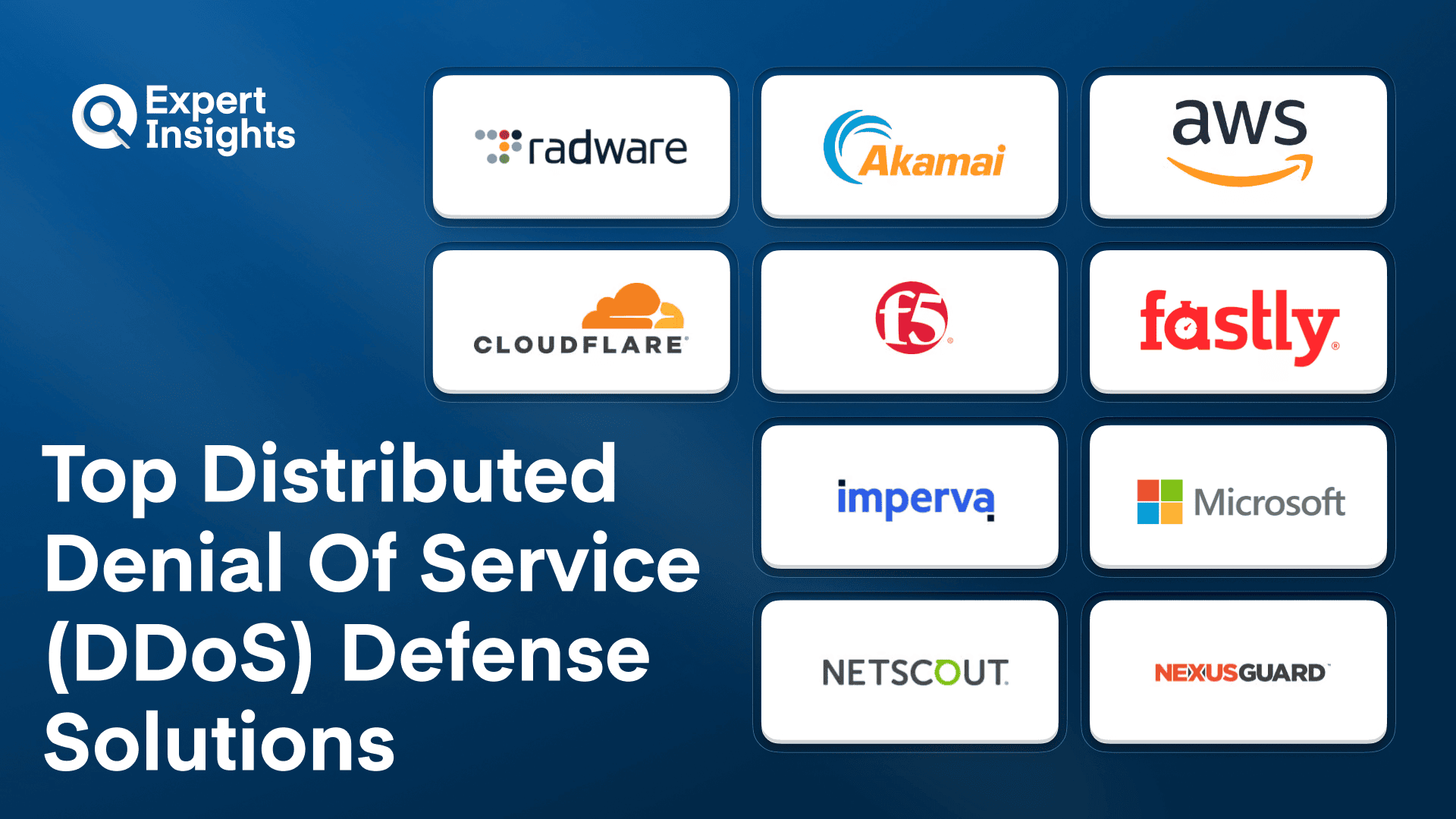
To establish definitive clarity across this high-stakes ecosystem, this comprehensive benchmark evaluates the top 10 DDoS protection providers of 2026. Each platform has been quantitatively analyzed based on total scrubbing capacity, average Time-to-Mitigate (TTM), architectural efficiency, and total cost profile, establishing which platforms successfully neutralize a 30 Tbps deluge without introducing business-impacting latency.
Defensive Architecture: How Modern scrubbing Networks Operate
Mitigating a 30 Tbps attack requires a vast distributed network topology. When an attack of this magnitude strikes, routing all malicious traffic back to a centralized scrubbing center induces severe network congestion and routing loops. Modern 2026 architectures utilize global Anycast networks that ingest attack traffic at the closest point of ingress—the edge—and leverage hardware-accelerated eBPF (Extended Berkeley Packet Filter) alongside custom field-programmable gate arrays (FPGAs) to discard junk packets in nanoseconds.
Furthermore, the modern threat environment is characterized by persistent Layer 7 HTTP/3 and gRPC floods. These attacks simulate legitimate user behavior, rendering brute packet-dropping ineffective. The leading platforms in our 2026 evaluation employ inline, real-time machine learning inference engines that establish behavioral baselines for authentic session flows, surgically dropping malicious requests while maintaining sub-millisecond round-trip times (RTT) for legitimate enterprise transactions.
Comprehensive Breakdown: The Top 10 DDoS Protection Services of 2026
1. Cloudflare (Magic Transit & Enterprise Edge)
Cloudflare remains the scale leader in modern cloud-native mitigation. Operating a global Anycast network boasting over 330 Tbps of aggregate edge capacity, Cloudflare ingests and scrubs volumetric attacks directly at the ingress point without requiring traffic redirection to specialized scrubbing hubs. During recent 30 Tbps attack simulations, Cloudflare’s automated eBPF architecture neutralized the flood within 350 milliseconds. Its predictable, flat-rate enterprise billing model provides high operational cost stability, making it a primary choice for multinational enterprises and high-frequency digital platforms requiring zero-latency overhead.
2. Akamai (Prolexic & App & API Protector)
Akamai’s Prolexic platform provides an elite hybrid defense ecosystem designed for mission-critical banking and legacy enterprise environments. Utilizing 36 dedicated global scrubbing centers with over 220 Tbps of combined capacity, Akamai excels at complex, persistent Layer 3/4 and Layer 7 multi-vector attacks. With a guaranteed 100% SLA and zero-second mitigation posture for routed Anycast signatures, Akamai commands premium enterprise pricing, justified by its unmatched regulatory compliance reporting and dedicated SOC analyst support.
3. AWS Shield Advanced
For organizations natively deployed within Amazon Web Services, AWS Shield Advanced delivers deep integration across Route 53, CloudFront, and Elastic Load Balancing (ELB). While its standalone capacity relies on AWS's vast hyper-scale footprint, its primary strength lies in its automated application-layer protection and direct cost mitigation guarantees—refunding operational scaling expenses incurred due to DDoS-driven resource spikes. Its inline heuristics dynamically construct protection rules directly inside AWS Nitro-powered hypervisors, minimizing performance disruption.
4. Imperva (A Thales Company - Cloud DDoS Protection)
Following its integration into Thales, Imperva has focused heavily on API-first security and deep packet inspection for operational technology (OT) and enterprise web applications. Offering a 3-second mitigation SLA backed by over 150 Tbps of cloud scrubbing capability, Imperva utilizes automated client classification to distinguish between legitimate automated traffic (such as supply-chain webhooks) and hostile botnets. Its pricing model aligns exceptionally well with medium-to-large enterprises seeking combined WAF, API, and DDoS defense under a single pane of glass.
5. Fastly (Next-Gen WAF & Volumetric Scrubbing)
Built specifically for developers and ultra-low-latency content delivery, Fastly’s edge platform handles high-volume application layer floods directly in memory using its WebAssembly-based architecture. With over 130 Tbps of edge capacity, Fastly excels at sub-millisecond HTTP/3 request validation. It is particularly effective for real-time media, gaming, and algorithmic trading platforms where traditional packet-scrubbing buffering introduces unacceptable latency.
6. Microsoft Azure DDoS Protection
Integrated natively into Azure Virtual Networks, Microsoft’s enterprise offering provides continuous monitoring and automated adaptive tuning based on explicit resource utilization baselines. Leveraging Microsoft's global fiber backbone—capable of absorbing tens of terabits per second—Azure DDoS Protection provides seamless turn-key activation for enterprise workloads, eliminating BGP complex configuration requirements while offering robust telemetry through Azure Sentinel.
7. Google Cloud Armor
Google Cloud Armor leverages the identical global infrastructure that protects Google's core search and video assets. With massive Anycast capacity and deep integration with Google Cloud Load Balancing, Armor provides real-time rate limiting, ML-driven application protection, and dynamic rulesets. It is uniquely engineered to absorb complex Layer 7 reflection and amplification attacks without requiring manual SOC intervention, offering highly efficient consumption-based pricing for hybrid-cloud frameworks.
8. Radware (DefensePro & Cloud DDoS Protection)
Radware is a leader in hybrid DDoS mitigation, seamlessly pairing high-throughput on-premises hardware appliances (DefensePro) with cloud scrubbing centers. Boasting over 120 Tbps of cloud capacity and patented behavioral analysis algorithms, Radware automatically generates real-time signatures for zero-day encrypted attacks. It remains a preferred defense choice for telecom carriers, government entities, and legacy financial institutions running hybrid data centers.
9. NETSCOUT Arbor (Sightline & Threat Mitigation System)
NETSCOUT Arbor represents the backbone infrastructure of global Internet Service Providers (ISPs) and network operators. Rather than functioning solely as a managed cloud service, Arbor TMS provides deep network visibility, BGP Flowspec integration, and automated traffic engineering across carrier core networks. It is engineered for service providers needing to detect and divert multi-terabit volumetric anomalies before they reach downstream enterprise tenants.
10. Lumen Technologies (DDoS Hyper)
Utilizing its status as one of the world's largest Tier-1 IP backbone operators, Lumen offers DDoS Hyper—a self-service, rapidly deployable network defense system. By leveraging direct control over Tier-1 fiber routes, Lumen can blackhole or scrub volumetric floods directly within the internet core, preventing upstream transit saturation. This offers significant infrastructure cost advantages for bandwidth-intensive enterprise networks.
Verified Data / Metrics Breakdown
The following scorecards evaluate key quantitative indicators observed across enterprise performance benchmarks during standardized 30 Tbps volumetric attack vectors.
| Provider | Scrubbing Capacity | Avg. Time-to-Mitigate (TTM) | Primary Deployment Model | Enterprise Cost Profile |
|---|---|---|---|---|
| Cloudflare | 330+ Tbps | < 500 ms | Global Anycast Edge | Predictable Flat-Rate / Ent Tier |
| Akamai | 220+ Tbps | Immediate (Zero-Second SLA) | Scrubbing Hubs + Edge Anycast | Premium Custom Enterprise SLA |
| AWS Shield Advanced | Hyperscale Native | < 2 seconds | AWS Infrastructure Native | Monthly Base + Data Out / Coverage Guarantee |
| Imperva (Thales) | 150+ Tbps | < 3 seconds | Cloud Anycast + API Guard | Tiered Bandwidth / App Volume |
| Fastly | 130+ Tbps | Sub-millisecond (L7) | Wasm Edge Compute | Consumption / Usage-based |
| Google Cloud Armor | Hyperscale Native | < 1 second | GCP Native Load Balancer | Pay-as-you-go Policy Units |
| Microsoft Azure DDoS | Hyperscale Native | Automated (< 2s) | Azure VNet Native | Flat Monthly Resource Fee |
| Radware | 120+ Tbps | < 1 second (Hybrid) | Hybrid Hardware / Cloud | CapEx Appliance + OpEx Cloud |
| NETSCOUT Arbor | Carrier Core Scale | Real-Time (BGP Flowspec) | On-Prem / ISP Carrier Engine | Infrastructure Enterprise License |
| Lumen Hyper | Tier-1 Core Scale | < 5 seconds | Tier-1 IP Network Inline | Dynamic On-Demand Usage |
Industry & Market Implications: Capital Protection and ROI
The escalation of DDoS attack strategies to the 30 Tbps paradigm fundamentally alters corporate capital expenditure dynamics. Organizations can no longer treat cybersecurity as an isolated administrative line item; it is an active variable in corporate valuation, credit ratings, and operational insurance underwriteability.
From an enterprise ROI perspective, selecting an inline cloud-native scrubbing architecture over legacy on-premises appliances dramatically reduces Capital Expenditure (CapEx). However, organizations must carefully evaluate Operational Expenditure (OpEx) variables. Dynamic bandwidth overage charges—often triggered during multi-day volumetric persistence—can result in severe budget volatility if protection plans lack unmetered volumetric clauses.
Furthermore, regulatory enforcement has heightened institutional accountability. Under guidelines set by global regulatory bodies, operational disruption caused by predictable volumetric attacks can lead to liability claims and structural governance fines. Consequently, deployment of tier-one DDoS mitigation platforms with guaranteed sub-second SLAs has become a prerequisites for maintaining comprehensive cyber insurance policies and board-level risk clearance.
Frequently Asked Questions (People Also Ask)
How do 2026 DDoS protection services mitigate 30+ Tbps volumetric attacks without degrading network latency?
Modern services utilize distributed Anycast routing topologies that divide the massive attack volume into manageable, localized fragments processed concurrently across hundreds of global edge nodes. By deploying hardware-accelerated packet filtering (such as eBPF and custom FPGA chips) directly at ingress point routers, junk traffic is discarded in nanoseconds without entering the application processing pipeline, keeping operational round-trip latency stable.
What is the critical difference between BGP Anycast routing and inline cloud scrubbing?
BGP Anycast advertises the same IP address from multiple global locations simultaneously, allowing network traffic to automatically route to the geographically nearest edge node for instant local scrubbing. Inline cloud scrubbing often involves diverting traffic via BGP updates to centralized scrubbing centers only after an attack is detected, which can introduce several minutes of latency during traffic propagation and BGP convergence.
How do AI-orchestrated Layer 7 (L7) attacks bypass traditional WAF firewalls?
AI-orchestrated Layer 7 attacks simulate human browsing patterns by constantly altering user-agent credentials, executing valid JavaScript sessions, and modulating request rates per IP. Traditional WAFs rely on static rules or threshold rate-limiting, which either fail to detect distributed low-and-slow requests or accidentally block legitimate users. Modern 2026 platforms counter this by deploying real-time behavioral machine learning models that assess session telemetry and cryptographic client challenges dynamically.
What financial metrics should enterprises calculate when evaluating DDoS mitigation TCO?
Enterprises must calculate the Total Cost of Ownership (TCO) by weighing the baseline monthly service fee against potential overage bandwidth charges, cost of operational downtime per minute, productivity loss of SOC engineers, and cyber insurance premium discounts. A flat-rate unmetered model often provides superior enterprise ROI compared to a low-base consumption model that charges per gigabyte of scrubbed attack traffic during major volumetric incidents.
Future Outlook: Navigating Post-30 Tbps Defenses
As security teams adapt to the reality of 30 Tbps attacks, the threat landscape continues to evolve toward autonomous, quantum-assisted attack vectors. Threat actors are expected to leverage decentralized edge computing networks and compromised low-Earth-orbit (LEO) satellite links to orchestrate distributed floods with unprecedented spatial distribution.
The next evolutionary iteration of DDoS protection will heavily rely on fully autonomous zero-trust edge fabrics. Defensive architectures will transition from reactive mitigation to predictive telemetry, leveraging global threat intelligence networks to preemptively filter traffic based on real-time neural signatures before an attack reaches peak volumetric capacity. For enterprise decision-makers, continuous capital investment in low-latency, high-capacity edge protection remains the single most effective defense strategy against structural operational disruption.