Executive Takeaways
- Unprecedented Consensus: A comprehensive Bloomberg survey of 21 top-tier Wall Street strategists reveals a 100% consensus predicting a positive equity market return for 2026—with not a single prognosticator calling for a market decline.
- Macroeconomic Drivers: The synchronized bullish outlook is anchored by anticipated monetary easing, robust enterprise ROI from artificial intelligence infrastructure scalability, and resilient consumer balance sheets.
- Valuation Multiples & Risk: While capital allocation strategies remain aggressive, institutional risk mitigation frameworks are shifting toward high-margin technology leaders and defensive cash-flow generators to navigate elevated valuation multiples.
- Regulatory & Liquidity Landscapes: Anticipated shifts in regulatory compliance and sustained market liquidity continue to fuel corporate mergers, acquisitions, and heavy capital expenditures across cloud compute architecture.
NEW YORK — In the complex, highly fractured world of equity research, true consensus is as rare as a structural anomaly on a balance sheet. Yet, as the financial markets closed the books on the prior year, an extraordinary phenomenon materialized across Wall Street’s premier institutions. According to a landmark year-end survey published by Bloomberg News, exactly 21 out of 21 surveyed market strategists—representing the most influential research desks in global finance—are predicting a definitive stock market rally for 2026. Not a single bearish outlier, defensive contraction call, or correction forecast exists among the group.
This unbroken wall of optimism has triggered intense debate across trading floors from Lower Manhattan to the City of London. Historically, unanimous macroeconomic agreement among sell-side analysts serves as a classic contrarian indicator, prompting sophisticated institutional investors to scrutinize the underlying valuation models, capital allocation trends, and risk mitigation strategies currently driving the narrative. To understand why every single major prognosticator is betting on the green, one must dissect the convergence of technological disruption, monetary policy shifts, and corporate earnings resilience that defines the modern macroeconomic landscape.
The Catalyst Behind the 100% Bullish Consensus
The foundation of this unprecedented 2026 outlook rests heavily on the maturation of enterprise technology and macroeconomic stabilization. Over the past several cycles, corporate leadership teams have successfully navigated inflationary pressures by defending profit margins through rigorous cost optimization and productivity enhancements. Chief among these drivers is the unprecedented build-out of artificial intelligence infrastructure.
Enterprise buyers are no longer viewing cloud compute architecture and AI integration as experimental line items. Instead, boardroom discussions now center on measurable enterprise ROI. As software-as-a-service (SaaS) platforms, semiconductor manufacturers, and industrial automation firms transition from heavy capital expenditure phases to high-margin revenue realization, overall corporate earnings growth is projected to accelerate.
Concurrently, the global interest rate environment has undergone a structural pivot. With central banks executing measured monetary easing cycles, corporate debt refinancing risks have significantly receded. This liquidity injection has revived primary capital markets, encouraging aggressive capital allocation toward corporate expansion, share repurchase programs, and strategic mergers and acquisitions.
Deconstructing the Projections: A Comparative Analysis
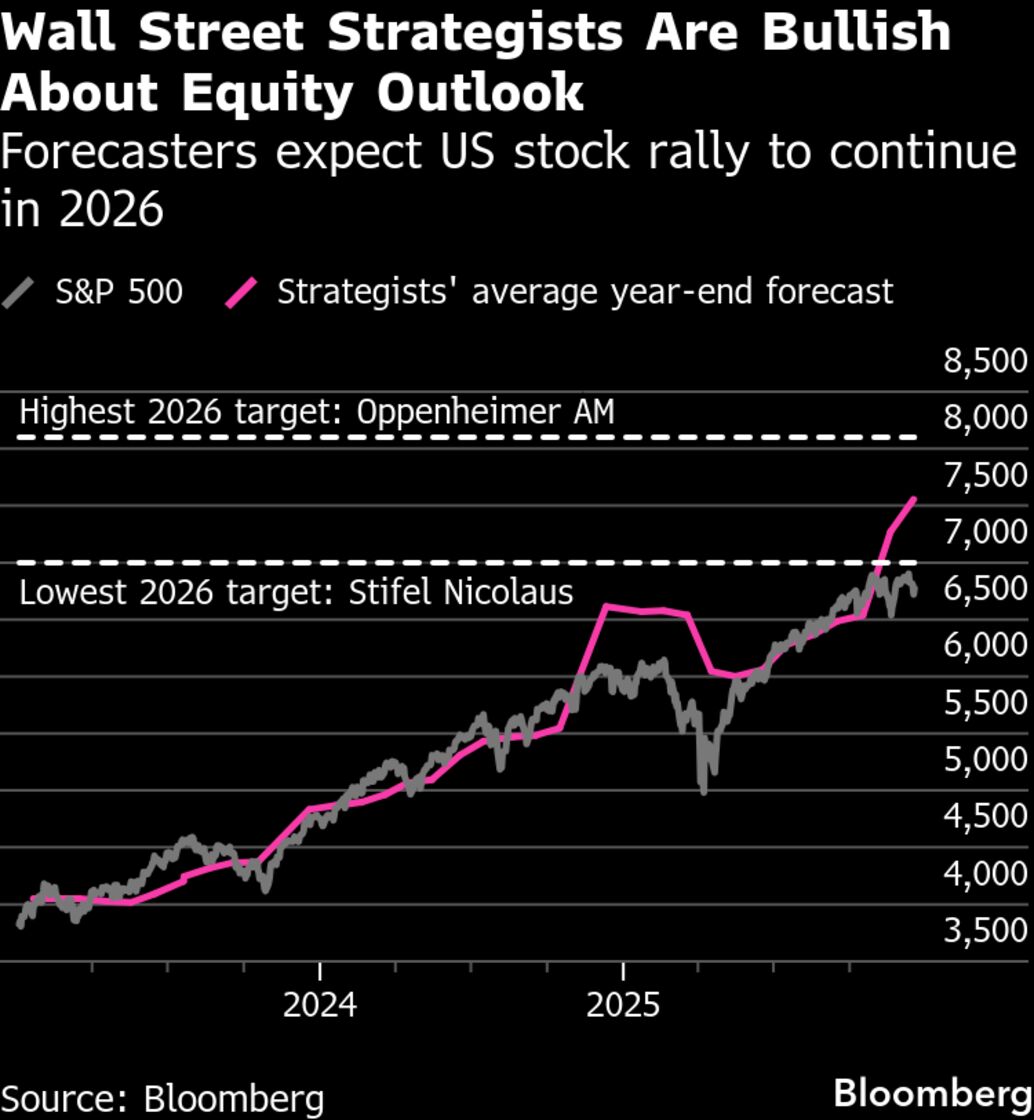
To evaluate the depth of Wall Street's 2026 conviction, a granular examination of the surveyed institutions reveals distinct strategic priorities. While all 21 forecasters project positive returns, their target justifications vary across specific growth vectors and defensive moats.
| Metric / Factor | Prior Year Baseline (2025) | 2026 Consensus Outlook | Primary Market Driver |
|---|---|---|---|
| Surveyed Prognosticators | 21 Wall Street Desks | 21 Bullish Forecasts (100%) | Unanimous equity appreciation expectation |
| Valuation Multiples (S&P 500 P/E) | Elevated (Historical Upper Quartile) | Sustained or Slightly Expanded | Stronger earnings per share (EPS) growth |
| Monetary Policy Stance | Late-stage tightening / Pivot | Accommodative / Rate Cuts | Market liquidity expansion and lower debt servicing |
| Primary Sector Focus | Mega-Cap Tech Dominance | Tech + Broadening Cyclicals | Infrastructure scalability and industrial recovery |
Industry & Market Implications: Winners, Losers, and Systemic Risk
A unanimous bullish consensus introduces unique portfolio management challenges. When every sell-side analyst points in the same direction, market participants must look closely at sector rotation dynamics to identify who stands to capture the greatest upside—and where hidden vulnerabilities lie.
The Winners: High-Margin Tech and Infrastructure Enablers
Firms specializing in cloud compute architecture, semiconductor fabrication, and automated enterprise software remain primary beneficiaries. These entities possess the pricing power necessary to maintain robust operating margins even in the face of persistent input cost fluctuations. Furthermore, industrial firms deeply integrated into the AI infrastructure supply chain—ranging from specialized electrical grid providers to advanced data center real estate investment trusts (REITs)—are positioned for substantial earnings surprises.
The Vulnerabilities: Over-Leveraged Entities and Regulatory Pressures
Conversely, companies struggling with high debt loads and weak balance sheets face heightened risks. Even in a declining interest rate environment, strict regulatory compliance standards and tightening credit underwriting for secondary borrowers mean that lower-tier corporations could experience margin compression. Furthermore, any unexpected macroeconomic shock—such as geopolitical supply chain disruptions or sticky wage inflation—could challenge elevated valuation multiples, triggering sharp, volatility-driven corrections in over-extended growth equities.
Frequently Asked Questions (People Also Ask)
Why are all Wall Street analysts predicting a stock rally in 2026?
The unanimous positive outlook is driven by a combination of anticipated monetary easing by central banks, robust corporate earnings growth, and measurable enterprise ROI derived from ongoing investments in artificial intelligence and digital infrastructure.
Does a 100% bullish consensus among analysts guarantee a market rise?
Historically, unanimous agreement among sell-side forecasters acts as a cautionary contrarian indicator rather than a guarantee. While macroeconomic fundamentals currently support equity expansion, high valuation multiples leave little room for operational missteps or unexpected geopolitical shocks.
Which market sectors are expected to perform best under the 2026 consensus?
Analysts anticipate strong performance from technology leaders tied to cloud compute architecture and AI infrastructure, alongside broadening participation in cyclical industries, industrials, and sectors benefiting directly from expanded market liquidity.
How are institutional investors adjusting their risk mitigation strategies?
Institutional desks are balancing aggressive capital allocation into high-growth equities with defensive positioning in cash-flow-generative assets, focusing heavily on balance sheet strength and regulatory compliance readiness to protect against sudden volatility.
Future Outlook: Milestones and Metrics to Monitor
As the 2026 trading year progresses, institutional research teams will closely monitor several key performance indicators to test the durability of this unanimous bullish thesis. Chief among these is quarterly earnings per share (EPS) actuals relative to consensus expectations. If enterprise ROI on artificial intelligence initiatives continues to outpace capital expenditure outlays, valuation multiples will find fundamental justification.
Additionally, market participants must track central bank liquidity injections, employment data releases, and corporate debt maturity schedules. While the current consensus points undeniably upward, long-term portfolio success will ultimately depend on agile risk management, disciplined asset allocation, and the ability to navigate shifts in global regulatory and economic landscapes.