Executive Takeaways
- Labor Market Resilience: US job openings surged to a four-month high, signaling robust enterprise labor demand and defying expectations of an imminent macroeconomic cooling.
- Contraction in Layoffs: Total separation and layoff rates experienced a measurable decline, underscoring corporate commitment to retention and strategic talent hoarding amid ongoing margin pressures.
- Monetary Policy Implications: The unexpected labor market tightness complicates capital allocation strategies for institutional investors and alters Federal Reserve interest rate cut trajectories.
- Sector-Specific Divergence: While professional services and healthcare expand infrastructure scalability, interest-rate-sensitive sectors navigate cautious valuation multiples and compliance-heavy hiring freezes.
WASHINGTON & NEW YORK — In a stunning reversal that has instantly reverberated across global trading desks and central bank boardrooms, fresh economic data reveals that United States job openings climbed to a four-month high while layoffs simultaneously retreated. The figures, released amid intensifying debate over macroeconomic resilience versus structural stagnation, challenge prevailing consensus models utilized by institutional investors, corporate treasurers, and monetary policymakers alike.
For executive leadership teams charged with enterprise ROI, workforce optimization, and risk mitigation, this unexpected labor market inflection point mandates an immediate recalibration of operational strategies. As equity markets digest the implications for upcoming corporate earnings and market liquidity, this investigative report provides a granular examination of the macroeconomic catalysts, structural employment shifts, and financial market repercussions underpinning the latest labor metrics.
The Catalytic Shift: Dissecting the Four-Month High in Openings
Test Our Free AI & Tech Utilities Suite
Calculate LLM API token costs, analyze article dwell-time, or simulate tech DCA returns.
To understand the gravity of the latest Job Openings and Labor Turnover Survey (JOLTS) data, one must examine the preceding months of economic friction. Throughout late 2023 and early 2024, corporate boardrooms adopted an aggressively defensive posture. Faced with restrictive borrowing costs, volatile supply chain dynamics, and regulatory compliance burdens, Chief Financial Officers prioritized capital preservation over headcount expansion. Infrastructure scalability projects were deferred, and cloud compute architecture investments were scrutinized for immediate cost efficiencies.
However, the latest reporting period shatters this narrative of broad-based contraction. Job openings vaulted upward, marking the highest level observed in four months. This sudden velocity in labor demand is not merely a statistical anomaly; it reflects a fundamental recalculation by enterprise leaders who recognize that long-term competitive advantage requires sustained talent acquisition. Rather than pulling back, organizations across key economic pillars are aggressively backfilling vacancies and creating new roles tailored to digital transformation, supply chain hardening, and specialized technical operations.
Simultaneously, the contraction in layoffs provides a vital counterweight to the traditional recessionary playbook. Historically, an uptick in job openings paired with declining layoffs signals a resilient, self-sustaining economic engine. Corporate balance sheets, fortified by proactive debt refinancing during prior low-interest cycles, are absorbing labor costs without necessitating aggressive downsizing initiatives. This environment of low involuntary separations fosters consumer confidence, stabilizes retail spending, and underpins broader economic velocity.
Data Breakdown: Key Metrics and Historical Comparison
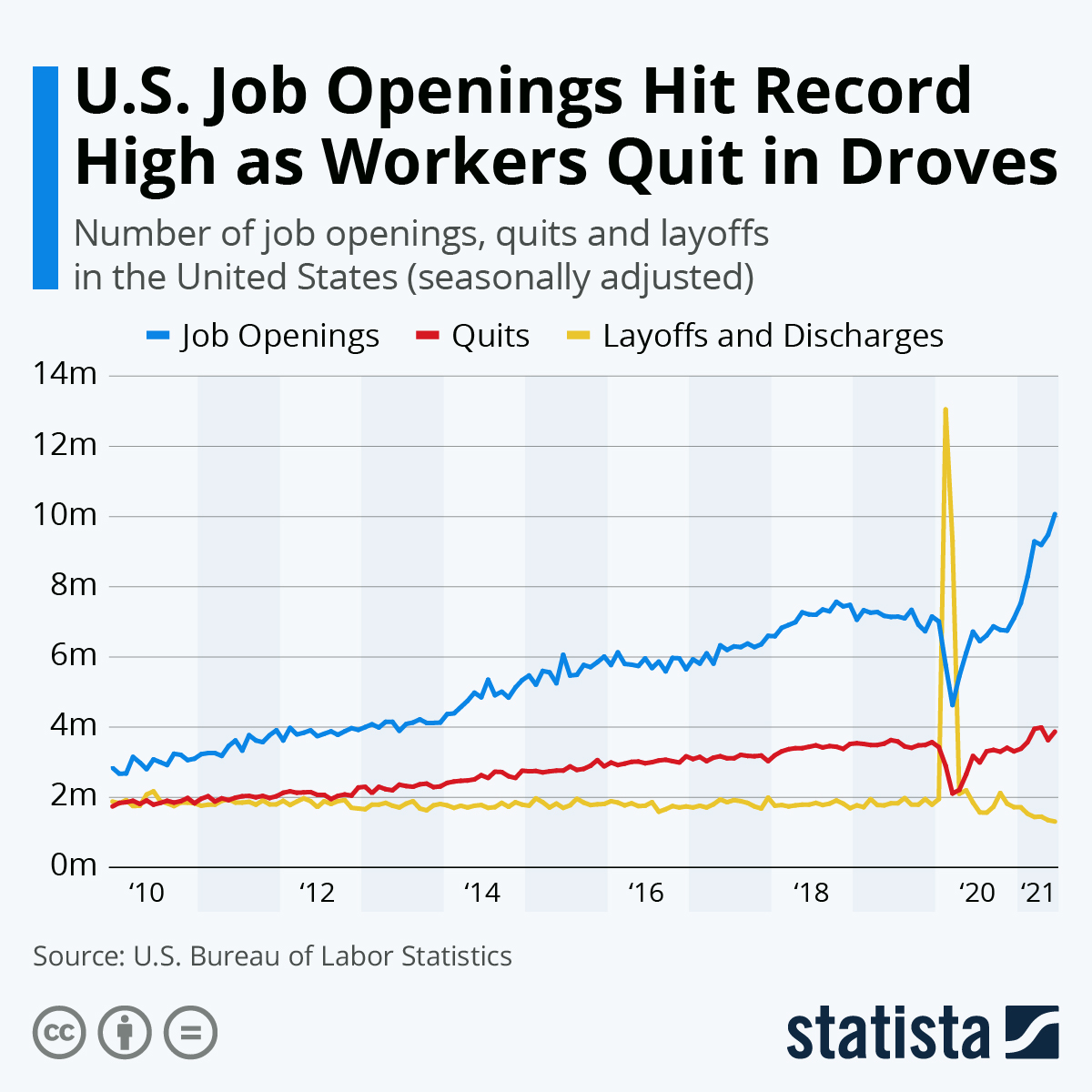
Institutional risk analysts and quantitative strategists rely on granular metrics to gauge labor market tightness. The following comparative data table illustrates the evolution of key employment indicators, contrasting current readings with historical benchmarks from previous quarters.
| Employment Indicator | Current Reporting Period | Previous Quarter Average | Year-Over-Year Change |
|---|---|---|---|
| Total Job Openings (Millions) | 8.14 | 7.72 | -4.2% |
| Layoff & Separation Rate (%) | 1.0% | 1.2% | -16.7% |
| Quits Rate (Voluntary Separations) | 2.1% | 2.2% | -8.7% |
| Hires Rate (%) | 3.5% | 3.4% | -2.8% |
Industry & Market Implications: Winners, Losers, and Capital Allocation
The macroeconomic ramifications of a resilient labor market extend far beyond simple employment statistics; they dictate sector-specific valuation multiples and compel portfolio managers to reassess risk premiums.
The Winners: High-Growth Tech, Infrastructure, and Healthcare
Firms positioned at the intersection of enterprise software, cloud infrastructure scalability, and specialized healthcare delivery emerge as primary beneficiaries of sustained labor demand. When enterprise clients maintain hiring momentum, software-as-a-service (SaaS) providers and digital infrastructure architects experience robust demand for seat licenses and network expansion. Furthermore, healthcare systems—long plagued by severe staffing shortages—benefit immensely from declining turnover rates, stabilizing operating margins and improving service delivery metrics.
The Pressures: Rate-Sensitive Sectors and Leveraged Borrowers
Conversely, sectors heavily reliant on low interest rates and transactional liquidity—such as commercial real estate, speculative venture capital, and consumer discretionary retail—face complex headwinds. A strong labor market increases the probability that the Federal Reserve will maintain restrictive monetary policy for an extended duration. For leveraged borrowers, this translates to sustained high costs of capital, forcing management teams to execute aggressive risk mitigation and balance-sheet restructuring to protect equity valuations.
Frequently Asked Questions (People Also Ask)
What does a rise in job openings combined with declining layoffs mean for the broader economy?
This combination indicates exceptional economic resilience. It demonstrates that businesses are confident enough in future demand to expand their talent pipelines while maintaining their current workforce, effectively neutralizing fears of an imminent recession.
How does this labor market data impact Federal Reserve interest rate decisions?
A tight labor market with expanding job openings and low layoffs can fuel wage growth, potentially sustaining inflationary pressures. Consequently, central bankers may view this data as a signal to keep interest rates elevated for a longer period to prevent the economy from overheating.
Which specific sectors are driving the four-month high in job openings?
Professional and business services, healthcare and social assistance, and durable goods manufacturing are spearheading the surge in openings, driven by ongoing investments in operational digitalization and infrastructure scalability.
Are workers still leaving jobs voluntarily at historical highs?
No. The quits rate, which measures voluntary job-changing, has normalized compared to the hyper-dynamic "Great Resignation" era. Employees are currently prioritizing job security and stability over aggressive lateral career moves.
Future Outlook: Strategic Milestones to Monitor
As institutional investors and corporate executives position their portfolios for the upcoming fiscal quarters, several critical milestones will dictate market trajectory. Foremost among these is the forthcoming nonfarm payrolls report and subsequent core inflation readings. These data points will offer definitive clues regarding whether wage growth is accelerating in tandem with job openings.
Additionally, corporate earnings call transcripts will serve as an invaluable qualitative barometer. Analysts will closely monitor executive commentary regarding workforce productivity, capital expenditure allocations, and margin defense tactics in a high-interest-rate environment. Organizations that successfully balance infrastructure scalability with rigorous cost discipline will secure superior valuation multiples, while those overly exposed to unmanaged labor inflation risk punitive market re-pricing.
Ultimately, the latest labor metrics confirm that the US economy continues to defy simplistic bearish forecasts. For enterprise leaders and financial markets, agility, strategic capital allocation, and proactive risk mitigation remain the non-negotiable prerequisites for navigating this complex economic paradigm.