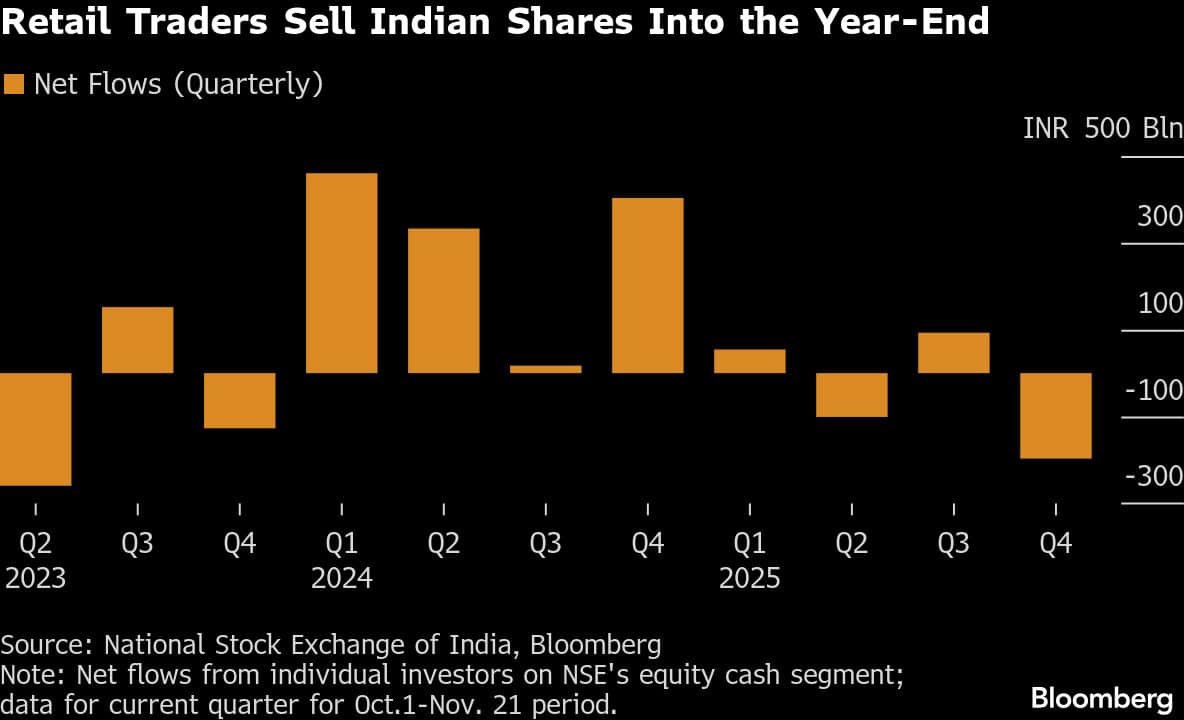
NEW YORK & LONDON — In a sudden and aggressive departure from the "buy-the-dip" ethos that has defined post-pandemic retail investing, individual market participants executed a mass exit, dumping a staggering $257 million in single stocks and exchange-traded funds in a single session. According to proprietary order-flow data and exchange clearinghouse reports, this dramatic risk-off pivot marks the fifth-largest single-day retail capital withdrawal since the unprecedented volatility of March 2020.
The exodus underscores a profound psychological shift among Main Street investors. Confronted by shifting macroeconomic headwinds, sticky inflation prints, and rising borrowing costs, retail sentiment has deteriorated from speculative exuberance to defensive capital preservation. For institutional desks, algorithmic market makers, and prime brokers, this sudden drying up of retail market liquidity serves as a flashing red indicator, forcing a rapid recalibration of risk mitigation strategies, valuation multiples, and capital allocation models across global equities.
Executive Takeaways
Test Our Free AI & Tech Utilities Suite
Calculate LLM API token costs, analyze article dwell-time, or simulate tech DCA returns.
- Massive Capital Flight: Retail investors offloaded $257 million in equities during a single trading session, marking the fifth-largest retail sell-off event since the onset of the COVID-19 pandemic in 2020.
- Broad-Based Capitulation: The liquidations extended far beyond volatile meme stocks and speculative tech growth plays, hitting core index funds, cyclical sectors, and high-beta momentum equities.
- Institutional Implications: The withdrawal of retail market liquidity has exacerbated intraday price volatility, prompting institutional trading desks to tighten risk parameters and adjust enterprise hedging profiles.
- Macroeconomic Catalyst: Persistent high interest rates, deteriorating consumer confidence, and heightened geopolitical uncertainties have fundamentally altered retail capital allocation behavior.
Anatomy of a Sell-Off: The Catalytic Forces Driving Retail Capitulation

To understand the magnitude of a $257 million single-day retail liquidation, one must examine the structural mechanics of modern retail order routing. Unlike institutional block trades executed through dark pools or algorithmic block facilities, retail volume is predominantly channeled through zero-commission retail brokerages via payment for order flow (PFOF). When retail sentiment flips, the synchronized wave of market-sell and stop-loss orders cascades through electronic communication networks (ECNs) with astonishing velocity.
Market intelligence firms tracking order imbalances noted that the liquidation was not concentrated in a single speculative pocket. Instead, the selling pressure was broadly distributed across high-flying semiconductor names, mega-cap technology equities, and leveraged index ETFs. This behavior signals that the capitulation was driven less by localized margin calls and more by a deliberate macroeconomic reassessment among retail participants. For months, individual investors had absorbed rising yields and hawkish Federal Reserve commentary with characteristic optimism. However, the cumulative weight of restrictive monetary policy, coupled with softening labor market indicators, finally fractured retail risk tolerance.
Furthermore, structural shifts in cloud compute architecture and high-frequency trading infrastructure mean that retail order flow is digested by market makers in micro-seconds. When millions of retail accounts simultaneously execute sell orders, liquidity providers rapidly widen their bid-ask spreads to protect against adverse selection, magnifying downward price momentum. This dynamic created a feedback loop during the session, transforming a standard portfolio rebalancing exercise into an acute liquidity flush.
Data & Metrics Breakdown: Historical Context of Retail Liquidation Events
Placing the $257 million outflow into historical perspective reveals the rarity and severity of the event. While institutional daily volumes dwarf retail participation, the concentration of retail selling relative to historical averages highlights a distinct behavioral breakpoint.
| Event Date / Period | Net Retail Flow Volume | Primary Market Catalyst | Market Sentiment Index |
|---|---|---|---|
| March 16, 2020 | -$1.24 Billion | Global Pandemic Lockdowns & Liquidity Crunch | Extreme Panic |
| January 28, 2021 | -$890 Million | Brokerage Trading Restrictions & Meme Stock Unwind | Regulatory & Volatility Shock |
| June 13, 2022 | -$412 Million | Hot CPI Print & Aggressive Fed Rate Hike Expectations | Bear Market Despair |
| September 13, 2022 | -$305 Million | Unexpectedly Persistent Core Inflation Data | Risk Aversion |
| Current Reporting Session | -$257 Million | Macro Headwinds, Valuation Fatigue & Yield Pressures | Defensive Retreat |
Industry & Market Implications: Winners, Losers, and Systemic Ripple Effects
The sudden vaporization of $257 million in retail capital has immediate ramifications across the financial services ecosystem. Corporate treasurers, asset managers, and market infrastructure providers must evaluate how this shift in retail behavior impacts broader market dynamics.
Who Loses: Retail Brokerages and High-Beta Growth Equities
Online brokerages that rely heavily on transaction-based revenues and margin interest face near-term headwinds. Lower trading volumes and reduced speculative engagement directly compress brokerage fee incomes. Furthermore, small-cap companies, high-growth technology startups, and speculative thematic ETFs that historically relied on retail momentum to support elevated valuation multiples find themselves acutely vulnerable. Without continuous retail inflows, these equities face severe downward price pressures, complicating corporate fundraising, secondary offerings, and employee equity compensation plans.
Who Wins: Institutional Hedgers and Fixed-Income Yield Seekers
Institutional asset managers who prioritize rigorous fundamental analysis and disciplined capital allocation often view retail capitulation as a necessary cleansing of market excesses. As speculative froth subsides, valuation multiples return to more rational historical averages, presenting long-term value entry points for institutional portfolios. Simultaneously, money market funds and short-term fixed-income products benefit as retail investors rotate their liquidated capital into risk-free assets yielding competitive returns above 5%.
Frequently Asked Questions (People Also Ask)
What caused the massive $257 million retail stock sell-off?
The sell-off was triggered by a combination of macroeconomic headwinds, including persistent inflationary pressures, elevated borrowing costs, and growing anxiety over the trajectory of corporate earnings. After years of buying every market dip, retail investors shifted toward a defensive posture, prioritizing capital preservation over speculative equity exposure.
Is this retail liquidation comparable to the meme stock crashes of 2021?
No. While the 2021 volatility was driven by speculative frenzies in isolated, heavily shorted securities, this recent $257 million outflow represents a broad-based portfolio de-risking event. Retail participants liquidated positions across diversified index funds, tech giants, and cyclical sectors, indicating a macro-driven sentiment shift rather than localized short squeezes.
How does retail trading volume impact overall market liquidity?
Retail trading accounts for a substantial percentage of daily equity volume, particularly in high-beta and technology sectors. When retail investors suddenly withdraw capital, market makers experience wider bid-ask spreads and reduced depth of book. This reduction in market liquidity can amplify intraday price swings, making execution more challenging for institutional and retail participants alike.
Where are retail investors moving their capital after selling stocks?
Data from clearinghouses and retail brokerage cash sweeps indicate that liquidated capital is primarily rotating into cash equivalents, short-term Treasury bills, and high-yield money market funds. Investors are locking in attractive, risk-free yields while waiting for clearer macroeconomic signals before re-entering risk assets.
Future Outlook: Strategic Milestones and What to Watch Next
As Wall Street digests the implications of this $257 million retail capital retreat, market participants must monitor several critical leading indicators to gauge whether this event is a temporary correction or the beginning of a prolonged risk-off cycle.
First, analysts will closely track brokerage cash-sweep balances and margin debt figures published by regulatory bodies. A sustained contraction in margin debt would confirm that retail leverage is being systematically unwound, reducing systemic fragility but removing a key driver of past market rallies. Second, macroeconomic data releases—specifically Consumer Price Index (CPI) prints, Employment Situation reports, and Federal Open Market Committee (FOMC) rate decisions—will dictate whether retail sentiment stabilizes or deteriorates further.
Ultimately, the return of robust retail market liquidity depends on improved visibility regarding interest rate trajectories and corporate profitability. Until macroeconomic clarity emerges, corporate executives, institutional risk managers, and market makers must navigate an environment where Main Street capital allocation is characterized by extreme caution, stringent risk mitigation, and a preference for capital preservation.