Executive Takeaways
- Domestic Ecosystem Expansion: Apple is set to unveil three strategic hardware iterations tomorrow under the "Welcome home" banner, targeting the under-monetized smart living room and ambient edge computing sector.
- Silicon Convergence: The rollout leverages Apple’s custom A-series and S-series neural silicon architectures, shifting Apple Intelligence inference off centralized server farms onto low-power domestic hardware nodes.
- Wall Street Valuation Defensibility: With iPhone upgrade cycles lengthening past 36 months, enterprise analysts view ambient home architecture as vital for anchoring high-margin Services revenue and lifting ecosystem retention.
- Interoperability Battleground: The hardware offensive directly counters Amazon’s Alexa and Google’s Nest ecosystems by operationalizing Matter over Thread with hardware-level cryptographic isolation and Private Cloud Compute handoffs.
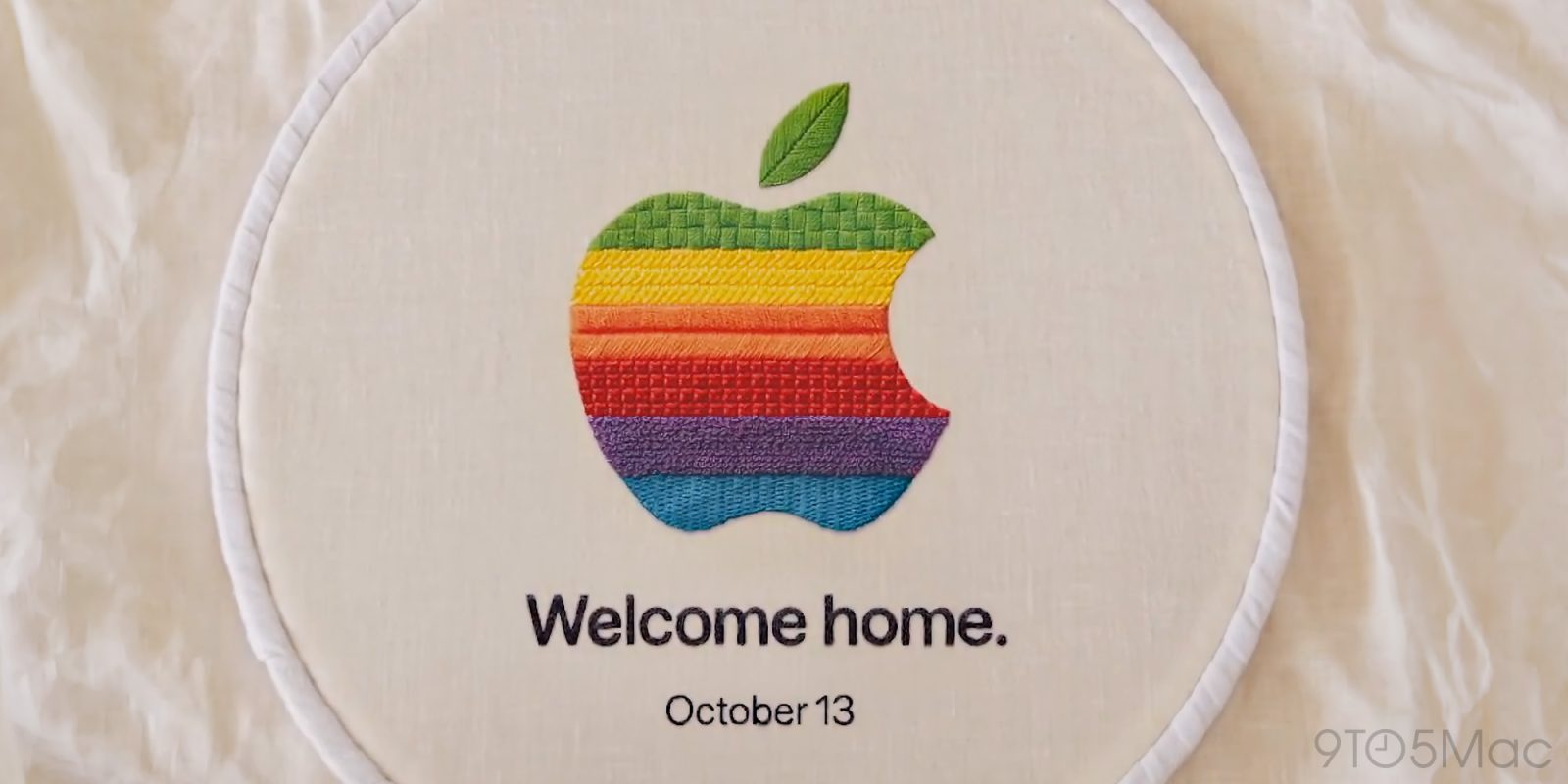
CUPERTINO, Calif. — In a decisive maneuver aimed at capturing the final frontier of modern digital infrastructure—the integrated smart home—Apple Inc. is scheduled to unveil a synchronized triumvirate of domestic hardware tomorrow. Billed through targeted internal communiqués and supply chain signals under the banner of "Welcome home," the event marks Cupertino’s most aggressive hardware repositioning since the launch of the Vision Pro. Yet unlike the enterprise-focused spatial computing headset, tomorrow’s announcements strike squarely at high-volume consumer monetization, enterprise ecosystem lock-in, and domestic edge-AI deployment.
For decades, Silicon Valley's titan has viewed the living room with strategic caution. While the iPhone emerged as the most profitable consumer product in history, Apple's domestic footprint—anchored by the Apple TV and the acoustically superior yet commercially challenged HomePod lineage—represented a fractional slice of hardware revenue. Tomorrow’s product cadence indicates a wholesale pivot from passive streaming accessories to high-leverage ambient edge computing platforms designed to anchor Apple Intelligence across daily domestic workflows.
The Catalytic Pivot: Why Ambient Edge Infrastructure Matters Now
The timing of the "Welcome home" product cycle is not coincidental; it is an economic and technological necessity dictated by shifting capital expenditure cycles and mobile hardware saturation. As high-income consumer markets navigate persistent macroeconomic crosscurrents, smartphone replacement intervals have extended from an average of 24.2 months in 2018 to roughly 38.5 months in 2024. For Apple, sustaining valuation multiples north of 30 times forward earnings requires expanding its Average Revenue Per User (ARPU) by entrenching its recurring Services umbrella across an interconnected matrix of physical environments.
Concurrently, the astronomical infrastructure scalability costs of hyperscale generative AI have triggered a profound shift toward hybrid compute topologies. Running continuous, natural-language voice orchestration across tens of millions of homes entirely via centralized cloud compute instances imposes ruinous bandwidth and thermal penalties. By deploying advanced Neural Processing Units (NPUs) directly into domestic base stations, Apple can process ambient natural language processing (NLP) requests locally at sub-millisecond latencies, escalating to Private Cloud Compute architectures only when complex frontier reasoning models are required.
Deconstructing the Trio: Silicon, Displays, and Protocols
Supply chain telemetry out of East Asia and proprietary channel checks across contract manufacturers confirm the simultaneous deployment of three distinct hardware categories. Each unit addresses an acute vulnerability in Apple's historical home automation matrix.
1. The Command Console: The Long-Awaited Smart Display ("HomePad")
The centerpiece of the event is an entirely novel form factor: a dedicated, low-profile ambient home display engineered to function as the operational bridgehead for domestic automation. Positioned between the iPad Mini and the existing HomePod form factor, this device integrates a micro-thin, wall- and dock-mountable 7-inch Liquid Retina display powered by an updated A-series processor optimized for continuous, low-power operation.
Unlike an enterprise iPad, the unit runs an optimized variant of domestic software—internally referenced as homeOS—engineered explicitly around Apple Intelligence widgets, FaceTime video streaming, Matter smart-device monitoring, and predictive automation scripts. Equipped with proximity sensors and an ultra-wide camera with Center Stage, the console identifies specific family members through local on-device biometric vectors, instantly dynamically configuring personalized calendars, communication feeds, and home security feeds without transferring visual telemetry off the device.
2. The Edge Engine: Next-Generation Apple TV 4K with Local Generative Silicon
Cupertino's living room centerpiece is scheduled for a comprehensive internal overhaul. The third iteration of the modern Apple TV 4K is projected to abandon legacy silicon in favor of the A17 Pro or an A18-adjacent processor, bringing high-density multi-core Neural Engines to the television screen. The industrial design maintains its compact thermal envelope while integrating a dedicated gigabit-speed Matter controller, dual-band Thread radios, and an upgraded Wi-Fi 7 networking transceiver.
Crucially, the enterprise ROI of this deployment centers on gaming and compute offloading. By infusing modern desktop-class graphics architectures—including hardware-accelerated ray tracing—into a sub-$150 streaming hockey puck, Apple simultaneously undercuts traditional gaming consoles while converting the household television into a high-bandwidth local media server capable of caching, running, and managing local home network LLM parameter weights.
3. The Audio Vanguard: Next-Generation HomePod Mini with Spatial Acoustic Arrays
The third pillar of tomorrow's showcase is an overdue refresh of the volume-driving HomePod mini. While the flagship full-size HomePod satisfies audiophile acoustics, the spherical mini platform serves as the fundamental physical distribution node for Siri and domestic sensor telemetry. The refreshed version incorporates an upgraded S-series system-in-package (SiP), introducing ultra-wideband (UWB) generational upgrades that enable ultra-precise directional device handoff.
The unit introduces environmental sensor upgrades, including enhanced ambient humidity, temperature, and indoor air-quality transducers, paired with microphonic beamforming arrays designed to discern whispered natural-language inputs across high-ambient-noise domestic spaces. This ensures ambient multi-room audio synchronization while establishing the foundational telemetry mesh required to train autonomous smart-home optimization models.
Comparative Architectural & Commercial Specifications
| Product Platform | Primary Silicon Tier | Strategic Value Metric | Network / Protocol Architecture | Estimated ASP (MSRP) | Direct Competitive Exposure |
|---|---|---|---|---|---|
| HomeOS Smart Display | A17 / A18 Optimized Silicon (Edge NPU) | Home UI Centralization / Edge-AI Bridgehead | Wi-Fi 6E/7, Thread, Matter, Bluetooth 5.4 | $249 – $299 | Amazon Echo Show, Google Nest Hub Max |
| Apple TV 4K (Gen 4) | A17 Pro (Hardware Ray Tracing Engine) | AAA Gaming Attach, Living Room Media Hub | Wi-Fi 7, Gigabit Ethernet, Thread Router | $129 – $149 | Roku Ultra, Nvidia Shield, Fire TV Cube |
| HomePod Mini (Gen 2) | S9 / S10 System-in-Package | Acoustic Mesh & Multi-Room Spatial Ingestion | Thread Border Router, Precision UWB, Wi-Fi 6E | $99 | Amazon Echo Dot, Google Nest Audio |
Wall Street and Enterprise Implications: Who Wins, Who Loses?
The introduction of this three-pronged domestic ecosystem generates direct ripple effects across institutional portfolios, digital services markets, and home technology infrastructures.
The Strategic Winners:
- Apple’s Services Division: A modernized home infrastructure acts as an immediate funnel for Apple One bundle adoption, including Apple Music, Apple Arcade, iCloud+ private relays, and nascent spatial computing streaming options. Margin expansion on Services (exceeding 74%) will cushion broader capital deployment.
- Semiconductor Supply Chains: TSMC (Taiwan Semiconductor Manufacturing Company) and domestic RF-component fabricators like Broadcom and Skyworks stand to capture outsized packaging revenues as Apple scales uniform 3nm and 4nm nodes beyond phones into lower-priced ambient consumer hardware.
- Smart Home Device Ecosystem (Matter Consortium): Consumers paralyzed by platform lock-in will benefit from Apple's enterprise commitment to the open-standard Matter protocol, which legitimizes peripheral hardware vendors such as Philips Hue, Eve Systems, and Nanoleaf.
The Strategic Losers:
- Amazon and Google: Both hyperscalers have historically treated their domestic hardware ecosystems as loss-leaders subsidized by ambient data collection, e-commerce ordering, or search engine ad inventory. Apple’s strict on-device data isolation model directly imperils their commercial viability in security-conscious enterprise executive households.
- Traditional Consumer Electronics Manufacturers: Mid-tier streaming box providers and budget audio manufacturers (e.g., Roku, Sonos) face margin compression. Sonos, already reeling from high-profile mobile application software instability, faces renewed enterprise competition across multi-room synchronized streaming nodes.
Frequently Asked Questions (People Also Ask)
What is the core focus of Apple’s "Welcome home" event?
The event focuses on establishing an integrated, privacy-focused smart home platform. By introducing an all-new ambient smart display alongside refreshed Apple TV 4K and HomePod mini hardware, Apple is operationalizing Apple Intelligence across domestic environments, transitioning Siri from a mobile assistant to an ambient home operating system (homeOS).
How does Apple Intelligence work on these new home devices?
Apple utilizes a hybrid compute topology. Routine interactions—such as device automation, spatial audio routing, biometric identification, and native voice command execution—are processed natively on-device using integrated Neural Processing Units (NPUs). Complex queries requiring broad world knowledge or deep reasoning are routed to Apple's Private Cloud Compute infrastructure using cryptographic privacy guarantees.
Will these new devices support third-party smart home hardware?
Yes. All three devices act as Matter border routers and Thread network orchestrators. This native protocol support ensures frictionless interoperability with non-Apple smart home peripherals, including lighting, locks, security cameras, and climate-control thermostats that adhere to modern CSA (Connectivity Standards Alliance) parameters.
How does tomorrow’s announcement impact Apple's long-term financial guidance?
While the hardware itself will carry Apple's standard blended hardware gross margins (typically 36% to 38%), its real economic dividend is lifetime customer retention. By deploying multiple low-cost access points throughout the home, Apple elevates Services attach rates and reinforces high-switching-cost moats around its most profitable consumer hardware line: the iPhone.
The Forward Horizon: Execution and Milestones to Watch
As the curtains rise tomorrow, institutional analysts will look beyond the physical industrial design to evaluate three critical execution metrics:
First, the architectural stability and latency of the revised conversational Siri interface will define consumer adoption. If the integrated edge-silicon successfully eliminates the historic delay and functional brittle nature of ambient voice interactions, Apple will transform HomeKit from a niche enthusiast sandbox into the foundational operating system of the modern domicile.
Second, channel pricing and gross margin guidance delivered during the subsequent quarterly earnings call will illuminate how aggressively Cupertino intends to price the hardware to wrest volume share from entrenched competitors. A competitive, sub-$250 smart display pricing structure signals an aggressive land-grab phase prioritizing installed base growth over short-term component margins.
Finally, enterprise software developer integration remains the paramount structural catalyst. Watch whether Cupertino opens the underlying homeOS application programming interfaces (APIs) to enterprise collaboration platforms, telehealth providers, and real estate property management software. Should third-party developer ecosystems gain low-latency access to the home-display interface, the "Welcome home" launch will be remembered not merely as a mid-cycle consumer hardware refresh, but as the dawn of the pervasive, ambient enterprise desktop.