Executive Takeaways
- Blowout Earnings Performance: Hon Hai Precision Industry Co. (Foxconn) posted a 35% year-over-year surge in second-quarter net profit to NT$60 billion ($1.88 billion), handily beating institutional consensus estimates.
- Accelerating Momentum: July consolidated revenue skyrocketed 54% year-over-year, confirming that compute supply chain ramp-ups are moving into hyper-drive ahead of anticipated enterprise cloud architectures.
- Structural Valuation Re-Rating: The world’s largest electronics contract manufacturer is rapidly decoupling from legacy smartphone seasonality, transforming its margin profile via hyperscale AI server integration and specialized rack-scale liquid cooling systems.
- Capital Allocation Shift: Global cloud service providers (CSPs) are maintaining aggressive capital expenditure, neutralizing broader consumer electronics softness and establishing custom AI compute infrastructure as the central pillar of tech market liquidity.
The Colossus Pivots: From Consumer Assembly to Compute Architecture
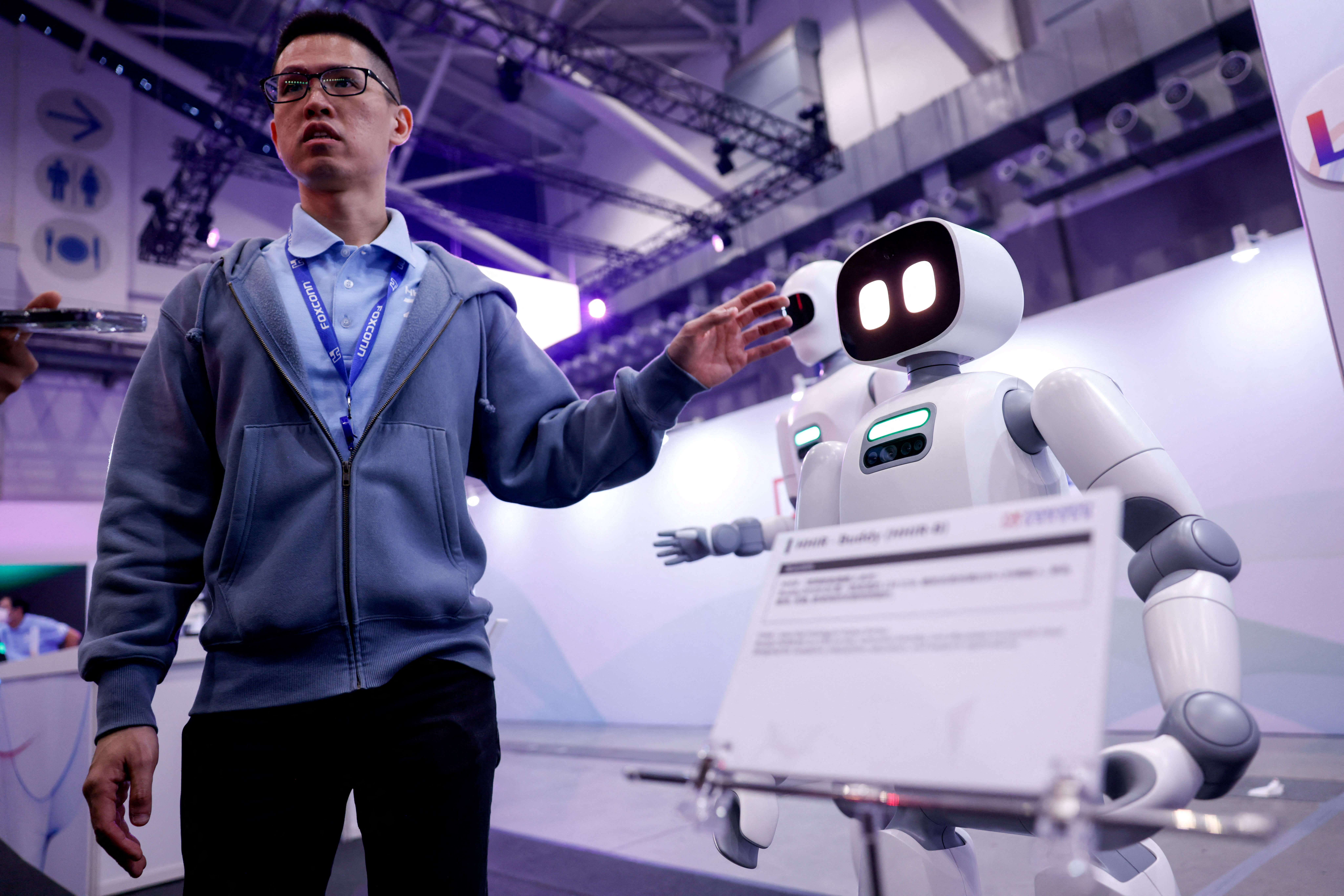
For four decades, Hon Hai Precision Industry Co. operated as the ultimate bellwether of the consumer electronics cycle. Its sprawling assembly campuses across Zhengzhou, Shenzhen, and southern India dictated the ebb and flow of global hardware demand, closely tracking the rhythm of the global smartphone upgrade cycle. However, the financial print delivered for the second quarter and the subsequent July revenue report definitively signals a historic paradigm shift: the Taiwanese manufacturing giant has transformed into the primary physical conduit for global artificial intelligence deployment.
Operating as the preeminent manufacturing and systems-integration partner for AI hardware titans including Nvidia, alongside direct ODM relationships with Western hyperscalers such as Microsoft, Alphabet, Amazon, and Meta, Hon Hai has positioned itself squarely at the confluence of cloud compute architecture and enterprise capital allocation. The group’s second-quarter net profit of NT$60 billion represents a 35% expansion compared to the prior-year period, powered overwhelmingly by high-density, liquid-cooled graphics processing unit (GPU) server racks rather than handheld consumer silicon.
The July performance dismantled any remaining skepticism regarding supply chain deceleration. Consolidated revenue jumped 54% year-over-year for the single month, delivering concrete empirical evidence that the long-promised delivery schedules for next-generation AI platforms—most notably Nvidia’s Blackwell-class architecture and custom ASIC accelerators—are scaling in production volumes without systemic yields or interconnect delays.
Deconstructing the Q2 Print: Margin Expansion and Operating Leverage
Hon Hai’s bottom-line expansion outpaced headline top-line growth, highlighting significant operational leverage inherent in complex AI server integration. Historically, high-volume consumer assembly yielded razor-thin operating margins hovering between 2.5% and 3.2%. However, the transition toward turnkey enterprise AI solutions—which bundle graphics silicon, proprietary power distribution boards, advanced thermal mitigation systems, and rack-level interconnect fabrics—has fundamentally altered the revenue quality.
Institutional desks tracking Taiwanese hardware components had broadly modeled a conservative Q2 due to persistent component transitions and initial engineering validation costs associated with liquid-to-air cooling manifolds. Instead, Hon Hai achieved gross margin resilience by capturing higher component value share internally. Rather than merely assembling white-box server chassis, the firm manufactures the high-density power delivery units (PDUs), complex printed circuit boards (PCBs), liquid-cooling cold plates, and advanced mechanical enclosures internally via its industrial subsidiaries, including Foxconn Industrial Internet (FII).
This vertical integration insulated the company from acute supply shortages in specialized cooling connectors and memory modules, translating top-line billing velocity directly into net margin accretion. Cash generation metrics demonstrated similar strength, providing the board with expanded capital allocation flexibility to support multi-billion-dollar capacity buildouts across North America and Southeast Asia.
Verified Data & Operational Metrics Breakdown
The operational metrics underscore how enterprise infrastructure has superseded smart devices as the core engine of organic growth within the enterprise.
| Financial / Operational Metric | Q2 Performance (Reported) | Prior Year Period (YoY Change) | Strategic Significance & Drivers |
|---|---|---|---|
| Consolidated Net Profit | NT$60.0 Billion | +35.0% YoY | Outperformed sell-side consensus; driven by high-margin AI compute server clusters. |
| July Monthly Revenue | NT$572.4 Billion (est.) | +54.2% YoY | Reflects accelerated batch deliveries of next-generation AI data center rack systems. |
| Cloud & Networking Share | ~42% of Total Revenue | Up ~10 percentage points | Matches or exceeds consumer smart devices revenue share during traditional off-peak quarter. |
| Server Vertical Value Capture | ~30-35% internal component share | Up from ~15-20% (Gen-on-Gen) | Higher content-per-box via proprietary power delivery, cold plates, and mechanicals. |
| Global Footprint Investment | $1.2B Allocated (H1) | +22% YoY Capex run-rate | Expansion across Mexico (server assembly), Vietnam, and India (diversification). |
The Engineering Hurdle: Liquid Cooling and System-Level Architecture
The operational divide separating commodity server assemblers from mission-critical AI infrastructure partners lies in physical engineering scalability. A standard modern dual-socket enterprise rack draws between 10 to 14 kilowatts (kW) of power. In contrast, modern generative AI clusters—composed of 72 interconnected GPUs operating on unified high-bandwidth memory (HBM)—command upwards of 120 to 140 kW per rack cabinet. Air-cooling mechanisms are physically incapable of dissipating this thermal density, forcing a complex industry-wide transition to direct-to-chip liquid cooling and hybrid heat exchangers.
Hon Hai seized an early structural moat by investing heavily in thermal testing labs and specialized plumbing validation long before competitors attempted to pivot. The company’s Guadalajara, Mexico manufacturing facility has been extensively retrofitted to function as an industrial-scale validation testing hub for liquid-cooled data center racks. By mastering the engineering complexities of coolant distribution units (CDUs), dripless quick-disconnect couplings, and automated hydrostatic leak detection, Hon Hai has erected high technical barriers to entry.
For cloud hyperscalers executing strict zero-downtime service level agreements (SLAs), operational risk mitigation takes precedence over minor unit pricing differences. Hon Hai’s ability to deliver pre-tested, factory-integrated, turn-key liquid-cooled racks directly to North American and European data center facilities has rendered the company an indispensable cog in global cloud architecture scalability.
Valuation Multiples and Market Liquidity: The Great Tech Re-Rating
From an equity valuation perspective, global capital allocators have historically priced Hon Hai as a low-margin hardware assembler, anchoring its forward price-to-earnings (P/E) multiple within a constrained band of 8x to 11x earnings. This discount reflected cyclical smartphone exposure, limited pricing power against primary consumer technology clients, and elevated geopolitical exposure regarding its mainland Chinese production footprint.
The 35% profit surge and blistering July run-rate are driving an institutional re-rating. Asset managers and sovereign wealth funds are increasingly categorizing Hon Hai alongside mission-critical infrastructure enablers such as Taiwan Semiconductor Manufacturing Co. (TSMC), Quanta Computer, and Super Micro Computer, which traditionally command multiples ranging from 18x to 25x forward earnings.
Market liquidity across institutional capital channels has increasingly gravitated toward suppliers that offer unhedged, clean-play leverage to the AI infrastructure capex boom while maintaining positive cash flow and conservative balance sheet leverage. Hon Hai represents this rare duality: an enterprise boasting defensive cash positions and massive balance-sheet capacity, simultaneously offering high-beta exposure to hyper-growth enterprise compute spending.
Industry Implications: Who Wins and Who Loses?
The systemic reallocation of global capital expenditures toward AI infrastructure creates distinct divergence across the enterprise hardware landscape:
The Winners:
- Integrated Tier-1 ODMs: Players with massive balance-sheet capacity like Hon Hai and Quanta can float multi-billion-dollar component working-capital cycles while managing long-lead-time advanced memory and processor inventory.
- Upstream Power and Thermal Specialists: Component vendors providing high-voltage power supplies, specialized busbars, and precision-engineered quick disconnects see their average selling prices (ASPs) surge by 300% to 500% per server cabinet.
- Hyperscale Cloud Providers: Rapid, reliable hardware rollouts ensure that cloud providers can quickly monetize their custom enterprise models, shortening the runway to measurable enterprise ROI.
The Losers:
- Legacy Enterprise Server Vendors: Traditional original equipment manufacturers (OEMs) focused on general-purpose, on-premise compute racks are squeezed out as corporate IT departments divert internal budgets entirely toward cloud-based AI initiatives.
- Second-Tier Assemblers Lacking Scale: Smaller electronics manufacturing services (EMS) firms lack the billions in working capital required to secure high-priority allocations of top-tier accelerators and advanced memory, locking them out of the highest-margin tier of the market.
- Commodity Consumer Hardware: As fab capacity prioritizes advanced nodes and High-Bandwidth Memory (HBM), mid-tier consumer electronics face higher component costs and supply deprioritization.
Frequently Asked Questions (People Also Ask)
Why is Hon Hai considered the premier barometer for enterprise AI demand?
Hon Hai occupies the pivotal mid-stream position in global computing. While semiconductor designers such as Nvidia and AMD report theoretical demand through bookings, and hyperscalers report capital expenditures through forward plans, Hon Hai reflects the physical reality of compute deployment. The company must procure components, balance complex logistics, integrate silicon onto systems-level boards, and deploy fully functioning, liquid-cooled racks. When Hon Hai reports accelerated revenues and profits, it confirms that actual enterprise delivery and installation are scaling in the real world.
How does the transition to liquid cooling affect Hon Hai's profit margins?
Liquid cooling systems introduce significantly higher engineering complexity and proprietary component design compared to standard air-cooled chassis. Hon Hai designs and manufactures a substantial portion of these specialized thermal components in-house—including cold plates, coolant distribution manifolds, and advanced leak-detection sensors. This vertical internal sourcing allows the company to capture far higher margins than traditional assembly, structurally lifting overall gross and operating profit margins across its Cloud and Networking business segment.
Can consumer smartphone seasonality still derail Hon Hai’s financial momentum?
While consumer electronics, particularly the global smartphone cycle, still represent a significant portion of Hon Hai's absolute top-line volume, their relative earnings contribution is steadily normalizing. The hyper-growth trajectory of the enterprise AI infrastructure sector—growing at 40% to 60% annualized clips—provides a robust counter-cyclical hedge. Softness in consumer handheld upgrades is increasingly offset by structural, non-discretionary capex spending from global hyperscalers racing to expand enterprise cloud compute capacity.
What are the primary operational risks facing Hon Hai's AI expansion?
The three most prominent structural risks include: (1) Supply-chain bottlenecks: Shortages in advanced packaging capacities (such as TSMC's CoWoS) or High-Bandwidth Memory (HBM) could temporarily delay final rack assembly; (2) Geopolitical friction: Shifts in cross-strait dynamics or US export control policies on advanced compute hardware require rapid, capital-intensive geographic diversification across North America, Southeast Asia, and India; and (3) Hyperscaler Capex ROI Fatigue: If cloud providers fail to translate heavy infrastructure capital investments into enterprise software revenue, enterprise infrastructure spending could face cyclical macro retrenchment.
Future Strategic Outlook and Milestones to Watch
As Hon Hai enters the latter half of the fiscal year, all institutional eyes will track the operational ramp of its Guadalajara facility alongside secondary manufacturing plants in Texas and Wisconsin. These facilities are designed to circumvent logistics bottlenecks and adhere to stringent North American sovereign computing and enterprise data security frameworks.
The second key milestone involves the platform architecture migration from single-server nodes to massive cluster-level deployments. As next-generation high-compute architectures establish dominance in enterprise data centers through late 2026 and into 2027, the dollar content per rack will climb higher, cementing Hon Hai's evolution from a consumer assembly plant into an indispensable architect of the modern global compute economy.
Hon Hai’s latest Q2 NT$60 billion earnings and 54% July revenue expansion demonstrate that the AI supercycle is not a speculative cloud software bubble. It is an immense, physical, capital-intensive reconstruction of the world’s digital infrastructure—and Hon Hai currently controls the central switchboard.