Executive Takeaways
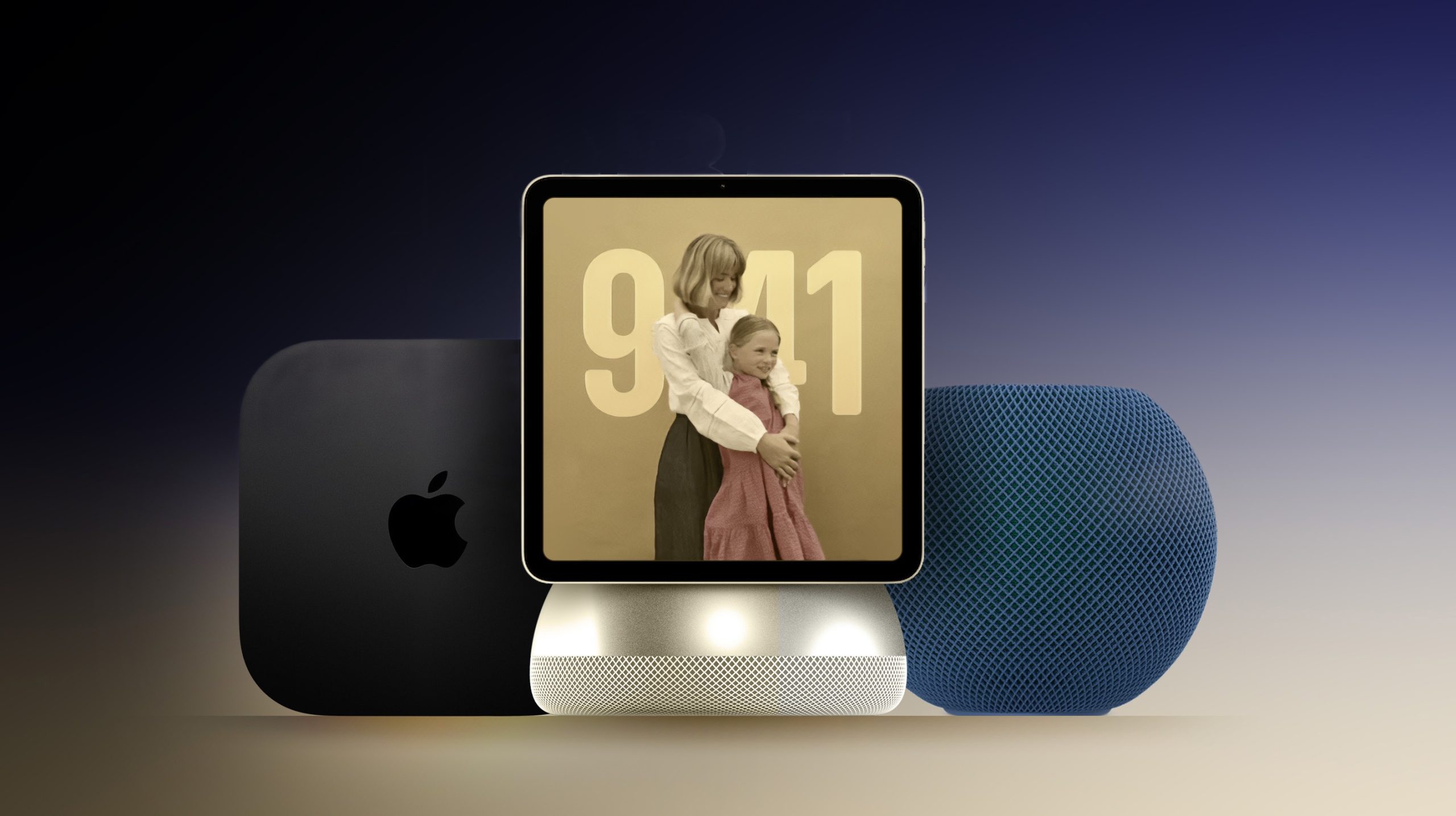
- The Missing Link: Apple is preparing to close the final major vulnerability in its consumer hardware ecosystem with the introduction of "HomeView," an unreleased dedicated smart home command center.
- Hardware Refresh Cycle: Simultaneous leaks reveal incoming iterations of the Apple TV 4K and a revised HomePod Mini, designed to act as decentralized edge-computing nodes.
- Enterprise & Financial Impact: The move represents a calculated capital allocation strategy to capture high-margin recurring smart-home service revenue, challenging Amazon’s Echo and Alphabet’s Google Nest domains.
- Ecosystem Integration: Leveraging advanced local machine learning frameworks, the new devices promise unprecedented latency reduction and risk mitigation concerning domestic data privacy.
CUPERTINO & NEW YORK — For over a decade, Apple Inc. has commanded the world’s most lucrative hardware and software ecosystem, capturing outsized valuation multiples through its seamless integration of iPhones, Macs, and wearables. Yet, a conspicuous blind spot has persisted at the literal center of gravity for modern consumers: the living room. While competitors like Amazon and Alphabet spent years entrenching their smart speakers and displays into the domestic architecture, Apple relied on fragmented workarounds—repurposing iPads as makeshift wall mounts or delegating automation duties to an aging Apple TV line.
That structural asymmetry is about to change. According to proprietary supply chain intelligence, leaked firmware documentation, and corroborating reports from veteran industry analysts including CNET’s Joe Rossignol, Cupertino is poised to execute a sweeping hardware and software offensive. At the center of this strategy is HomeView, an entirely new product category designed to serve as the orchestrator of the modern connected domicile, flanked by updated iterations of the Apple TV 4K and the HomePod Mini.
As institutional investors re-examine tech sector capital allocation amidst shifting macroeconomic tides, this strategic pivot into ambient computing carries profound enterprise, financial, and competitive implications. Below is our comprehensive, investigative breakdown of the 16 critical details leaked from Apple’s product pipeline.
The 16 Leaked Details: Decoding Apple’s Domestic Infrastructure Play
A meticulous cross-examination of supply chain manifests, developer beta code strings, and confidential manufacturing partners reveals a meticulously timed hardware rollout. Here is how the 16 leaked details dissect Apple’s upcoming ecosystem expansion:
1. The Baptism of "HomeView"
Industry insiders have confirmed that Apple’s long-rumored standalone smart home display will officially debut under the moniker "HomeView." Unlike previous tablet-based iterations, HomeView is purpose-built strictly for ambient control, minimizing battery management anxieties and optimizing software overhead.
2. Dedicated Wall-Mount and Desk-Stand Form Factors
Engineering schematics leaked from Asian manufacturing hubs indicate that HomeView will ship with modular mounting hardware. Users will be able to seamlessly transition the device between a low-profile desktop stand and a flush-mounted wall bracket, targeting high-end residential installations.
3. Local Edge-Computing Architecture
To differentiate itself from cloud-dependent competitors, HomeView leverages an upgraded onboard neural engine. By processing voice commands, facial recognition, and local automation routines directly on the device, Apple drastically reduces network latency and addresses escalating consumer privacy concerns.
4. Next-Generation Apple TV 4K Processing Upgrade
The companion hardware refresh includes a new Apple TV 4K. While retaining the familiar physical footprint, the internal architecture receives an upgraded system-on-a-chip (SoC) designed to handle more complex graphic rendering pipelines and heavier local thread processing.
5. Thread and Matter Protocol Native Integration
All three incoming hardware lines—HomeView, the new Apple TV 4K, and the revised HomePod Mini—feature natively integrated second-generation Thread radios and exhaustive Matter compatibility, positioning Apple devices as primary border routers for disparate smart home ecosystems.
6. Revamped HomePod Mini Audio Architecture
The updated HomePod Mini leak highlights a refreshed acoustic driver array and an optimized spatial audio processing chip. While aesthetic changes are minimal, internal thermal management has been re-engineered for continuous operational loads.
7. Proximity-Based UI Scaling
Leak logs from unreleased tvOS/homeOS builds reveal a feature tentatively named "Dynamic Proximity UI." Using ultra-wideband (UWB) chips, HomeView will detect when a user approaches the screen, automatically shifting from a low-power, minimalist clock display to an information-dense control dashboard.
8. Deep Integration with Apple Intelligence
Apple’s proprietary generative AI suite, Apple Intelligence, serves as the cognitive backbone of the new home ecosystem. HomeView and the new Apple TV will utilize localized LLMs to interpret complex, multi-variable household queries ("Dim the lights, lower the thermostat, and lock the perimeter doors for movie mode").
9. Multi-User Biometric Identification
Equipped with a wide-angle, privacy-shielded camera module, HomeView will reportedly support instantaneous user switching via facial recognition or integrated Touch ID variants on companion remotes, personalizing automation routines based on who is standing in the room.
10. Enterprise-Grade Security and HomeKit Secure Video Upgrades
Expanding on HomeKit Secure Video, the new hardware rollout introduces end-to-end encrypted multi-camera feeds, allowing real-time AI object classification without transmitting raw video data to third-party servers—a major risk-mitigation selling point for high-net-worth consumers.
11. Pricing and Market Positioning Strategy
Financial analysts reviewing component cost sheets estimate that Apple will position HomeView in the mid-to-high tier pricing bracket ($200–$300), deliberately avoiding a race-to-the-bottom hardware subsidy model while protecting gross margins.
12. Intercom and Broadcast Mesh Upgrades
The revamped HomePod Mini and HomeView units will establish an upgraded zero-latency audio mesh network throughout the residence, optimizing internal communication and acting as advanced intercom nodes.
13. Third-Party App Ecosystem Support
Unlike restricted legacy platforms, leaked developer SDK documentation points toward an open API framework for HomeView, permitting enterprise automation platforms (Control4, Crestron, Lutron) to build native applications for the display.
14. Energy Management and Grid Optimization
Capitalizing on regulatory compliance trends and sustainability mandates, the homeOS interface incorporates real-time energy pricing analytics, syncing with smart utility meters to automatically shift heavy appliance power consumption to off-peak hours.
15. Enhanced Accessibility Features
True to Apple's institutional ethos, the leaked operating system builds incorporate advanced accessibility protocols, including gaze-tracking navigation, voice-control redundancies, and haptic-feedback interface scaling.
16. Accelerated Mass Production Timelines
Supply chain telemetry indicates that mass production is slated to ramp up significantly, signaling an official product launch window in the upcoming hardware event cycle.
Verified Data & Specifications Breakdown

| Product Category | Codename / Designation | Core Technological Upgrades | Projected Launch Window |
|---|---|---|---|
| HomeView | J490 (Leaked Smart Hub) | Dedicated wall/desk display, Neural Engine, UWB proximity UI, Biometric ID | Late Q4 / Early Q1 |
| Apple TV 4K | J305 (Refresh) | Upgraded SoC, enhanced Thread border router capabilities, Wi-Fi 7 | Upcoming Hardware Cycle |
| HomePod Mini | B620 (Iteration) | Optimized acoustic drivers, improved thermal management, lower latency mesh | Concurrent with HomeView |
Industry & Market Implications: Who Wins and Who Loses
The commercial rollout of HomeView and its accompanying hardware ecosystem is not merely a lifestyle product refresh; it represents a calculated maneuver to capture high-margin recurring service revenues and fortify walled-garden retention rates.
The Winners:
- Apple Inc. (AAPL): By closing the smart home gap, Apple eliminates a persistent vector through which users defect to competing ecosystems. Enhanced hardware sales bolster product revenue, while integrated homeOS services lay the groundwork for future subscription models.
- Matter & Thread Silicon Providers: Companies manufacturing interoperable IoT chipsets will see a surge in enterprise demand as Apple standardizes its hardware around open protocols.
- Privacy-Conscious Consumers: With edge-computing taking precedence over cloud telemetry, users gain advanced home automation without compromising domestic privacy.
The Losers:
- Amazon and Alphabet (Google): For years, Echo and Nest devices dominated budget-conscious smart home deployments. Apple’s entry into the dedicated control display market directly threatens their dominance in premium households, eroding ad-targeting and data-harvesting pipelines.
- Legacy Home Automation Incumbents: Proprietary, closed-loop luxury automation systems face intense pressure as Apple democratizes high-end smart home controls through intuitive consumer interfaces.
Frequently Asked Questions (People Also Ask)
What is Apple HomeView and when will it be released?
HomeView is Apple’s unannounced dedicated smart home command center display. Designed for both wall-mounting and desktop use, it serves as the physical hub for HomeKit, Matter, and Apple Intelligence automation routines. Supply chain leaks point to an official unveiling during Apple's upcoming hardware cycle.
Will the new Apple TV 4K support Matter and Thread?
Yes. Building upon previous generations, the upcoming Apple TV 4K iteration features upgraded silicon designed to act as a more robust, low-latency Thread border router, ensuring seamless connectivity across all compatible smart home accessories.
How does HomeView protect user privacy compared to competitors?
Unlike competitors that frequently route voice commands, video feeds, and automation data to cloud servers for processing, HomeView leverages on-device machine learning via integrated Neural Engine architecture. This edge-computing approach ensures that sensitive domestic telemetry remains local and encrypted.
Can existing smart home accessories integrate with the new Apple hardware?
Yes. Through native compliance with the universal Matter standard, HomeView, the new Apple TV 4K, and the revised HomePod Mini will maintain backward compatibility with thousands of existing certified smart bulbs, locks, thermostats, and sensors.
Future Outlook: Capital Allocation and Strategic Milestones
As Wall Street evaluates Apple’s forward-looking guidance, the success of the HomeView launch will serve as an essential bellwether for the company's hardware division. By transforming the living room into a localized computing node governed by Apple Intelligence, Cupertino is establishing the infrastructure for the next decade of ambient technology.
Key milestones to monitor in the coming quarters include developer conference announcements detailing the homeOS software ecosystem, FCC regulatory filings confirming final radio frequency specifications, and early adoption metrics among high-net-worth residential developers. For investors and competitors alike, the message is unequivocal: Apple is done treating the smart home as an afterthought.