Off-World Rx: Why the Next Medical Breakthroughs Are Happening in Zero Gravity, According to a Veteran Astronaut
NEW YORK & BENGALURU — For decades, the space race was defined by geopolitics, rocketry, and the quest to plant flags on distant celestial bodies. Today, a quieter, far more lucrative revolution is taking place 250 miles above our heads. Low Earth Orbit (LEO) is fast becoming the ultimate R&D incubator for global healthcare, promising to revolutionize how we treat cancer, manufacture life-saving drugs, and understand human aging.
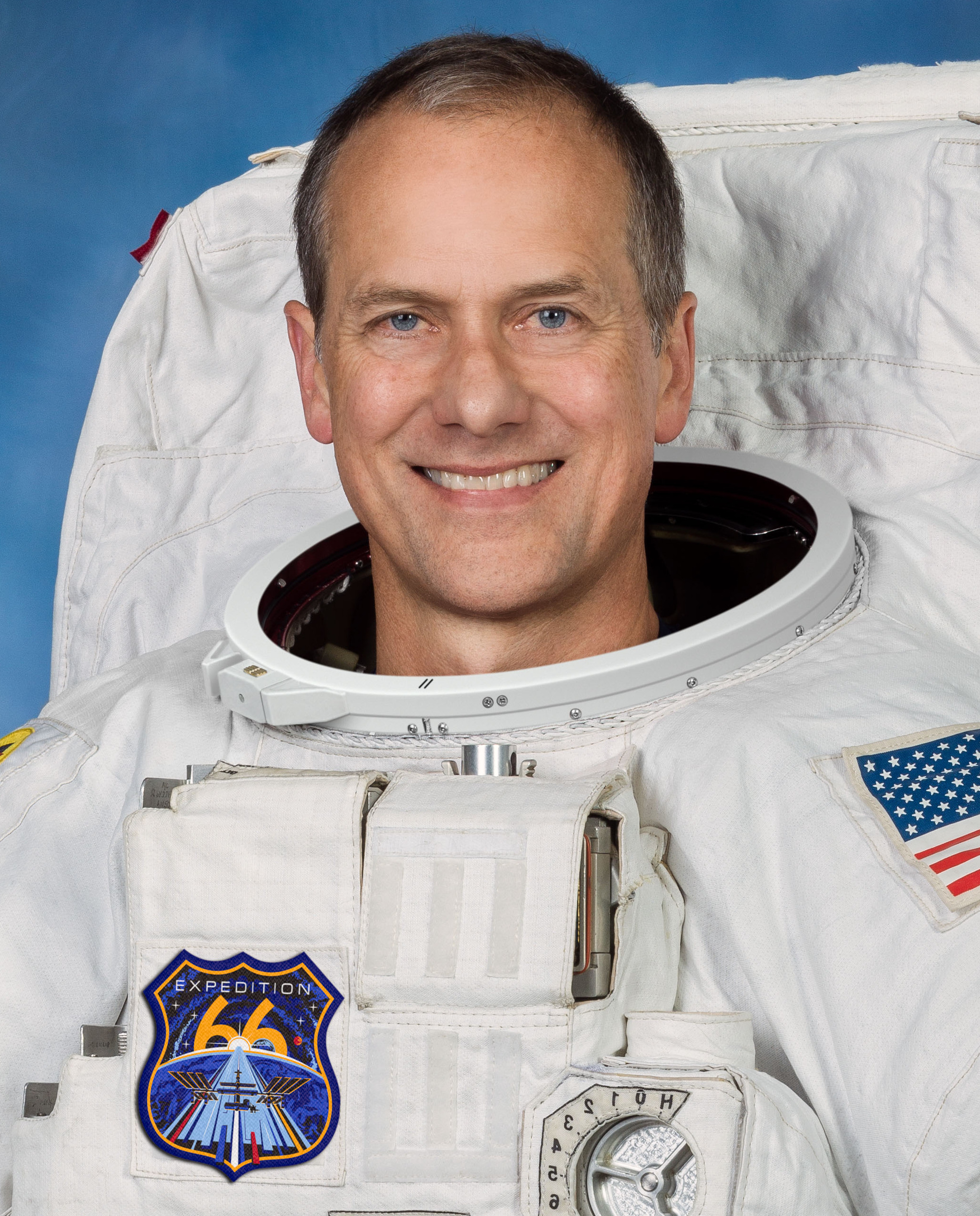
At the center of this paradigm shift is Dr. Tom Marshburn, a veteran NASA astronaut who has logged 337 days in space across three missions and currently serves as the Chief Medical Officer at Sierra Space. In an era where commercial space stations are poised to replace the aging International Space Station (ISS), Dr. Marshburn is championing the commercialization of microgravity to solve some of Earth’s most complex medical challenges.
“Space is not just a destination for exploration; it is an unparalleled platform for discovery,” Dr. Marshburn explained. “When you remove gravity from the equation, biology behaves in ways that are impossible to replicate in any laboratory on Earth. We are on the cusp of medical breakthroughs that will directly save lives down here.”
The Physics of Zero-G: Why Space Changes Biology
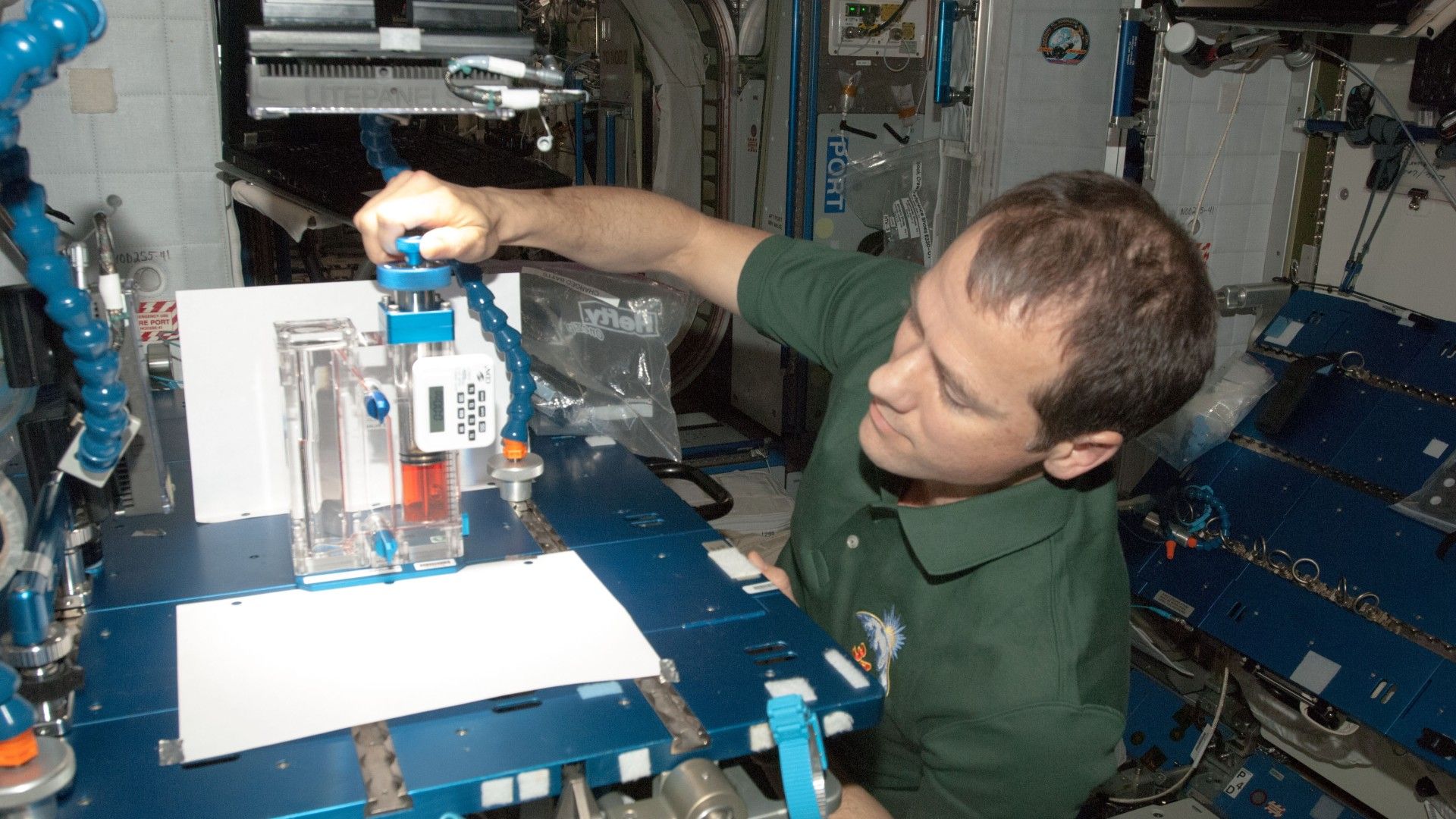
To understand why pharmaceutical giants and biotech startups are booking cargo space on rockets, one must look at the physics of microgravity. On Earth, gravity forces sedimentation, convection, and hydrostatic pressure. In orbit, these forces disappear, allowing physical and biological systems to behave in a "pure" state.
For drug developers, this frictionless environment is a goldmine. In microgravity, protein crystals—the building blocks of targeted therapeutics—grow much larger, more slowly, and with far fewer defects than they do on Earth. This allows scientists to map their molecular structures with extreme precision, leading to the design of more effective, highly targeted drugs.
Key Therapeutic Arenas Set for Off-World Disruption
- Oncology & Immunotherapy: Pharmaceutical giant Merck has already utilized the ISS to reformulate its blockbuster cancer drug, Keytruda. In microgravity, they successfully produced high-quality crystalline suspensions that could allow the drug to be administered via a simple under-the-skin injection rather than hours-long chemotherapy infusions.
- Stem Cell Research & Regenerative Medicine: In zero gravity, stem cells retain their pluripotency (the ability to turn into any cell type) and replicate much faster than they do on Earth. This could accelerate the manufacturing of tissues and organs for transplantation.
- Accelerated Aging Studies: Astronauts in space experience physiological changes that mimic rapid aging—such as bone density loss, muscle atrophy, and arterial stiffening. By studying these accelerated processes in space, researchers can test therapeutics for osteoporosis, cardiovascular disease, and sarcopenia in a fraction of the time it would take on Earth.
The Commercial Space Pipeline: From Orbit to Patient
As the ISS prepares for its planned decommissioning by 2030, commercial players are stepping in to fill the void. Sierra Space is actively developing the "Orbital Reef" space station in partnership with Blue Origin, alongside their revolutionary Dream Chaser spaceplane.
The Dream Chaser is a critical piece of the medical supply chain. Unlike traditional capsules that splash down in the ocean—subjecting delicate scientific payloads to violent forces of up to 4 to 9 Gs—the Dream Chaser lands gently on commercial runways. This soft landing preserves fragile biological samples, 3D-bioprinted tissues, and pristine protein crystals, ensuring they arrive at terrestrial laboratories intact.
| Research Area | The Earth-Bound Challenge | The Microgravity Advantage | Potential Clinical Outcome |
|---|---|---|---|
| Protein Crystallization | Gravity causes convection and sediment, degrading crystal purity. | Diffusion-dominated growth yields near-perfect crystal structures. | Easier drug delivery (e.g., sub-Q injections vs. IV infusions). |
| 3D Bioprinting | Scaffolds are required to prevent cellular structures from collapsing. | Tissues float freely; complex cellular structures print naturally. | Viable lab-grown human organs and vascular networks. |
| Cellular Senescence | Aging studies require decades of clinical observation. | Astronaut physiology mimics rapid cardiovascular and bone aging. | Rapid development of anti-aging and osteoporosis therapeutics. |
Capitalizing on the LEO Economy
Wall Street is taking note. Investment banks estimate that the space economy could surpass $1 trillion by 2040, with "space-for-earth" biomanufacturing representing one of its fastest-growing subsectors. The ability to patent new drug formulations discovered exclusively in microgravity is driving a surge in venture capital funding for space-tech and biotech crossovers.
For Dr. Marshburn and the team at Sierra Space, the ultimate goal is to democratize access to these space-based laboratories. By lowering the cost of transport and providing state-of-the-art automated laboratories in orbit, they aim to make off-world research a standard step in the drug development pipeline.
“We are transitioning from an era of space exploration to an era of space utilization,” said Marshburn. “The molecules we bring back from orbit in the coming decade will change the face of medicine forever.”
Frequently Asked Questions
Why can't we just simulate microgravity on Earth for medical research?
While devices like clinostats and random positioning machines can simulate some aspects of microgravity by constantly rotating samples, they cannot eliminate gravitational forces. True microgravity—where sedimentation and convection are completely absent—can only be achieved through sustained freefall in orbit, making space stations irreplaceable for high-precision biomanufacturing.
When will patients see the benefits of space-made medicines?
The transition is already underway. Several therapies currently in late-stage clinical trials on Earth—particularly monoclonal antibodies for cancer and treatments for degenerative bone diseases—have had their development accelerated by microgravity research on the ISS. With commercial space stations online by the late 2020s, the volume of space-assisted therapeutics entering the market is expected to scale exponentially.