Executive Takeaways
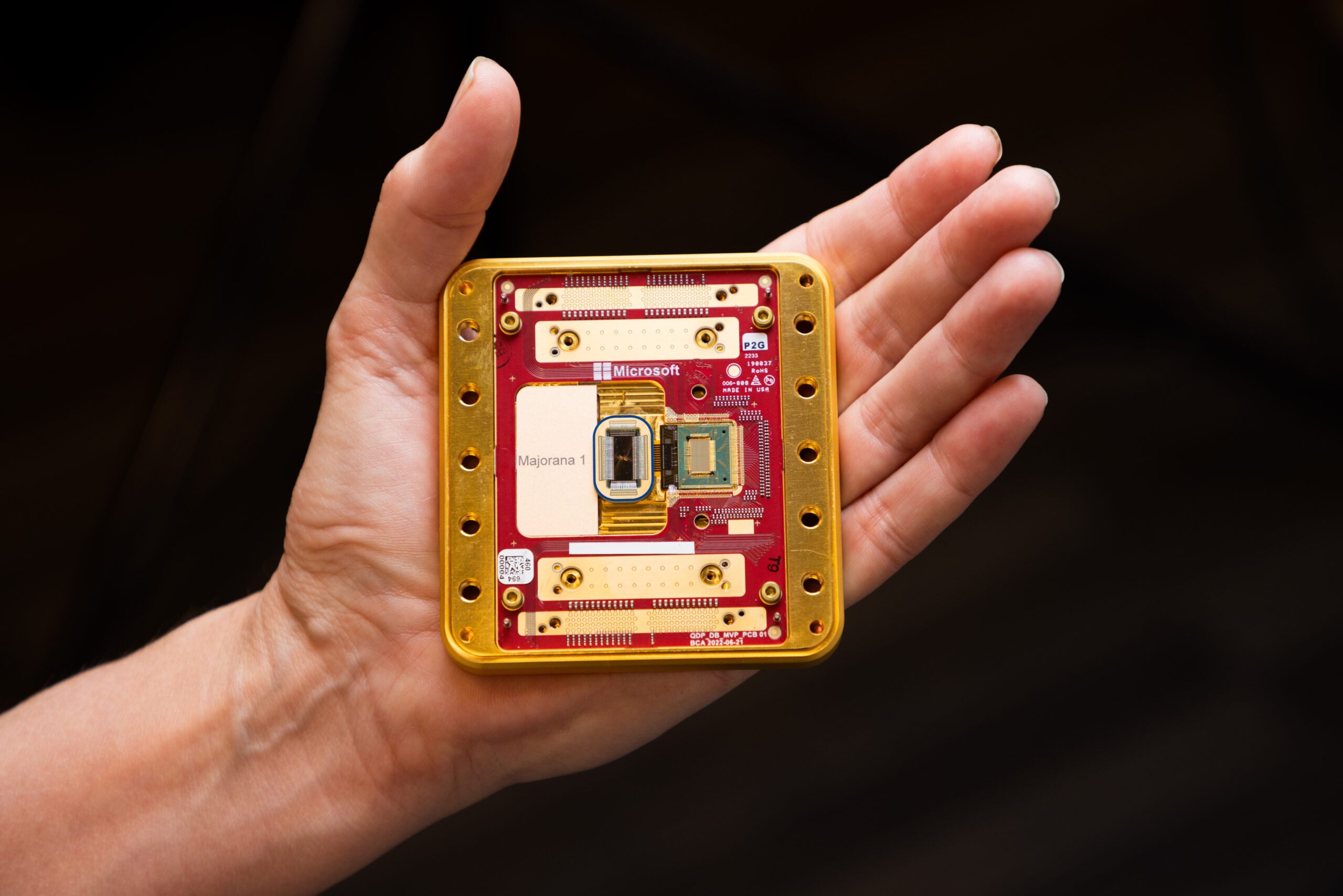
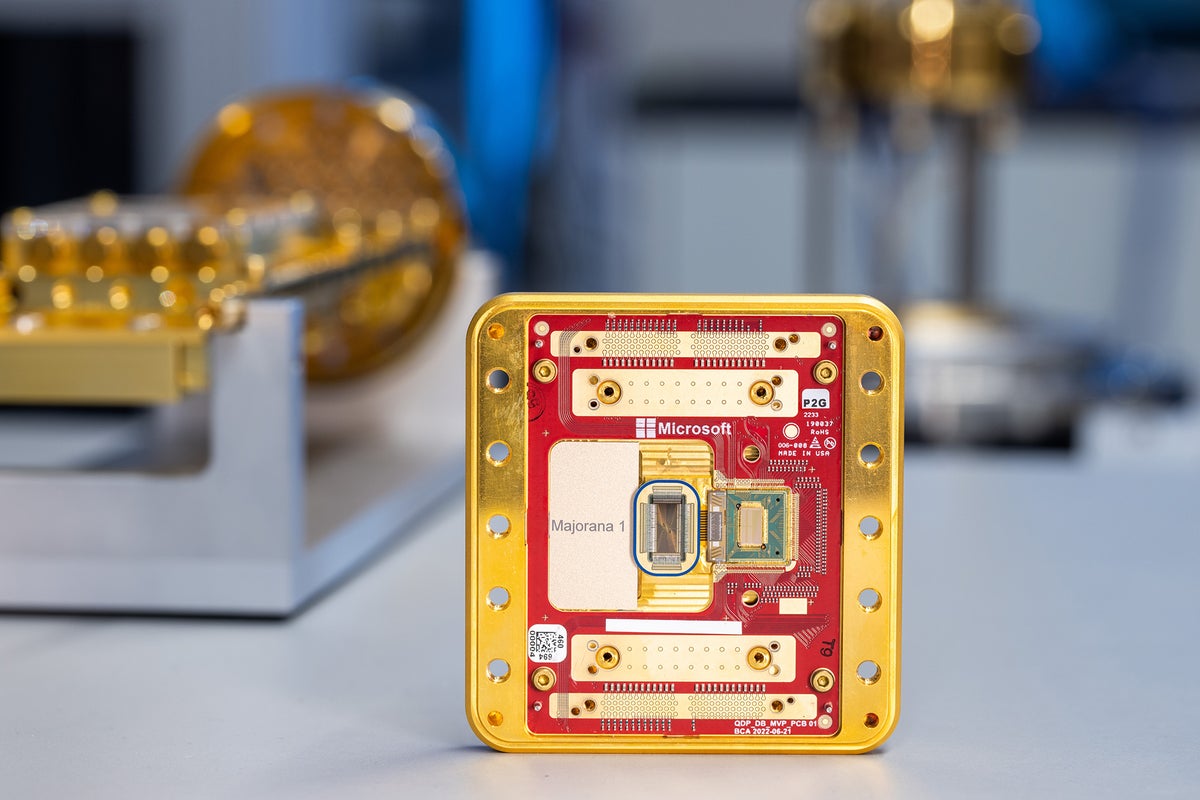
- A Paradigm Shift in Physics: Unveiled on February 19, 2025, Microsoft’s Majorana 1 is the world's first quantum chip built on topological qubits, fundamentally altering the architecture of quantum computing.
- Solving the Error-Correction Bottleneck: By leveraging non-Abelian anyons, the chip dramatically reduces the physical hardware overhead typically required for large-scale error mitigation, transforming enterprise ROI models.
- Direct-to-Answer Architecture: Moving away from probabilistic gate-based systems, Majorana 1 is engineered to inherently stabilize states and accelerate complex industrial computations.
- <Capital and Market Reallocation: Tech conglomerates and venture capital firms are forced to re-evaluate infrastructure scalability roadmaps, triggering a strategic pivot in enterprise cloud compute architecture.
The announcement on February 19, 2025, sent immediate shockwaves through the global technology sector and quantitative finance markets alike. Microsoft Corporation’s unveiling of the Majorana 1 chip marks a watershed moment in the history of information technology. For decades, the holy grail of quantum computing has been hindered by a seemingly insurmountable physical barrier: decoherence. Noise, thermal fluctuations, and electromagnetic interference routinely corrupt delicate quantum states, rendering traditional quantum processors fragile, error-prone, and economically unviable for enterprise-grade deployment.
Microsoft’s introduction of the world's first quantum chip powered by topological states—specifically engineered around Majorana zero modes—bypasses these legacy limitations. By redefining the underlying physics of the qubit, Redmond has not merely updated an engineering blueprint; it has rewritten the physics textbook for industrial-scale quantum computing. For Chief Information Officers, venture capitalists, and risk management executives, this development transitions quantum technology from a speculative theoretical physics exercise into an imminent balance-sheet consideration.
The Physics of Breakthrough: Rethinking Qubits at Scale
To understand the profound economic and technical implications of the Majorana 1 chip, one must examine the foundational flaw plaguing standard quantum architectures. Traditional superconducting and trapped-ion quantum computers rely on fragile qubits that require millions of physical backup components just to execute a handful of error-corrected logical operations. This prohibitive hardware overhead has long blocked enterprise infrastructure scalability.
Microsoft’s multi-year bet, spearheaded by its Station Q research division, focused on a radically different approach: topological quantum computing. Instead of trying to shield fragile states from environmental noise, the Majorana 1 chip uses topological protection. Information is stored non-locally in pairs of Majorana zero modes—exotic quasi-particles known as non-Abelian anyons. Because the quantum information is braided across spatial dimensions rather than localized in a single point, it is inherently immune to local environmental perturbations.
"It just gives you the answer," leading physicists working on the project noted, emphasizing how the hardware's structural stability minimizes the cascading error rates that traditionally plague quantum algorithms. This intrinsic hardware-level error suppression drastically reduces the capital expenditure (CapEx) and operational overhead required to maintain cryogenic computing environments at scale.
Verified Data & Metrics Breakdown
A rigorous examination of the Majorana 1 architecture reveals a fundamental divergence from legacy quantum systems. The following comparative matrix outlines the operational parameters distinguishing Microsoft’s latest milestone from previous paradigms:
| Architectural Metric | Legacy Superconducting Qubits | Microsoft Majorana 1 Chip |
|---|---|---|
| Core Qubit Type | Transmon / Superconducting Circuits | Topological / Majorana Zero Modes |
| Error Correction Strategy | Surface codes requiring massive physical redundancy | Hardware-level topological protection |
| Infrastructure Scalability | Severely constrained by wiring and thermal loads | Optimized for dense integration and rack-scale deployment |
| Enterprise ROI Timeline | 10 to 15+ years (speculative horizon) | Accelerated commercialization window (Late 2020s) |
Industry & Market Implications: Winners, Losers, and Capital Allocation
The introduction of the Majorana 1 chip triggers an immediate reallocation of global technology capital. As enterprise budgets pivot toward quantum-ready cloud architectures, the ripple effects will be felt across multiple vertical sectors.
The Winners: Enterprise Cloud and Advanced Simulation
Microsoft’s Azure cloud ecosystem stands as the primary commercial beneficiary. By integrating Majorana 1 hardware directly into its cloud compute architecture, Microsoft creates an unassailable moat for enterprise clients demanding fault-tolerant simulation. Industries dependent on complex molecular modeling—such as pharmaceuticals, materials science, and clean energy optimization—will experience compressed research and development cycles. Furthermore, financial institutions seeking high-frequency risk mitigation and market liquidity modeling will find the deterministic nature of topological processing vastly superior to probabilistic legacy models.
The Disrupted: Hardware Competitors Lacking Topological Roadmaps
Conversely, quantum hardware startups and major technology conglomerates relying exclusively on noisy intermediate-scale quantum (NISQ) superconducting or photonic architectures face severe strategic pressure. Valuation multiples for firms unable to demonstrate a credible path to hardware-level topological error correction will likely compress. Investors are shifting focus toward risk mitigation, favoring firms capable of delivering predictable infrastructure scalability over raw physical qubit counts.
People Also Ask (FAQ)
What makes Microsoft’s Majorana 1 chip different from traditional quantum processors?
Traditional quantum processors utilize fragile superconducting or ion-trap qubits that require millions of physical components to execute software-based error correction. The Majorana 1 chip relies on topological qubits (Majorana zero modes), providing hardware-level protection against environmental noise and drastically reducing infrastructure complexity.
When will the Majorana 1 chip be commercially available for enterprise use?
Following its February 2025 introduction, Microsoft is actively scaling the technology for integration into its Azure cloud platform. While broad commercial enterprise deployment will roll out in phases throughout the late 2020s, early access programs are targeted at strategic enterprise and academic partners.
How does topological quantum computing impact enterprise ROI?
By solving the error-correction bottleneck at the physical hardware layer, topological chips eliminate the massive financial and thermal overhead associated with massive qubit redundancy. This efficiency translates directly into accelerated computational times, lower operational expenditures, and faster time-to-market for complex industrial simulations.
Future Outlook: Milestones to Watch
As the dust settles on the initial February 2025 disclosures, the global tech industry must monitor critical milestones to gauge the true velocity of Majorana 1's commercialization. Key performance indicators include the expansion of logical qubit counts, the successful integration of rack-scale cryogenic control systems within Azure data centers, and benchmark validations published by independent academic institutions.
Ultimately, Microsoft’s Majorana 1 chip is more than a triumphant engineering milestone; it is the opening salvo in the industrialization of quantum information science. For corporate strategists, chief technology officers, and market analysts, the mandate is clear: update your risk assessments, recalibrate your cloud computing strategies, and prepare for a future where quantum mechanics delivers not just probabilities, but definitive answers.