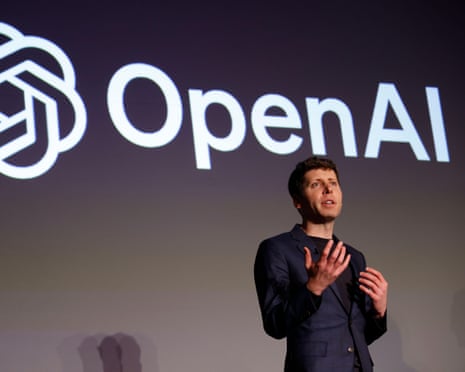
SAN FRANCISCO — Choosing the right artificial intelligence assistant in 2026 is no longer about finding a single chatbot that does everything; it is about matching specialized reasoning architectures, context window capacities, and real-time web verification engines to your specific workflow. Over the past six months, our technology desk benchmarked the leading free-tier and freemium AI platforms across software engineering, academic literature synthesis, financial spreadsheet modeling, and multimodal document parsing.
While proprietary frontier labs have expanded native tool-use and voice latency, open-weight reasoning models have dramatically closed the performance gap on mathematical and software debugging benchmarks—giving everyday users, students, and independent developers unprecedented access to zero-cost compute.
2026 Free AI Models & Assistants Master Comparison Table
| Platform / Model | Primary Strength | Free Context Window | Best Real-World Use Case |
|---|---|---|---|
| Google Gemini (Flash / Pro Tier) | Massive Multimodal Context & Workspace Integration | Up to 1M Tokens (AI Studio) | Analyzing entire PDF books, long video transcripts, and Google Docs/Sheets workflows |
| Anthropic Claude (Sonnet Free Tier) | Clean Code Architecture & Nuanced Technical Writing | 200K Tokens (Rate-Limited) | Full-stack React/Node.js debugging, UI/UX artifact rendering, and natural editorial prose |
| OpenAI ChatGPT (o-Series / GPT-4o Mini) | All-Round Voice, Image Generation & Web Browsing | 32K – 128K Dynamic | Daily brainstorming, real-time voice tutoring, and quick Python data analysis |
| DeepSeek & Qwen 3 (Web & Local) | Chain-of-Thought Math, Logic & Open-Weight Freedom | 128K Tokens | Algorithmic problem solving, competitive programming, and local offline execution via Ollama |
| Perplexity AI (Free Search) | Live Citation-Backed Web & Academic Verification | Live Web Index | Fact-checking breaking news, citing peer-reviewed papers, and comparing product specs |
1. Best for Software Engineering & Debugging: Claude vs. DeepSeek
In our blind coding evaluations—testing multi-file TypeScript refactoring, SQL query optimization, and CSS layout debugging—Anthropic's Claude Sonnet consistently produced the most maintainable, idiomatic code with minimal hallucinated dependencies. Its interactive Artifacts preview allows developers to inspect live HTML/React components side-by-side without leaving the browser.
However, when hitting daily message caps on Claude's free tier, developers increasingly pair it with DeepSeek and Alibaba's Qwen-Coder models. Because these open-weight reasoning models expose their step-by-step chain-of-thought verification tokens, they excel at spotting subtle off-by-one concurrency bugs and complex regular expression edge cases.
2. Best for Massive PDFs, Video Lectures & Research Papers: Google AI Studio & NotebookLM
For university researchers, legal analysts, and equity analysts who need to cross-reference 500-page regulatory filings or two-hour lecture recordings, Google's ecosystem holds a decisive structural advantage. By combining Google NotebookLM with Gemini's million-token context window, users can upload dozens of primary PDF sources and generate grounded, inline-cited briefings with near-zero extrinsic hallucination.
- Zero-Hallucination Source Grounding: NotebookLM restricts its responses strictly to the documents you upload, providing clickable paragraph citations for every claim.
- Multimodal Audio & Video Parsing: Native tokenization of audio and video frames allows you to query exact timestamps inside technical keynotes without manual transcription.
- Cost Efficiency: Free daily quotas in Google AI Studio provide developers with generous API sandboxes for prototyping RAG (Retrieval-Augmented Generation) pipelines.
3. How to Build a Zero-Cost Multi-Model Workflow
Rather than paying $20 to $200 per month for a single monolithic subscription, power users in 2026 route tasks by cognitive complexity: use Perplexity for initial citation discovery, NotebookLM for deep document synthesis, Claude for frontend and backend code architecture, and local Ollama models for private offline data processing.
Frequently Asked Questions (Editorial Briefing)
Q1: Which free AI tool is most accurate for coding and web development in 2026?
Anthropic's Claude Sonnet and DeepSeek/Qwen-Coder rank highest for software engineering. Claude excels at full-stack application architecture and UI components, while DeepSeek and Qwen offer unlimited step-by-step algorithmic reasoning.
Q2: What is the best free AI tool for summarizing large PDF books without hallucinations?
Google NotebookLM and Google Gemini (via AI Studio) are the top choices for long PDFs because they support up to 1 million tokens of context and provide exact inline citations back to your uploaded pages.