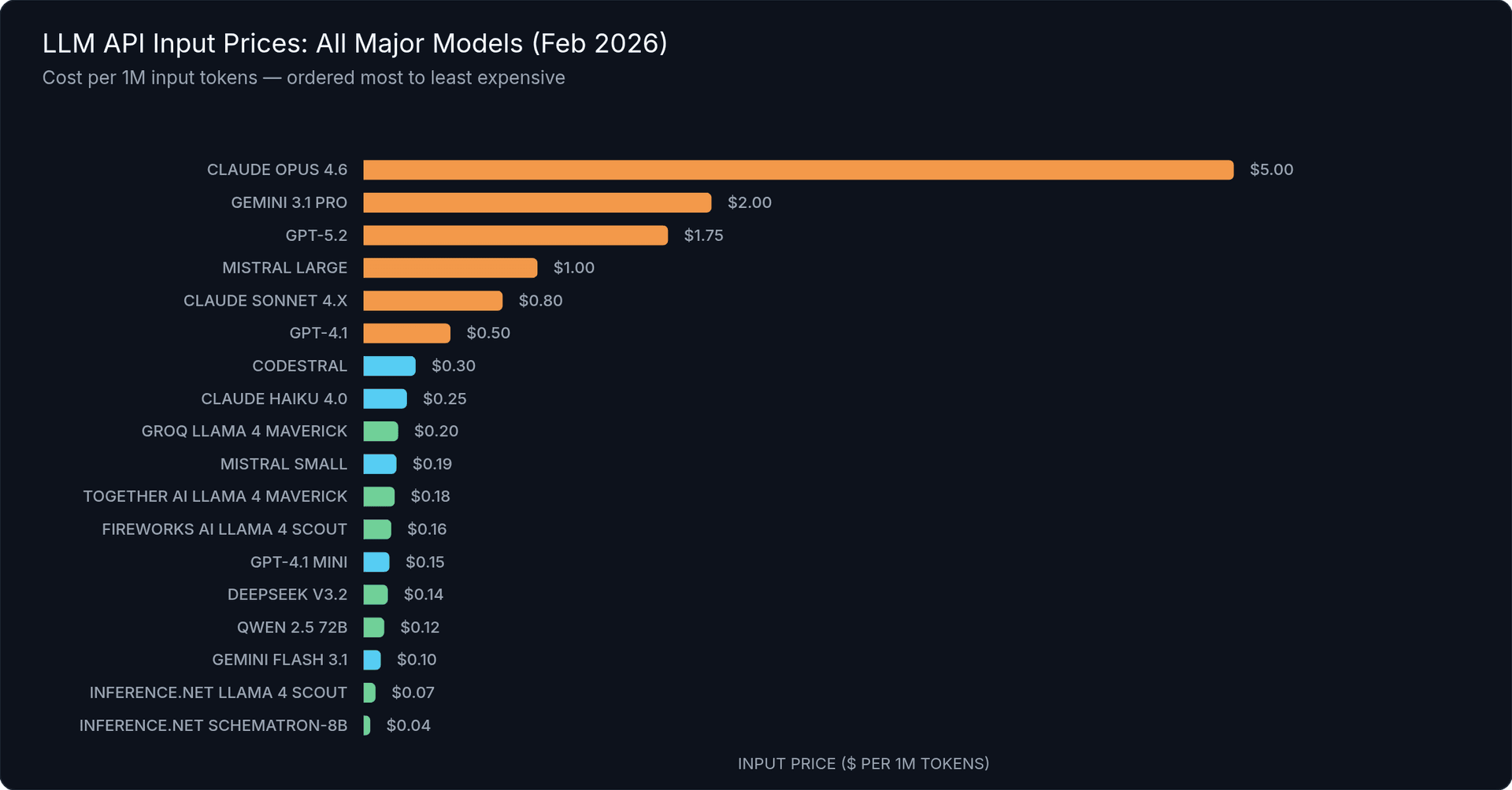
A quiet, brutal price war is reshaping the balance of power in Silicon Valley and global boardroom dynamics. Over the past eighteen months, the cost of raw machine intelligence has undergone a deflationary collapse reminiscent of the early semiconductor cycles. Analysis of the primary market data tracking launch prices of more than 160 Large Language Models (LLMs) across 15+ major providers reveals that the unit economics of generative AI have plummeted by up to 99% for equivalent tiers of reasoning.
What began as an elite arms race dominated by proprietary gatekeepers has transformed into a high-volume, low-margin utility market. For enterprise chief financial officers, capital allocation strategies, and technology buyers, this structural shift has transformed generative AI from a cost-prohibitive experiment into a highly scalable, economically viable operational layer. However, for the venture capital firms pouring billions into proprietary foundation models at staggering valuation multiples, this deflationary trajectory raises a troubling question: is the underlying technology of the cognitive revolution being commoditized before founders can even build defensible moats?
Executive Takeaways
- Deflationary Collapse: High-performance LLM input and output token costs have declined by up to 99% since the release of early proprietary flagship models in 2023, driven by architectural innovations and intense market competition.
- Commoditization via Open-Weights: The rise of highly competitive open-weights alternatives, such as Meta’s Llama 3.1 suite and Mistral Large 2, has stripped proprietary API providers of their pricing power, sparking a pricing race to the bottom among third-party inference engines.
- Hyperscaler Loss-Leaders: Cloud giants are leveraging rock-bottom LLM pricing as a strategic funnel to secure high-margin cloud compute architecture, data storage, and enterprise software ecosystem lock-in.
- Shift to TCO and ROI: Enterprise decision-makers are pivoting from simplistic per-token API cost comparisons to comprehensive Total Cost of Ownership (TCO) frameworks, assessing latency, custom fine-tuning, data privacy, and multi-tenant GPU orchestration.
The Catalytic Events Behind the Pricing Death Spiral

In March 2023, OpenAI’s GPT-4 set the gold standard for high-tier cognitive tasks. At its launch, however, the model carried a premium price tag: $30.00 per million input tokens and $60.00 per million output tokens. For enterprise buyers designing agentic workflows requiring millions of continuous context loops, the unit economics were challenging to justify. It presented a structural barrier to achieving a positive enterprise ROI, confining generative AI to low-volume pilot programs.
The first catalyst for change was Meta’s strategic pivot. By open-sourcing the weights of the Llama series, Meta effectively shifted the industry's economic baseline. Because developers could now host comparable models on their own private cloud compute architectures, proprietary API providers could no longer command monopolistic premiums. This open-source pressure forced a wave of developer migration toward highly optimized, low-cost alternatives.
The second catalyst was the rapid evolution of model architecture. The industry transitioned from massive, dense monolithic architectures to Mixture of Experts (MoE) frameworks. MoE models, such as Google’s Gemini 1.5 Pro and Mistral Large, only activate specialized subsets of their parameter pathways for any given token query. This dramatically lowers the FLOPS (Floating Point Operations Per Second) required per inference pass, enabling providers to slash pricing without sacrificing gross margin profiles.
Finally, a fierce price war erupted among specialized inference-as-a-service platforms. Providers like DeepInfra, Together AI, Groq, and Fireworks AI began hosting open-weights models on hyper-optimized hardware configurations. Operating on razor-thin infrastructure margins, these platforms started undercutting proprietary APIs by offering Llama and Qwen models at fractions of a cent per million tokens. This forced proprietary leaders like OpenAI and Anthropic to introduce specialized, lighter-weight models—namely GPT-4o mini and Claude 3.5 Haiku—at aggressively low price points to protect their market share and developer ecosystems.
Analyzing the Top 15+ LLM Providers and Key Configurations
To understand the current economic landscape of generative AI, we must analyze the market across three distinct segments: elite proprietary models, mid-tier workhorses, and open-weights alternatives hosted by competitive third-party inference providers.
The following verified data matrix compiles the real-world costs per million tokens, context windows, and primary deployment environments for key models in the current market.
| Model Name | Primary Provider / Host | Model Category | Input Price (per 1M Tokens) | Output Price (per 1M Tokens) | Context Window (Tokens) |
|---|---|---|---|---|---|
| GPT-4o | OpenAI | Proprietary Frontier | $2.50 | $10.00 | 128,000 |
| GPT-4o mini | OpenAI | Proprietary Lightweight | $0.150 | $0.600 | 128,000 |
| Claude 3.5 Sonnet | Anthropic / AWS Bedrock | Proprietary Frontier | $3.00 | $15.00 | 200,000 |
| Claude 3.5 Haiku | Anthropic / Google Vertex | Proprietary Lightweight | $0.800 | $4.000 | 200,000 |
| Claude 3 Opus | Anthropic | Proprietary Legacy | $15.00 | $75.00 | 200,000 |
| Gemini 1.5 Pro | Google Cloud | Proprietary Frontier | $1.25 | $5.00 | 2,000,000 |
| Gemini 1.5 Flash | Google Cloud | Proprietary Lightweight | $0.075 | $0.300 | 1,000,000 |
| Llama 3.1 405B | Meta (via DeepInfra) | Open-Weights Frontier | $1.00 | $1.00 | 128,000 |
| Llama 3.1 405B | Meta (via Together AI) | Open-Weights Frontier | $2.66 | $2.66 | 128,000 |
| Llama 3.1 70B | Meta (via Groq) | Open-Weights Mid-Tier | $0.590 | $0.790 | 128,000 |
| Llama 3.1 8B | Meta (via DeepInfra) | Open-Weights Edge | $0.055 | $0.055 | 128,000 |
| Mistral Large 2 | Mistral AI | Commercial Open-Weights | $2.00 | $6.00 | 128,000 |
| Command R+ | Cohere (via AWS) | Enterprise Proprietary | $2.50 | $10.00 | 128,000 |
| Qwen 2.5 72B | Alibaba (via Together AI) | Open-Weights Mid-Tier | $0.400 | $0.400 | 32,000 |
| DeepSeek-V2.5 | DeepSeek API | Proprietary MoE | $0.140 | $0.280 | 128,000 |
Industry & Market Implications: Who Wins and Who Loses?
The structural transformation of LLM pricing is triggering a profound realignment of capital across the global technology ecosystem. As unit costs drop, the competitive moats of foundation model builders are showing signs of wear, while downstream applications are capturing a larger share of the economic value.
1. Capital Allocation and the Squeeze on Proprietary Moats
For venture capital firms backing proprietary model developers, these economics present a challenging calculus. To justify multi-billion-dollar valuation multiples, these companies must defend high-margin SaaS revenue streams. However, with open-weights models narrowing the performance gap and third-party inference providers driving costs down, proprietary developers are losing their pricing leverage. To stay competitive, they are forced to lower prices, shortening their cash runways and increasing their reliance on continuous funding rounds from corporate backers.
2. The Downstream Winners: Enterprise Application Layer
Conversely, downstream enterprise software developers are experiencing a surge in gross margins. Startups and legacy software vendors that integrate generative AI into their products no longer face prohibitive variable costs. Lower token pricing allows them to offer richer AI features within standard subscription tiers, improving their enterprise ROI and accelerating customer adoption without eroding their own profitability.
3. Hyperscalers and the Cloud Compute Play
The primary winners of this pricing race are the cloud hyperscalers—namely Microsoft Azure, Amazon Web Services (AWS), and Google Cloud Platform (GCP). For these giants, LLM tokens function as a high-intent marketing funnel. They are comfortable offering proprietary and open-weights models at or near cost because the underlying workloads drive massive demand for high-margin cloud infrastructure: vector databases, enterprise-grade security tools, data pipelines, and raw GPU/TPU compute nodes.
People Also Ask (Frequently Asked Questions)
What is the difference between input and output token pricing, and why does it matter?
Input tokens represent the data sent to the model (user prompts, system instructions, and retrieved context), while output tokens are the generated response. Output tokens are priced significantly higher—often 3 to 4 times more than input tokens—because their generation requires sequential compute passes that are computationally expensive. System architects must carefully manage this asymmetry, design concise agent instructions, and limit output lengths to keep operational costs predictable.
How do open-weights models hosted on third-party inference engines compare to proprietary APIs?
Open-weights models like Meta's Llama 3.1 405B, when hosted on optimized third-party engines like DeepInfra or Together AI, often deliver comparable reasoning capabilities to proprietary models like GPT-4o at a fraction of the cost. These specialized providers optimize their serving stacks for raw throughput and lower latency, allowing them to pass operational savings directly to developers. However, proprietary APIs still tend to lead in specialized areas like multilingual tasks, advanced agent tool-calling, and managed SLA support.
What hidden costs should enterprise architects consider beyond API token prices?
While API token prices provide a straightforward point of comparison, they represent only a portion of the Total Cost of Ownership (TCO). Organizations must also account for:
- Network Latency: Multi-region API calls can add delays that impact user experience.
- Data Egress and Security: Moving sensitive corporate data across public APIs can introduce regulatory risks and compliance costs.
- Fine-Tuning: Hosting, training, and updating custom weights requires dedicated engineering hours and specialized compute resources.
- System Reliability: Unpredictable rate limits and platform downtime can disrupt core business operations.
How does context window size affect the total cost of ownership (TCO)?
Modern LLMs offer massive context windows, with some supporting up to 2 million tokens. While this enables systems to process entire codebases or dense legal documents in a single query, processing large contexts significantly increases input token costs. Because input fees scale linearly with the length of the prompt, routinely filling a 1-million-token context window can quickly lead to substantial hosting bills, making efficient Retrieval-Augmented Generation (RAG) pipelines essential for cost control.
Future Outlook: What Comes Next and Key Milestones to Watch
As the primary LLM pricing landscape stabilizes, the next structural shift will likely focus on compute-equivalent pricing rather than simple token counts. With the rise of reasoning models that generate hidden "thinking" tokens to solve complex problems, charging strictly for visible output tokens is becoming less practical. The industry is beginning to explore charging models based on computational complexity (FLOPs consumed) or successful outcome-based tasks.
At the same time, hardware innovation will continue to shape the cost structure. The rollout of next-generation accelerator architectures, such as NVIDIA’s Blackwell platform, promises to significantly lower the energy and infrastructure footprints of model serving. This hardware efficiency, combined with custom-built enterprise silicon, will likely push the marginal cost of standard language processing closer to zero.
For executive leadership, the strategic priority is shifting from cost reduction to value creation. As raw reasoning becomes a highly accessible utility, the primary source of competitive advantage is no longer the model itself. Instead, long-term enterprise value will belong to organizations that leverage their proprietary data networks, build specialized agentic workflows, and establish robust, secure system architectures that turn inexpensive intelligence into sustained business value.