Executive Takeaways
- Commercial Valuation Surge: India’s rapidly expanding space economy has scaled past the $9 billion threshold, currently commanding approximately 2% to 3% of the global market share, with projections pointing toward a $44 billion valuation by 2033.
- Capital Allocation & FDI Reform: The Indian government’s structural pivot—allowing up to 100% Foreign Direct Investment (FDI) under liberalized pathways—has unlocked institutional venture capital and private equity deployment across downstream and upstream aerospace infrastructure scalability.
- The 2035 Horizon: The Indian Space Research Organisation (ISRO) has cemented a concrete, phased roadmap targeting an operational Bharatiya Space Station by 2035 and an independent crewed lunar landing by 2040.
- Enterprise ROI & Supply Chain Disruption: By weaponizing extreme frugality and proprietary launch vehicle architectures (LVM3, PSLV), Indian spacetech startups are undercutting global launch-service providers by up to 50%, forcing legacy Western aerospace contractors to re-evaluate their enterprise cost structures.
The Paradigm Shift: From Sovereign Science to Market Liquidity
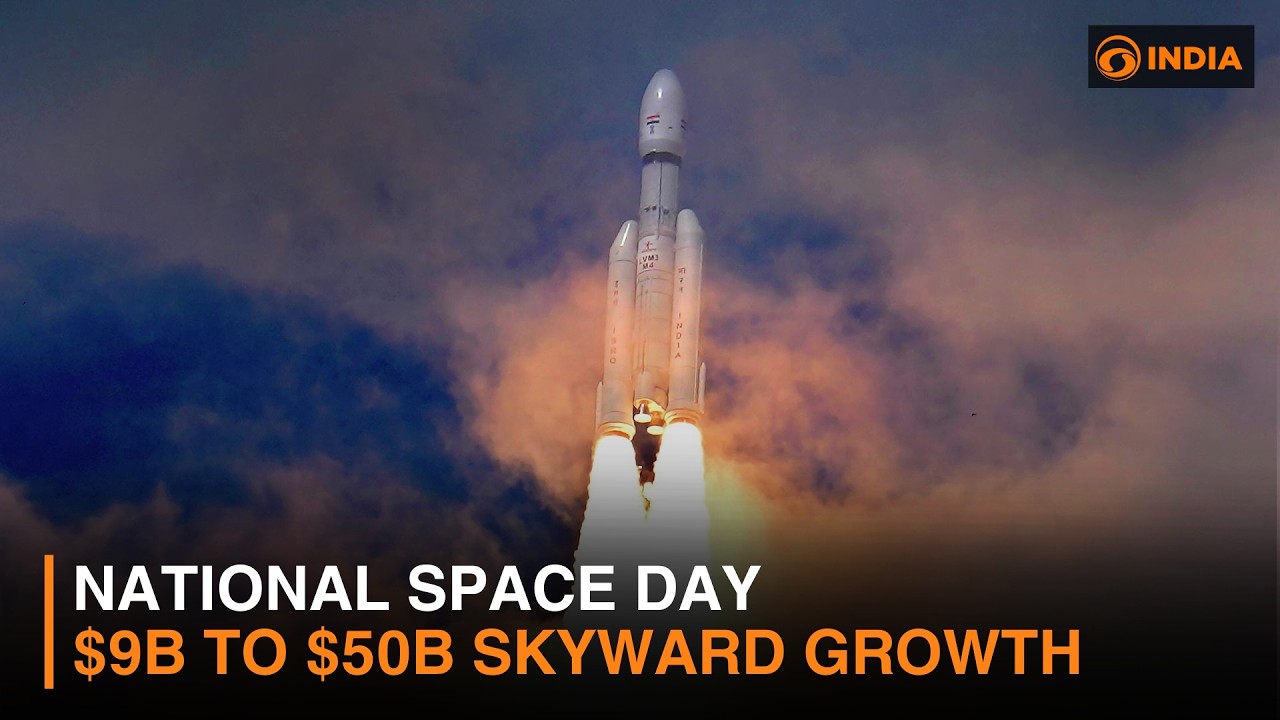
For decades, the narrative surrounding India’s space program was defined by improbable frugality and singular sovereign milestones. When the Indian Space Research Organisation (ISRO) successfully inserted the Chandrayaan-3 spacecraft into the lunar south pole’s orbit on National Space Day, it did so on a budget that was famously lower than the production cost of Hollywood sci-fi thrillers. However, behind the triumphs of national prestige, a profound structural transformation was quietly taking place within New Delhi's policy corridors. The true story of India’s space sector is no longer merely about scientific discovery; it is about the calculated financialization of low-Earth orbit (LEO) and deep-space logistics.
Today, India's space economy stands at a formidable $9 billion valuation. More importantly, it is no longer a monolith controlled exclusively by government bureaucrats. Through the establishment of IN-SPACe (Indian National Space Promotion and Authorization Centre)—the apex single-window regulatory compliance and promotion agency—India has dismantled the state monopoly that governed its aerospace sector since its inception. This regulatory unbundling has acted as a powerful market catalyst, drawing private equity, venture capital, and institutional risk mitigation strategies into an arena once reserved strictly for state treasuries.
Unlocking Private Capital: The FDI Policy Revolution

The catalytic event that altered the risk-reward matrix for global investors occurred when the Union Cabinet amended the Foreign Direct Investment (FDI) policy for the space sector. Under the revised framework, 100% FDI is now permitted in components, systems, and sub-systems for satellites, ground segments, and user terminals—with specific entry routes open for satellite manufacturing, launch vehicles, and spaceports.
This regulatory clarity has triggered an influx of capital allocation from global venture syndicates. Enterprise ROI models that previously stalled due to regulatory ambiguity are now accelerating. Indian spacetech startups—ranging from rocket developers like Skyroot Aerospace and Agnikul Cosmos to satellite constellation builders like Pixxel—are securing robust funding rounds. These firms are leveraging domestic cloud compute architecture, advanced additive manufacturing (3D-printed rocket engines), and localized supply chain ecosystems to compress development timelines and reduce valuation multiples relative to their Western counterparts.
Upstream vs. Downstream: The Composition of the $9 Billion Market
A granular dissection of India’s $9 billion space economy reveals that the downstream sector—comprising satellite communications (SatCom), Earth observation (EO) analytics, navigation, and location-based enterprise services—accounts for the lion's share of current revenues. Agricultural tech, maritime logistics, disaster management, and fintech applications are increasingly reliant on geospatial intelligence generated by ISRO’s remote-sensing constellations.
Conversely, the upstream sector—launch vehicles, spacecraft manufacturing, and propulsion systems—is experiencing hyper-growth as private entities transition from drawing boards to launchpads. The commercialization of the Small Satellite Launch Vehicle (SSLV) and the heavy-lift Launch Vehicle Mark-3 (LVM3) provides ISRO’s commercial arm, NewSpace India Limited (NSIL), with unprecedented market liquidity, enabling it to aggressively bid for international multi-satellite launch contracts.
ISRO’s Long Flight Plan to 2035: Strategic Milestones
Looking past the immediate milestones, ISRO’s strategic blueprint extends deep into the 21st century. Prime Minister Narendra Modi’s directive for the agency's long-term roadmap has introduced concrete, non-negotiable temporal benchmarks that dictate capital expenditures and technological R&D allocations:
- The 2028 Orbital Laboratory: Interim precursor missions to test life-support systems, docking mechanisms, and microgravity manufacturing in low-Earth orbit.
- The 2035 Bharatiya Space Station: A modular, permanently crewed indigenous space station positioned in LEO to serve as a hub for scientific research, space tourism, and microgravity industrial processing.
- The 2040 Lunar Touchdown: An autonomous and crewed mission to land Indian astronauts on the lunar surface, establishing a permanent scientific outpost.
Verified Data & Metrics Breakdown
To evaluate the velocity of India’s aerospace sector, financial analysts track several core operational and macroeconomic metrics. The table below outlines the trajectory of India's space economy from legacy operations to projected 2033 targets:
| Metric / Indicator | Baseline (Legacy Era) | Current Status (Present) | Projected Target (2033–2035) |
|---|---|---|---|
| Total Space Economy Valuation | $2.5 Billion – $3 Billion | ~$9 Billion | $44 Billion |
| Global Market Share | < 1% | 2% – 3% | 8% – 10% |
| Private Spacetech Startups | < 10 (State-dependent) | 250+ Registered Entities | 1,000+ Enterprise Ecosystem |
| FDI & Regulatory Framework | Restricted / Government Only | Up to 100% FDI (Liberalized) | Fully Integrated Global Hub |
Industry & Market Implications: Who Wins, Who Loses
The rapid industrialization of India’s space sector creates distinct economic winners and structural losers across the global financial landscape.
The Winners: Global telecommunications firms and satellite operators stand to benefit immensely from lower launch-service costs and expanded orbital capacity. Indian engineering talent, domestic semiconductor fabricators, and specialized materials suppliers are positioned for exponential top-line growth. Furthermore, venture capital funds targeting emerging market deep-tech are securing early-stage equity stakes in companies that are poised to dominate the high-margin small-satellite delivery market.
The Losers: Legacy Western launch providers who rely heavily on inflated cost-plus government procurement models face severe competitive pressure. As ISRO and private Indian startups demonstrate the ability to execute orbital insertions at a fraction of traditional costs, legacy contractors will be forced to compress their operating margins or accelerate their own R&D restructuring to remain commercially viable.
Frequently Asked Questions (People Also Ask)
Q: What is the current valuation of India's space economy, and what are the growth projections?
A: India's space economy is currently valued at approximately $9 billion, commanding roughly 2% to 3% of the global market share. Backed by aggressive policy reforms, liberalized FDI, and private sector participation, government and industry projections estimate the market will surge to $44 billion by 2033.
Q: How does IN-SPACe facilitate private investment in India's aerospace sector?
A: Established as an independent single-window nodal agency under the Department of Space, IN-SPACe acts as a bridge between ISRO and private entities. It authorizes space activities, shares state-owned infrastructure, provides regulatory compliance oversight, and enables private startups to leverage decades of ISRO research and testing facilities.
Q: What are the primary objectives of ISRO's long flight plan leading up to 2035?
A: ISRO’s long-term roadmap focuses on crewed spaceflight and permanent orbital infrastructure. Key milestones include uncrewed and crewed precursor missions under the Gaganyaan program, the establishment of the indigenous Bharatiya Space Station in low-Earth orbit by 2035, and an independent crewed lunar landing targeted for 2040.
Q: How has the recent FDI policy change impacted Indian spacetech startups?
A: The government's amendment permitting up to 100% Foreign Direct Investment in satellite manufacturing, launch vehicles, and ground systems has removed critical regulatory bottlenecks. This has unlocked institutional venture capital, enabled cross-border technology partnerships, and accelerated capital allocation for upstream and downstream aerospace ventures.
Future Outlook: Key Milestones to Watch
As India prepares for its next fiscal and technological cycles, the intersection of national security, commercial enterprise, and deep-space exploration will dictate the maturation of its aerospace sector. Investors and market analysts must monitor upcoming uncrewed orbital test flights under the Gaganyaan human spaceflight initiative, the operationalization of the Small Satellite Launch Vehicle (SSLV) transfer to private industry consortiums, and the regulatory evolution of satellite broadband spectrum allocation.
What began as an improbable endeavor in the rural fields of Thumba has successfully evolved into a sophisticated, market-driven economic engine. India is no longer merely participating in the space race—it is actively redefining the economics of the cosmos.