Executive Takeaways
- Unprecedented Scale: Driven by a compound annual growth rate (CAGR) of 13.8%, the global cybersecurity market is projected to expand from approximately $289.4 billion in 2026 to an unprecedented $552.35 billion by 2031.
- Capital Allocation Restructuring: Enterprise risk mitigation is transitioning from a cost-center line item to a critical driver of valuation multiples. Boardrooms are allocating larger shares of capital to zero-trust architectures and automated SecOps to preserve enterprise ROI.
- The AI Threat Multiplier: Generative AI and automated offense capabilities utilized by state-sponsored actors are rendering legacy, signature-based security systems obsolete, forcing a massive migration toward cloud-native, behavior-analytic platforms.
- Regulatory Imperatives: Strict compliance protocols globally, including the SEC’s cyber incident disclosure mandates and Europe's NIS2 directive, are driving non-discretionary compliance spending across critical infrastructure, healthcare, and financial services.
The Anatomy of a $552.35 Billion Market: Driving Force and Catalytic Events
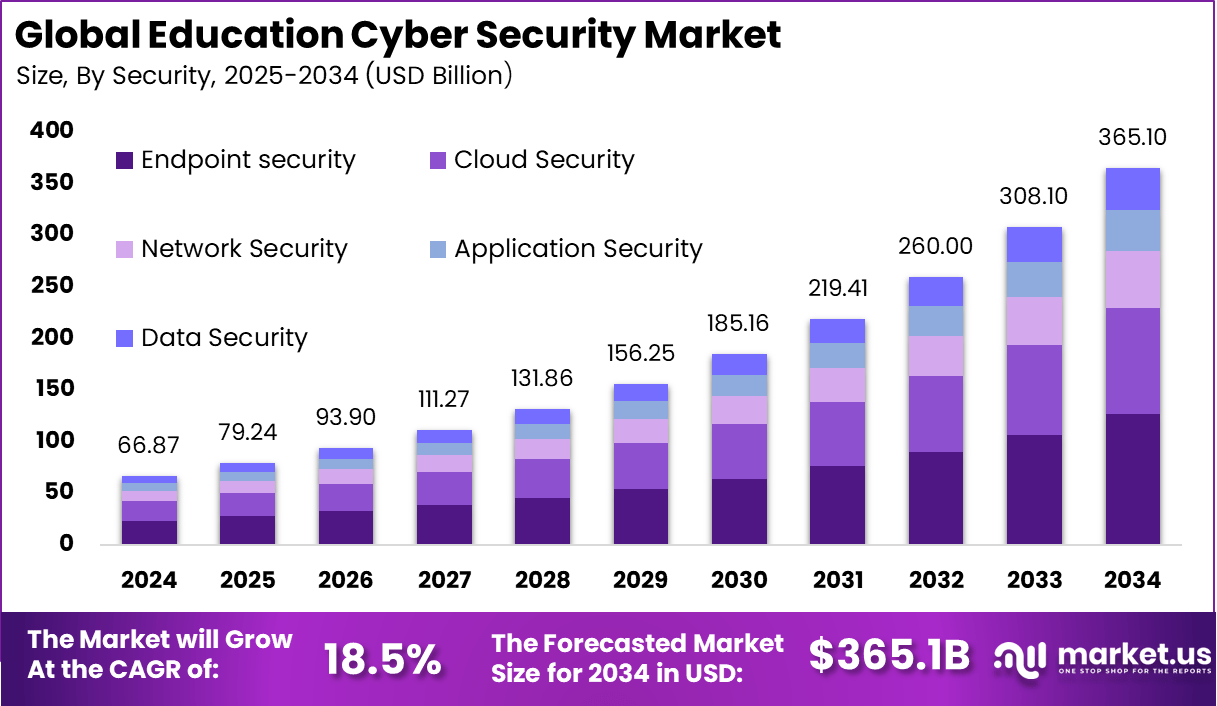
As the global economy becomes increasingly digitized, the boundary between corporate enterprise and sovereign security has dissolved. According to a landmark market intelligence report syndicated via GlobeNewswire, the global cybersecurity market is on a trajectory to reach $552.35 billion by 2031, expanding at a robust CAGR of 13.8%. This massive capital influx is not merely an incremental upgrade of existing software firewall licenses. It represents a fundamental, structural reorganization of how corporate enterprises, sovereign entities, and financial institutions defend their digital assets and operational continuity.
Historically, cybersecurity spending was treated as defensive insurance—a grudging capital expenditure designed to minimize downside risk. In 2026, that paradigm has shifted entirely. Today, robust cybersecurity is a prerequisite for enterprise valuation premium, market liquidity, and capital allocation strategy. Companies with vulnerable cloud compute architectures are penalized with depressed valuation multiples, while those demonstrating proactive, resilient cyber postures command a lower cost of capital and higher trust among institutional investors.
Two primary catalysts are driving this 13.8% CAGR. First is the weaponization of generative artificial intelligence by sophisticated cyber-cartels and nation-state actors. The velocity, volume, and customization of modern phishing, ransomware, and social engineering attacks have completely overwhelmed legacy, human-monitored Security Operations Centers (SOCs). Second is the rapid migration of legacy workloads to hybrid and multi-cloud environments. As corporations deploy complex microservices across heterogeneous cloud providers, the attack surface expands exponentially. Secure Access Service Edge (SASE), Zero Trust Network Access (ZTNA), and Cloud Native Application Protection Platforms (CNAPP) are no longer luxury frameworks—they are foundational necessities for modern business execution.
From Cost Center to Boardroom KPI: The Financialization of Cybersecurity
For Chief Financial Officers and institutional asset managers, the strategic priority of cyber spend has reached the highest levels of governance. The modern boardroom views cybersecurity through the lens of business continuity, asset protection, and regulatory compliance. Under new regulatory architectures globally, failure to maintain state-of-the-art security postures can result in direct personal liability for corporate officers, significant regulatory fines, and catastrophic brand erosion.
This reality has redefined enterprise ROI calculations. CIOs are increasingly forced to justify tech stack investments by demonstrating how their cloud compute architectures mitigate third-party vendor risks. Consequently, vendor consolidation is accelerating. Rather than managing 30 distinct point-solution security products, enterprises are allocating their capital to unified platforms that deliver comprehensive visibility across endpoints, identity, network, and cloud workloads. This shift is fueling hyper-growth among tier-1 cybersecurity software providers, yielding highly sticky Annual Recurring Revenue (ARR) streams and robust EBITDA margins that attract immense interest from private equity and venture capital firms.
Evaluating the Cyber Defense Ecosystem: 2026 vs. 2031
The transition toward the $552.35 billion endpoint in 2031 is marked by distinct shifts in where security capital is being deployed. Legacy, perimeter-based defenses are shrinking as a percentage of total spend, while identity protection, cloud security, and AI-driven automation absorb the lion's share of new budgets.
| Market Segment / Metric | Estimated Valuation (2026) | Projected Valuation (2031) | Primary Tech Drivers & Architectural Focus | Key Compliance & Risk Considerations |
|---|---|---|---|---|
| Cloud Security & CNAPP | $72.4 Billion | $158.2 Billion | Multi-cloud visibility, Kubernetes security, microservices protection, infrastructure-as-code scanning. | GDPR, HIPAA, and sovereign cloud data residency mandates. |
| Identity & Access Management (IAM / ZTNA) | $58.1 Billion | $118.5 Billion | Biometric authentication, continuous adaptive trust, privilege access management, decentralized identity. | Prevention of credential stuffing, session hijacking, and insider threats. |
| AI-Powered SecOps & XDR | $45.8 Billion | $102.7 Billion | Autonomous threat hunting, machine learning threat detection, automated incident response playbooks. | Rapid mitigation of zero-day exploits; reduction in Mean Time to Detect (MTTD). |
| Data Privacy & Governance | $38.5 Billion | $81.4 Billion | Homomorphic encryption, tokenization, automated data discovery, secure data pipeline management. | SEC cyber disclosure rules, European NIS2 directive, CCPA/CPRA. |
| Other (Network, Endpoint, OT/IoT Security) | $74.6 Billion | $91.55 Billion | Industrial Control Systems (ICS) protection, secure hardware enclaves, edge security. | Mitigation of critical infrastructure disruption and supply chain vulnerabilities. |
Industry & Market Implications: Winners, Losers, and the Capital Allocation Playbook
In this high-stakes security landscape, a clear divergence is emerging between market leaders and legacy operators. The clear winners of this $552.35 billion cycle are the consolidated enterprise security platforms. Giants such as Palo Alto Networks, CrowdStrike, Microsoft, and Cloudflare are successfully leveraging their massive data lakes and platform integration advantages to capture larger shares of corporate IT budgets. By offering cross-domain correlation—linking identity context with endpoint telemetry and network traffic—these platform players deliver superior risk mitigation compared to disjointed, best-of-breed toolsets.
Conversely, legacy software vendors that rely on static, signature-based defense systems are facing structural decline. Point-solutions that fail to integrate cleanly via open APIs into broader security orchestrators are losing market share. Private equity firms are aggressively acquiring these undervalued legacy assets, hoping to restructure them, integrate AI features, and exit at higher valuation multiples in a highly liquid M&A environment.
From an investment perspective, public and private market liquidity remains highly concentrated around companies exhibiting strong Net Retention Rates (NRR) and high ARR visibility. As enterprise risk mitigation becomes directly tied to credit ratings and corporate insurance premiums, cybersecurity has evolved into a highly defensive, non-discretionary software vertical, protecting it from broader macroeconomic contractions.
People Also Ask (FAQ)
Why is the cybersecurity market expected to reach $552.35 billion by 2031?
The expansion is driven by a convergence of high-velocity threat vectors and fundamental structural shifts in enterprise technology. Key factors include the exponential rise of generative AI-powered cyberattacks, rapid corporate migration to complex multi-cloud environments, the proliferation of IoT and operational technology endpoints, and increasingly stringent global regulatory mandates that impose severe financial and personal penalties for data breaches and security failures.
How does modern cybersecurity spend impact enterprise valuation and cost of capital?
Institutional investors and credit rating agencies now evaluate cyber risk as a core material factor. A robust, audited security posture lowers an organization’s risk profile, leading to cheaper cyber insurance premiums, improved debt ratings, and premium valuation multiples during public offerings or M&A transactions. Conversely, organizations with weak cyber defense architectures face discounted valuations and potential exclusion from high-value government and enterprise supply chains.
What is the role of Artificial Intelligence in the 13.8% CAGR forecast?
Artificial Intelligence acts as both a primary threat driver and the core solution. Cyber criminals leverage generative AI to automate sophisticated malware creation and launch highly targeted attacks at scale. To counter this, enterprises are allocating significant capital to AI-driven security platforms that analyze petabytes of telemetry in real-time, enabling autonomous threat detection and immediate mitigation without human intervention.
Which industries are contributing most to this market expansion?
While all sectors are increasing cyber budgets, critical infrastructure, healthcare, financial services, and defense technology lead the capital deployment. These industries manage highly sensitive personal data and operational technologies, making them prime targets for ransomware syndicates and state-sponsored cyber warfare campaigns. Regulatory compliance guidelines in these sectors make security spending strictly non-discretionary.
Future Outlook: The Next Milestones in Global Cyber Hegemony
Looking toward the 2031 horizon, the global cybersecurity landscape will undergo further structural revolutions. The imminent threat of quantum computing, capable of breaking modern asymmetric encryption standards, is already forcing forward-looking enterprises to allocate capital toward post-quantum cryptography (PQC). Over the next five years, the transition to quantum-resistant security protocols will trigger a massive, multi-billion-dollar upgrade cycle across financial infrastructure, defense networks, and sovereign data systems.
Simultaneously, we will see the rise of the fully autonomous Security Operations Center (SOC). By 2030, human security analysts will transition from front-line triage to strategic system orchestrators, with AI agents handling 99% of threat detection, correlation, and active containment. As enterprise risk mitigation becomes entirely automated, the organizations that invest heavily today in foundational cloud compute architectures, robust data governance, and integrated platform security will emerge as the resilient, high-valuation leaders of the global digital economy.