
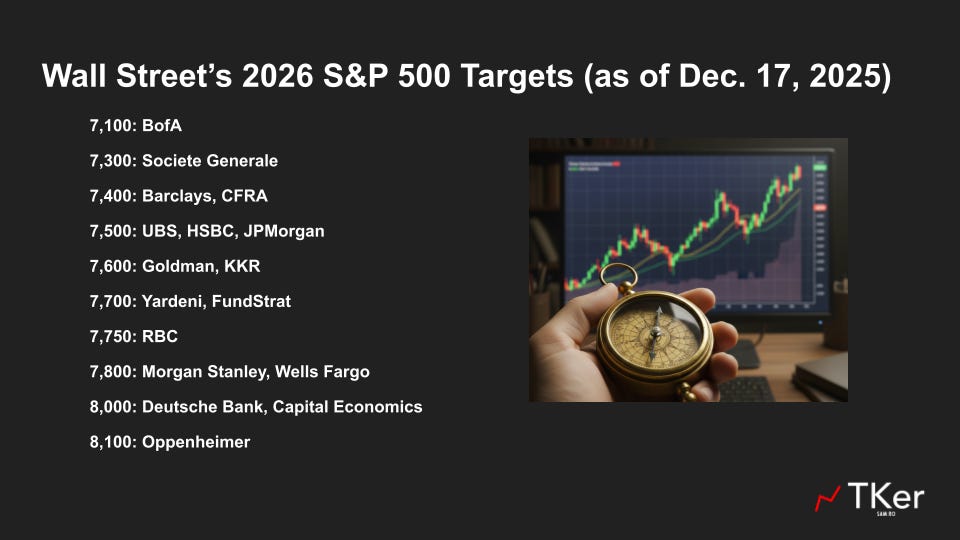
Executive Takeaways
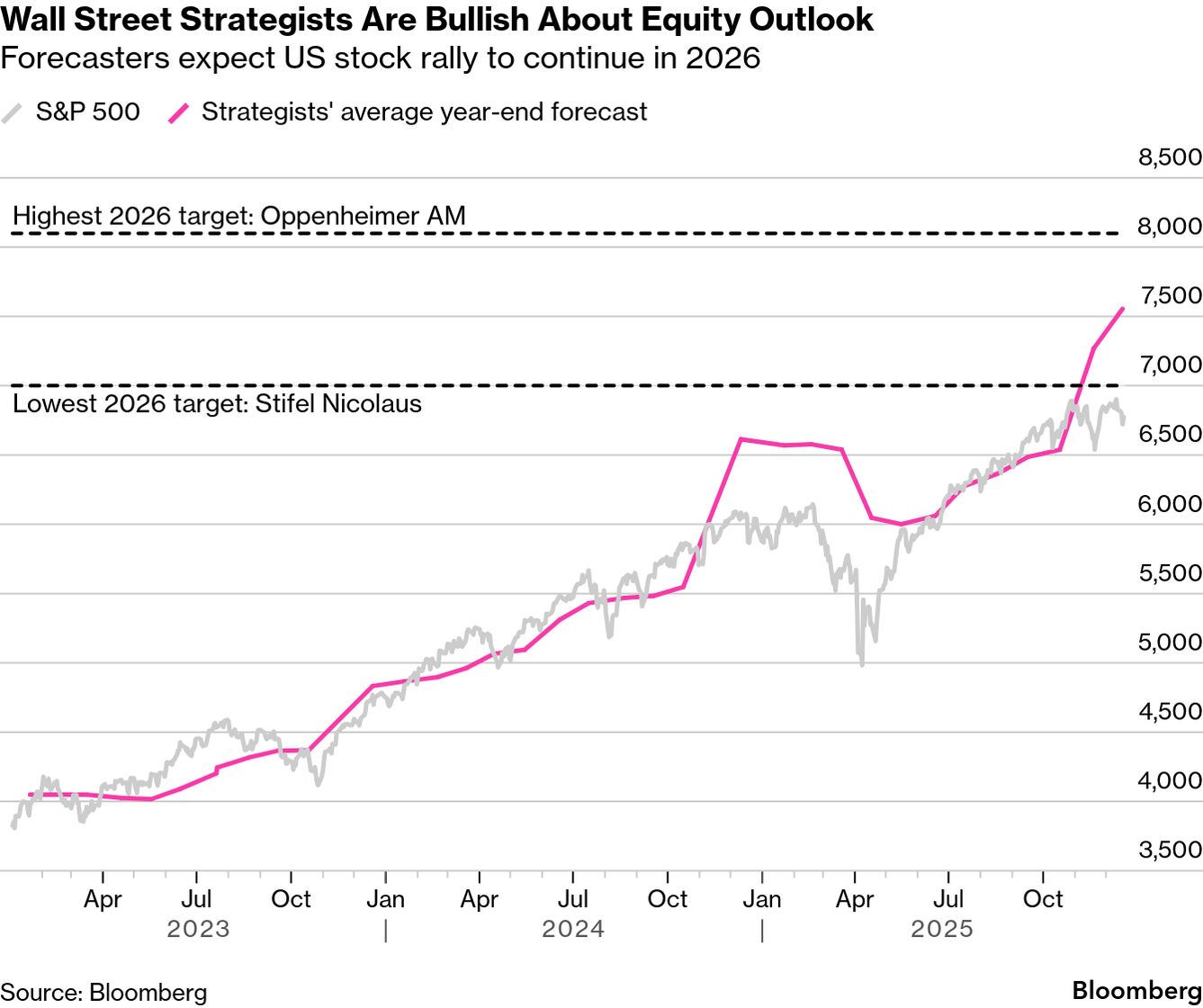
- Cautious Bullishness: Institutional strategists anticipate continued equity market gains through 2026, though forward returns are expected to moderate compared to historical post-correction surges.
- The AI CapEx Reckoning: Enterprise ROI pressures on massive artificial intelligence infrastructure investments are forcing boardrooms to scrutinize cloud compute architecture and hardware payback periods.
- Elevated Volatility: Market liquidity adjustments, shifting central bank balance sheet dynamics, and regulatory compliance shifts are projected to sustain higher intraday and intermonth volatility.
- Capital Allocation Pivots: Portfolio managers are actively rotating away from hyper-concentrated mega-cap growth allocations toward defensive value, industrial automation, and high-yield credit instruments.
NEW YORK — As Wall Street trading desks wind down the final sessions of 2025, investment committees across Lower Manhattan and Mayfair are finalizing their playbooks for the year ahead. The consensus narrative heading into 2026 is one of measured optimism: corporate earnings are projected to expand, macroeconomic soft-landing indicators remain resilient, and global liquidity continues to find its way into risk assets. Yet, beneath the veneer of persistent market highs, an undercurrent of institutional anxiety is palpable. Chief risk officers and quantitative strategists warn that while the equity bull market retains structural momentum, the margin for error has narrowed considerably.
The primary catalyst for this bifurcated sentiment lies in the maturation of the artificial intelligence trade. Having driven the lion's share of market capitalization gains over the past three years, the tech sector now faces an exacting valuation test. Investors are no longer rewarding speculative infrastructure announcements or sprawling data center blueprints; instead, they are demanding concrete enterprise ROI, scalable monetization models, and verifiable proof that multi-billion-dollar capital allocation strategies are translating into tangible bottom-line growth. As these economic realities intersect with shifting regulatory compliance frameworks and tightening credit conditions, 2026 is shaping up to be a year where stock selection and rigorous risk mitigation supersede passive, index-driven outperformance.
The Anatomy of the 2026 Outlook: Balancing Growth and Vulnerability
To understand the trajectory of stocks for 2026, one must examine the macroeconomic tightrope walk managed by global central banks over the previous 24 months. Following the aggressive monetary tightening cycles designed to curb post-pandemic inflation, monetary authorities have transitioned into a delicate calibration phase. Interest rate pathways, while stabilizing, remain elevated relative to the ultra-low regime of the 2010s. This shifting cost-of-capital environment has fundamentally altered corporate finance, separating capital-efficient enterprises from those reliant on cheap, continuous debt issuance.
Equity strategists note that corporate balance sheets remain generally robust, particularly within the S&P 500 large-cap tier. However, earnings dispersion is widening. While mega-cap technology firms continue to post dominant revenue figures, the rate of acceleration is moderating. This deceleration forces portfolio managers to reassess valuation multiples that currently price in near-flawless execution. Any disruption in cloud compute architecture supply chains, semiconductor manufacturing yields, or enterprise software adoption rates could trigger sharp sector-specific corrections, radiating outward into broader market indices.
Furthermore, geopolitical friction points—ranging from trade policy realignments to energy market volatility—inject continuous uncertainty into cross-border capital flows. Institutional risk models indicate that correlation breakdowns between asset classes could occur more frequently in 2026, making traditional diversification strategies harder to execute without active tactical adjustments.
Verified Data & Metrics Breakdown
| Metric / Parameter | 2024 Actual | 2025 Estimated (Full Year) | 2026 Projections (Consensus) |
|---|---|---|---|
| S&P 500 Earnings Growth (YoY) | ~9.5% | ~11.2% | 8.5% – 10.0% |
| Tech Sector CapEx Growth | +35% | +22% | +12% – +15% (Normalizing) |
| Average P/E Ratio (Forward S&P 500) | 21.5x | 22.8x | 20.5x – 22.0x |
| Implied Market Volatility (VIX Avg) | 15.2 | 16.8 | 18.0 – 21.0 (Elevated) |
Industry & Market Implications: Winners and Losers
The structural evolution of the market in 2026 will create distinct performance disparities across asset classes and corporate tiers. Understanding these dynamics is critical for institutional asset allocators and sophisticated retail investors alike.
The Winners: Infrastructure Efficiency & Value Realignment
- Enterprise Software and Application Layer Providers: As hardware buildouts reach a high watermark, companies successfully deploying proprietary, high-margin AI software applications will capture expanding profit margins.
- Industrial Automation and Advanced Manufacturing: Firms benefiting from supply chain reshoring and automation to counter labor cost inflation will see steady capital inflows.
- Select Value and Dividend Growth Equities: Sectors with robust free cash flow generation and reasonable valuation multiples will attract capital fleeing high-beta tech volatility.
The Losers: Speculative Infrastructure & Over-Leveraged Entities
- Sub-Scale AI Hardware Vendors: Companies lacking proprietary intellectual property or deep ecosystem integration will suffer margin compression as hardware commoditization accelerates.
- Debt-Dependent Business Models: Firms with upcoming debt maturities facing higher refinancing rates will experience earnings headwinds, pressuring equity valuations.
- Pure Momentum Retail Plays: Unhedged retail participation chasing parabolic short-term moves faces heightened risk of sudden drawdowns amid algorithmic liquidity sweeps.
Frequently Asked Questions (People Also Ask)
1. Will the AI stock rally collapse in 2026?
Most institutional strategists do not forecast a systemic collapse of the AI ecosystem in 2026, but rather a maturation phase. The era of indiscriminate buying across all technology stocks is giving way to rigorous fundamental analysis. Companies failing to demonstrate clear enterprise ROI and sustainable revenue models from their AI investments will face valuation corrections, while market leaders with dominant infrastructure and software moats are expected to sustain solid, if more volatile, performance.
2. How will interest rates impact stock market performance in 2026?
With central banks having largely completed their aggressive tightening cycles, interest rates are expected to stabilize at levels higher than the post-2008 average. This "higher-for-longer" reality places a premium on balance sheet health. Equities with strong pricing power and low debt-to-equity ratios will outperform, whereas companies reliant on cheap leverage for growth will experience compressed margins and increased equity risk.
3. What role will market volatility play for portfolio managers next year?
Volatility is projected to remain elevated throughout 2026 compared to historical norms. Factors contributing to this include ongoing adjustments in global market liquidity, geopolitical realignments, and shifting regulatory scrutiny surrounding mega-cap technology firms. Consequently, risk mitigation, active portfolio rebalancing, and tactical hedging strategies will be essential for managing downside risk.
4. Are defensive sectors worth buying as the bull market matures?
Yes. As equity valuations in growth sectors stretch toward historical highs, institutional asset allocators are increasingly rotating capital into defensive sectors—such as healthcare, consumer staples, and utilities—as well as dividend-growing industrials. These segments provide a protective buffer against unexpected macroeconomic shocks and sudden sentiment shifts in the broader market.
Future Outlook: Milestones to Watch in 2026
As the market navigates 2026, investors must monitor several critical inflection points that will determine whether equities achieve a smooth glide path or encounter turbulence. First, quarterly corporate earnings calls will serve as the definitive test for enterprise AI adoption; Wall Street will scrutinize whether capital expenditures are yielding measurable productivity gains or merely inflating balance sheet liabilities.
Second, central bank liquidity operations and quantitative tightening trajectories will dictate the broader cost of capital. Any unexpected policy shifts or inflationary spikes could rapidly reprice risk assets. Finally, regulatory developments—particularly concerning data privacy, antitrust enforcement, and cross-border technology transfers—will reshape the operational boundaries of the world's most influential corporations.
Ultimately, 2026 will not reward complacency. While the structural pillars of economic expansion remain intact, navigating the intersection of high valuations, technological transition, and macroeconomic normalization requires rigorous discipline, granular research, and an unwavering focus on risk-adjusted returns.


